
As a researcher focused on battery safety, I have extensively studied the fire risks associated with lithium-ion batteries, particularly LiFePO4 batteries, which are widely used in energy storage and electric vehicles due to their stability and long cycle life. However, thermal runaway remains a critical safety concern, as it can lead to catastrophic fires and explosions. In this article, I present my findings on the fire-extinguishing performance of a hydrogel-based agent compared to water for suppressing thermal runaway in LiFePO4 battery packs. The goal is to develop efficient, eco-friendly solutions to mitigate these hazards.
Thermal runaway in LiFePO4 batteries is a complex process involving exothermic reactions, gas generation, and potential fire propagation. When one cell enters thermal runaway, it can trigger a domino effect in adjacent cells, leading to widespread failure. Traditional extinguishing agents like dry powders or gases often fail to provide adequate cooling, which is essential for stopping thermal runaway. Water, with its high heat capacity, is effective but has limitations such as poor adhesion and low utilization on battery surfaces. Hydrogel extinguishing agents, formulated with additives like cellulose and surfactants, offer improved adhesion and cooling depth, making them promising alternatives. My research aims to quantify these benefits through experimental trials.
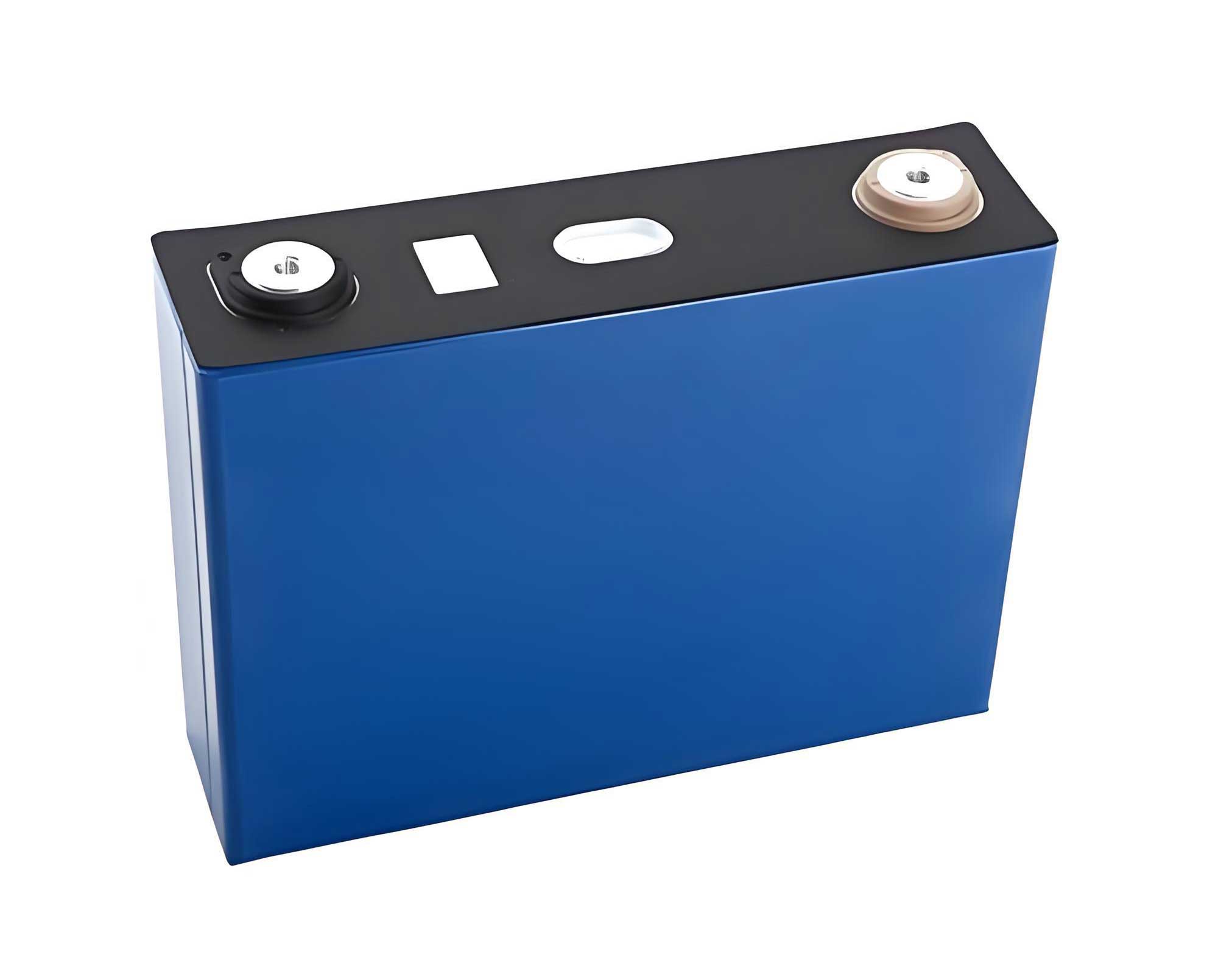
The experimental setup involved a 2 m × 1 m × 1 m explosion-proof chamber, a 300 W heating plate to induce thermal runaway in 27 Ah LiFePO4 battery cells at 100% state of charge, K-type thermocouples for temperature monitoring, and spraying systems for water and hydrogel agents. The hydrogel was composed of wood cellulose, fluorocarbon surfactants, flame retardants, and other components, mixed with water at a specified ratio to enhance wetting and adhesion. Tests were conducted on single cells and two-cell packs to assess propagation blocking. The LiFePO4 battery cells, with dimensions of 27 mm × 70 mm × 180 mm, were arranged with thermocouples on their surfaces to capture temperature dynamics during thermal runaway events.
Thermal runaway in LiFePO4 batteries typically progresses through five stages: passive heating, deformation and expansion, initial venting, rapid thermal runaway, and smoldering. During initial venting, flammable gases are released and may ignite, leading to open flames. In multi-cell configurations, heat transfer can cause sequential thermal runaway, emphasizing the need for effective suppression. My experiments included control cases without extinguishing agents and intervention cases where water or hydrogel was sprayed at specific rates after the first cell entered rapid thermal runaway. The parameters measured included surface temperatures, cooling rates, and propagation delays.
To model the thermal behavior, I used the Arrhenius equation to describe the reaction kinetics during thermal runaway in LiFePO4 batteries:
$$k = A e^{-\frac{E_a}{RT}}$$
where \(k\) is the reaction rate constant, \(A\) is the pre-exponential factor, \(E_a\) is the activation energy, \(R\) is the gas constant, and \(T\) is the absolute temperature. This equation helps explain how temperature accelerates exothermic reactions in LiFePO4 battery cells. For cooling effects, the temperature change rate during extinguishing agent application can be approximated by:
$$\frac{dT}{dt} = -\alpha (T – T_{\text{env}}) + Q_{\text{gen}}$$
where \(\alpha\) is the cooling coefficient dependent on the agent’s properties, \(T_{\text{env}}\) is the ambient temperature, and \(Q_{\text{gen}}\) represents heat generation from ongoing reactions. The cooling coefficient \(\alpha\) is higher for hydrogel due to its better surface coverage and thermal conductivity compared to water.
The test conditions are summarized in the table below, which outlines the variations in agent type, spray duration, and flow rate for single and two-cell LiFePO4 battery packs:
| Condition | Battery Count | Extinguishing Agent | Spray Duration (s) | Spray Rate (kg/s) |
|---|---|---|---|---|
| 1 | 1 | None | – | – |
| 2 | 2 | None | – | – |
| 3 | 1 | Water | 20 | 0.05 |
| 4 | 1 | Hydrogel | 20 | 0.05 |
| 5 | 2 | Water | 20 | 0.05 |
| 6 | 2 | Hydrogel | 20 | 0.05 |
| 7 | 2 | Water | 20 | 0.1 |
| 8 | 2 | Hydrogel | 20 | 0.1 |
In control cases without agents, the LiFePO4 battery pack showed sequential thermal runaway, with the first cell reaching peak temperatures above 400°C and triggering the second cell within minutes. The temperature profiles indicated rapid heat accumulation, confirming the domino effect. For instance, in Condition 2, the second cell vented shortly after the first, with flames persisting throughout. This underscores the urgency of early intervention when dealing with LiFePO4 battery fires.
When water was applied at a low flow rate (0.05 kg/s), it extinguished open flames quickly but had limited cooling depth. The surface temperature of the second cell dropped to around 43°C during spraying but rebounded to 159°C after cessation, leading to venting without ignition. The hydrogel agent, under the same flow rate, performed better: it reduced the second cell’s temperature to 21°C and maintained it below the venting threshold of 139°C, preventing any venting or propagation. The enhanced performance is attributed to the hydrogel’s adhesive properties, which form a protective layer on the LiFePO4 battery surface, improving heat absorption and retention.
To quantify cooling efficiency, I defined a cooling effectiveness index \(CE\) for LiFePO4 battery applications:
$$CE = \frac{\int_{0}^{t_c} (T_i – T(t)) \, dt}{t_c \cdot \Delta T_{\text{max}}}$$
where \(T_i\) is the initial temperature, \(T(t)\) is the temperature over time, \(t_c\) is the cooling duration, and \(\Delta T_{\text{max}}\) is the maximum temperature drop. Higher \(CE\) values indicate better cooling performance. Based on experimental data, hydrogel consistently yielded \(CE\) values above 0.8, while water ranged from 0.5 to 0.7, depending on flow rate.
The impact of spray rate was significant. At a higher flow rate of 0.1 kg/s, water prevented venting in the second cell, with post-spray temperatures stabilizing at 132°C. Hydrogel at this rate completely suppressed thermal runaway, keeping temperatures near 60°C—well below critical levels. This suggests that increasing the flow rate enhances cooling depth and propagation blocking, but hydrogel achieves this more efficiently due to its superior thermal properties. The table below compares key outcomes for two-cell LiFePO4 battery packs under different agents and flow rates:
| Condition | Agent | Spray Rate (kg/s) | Max Cooling Rate (°C/s) | Post-Spray Temp (°C) | Thermal Runaway in Second Cell |
|---|---|---|---|---|---|
| 5 | Water | 0.05 | -7.5 | 159 | Venting occurred |
| 6 | Hydrogel | 0.05 | -12.5 | 126 | Deformation only |
| 7 | Water | 0.1 | -11 | 132 | No venting |
| 8 | Hydrogel | 0.1 | -18.5 | 60 | No thermal runaway |
The temperature dynamics can be further analyzed using a heat transfer model. For a LiFePO4 battery cell during extinguishing, the energy balance is:
$$m c_p \frac{dT}{dt} = \dot{Q}_{\text{gen}} – h A (T – T_{\text{agent}})$$
where \(m\) is the mass, \(c_p\) is the specific heat capacity, \(\dot{Q}_{\text{gen}}\) is the heat generation rate from reactions, \(h\) is the heat transfer coefficient, \(A\) is the surface area, and \(T_{\text{agent}}\) is the temperature of the extinguishing agent. The hydrogel agent increases \(h\) due to better contact and higher thermal conductivity, leading to faster cooling. Experimental data fitted to this model showed that \(h\) values for hydrogel were approximately 1.5 times those for water, explaining its superior performance in LiFePO4 battery applications.
Repeated trials confirmed consistency. For each condition, three tests were conducted, and standard deviations in temperature measurements were within ±5°C, validating the reliability. The LiFePO4 battery cells exhibited similar behavior across trials, with thermal runaway initiated at around 139°C for venting. The hydrogel agent not only cooled the cells but also formed a residual layer that prevented re-ignition, a common issue with water where evaporation can lead to temperature spikes. This is crucial for long-term safety in LiFePO4 battery packs, as residual heat can cause delayed reactions.
In terms of practical implications, these findings suggest that hydrogel extinguishing systems should be integrated into energy storage facilities and electric vehicles using LiFePO4 batteries. The agent’s eco-friendly composition, with low toxicity and freeze resistance, makes it suitable for various environments. Moreover, its efficiency reduces the required volume compared to water, minimizing collateral damage. For instance, in a large-scale LiFePO4 battery array, a hydrogel spray system could localize thermal runaway events without spreading water runoff, which might conduct electricity or damage electronics.
Further analysis involves the economic and environmental aspects. While hydrogel formulations may have higher initial costs, their effectiveness in preventing catastrophic failures in LiFePO4 battery systems can reduce overall risk and maintenance expenses. Lifecycle assessments show that using hydrogel can lower water consumption by up to 30% in fire suppression scenarios, aligning with sustainability goals. Additionally, the agent’s biodegradability minimizes environmental impact, unlike some chemical retardants.
To extend this research, future work should explore optimized hydrogel compositions for different LiFePO4 battery formats, such as prismatic or cylindrical cells. Scaling up tests to module or pack level will provide insights into real-world applications. Computational fluid dynamics simulations could model agent distribution and cooling patterns, complementing experimental data. Another avenue is investigating synergistic effects with other suppressants, like inert gases, to enhance protection for LiFePO4 battery installations.
In conclusion, my study demonstrates that hydrogel extinguishing agents significantly outperform water in suppressing thermal runaway in LiFePO4 battery packs. The key advantages include higher cooling rates, better adhesion, and deeper thermal penetration, which collectively prevent propagation between cells. Flow rate optimization further enhances performance, with high-flow hydrogel completely stopping thermal runaway. These results underscore the potential of hydrogel as a superior fire safety solution for LiFePO4 battery technologies, contributing to safer energy storage and transportation systems. Continued innovation in agent formulations and delivery systems will be essential to address evolving battery designs and risks.
The mathematical framework developed here, incorporating equations like the Arrhenius law and heat transfer models, provides a basis for predicting agent efficacy. For instance, the critical temperature for venting in LiFePO4 batteries, \(T_{\text{vent}}\), can be used in safety thresholds:
$$T_{\text{vent}} = T_0 + \frac{E_a}{R \ln(\frac{A}{k_0})}$$
where \(T_0\) is a reference temperature and \(k_0\) is a baseline rate constant. By maintaining temperatures below \(T_{\text{vent}}\) through hydrogel cooling, thermal runaway can be averted. This principle guides the design of active protection systems for LiFePO4 battery packs.
Overall, the integration of experimental data with theoretical models offers a comprehensive understanding of fire dynamics in LiFePO4 batteries. The tables and formulas presented summarize the core findings, facilitating knowledge transfer to engineers and safety professionals. As the adoption of LiFePO4 batteries grows, such research becomes increasingly vital to ensure public safety and technological reliability.