
In recent years, the rapid development of new energy industries has led to the widespread application of lithium-ion batteries in energy storage systems. Among these, LiFePO4 batteries are particularly favored due to their inherent safety advantages compared to ternary batteries. However, the flammable nature of the electrolyte in LiFePO4 batteries raises concerns about thermal stability and safety. To better prevent and control explosion accidents in energy storage stations, it is essential to study the thermal runaway process of energy storage batteries and analyze the hazards associated with gas production and its components. In this study, we investigate the thermal runaway behavior and gas production characteristics of 60 Ah LiFePO4 batteries under different states of charge (SOC). We conduct experiments to monitor temperature, voltage, and gas pressure evolution, analyze gas composition, and evaluate explosion risks through simulations. The findings provide theoretical guidance for the safety protection of energy storage systems, emphasizing the importance of understanding LiFePO4 battery behavior under thermal abuse conditions.
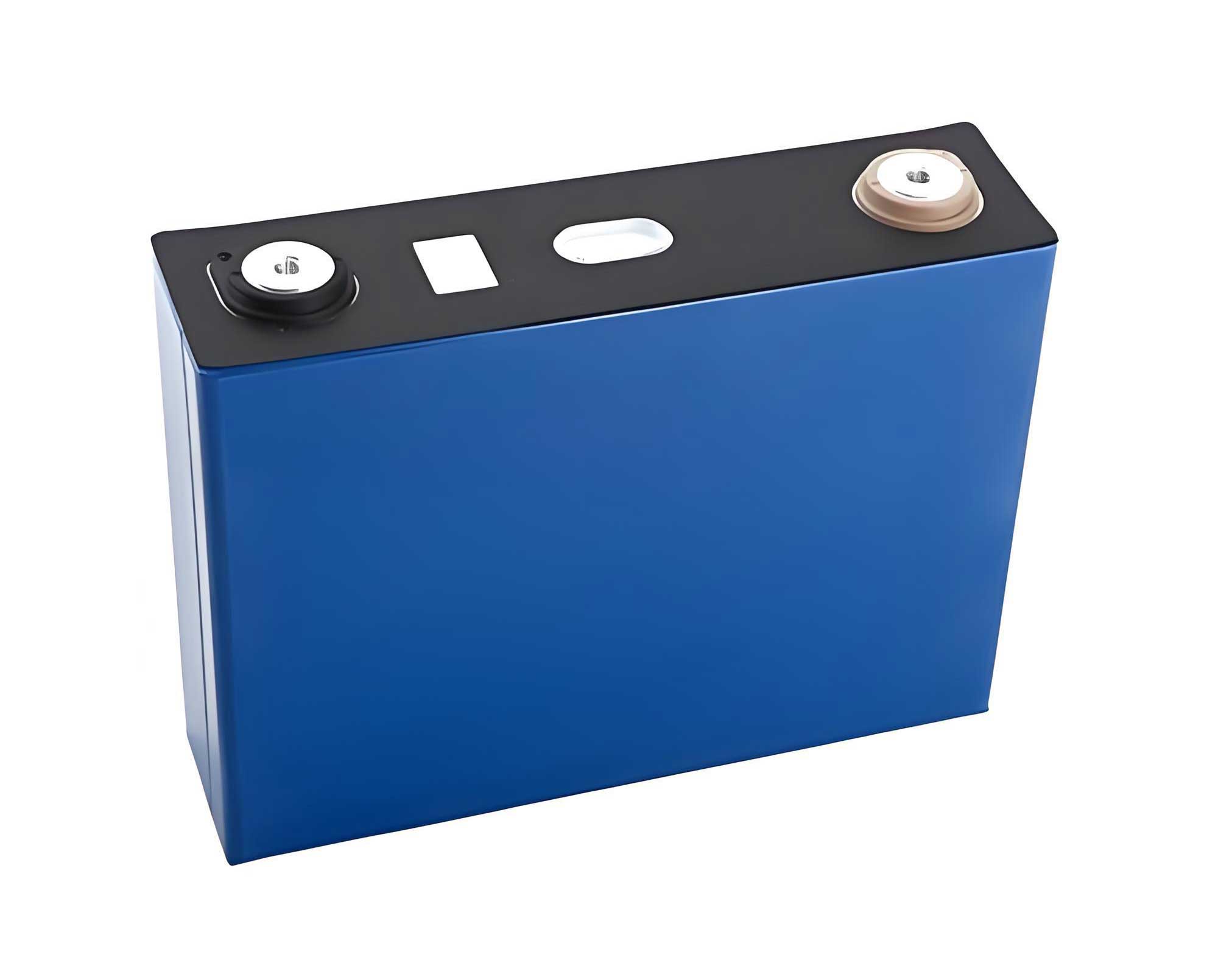
The experimental setup involved using a 60 Ah prismatic LiFePO4 battery with a nominal capacity, as shown in the image. The battery’s positive electrode material is lithium iron phosphate (LiFePO4), and the negative electrode is graphite. Before thermal runaway tests, the batteries were subjected to three charge-discharge cycles to select those with capacities within 5% of 60 Ah. They were then charged to different SOC levels (0%, 30%, 50%, 70%, 80%, 90%, 100%, and 110%) at a 0.5C rate. The test apparatus included an explosion tank, vacuum pump, data recorder, vacuum pressure gauge, and thermocouples. The battery was placed in a sealed tank with heating pads, and temperature, voltage, and pressure data were recorded during heating until thermal runaway occurred. Gas samples were collected for composition analysis.
To systematically analyze the thermal runaway process, we divided it into three stages based on temperature evolution curves: Stage I (thermal accumulation), Stage II (thermal equilibrium), and Stage III (thermal runaway and cooling). Similarly, the gas production process was divided into four stages based on pressure curves. Key parameters such as initial temperatures (\(\theta_1\), \(\theta_2\)) and peak temperatures (\(\theta_3\)) were identified. For example, in a 90% SOC LiFePO4 battery, Stage I spanned from 0 to 481 s with a temperature rise from 29°C to 128°C, Stage II from 481 to 711 s with slow heating, and Stage III from 711 to 1800 s with rapid temperature increase to 372°C. The voltage remained stable in Stage I but dropped sharply in Stage II, indicating internal short circuits. The temperature rise rate (\(\Delta \theta / \Delta t\)) varied with SOC, as summarized in the tables below.
The gas production behavior was analyzed by monitoring pressure changes. For the 90% SOC LiFePO4 battery, Stage 1 involved no gas release until the safety valve opened at around 130°C. Stage 2 saw a pressure increase of 4.80 kPa with an average gas production rate (\(v\)) of 0.03 kPa/s, calculated using the formula:
$$ v = \frac{p_d}{t_d} $$
where \(p_d\) is the gas production amount in kPa and \(t_d\) is the duration in seconds. Stage 3 exhibited a peak pressure of 23.10 kPa and a rate of 0.16 kPa/s, coinciding with the maximum temperature rise rate. Stage 4 involved pressure stabilization and gradual decay. The gas production data for different SOC levels are summarized in Table 1, showing that higher SOC LiFePO4 batteries generally produced more gas and reached higher pressures.
| Battery SOC (%) | Pressure (kPa) | Gas Production (mol/Ah) |
|---|---|---|
| 0 | 11.4 | 0.0331 |
| 30 | 11.5 | 0.0333 |
| 50 | 9.6 | 0.0280 |
| 70 | 11.4 | 0.0331 |
| 80 | 11.7 | 0.0339 |
| 90 | 23.1 | 0.0670 |
| 100 | 23.7 | 0.0687 |
| 110 | 24.1 | 0.0699 |
The gas composition analysis revealed that LiFePO4 battery thermal runaway produces hydrogen, carbon monoxide, carbon dioxide, propylene, ethylene, ethane, and methane. The proportions varied with SOC, as detailed in Table 2. For SOC levels up to 100%, hydrogen content increased with SOC, while organic components and carbon dioxide decreased. The overcharged LiFePO4 battery (110% SOC) showed a different trend, with higher organic gas and carbon dioxide proportions. This indicates that the gas production mechanism in LiFePO4 batteries depends on SOC, affecting the overall hazard level.
| Battery SOC (%) | Hydrogen | Carbon Monoxide | Carbon Dioxide | Propylene | Ethylene | Ethane | Methane |
|---|---|---|---|---|---|---|---|
| 0 | 0.2214 | 0.0404 | 0.6436 | 0.0243 | 0.0614 | 0.0039 | 0.0048 |
| 30 | 0.2975 | 0.0661 | 0.5210 | 0.0192 | 0.0793 | 0.0061 | 0.0108 |
| 50 | 0.3927 | 0.0503 | 0.3187 | 0.0189 | 0.0843 | 0.0125 | 0.0323 |
| 70 | 0.4846 | 0.0487 | 0.3188 | 0.0189 | 0.0843 | 0.0125 | 0.0322 |
| 80 | 0.5169 | 0.0620 | 0.2674 | 0.0192 | 0.0848 | 0.0130 | 0.0366 |
| 90 | 0.5312 | 0.0556 | 0.2372 | 0.0218 | 0.0936 | 0.0148 | 0.0458 |
| 100 | 0.5418 | 0.0487 | 0.2312 | 0.0278 | 0.0961 | 0.0139 | 0.0405 |
| 110 | 0.4592 | 0.0561 | 0.2664 | 0.0226 | 0.1337 | 0.0156 | 0.0464 |
To assess the explosion hazards of the gas mixtures, we calculated the explosion limits using the modified Le Chatelier formula. First, the composite explosion limit for hydrogen and carbon dioxide was determined using the equation:
$$ L_m = L_f \times \frac{1 + \frac{\varphi_B}{1 – \varphi_B}}{100 + L_f \times \frac{\varphi_B}{1 – \varphi_B}} \times 100 $$
where \(L_m\) is the composite explosion limit in %, \(\varphi_B\) is the volume fraction of carbon dioxide in %, and \(L_f\) is the explosion limit of hydrogen (typically 4-75%). Then, the overall explosion limit \(L\) for the mixed gases was calculated using the standard Le Chatelier formula:
$$ \frac{1}{L} = \frac{\varphi_1}{L_1} + \frac{\varphi_2}{L_2} + \cdots + \frac{\varphi_n}{L_n} $$
where \(\varphi_n\) is the volume fraction of each combustible component and \(L_n\) is its explosion limit. The results, shown in Table 3, indicate that the explosion limits for LiFePO4 battery gas mixtures range from 4.9% to 69%, with both lower and upper limits increasing with SOC. This suggests that higher SOC LiFePO4 batteries produce more hazardous gas mixtures.
| Battery SOC (%) | Upper Explosion Limit (%) | Lower Explosion Limit (%) |
|---|---|---|
| 0 | 51.36 | 5.12 |
| 30 | 52.43 | 4.96 |
| 50 | 53.43 | 5.13 |
| 70 | 54.20 | 5.32 |
| 80 | 57.59 | 5.62 |
| 90 | 55.08 | 5.61 |
| 100 | 65.77 | 7.91 |
| 110 | 68.77 | 9.98 |
We further evaluated the explosion hazards through simulations using FLACS software, which models fluid dynamics based on conservation equations for mass, energy, and momentum. A container model with dimensions 12 m × 3 m × 3 m was created to represent an energy storage unit. The gas mixture from a 90% SOC LiFePO4 battery was used as a premixed fuel, with 9 kg of gas added at the stoichiometric ratio for complete combustion. The ignition point was set at the center of the first column, and mesh grids of 0.5 m × 0.5 m × 0.5 m were used. The simulation results showed a peak overpressure of 0.8093 MPa and a maximum temperature of 2748°C, with a final overpressure of 0.7738 MPa. According to safety standards, overpressures above 0.05 MPa can be fatal, indicating that LiFePO4 battery gas explosions pose severe risks. Simulations for all SOC levels, summarized in Table 4, reveal that higher SOC LiFePO4 batteries produce greater overpressures and temperatures, with shorter explosion times, emphasizing the increased danger at elevated SOC.
| Battery SOC (%) | Overpressure (MPa) | Maximum Temperature (°C) | Explosion Time (s) |
|---|---|---|---|
| 0 | 0.6897 | 2519 | 0.702 |
| 30 | 0.7224 | 2558 | 0.526 |
| 50 | 0.7534 | 2703 | 0.322 |
| 70 | 0.7554 | 2695 | 0.341 |
| 80 | 0.7605 | 2739 | 0.314 |
| 90 | 0.7738 | 2748 | 0.328 |
| 100 | 0.7794 | 2775 | 0.307 |
| 110 | 0.7830 | 2749 | 0.300 |
The thermal runaway mechanism in LiFePO4 batteries involves several exothermic reactions. In Stage I, heating causes the solid electrolyte interphase (SEI) layer on the anode to decompose at 90-120°C, releasing gases. The entropy coefficient influences voltage behavior, as described by the relationship:
$$ \Delta V = \left( \frac{\partial V}{\partial T} \right)_S \cdot \Delta T $$
where \(\Delta V\) is the voltage change and \(\Delta T\) is the temperature change. For LiFePO4 batteries, the entropy coefficient varies with SOC, leading to voltage stability or slight drops. In Stage II, internal short circuits develop, accelerating heat generation. The gas production rate correlates with temperature rise, as shown by the empirical equation:
$$ \frac{dp}{dt} = k \cdot \exp\left(-\frac{E_a}{RT}\right) $$
where \(dp/dt\) is the pressure change rate, \(k\) is a pre-exponential factor, \(E_a\) is the activation energy, \(R\) is the gas constant, and \(T\) is the temperature. This Arrhenius-type relationship explains the rapid gas release during thermal runaway. For LiFePO4 batteries, the activation energy depends on SOC, with higher SOC values reducing the energy barrier for gas-producing reactions.
The gas composition analysis indicates that hydrogen is a major product, especially at high SOC, due to electrolyte decomposition and lithium deposition. The overall gas yield \(G\) for a LiFePO4 battery can be estimated using the formula:
$$ G = \int_{t_0}^{t_f} A \cdot \exp\left(-\frac{\Delta H}{RT(t)}\right) dt $$
where \(A\) is a constant, \(\Delta H\) is the reaction enthalpy, and \(T(t)\) is the temperature over time. This integral approach helps quantify the total gas production across different SOC levels. Our data show that LiFePO4 batteries at 100% SOC produce approximately 0.0687 mol/Ah of gas, while at 0% SOC, it drops to 0.0331 mol/Ah, highlighting the SOC dependence.
The explosion hazard assessment further underscores the risks associated with LiFePO4 battery thermal runaway. The modified Le Chatelier formula accounts for non-combustible gases like carbon dioxide, which can dilute the mixture and affect flammability. For LiFePO4 battery gas mixtures, the explosion limits widen with SOC, meaning that the gas becomes combustible over a broader concentration range. This is critical for safety designs in energy storage systems, where ventilation and gas detection are essential. The simulation results align with theoretical predictions, as the overpressure \(P\) from an explosion can be modeled using the TNT equivalence method:
$$ P = K \cdot \left( \frac{W}{R^3} \right)^{1/3} $$
where \(K\) is a constant, \(W\) is the equivalent TNT mass, and \(R\) is the distance from the explosion. For LiFePO4 battery gases, \(W\) increases with SOC due to higher combustible content, leading to greater overpressures.
In conclusion, our study on LiFePO4 batteries reveals that SOC significantly influences thermal runaway behavior and gas production characteristics. The thermal runaway process can be divided into three stages: thermal accumulation, thermal equilibrium, and thermal runaway with cooling. The gas production process consists of four stages, from initial valve opening to pressure stabilization. Higher SOC LiFePO4 batteries exhibit more severe thermal runaway, with higher peak temperatures, greater gas production, and more hazardous gas mixtures. The explosion limits and simulation results confirm that gases from high SOC LiFePO4 batteries pose higher risks, with overpressures exceeding 0.68 MPa and temperatures above 2500°C. These findings emphasize the need for robust safety measures in energy storage applications, such as thermal management systems, gas venting, and explosion suppression technologies. Future work should focus on real-time monitoring of LiFePO4 battery parameters to enable early warning and prevent catastrophic failures. The LiFePO4 battery, while safer than other lithium-ion chemistries, still requires careful handling under abuse conditions, and ongoing research is vital for advancing energy storage safety.
To further elaborate, the temperature evolution in LiFePO4 batteries follows a predictable pattern. For instance, the time to thermal runaway \(t_{tr}\) can be expressed as:
$$ t_{tr} = \frac{C_p \cdot \Delta T}{Q_{gen} – Q_{loss}} $$
where \(C_p\) is the heat capacity, \(\Delta T\) is the temperature rise, \(Q_{gen}\) is the heat generation rate from reactions, and \(Q_{loss}\) is the heat loss rate. For LiFePO4 batteries, \(Q_{gen}\) increases with SOC due to enhanced reactivity, reducing \(t_{tr}\). This aligns with our observations where 110% SOC LiFePO4 batteries entered thermal runaway earlier than lower SOC ones.
The gas production analysis also highlights the role of electrolyte decomposition. The main reactions include:
$$ \text{LiPF}_6 \rightarrow \text{LiF} + \text{PF}_5 $$
$$ \text{PF}_5 + \text{H}_2\text{O} \rightarrow \text{HF} + \text{POF}_3 $$
$$ \text{Electrolyte solvents} \rightarrow \text{H}_2 + \text{CO} + \text{Hydrocarbons} $$
These reactions produce the gases detected in our study. The proportion of hydrogen, in particular, rises with SOC in LiFePO4 batteries because of increased lithium inventory and side reactions. The gas yield per Ah, \(Y\), can be correlated with SOC through a linear regression:
$$ Y = m \cdot \text{SOC} + b $$
where \(m\) and \(b\) are constants derived from experimental data. For our LiFePO4 batteries, \(m\) is positive, indicating higher gas production at elevated SOC.
The explosion simulations provide insights into hazard mitigation. The overpressure decay over distance \(r\) can be described by the equation:
$$ P(r) = P_0 \cdot \left( \frac{r_0}{r} \right)^n $$
where \(P_0\) is the peak overpressure at reference distance \(r_0\), and \(n\) is a decay exponent. For LiFePO4 battery gas explosions, \(n\) typically ranges from 1.5 to 2, suggesting rapid pressure drop with distance. However, in confined spaces like energy storage containers, pressure buildup can be severe, necessitating venting designs. The simulation results for LiFePO4 batteries show that overpressures exceed human tolerance limits, underscoring the importance of structural reinforcements and explosion-proof enclosures.
In summary, the LiFePO4 battery, despite its advantages, requires comprehensive safety assessments. Our analysis of thermal runaway and gas production at different SOC levels provides valuable data for improving battery management systems. By integrating temperature and pressure monitoring, along with gas detection, the risks associated with LiFePO4 batteries can be mitigated. The repeated emphasis on LiFePO4 battery behavior across SOC variations highlights its critical role in energy storage safety. Future studies should explore aging effects, cycle life impacts, and large-scale module failures to further enhance the safety protocols for LiFePO4 battery-based energy storage systems.