
In the contemporary landscape of energy storage, lithium-ion batteries stand out for their high energy density, impressive charge-discharge efficiency, extended cycle life, and environmental friendliness. These attributes have cemented their role in consumer electronics, electric vehicles, and grid-scale storage systems. However, a critical and often limiting factor in their application is performance degradation at low temperatures. In cold environments, the usable capacity and power capability of a lifepo4 battery can diminish severely, restricting its use in high-latitude, high-altitude, or space exploration contexts where temperatures routinely plunge below -30°C. To unlock these applications, enhancing the low-temperature performance, particularly for the inherently safe and stable lithium iron phosphate chemistry, is a pivotal research and engineering challenge. This article details a comprehensive study focused on the formulation and process optimization for developing a high-performance 5 Ah ultra-low temperature pouch lifepo4 battery.
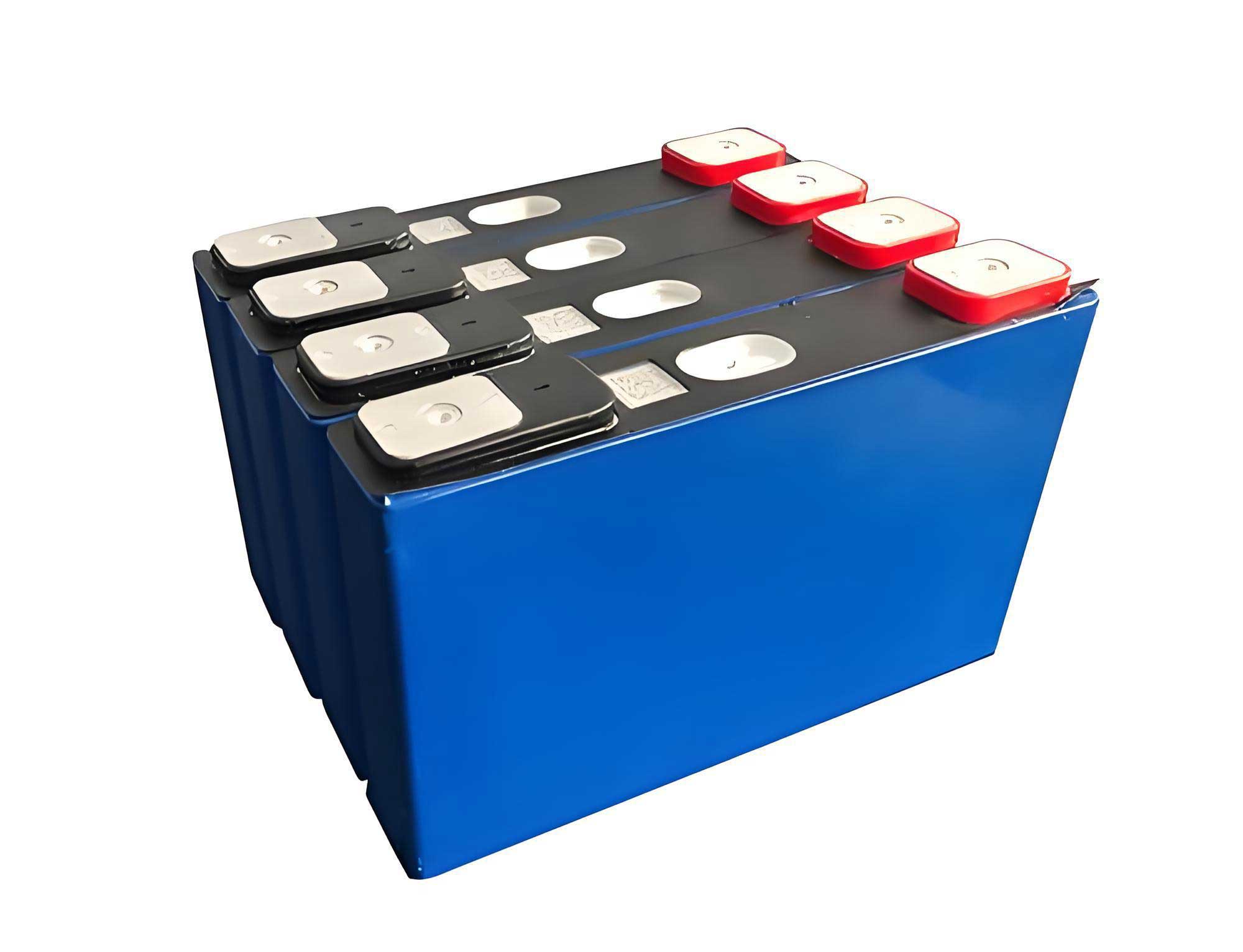
The low-temperature performance of a lifepo4 battery is a complex interplay of multiple components and processes. Primarily, it is governed by the kinetics of lithium-ion diffusion within the solid electrode materials, the ionic conductivity of the electrolyte, and the charge transfer resistance at the electrode-electrolyte interfaces. At sub-zero temperatures, these processes slow down exponentially, leading to increased cell polarization, a rapid drop in working voltage, and significant capacity loss. Therefore, a systemic approach targeting the cathode, anode, conductive network, electrolyte, and cell construction is essential. Our strategy involved selecting a hydrothermally-synthesized LiFePO4 cathode material for its uniform, nano-sized particles which facilitate faster lithium-ion diffusion, and a high-power modified artificial graphite anode for its superior reaction kinetics. The core of our investigation, presented here, revolves around optimizing the conductive agent formulation within the cathode, engineering a low-temperature electrolyte, and refining manufacturing parameters such as electrode loading and current collector choice.
Experimental Methodology: Materials and Coin Cell Fabrication
The initial phase of the study utilized CR2032 coin cells to efficiently screen material formulations. The cathode slurry was prepared by mixing LiFePO4 active material with various ratios of conductive agents—Super P carbon black, KS-6 conductive graphite, and Carbon Nanotubes (CNT)—using polyvinylidene fluoride (PVDF) as the binder in N-Methyl-2-pyrrolidone (NMP) solvent. This slurry was coated onto a 16 µm thick aluminum foil, dried, and punched into 15 mm diameter discs. These cathode discs, a commercial low-temperature electrolyte (for baseline), a lithium metal counter electrode, and a 20 µm thick high-porosity separator were assembled into coin cells in an argon-filled glove box. For full lifepo4 battery assembly, optimized materials were scaled up to produce 83 mm x 98 mm cathodes and 85 mm x 100 mm anodes (using an 8 µm copper foil), which were then stacked, packaged in aluminum laminate pouches, filled with the customized electrolyte, and sealed to form 5 Ah pouch cells.
Optimizing the Cathode’s Conductive Network
The electronic conductivity of the cathode composite is paramount, especially at low temperatures where ionic conductivity is poor. A robust, low-tortuosity conductive network ensures efficient electron transport to every active material particle, minimizing ohmic polarization. We investigated four distinct conductive agent formulations, keeping the total additive content constant while varying the mass ratios between Super P (SP), KS-6 (G), and CNT (C). The formulations are designated as follows:
| Formulation ID | m(SP) : m(G) : m(C) | Description |
|---|---|---|
| F1 | 2 : 1 : 0 | Traditional binary mix (SP + G) |
| F2 | 2 : 0 : 1 | SP with 1D CNT |
| F3 | 1 : 1 : 1 | Equal parts of all three |
| F4 | 2 : 1 : 1 | SP-dominant ternary mix |
The performance of coin cells with these cathodes was evaluated through room-temperature rate capability and -40°C low-temperature discharge tests. The capacity retention at different rates is a key metric, calculated as:
$$ \text{Capacity Retention (CR)} = \frac{C_{Rate}}{C_{0.1C}} \times 100\% $$
where \( C_{Rate} \) is the discharge capacity at a specific C-rate and \( C_{0.1C} \) is the baseline capacity at 0.1C.
| Formulation ID | 0.1C Capacity (mAh/g) | 1C Capacity (mAh/g) | 1C Capacity Retention (%) | -40°C, 0.2C Capacity (mAh/g) | -40°C, Avg. Voltage (V) |
|---|---|---|---|---|---|
| F1 | 154.37 | 47.68 | 30.9 | 60.39 | 2.18 |
| F2 | 154.31 | 65.69 | 42.6 | 72.28 | 2.28 |
| F3 | 154.11 | 94.70 | 61.5 | 76.44 | 2.44 |
| F4 | 154.31 | 120.70 | 78.2 | 75.80 | 2.48 |
The results are conclusive. Formulation F4, with an SP-dominant ternary mix, delivered the best overall performance. It achieved the highest room-temperature rate capability (78.2% retention at 1C) and excellent low-temperature capacity with a high average voltage. The synergistic effect is clear: Super P provides a broad, web-like conductive matrix and aids in electrolyte absorption, KS-6 acts as a large-particle conductive bridge between distant LiFePO4 agglomerates, and CNT forms a rapid, one-dimensional conductive highway across the composite. This optimized network is crucial for maintaining electronic conductivity in the frozen state of a lifepo4 battery. Consequently, F4 was selected for all subsequent experiments.
Engineering a Low-Temperature Electrolyte
The electrolyte is often the primary bottleneck for low-temperature operation. Its ionic conductivity (\(\sigma\)) follows an Arrhenius-type relationship, plummeting as temperature decreases:
$$ \sigma = A \cdot e^{(-E_a / RT)} $$
where \(E_a\) is the activation energy for ion transport, \(R\) is the gas constant, and \(T\) is the temperature. To lower \(E_a\) and the freezing point, we formulated a modified electrolyte. It was based on a commercial 1.0 M LiPF6 in EC/EMC/DEC solvent blend, into which we introduced methyl propionate (MP) as a low-melting co-solvent (melting point: -88°C) and fluoroethylene carbonate (FEC) as a solid-electrolyte interphase (SEI) film-forming additive.
Coin cells with the F4 cathode and different electrolytes were tested at -40°C. The results highlight the impact of formulation:
| Electrolyte Type | -40°C, 0.2C Capacity (mAh/g) | -40°C, Avg. Voltage (V) | -40°C, Energy Density (Wh/kg) |
|---|---|---|---|
| Commercial Low-Temp | 75.80 | 2.48 | 183.6 |
| Commercial Standard | 72.19 | 2.61 | 183.2 | Modified (with MP & FEC) | 74.54 | 2.81 | 202.1 |
While the capacity showed a modest improvement, the most striking effect was on the discharge voltage plateau, which increased from 2.48 V to 2.81 V. This significant reduction in polarization can be attributed to two factors: 1) MP lowers the viscosity and freezing point, enhancing bulk ionic conductivity, and 2) FEC promotes the formation of a more conductive and stable SEI on the graphite anode, reducing the charge-transfer resistance. The combined effect dramatically increases the low-temperature energy density, a critical figure of merit for the lifepo4 battery, calculated as:
$$ E_d = \frac{1}{m} \int_{t_0}^{t_f} V(t) \cdot I \, dt \approx \text{Capacity} \times \text{Average Voltage} $$
Critical Manufacturing Parameters: Electrode Loading and Current Collector
Even with optimal materials, cell design parameters profoundly affect low-temperature behavior. We investigated the impact of cathode loading (areal density) and current collector type.
Areal Density: Higher loadings lead to thicker electrodes, increasing the diffusion path length for lithium ions. At -40°C, this can be catastrophic. We tested cathodes with areal densities of 10, 12, and 14 mg/cm².
| Areal Density (mg/cm²) | -40°C, 0.2C Capacity (mAh/g) | -40°C, Avg. Voltage (V) | Observation |
|---|---|---|---|
| 10 | 79.34 | 2.72 | Best performance |
| 12 | 78.88 | 2.70 | Similar to 10 mg/cm² |
| 14 | 47.76 | 2.28 | Severe polarization, voltage dip & rebound |
The 14 mg/cm² electrode exhibited a severe voltage drop followed by a mid-discharge rebound, indicative of significant Joule heating due to high internal resistance. The 10 and 12 mg/cm² electrodes performed nearly identically. We selected 10 mg/cm² as the optimal loading, providing a good balance between low-temperature kinetics and overall cell energy density.
Current Collector: Replacing standard aluminum foil (16 µm) with carbon-coated aluminum foil (17 µm) had a transformative effect on impedance.
| Current Collector | DC Internal Resistance (Ω) | -40°C, Avg. Voltage (V) |
|---|---|---|
| Standard Al Foil | 20.75 | 2.81 |
| Carbon-Coated Al Foil | 11.79 | 2.88 |
The carbon coating reduces the contact resistance at the interface between the active material layer and the foil, effectively halving the cell’s DC internal resistance. This leads to a higher and more stable operating voltage under load, which is essential for the power performance of a lifepo4 battery in cold conditions.
Performance of the Full 5 Ah Ultra-Low Temperature Pouch Cell
Integrating all optimizations—F4 conductive formula, modified MP/FEC electrolyte, 10 mg/cm² cathode loading, carbon-coated Al current collector, high-porosity separator, and power-grade graphite anode—we manufactured 5 Ah soft-pouch lifepo4 battery cells. Their performance was rigorously characterized across a wide temperature range.
1. Room-Temperature Rate Capability: The cell demonstrated excellent power performance at 25°C.
| Discharge Rate | Discharge Capacity (Ah) | Capacity Retention vs. 0.5C (%) | Mid-point Voltage (V) |
|---|---|---|---|
| 0.5C | 5.24 | 100.0 | 3.26 |
| 1C | 5.19 | 99.0 | 3.24 |
| 2C | 5.15 | 98.3 | 3.20 |
| 3C | 5.13 | 97.9 | 3.17 |
The minimal capacity fade even at 3C discharge confirms the effectiveness of the low-resistance conductive network and electrode design.
2. Low-Temperature Charging (-20°C): The ability to accept charge in the cold is critical for applications without access to warm environments. At -20°C, the cell achieved 92.0% of its room-temperature capacity when charged at 0.5C, with a high constant current (CC) ratio of 94.6%. This is a direct benefit of the low-polarization electrolyte and anode SEI.
3. Ultra-Low-Temperature Discharge (-40°C): This is the key performance metric. The cell was discharged at various rates after a 24-hour soak at -40°C.
| Discharge Rate at -40°C | Capacity Retention vs. RT 0.5C (%) | Observation |
|---|---|---|
| 0.2C | 70.9% | Stable voltage plateau |
| 0.5C | 68.1% | Moderate polarization |
| 1C | 70.2% | Higher polarization but greater self-heating leads to comparable capacity to 0.5C |
The ability to deliver over 70% of nominal capacity at a 1C rate at -40°C represents a significant advancement for a lifepo4 battery.
4. High-Temperature Performance (60°C): Stability at elevated temperatures is equally important. The cell retained 93.1% of its room-temperature capacity when discharged at 0.5C at 60°C, with no noticeable swelling, confirming that the addition of MP did not compromise thermal stability or seal integrity.
5. Room-Temperature Cycle Life: Long-term durability was assessed with 1C charge/discharge cycles between 2.5V and 3.7V. The cell exhibited a capacity retention of approximately 95% after 500 cycles. The degradation often follows a semi-empirical relationship:
$$ C_n = C_0 \cdot e^{-\alpha n} $$
where \( C_n \) is the capacity at cycle \( n \), \( C_0 \) is the initial capacity, and \( \alpha \) is the decay rate constant. Our optimized cell showed a very low \( \alpha \) value, indicating stable long-term operation and that the low-temperature additives did not induce accelerated aging.
Conclusion
Through a systematic investigation of material formulations and cell engineering parameters, we have successfully developed a high-performance 5 Ah ultra-low temperature pouch lifepo4 battery. The synergistic use of a ternary conductive agent system (Super P / KS-6 / CNT) in the cathode, a methyl propionate and FEC-enhanced electrolyte, a moderate electrode areal density, and a carbon-coated current collector collectively address the fundamental kinetic limitations at low temperatures. The resulting cell demonstrates exceptional capability, maintaining over 70% of its room-temperature capacity at a 1C discharge rate at -40°C, while also excelling in -20°C charging, high-temperature operation, and room-temperature cycle life. This work provides a validated, holistic blueprint for engineering lifepo4 battery technologies capable of reliable operation in extreme cold environments, thereby significantly expanding their potential application frontier.