
In the course of developing and analyzing commercial LiFePO4 batteries, I have encountered a specific failure phenomenon characterized by the appearance of dark spots, or black patches, on the surface of the graphite anode. This issue typically manifests after the initial formation cycles or following storage periods, often accompanied by subtle yet measurable performance degradation such as slight capacity loss, increased cell thickness, and inconsistent capacity recovery after storage. The investigation into this anode black spot anomaly is crucial, as it directly impacts the performance, consistency, and long-term reliability of LiFePO4 battery systems.
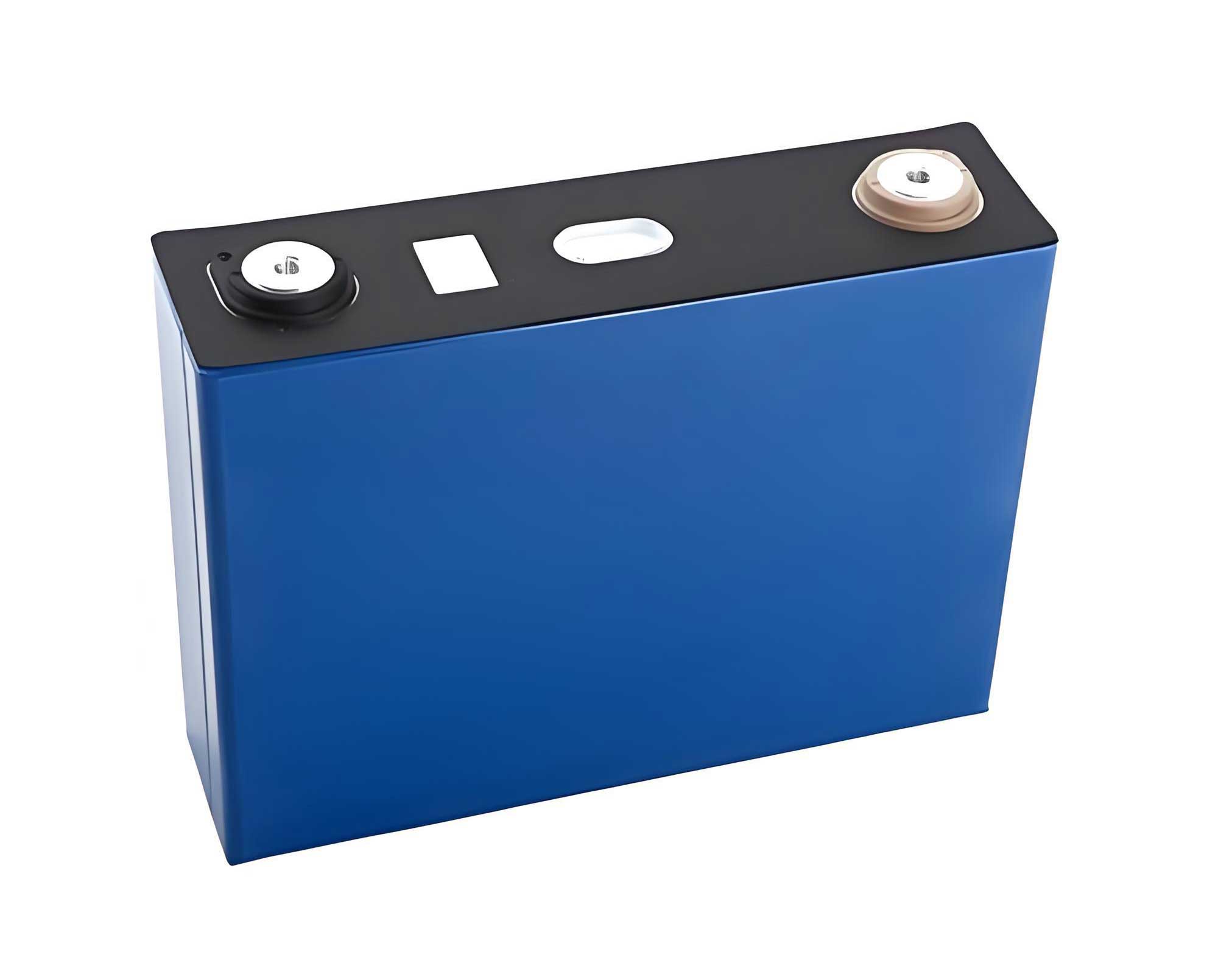
The primary visual symptom involves non-uniform black discoloration across the large surface of the negative electrode in a wound cell configuration. The severity of these spots can vary between jelly rolls, and they are frequently more pronounced at the terminal ends of the electrode where alignment might be imperfect. In severe cases, the black material appears to have exfoliated, contributing to a measurable increase in the anode coating thickness. This is not merely a cosmetic defect; it signifies underlying electrochemical and structural instability within the anode of the LiFePO4 battery.
My analytical approach to understanding this failure mode involved a multi-faceted investigation, dissecting the cells and employing various material characterization techniques. The analysis focused on four principal, interconnected avenues: the intrinsic structural properties of the anode material, the composition and behavior of the electrolyte, the potential sources and role of sodium ion contamination, and the detrimental effects of residual moisture. The formation of black spots is seldom due to a single factor; rather, it is the synergistic result of several conditions aligning unfavorably within the LiFePO4 battery.
Morphology and Composition of the Black Spot Regions
To begin the root cause analysis, I conducted a comparative study of the afflicted anode areas versus regions of normal appearance. Scanning Electron Microscopy (SEM) revealed a stark contrast in morphology. The surface of normal anode material is relatively dense and uniform, while the black spot areas show severe structural degradation. The graphite particles exhibit significant exfoliation and expansion, with the layered structure visibly disrupted. Cracks propagate through the particles due to splitting, and abnormal pores appear, likely from the failure of binder adhesion between particles. Crucially, cross-sectional views indicate that the exfoliated material grows outward from the anode surface in the direction towards the separator.
Energy Dispersive X-ray Spectroscopy (EDS), providing semi-quantitative elemental analysis of the top 1-2 micrometers, further differentiated the spots. A normal graphite anode surface registers almost exclusively carbon (C). In contrast, the black spot composition is more complex, as summarized below:
| Element | Typical Detection in Black Spots | Probable Source |
|---|---|---|
| Carbon (C) | 50% – 96% | Graphite anode material (degraded). |
| Oxygen (O) | 4% – 44% | Decomposition products from electrolyte solvents (e.g., ROCO2Li, Li2O). |
| Fluorine (F) / Phosphorus (P) | 1% – 3% | Lithium hexafluorophosphate (LiPF6) salt decomposition (e.g., LiF, LixPFyOz). |
| Sodium (Na) | ~2% (in some points) | Contamination, likely from electrode processing aids. |
This composition is characteristic of a disrupted and excessively thick Solid Electrolyte Interphase (SEI) layer, intermixed with exfoliated graphite fragments. The presence of O, F, and P confirms massive, ongoing electrolyte decomposition at the anode. The sporadic detection of Na points to a specific contaminant pathway. The exfoliation process continuously consumes active lithium and electrolyte, directly leading to the observed capacity fade and poor cycling performance in the LiFePO4 battery. Furthermore, the dislodged graphite particles pose a severe risk of bridging the separator and causing internal short circuits.
Structural Characteristics of the Anode Material
The performance of any carbonaceous anode, including those in LiFePO4 batteries, is fundamentally tied to its crystallographic structure. The degree of graphitization is a key parameter, reflecting how well-ordered the carbon layers are. A higher degree of graphitization, indicated by a smaller interlayer spacing (d002) and larger crystalline stacking height (Lc), generally facilitates smoother intercalation and de-intercalation of lithium ions. However, the ideal material often possesses a certain level of disorder or sp3-hybridized carbon to provide sufficient defects for initiating a stable SEI formation.
I used X-ray Diffraction (XRD) to analyze the structural parameters of graphite in both black spot and normal areas. While the lattice parameter d002 and the calculated degree of graphitization (g) remained constant—suggesting the bulk material was nominally the same—the notable change was in the Lc parameter and the derived number of stacking layers (n).
| Parameter | Normal Anode Area | Black Spot Area | Implication |
|---|---|---|---|
| d002 (Å) | 3.36 | 3.36 | Unchanged interlayer spacing. |
| Lc (nm) | 45.2 | 22.1 | Halving of crystalline stack height. |
| Stacking Layers (n) | ~134 | ~66 | Severe reduction in ordered layers. |
| Graphitization (g) | 92% | 92% | Unchanged bulk graphitic order. |
The dramatic decrease in Lc and n in the black spot zone provides direct XRD evidence supporting the SEM observations: the graphite has undergone severe exfoliation and layer separation. This structural collapse means these regions have either poorly intercalated lithium or failed to intercalate it at all during cycling, rendering them electrochemically inactive. This contributes directly to the capacity loss in the affected LiFePO4 battery. Therefore, while the initial material graphitization may be adequate, localized electrochemical events trigger this structural failure.
The Critical Role of Electrolyte Composition
The stability of graphite anodes is entirely dependent on the formation of a robust and ionically conductive SEI layer during the initial cycles. The chemical nature of this SEI is dictated by the reduction reactions of the electrolyte components—the lithium salt, solvents, and additives—on the graphite surface at low potentials (~0.8 V to 0.01 V vs. Li/Li+). The choice of solvent is particularly paramount, as famously illustrated by the contrasting behavior of Propylene Carbonate (PC) and Ethylene Carbonate (EC).
PC has desirable properties like low melting point and good dielectric constant. However, it is notorious for causing graphite exfoliation. The mechanism involves co-intercalation of solvated lithium ions. Before lithium intercalates into the narrow graphite galleries (d002 ~ 3.35 Å), it must shed its solvation shell. In PC-based electrolytes, the solvated [Li(PC)x]+ complex can co-intercalate into graphite before complete desolvation. Once inside, this complex is thermodynamically unstable. Its Lowest Unoccupied Molecular Orbital (LUMO) energy level lies below the Fermi level of the graphite host, promoting electron transfer and reductive decomposition within the graphite layers.
This internal decomposition generates gaseous products (CO, CO2, H2) and solid residues, creating immense internal pressure that cracks and exfoliates the graphite particles, leading to the black, decomposed material seen in the spots. The reaction can be conceptually summarized as:
$$ \text{[Li(PC)_n]^+ + e^- + Graphite \rightarrow Graphite(exfoliated) + Li_2CO_3 + C_3H_6 + CO \uparrow + …} $$
In contrast, EC, while solid at room temperature, reduces at a slightly higher potential to form a compact, stable SEI rich in lithium alkyl carbonates (e.g., (CH2OCO2Li)2) and Li2CO3. This SEI passivates the surface, preventing further electrolyte reduction and allowing reversible Li+ intercalation. Research indicates that the anion (e.g., PF6–) plays a key role: in EC systems, PF6– more readily participates in the reduction, forming LiF, a critical component for SEI stability. In PC systems, this process is less favorable, leading to a LiF-deficient, unstable SEI.
Based on this understanding, I formulated a test. The original electrolyte (Electrolyte A) used in the problematic LiFePO4 battery cells contained PC. I prepared a modified electrolyte (Electrolyte B) by removing PC and increasing the proportion of Dimethyl Carbonate (DMC), a linear carbonate known for its good kinetics and lower tendency for detrimental co-intercalation.
| Electrolyte | Solvent Composition | Observation After Formation |
|---|---|---|
| Electrolyte A | EC / PC / EMC (with PC) | Pronounced black spots on anode. |
| Electrolyte B | EC / DMC / EMC (PC-free, high DMC) | No black spot formation, clean anode surface. |
The result was clear: cells using the PC-free electrolyte showed no signs of anode black spots. This confirms that solvent co-intercalation and subsequent internal decomposition, primarily driven by PC, are central to the formation of this failure mode in LiFePO4 batteries.
Sodium Ion Contamination: A Catalyst for Failure
The EDS analysis occasionally detected sodium in the black spots. Even trace amounts of Na+ can have disproportionately large effects. I traced the potential sources of sodium within the LiFePO4 battery cell components:
| Component | Na Content (ppm) | Assessment |
|---|---|---|
| Positive Electrode (LFP) | 74 | Low level. |
| Negative Electrode (Graphite) | 20 | Low level (reflects total in coating). |
| Carboxymethyl Cellulose (CMC) Binder | 1120 | Very High. Primary suspect. |
| Styrene-Butadiene Rubber (SBR) Binder | 5 | Negligible. |
| Conductive Additive | <5 | Negligible. |
CMC, a sodium salt (Na-CMC), is a weak acid cation exchanger. In the presence of residual moisture or under weak acid conditions (e.g., from trace HF in the electrolyte), it can undergo ion exchange:
$$ \text{R-COONa + H}^+ \rightarrow \text{R-COOH + Na}^+ $$
The released Na+ ions then enter the electrolyte. Sodium ions have a smaller Stokes’ radius than Li+ in certain solvent configurations and can intercalate into graphite more rapidly under low-current or static conditions. This leads to the formation of sodium-graphite intercalation compounds (Na-GICs), which have different staging structures and larger volume expansion compared to Li-GICs, exacerbating graphite exfoliation.
Furthermore, Na+ can form [Na(PC)]+ complexes. Computational studies show the LUMO of [Na(PC)]+ is significantly lower than that of neutral PC, making it even more susceptible to reduction than the lithium analogue. This means Na+ contamination not only causes physical stress via co-intercalation but also catalytically accelerates the reductive decomposition of solvents like PC, amplifying the black spot formation mechanism. The presence of Na+ effectively lowers the activation barrier for the destructive reactions that plague the anode in a LiFePO4 battery.
The Amplifying Effect of Residual Moisture
Residual water is a pernicious contaminant in Li-ion batteries, and its role in the black spot phenomenon for LiFePO4 batteries is multifold and synergistic with the other factors.
1. Direct Reaction with Electrolyte: Water reacts with cyclic carbonates like PC or EC.
$$ \text{PC + H}_2\text{O} \rightarrow \text{HO(CH}_2)_3\text{OH (Propylene Glycol) + CO}_2 \uparrow $$
This consumes solvent and produces gas (CO2) and protic species.
2. Reaction on the Anode: Water is electrochemically reduced at the anode during formation:
$$ 2\text{H}_2\text{O} + 2\text{e}^- + 2\text{Li}^+ \rightarrow 2\text{LiOH} \downarrow + \text{H}_2 \uparrow $$
$$ 2\text{LiOH} + 2\text{e}^- + 2\text{Li}^+ \rightarrow 2\text{Li}_2\text{O} \downarrow + \text{H}_2 \uparrow $$
These reactions irreversibly consume active lithium (contributing to capacity loss) and generate hydrogen gas, increasing internal pressure. The solid products (LiOH, Li2O) can form a poor-quality, resistive surface layer.
3. Hydrolysis of LiPF6: This is a critical chain reaction.
$$ \text{LiPF}_6 \rightleftharpoons \text{LiF} + \text{PF}_5 $$
$$ \text{PF}_5 + \text{H}_2\text{O} \rightarrow \text{POF}_3 + 2\text{HF} $$
The generated HF is highly corrosive. It attacks the SEI, causing its continuous breakdown and reformation, further consuming Li+ and electrolyte. HF also catalyzes further hydrolysis and can promote polymerization of carbonate solvents, increasing viscosity and degrading performance.
4. Enabling Sodium Release: As indicated in the previous section, the H+ from HF or water dissociation provides the acidic medium necessary to protonate Na-CMC and release free Na+ ions, thereby activating the sodium-contamination pathway.
Thus, moisture acts as a universal accelerator: it directly generates gas and consumes lithium, creates corrosive HF that destabilizes the SEI, and facilitates the release of catalytic Na+ ions. In a LiFePO4 battery, even a few hundred parts per million of water can set the stage for severe anode degradation, including black spot formation.
Conditions that Exacerbate Black Spot Formation
The kinetics of the failure are influenced by operational and environmental conditions. Storage or operation at low temperatures (e.g., 0°C and below) is particularly deleterious. At low temperatures, the electrochemical polarization of the graphite anode increases significantly. The desolvation and intercalation kinetics of Li+ become sluggish, while some parasitic reactions, including those involving Na+ co-intercalation and slow electrolyte reduction, may still proceed. This imbalance can lead to lithium plating or uneven lithium intercalation, increasing local stress and promoting the exfoliation reactions that cause black spots. Furthermore, the mechanical properties of the electrode coatings become more brittle at low temperatures, making them less able to withstand the internal stresses generated by side reactions.
High states of charge (SOC) during storage place the anode at a very low, stable potential, which can accelerate the slow, continuous decomposition of the electrolyte and the degradation of the SEI over time, providing a longer time window for the black spot defects to initiate and grow. Therefore, a LiFePO4 battery experiencing these conditions is at a higher risk of developing this failure mode.
Conclusion
The formation of black spots on the anode of a LiFePO4 battery is a complex failure mechanism rooted in the interplay between material properties and electrochemical environment. My analysis leads to the following synthesized conclusion:
The phenomenon is primarily initiated by the co-intercalation and subsequent internal reductive decomposition of certain electrolyte solvents, with Propylene Carbonate (PC) being a prime example. This process is fundamentally destabilizing to the graphite lattice. This intrinsic instability is catalyzed and amplified by the presence of sodium ion contamination, often leached from the CMC binder in the presence of moisture or acid. Sodium ions facilitate faster intercalation and form complexes that are even more readily reduced than their lithium counterparts. The entire destructive process is greatly accelerated by residual moisture, which consumes lithium and electrolyte, generates corrosive hydrofluoric acid (HF) via LiPF6 hydrolysis, and creates the acidic conditions needed to release sodium ions from CMC.
While a low degree of graphitization can impair initial performance, the XRD data suggests that in this specific case, the graphite material itself had adequate structure; the exfoliation was a consequence of the electrochemical attack, not its initial cause. The synergistic effect of these factors—PC-based electrolyte, Na+ contamination, and moisture—leads to massive, localized electrolyte reduction, gas evolution, graphite layer separation, and the buildup of a thick, heterogeneous decomposition layer that appears as a black spot. Operating or storing LiFePO4 batteries at low temperatures exacerbates the kinetics, making the system more susceptible to this failure.
Mitigation strategies are clear from the analysis: (1) Use PC-free electrolyte formulations optimized for graphite anodes, favoring EC and linear carbonates like DMC and EMC. (2) Implement extremely strict moisture control throughout cell manufacturing and component storage. (3) Evaluate and qualify alternative binders with lower alkali metal content or use purified grades of CMC. By controlling these critical factors, the reliability and performance consistency of LiFePO4 battery systems can be significantly enhanced, preventing the formation of these detrimental anode black spots.