
In the context of global energy transition towards decarbonization, the integration of renewable energy sources into power grids has become a critical challenge. Energy storage systems, particularly electrochemical storage, play a pivotal role in stabilizing grid fluctuations and enhancing renewable energy utilization. Among various technologies, lithium-ion batteries stand out due to their high energy density and rapid response capabilities. Specifically, the LiFePO4 battery, with its inherent safety, long cycle life, and cost-effectiveness, dominates over 90% of the energy storage market in many regions. However, as energy storage applications expand into extreme climates and high-power scenarios, understanding the performance boundaries of LiFePO4 battery under diverse operational conditions is essential. This study focuses on a 314Ah LiFePO4 battery designed for power storage, investigating its electrochemical behavior under multiple temperature and C-rate conditions. The findings aim to provide insights for optimizing thermal management, dynamic rate control, and battery selection in large-scale energy storage systems.
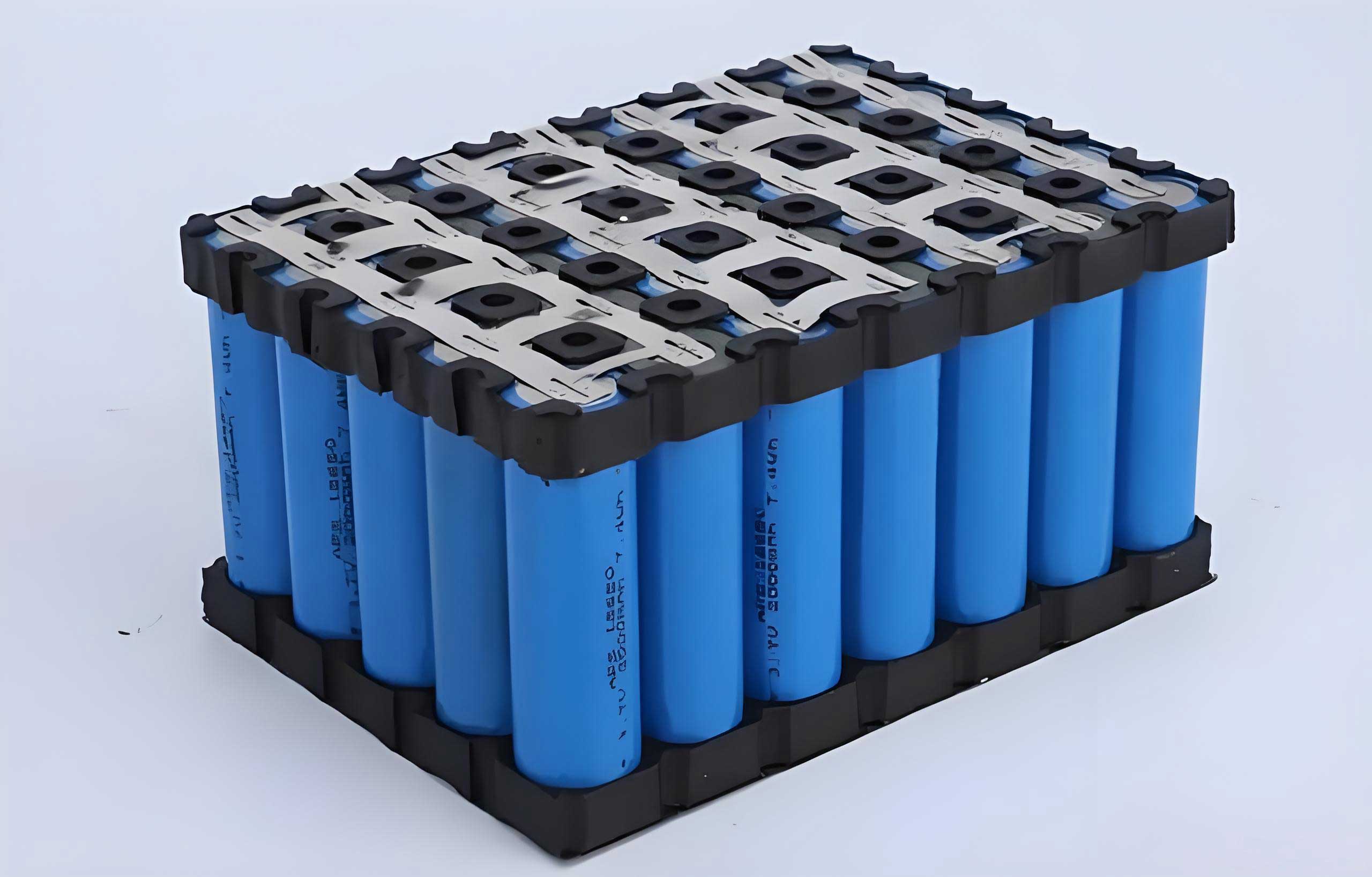
The LiFePO4 battery operates based on the reversible intercalation and de-intercalation of lithium ions between the LiFePO4 cathode and graphite anode. The fundamental reactions are as follows:
Cathode reaction: $$\text{LiFePO}_4 \leftrightarrow \text{Li}_{1-x}\text{FePO}_4 + x\text{Li}^+ + xe^-$$
Anode reaction: $$\text{C}_6 + x\text{Li}^+ + xe^- \leftrightarrow \text{Li}_x\text{C}_6$$
Overall reaction: $$\text{LiFePO}_4 + 6\text{C} \leftrightarrow \text{Li}_{1-x}\text{FePO}_4 + \text{Li}_x\text{C}_6$$
During charging, lithium ions extract from the LiFePO4 cathode, migrate through the electrolyte, and insert into the graphite anode, while electrons flow via the external circuit. Discharging reverses this process, releasing stored energy. The stable olivine structure of LiFePO4 and layered graphite contribute to the safety and durability of the LiFePO4 battery, making it a preferred choice for stationary energy storage.
To evaluate the performance of the LiFePO4 battery, experiments were conducted according to the national standard GB/T 36276-2023 for lithium-ion batteries used in electrical energy storage. The test object was a prismatic LiFePO4 battery with a nominal capacity of 314Ah and nominal voltage of 3.2V. The charge cutoff voltage was set at 3.65V, and discharge cutoff at 2.5V. Multiple batteries from the same batch with similar electrical characteristics were selected. Environmental temperature was precisely controlled using a thermal chamber, and high-precision temperature sensors (accuracy ±0.5°C) were attached to the center of the battery surface to monitor temperature variations. A battery testing system was employed for charge-discharge cycles. The experimental design included three main aspects:
- Temperature Tests: Three sets were configured at environmental temperatures of 25°C, 45°C, and 5°C. Following the standard method for initial charge-discharge performance, the LiFePO4 battery was subjected to initialization discharge, followed by 1P constant power charge and discharge until cutoff conditions.
- C-rate Tests: At an ambient temperature of (25±2)°C, the LiFePO4 battery was tested at constant power rates of 1P, 2P, and 4P, corresponding to standard rate and overload performance evaluations.
- C-rate-Temperature Tests: For the 2P rate group, two batteries were tested first at (25±2)°C and then at a slightly elevated temperature to observe the combined effects.
Data on voltage, current, energy, time, and surface temperature were recorded. The energy efficiency (η) was calculated as: $$\eta = \frac{E_{\text{discharge}}}{E_{\text{charge}}} \times 100\%$$ where \(E_{\text{discharge}}\) and \(E_{\text{charge}}\) are the discharge and charge energies, respectively. Incremental capacity analysis (ICA) was applied to derive dQ/dV versus voltage curves, revealing phase transition behaviors during charge and discharge of the LiFePO4 battery.
Impact of Temperature on LiFePO4 Battery Performance
The performance of the LiFePO4 battery is highly sensitive to temperature variations. At 1P constant power, the energy efficiency, voltage profiles, and thermal characteristics were analyzed across 5°C, 25°C, and 45°C environments. The results are summarized in Table 1.
| Parameter | Unit | 5°C | 25°C | 45°C |
|---|---|---|---|---|
| Charge Energy | Wh | 1005.1 | 1089.4 | 1101.7 |
| Discharge Energy | Wh | 828.3 | 1031.5 | 1074.2 |
| Energy Efficiency (η) | % | 82.4 | 94.7 | 97.5 |
| Max Charge Temperature | °C | 8.1 | 29.8 | 49.4 |
| Max Discharge Temperature | °C | 11.3 | 30.8 | 50.8 |
| Charge Temperature Rise | °C | 3.9 | 1.5 | 2.6 |
| Discharge Temperature Rise | °C | 4.9 | 2.8 | 2.5 |
The LiFePO4 battery exhibited the highest energy efficiency at 45°C (97.5%), with both charge and discharge energies increased. At 25°C, efficiency was 94.7%, while at 5°C, it dropped significantly to 82.4%, accompanied by reduced discharge energy. This decline is attributed to increased internal resistance and polarization at low temperatures. The voltage profiles showed that at 45°C and 25°C, the charge voltage plateaus were in the range of 3.35–3.45V, with a longer plateau at higher temperatures. At 5°C, the charge plateau shifted to 3.4–3.5V and shortened, indicating hindered lithium-ion kinetics. Similarly, discharge plateaus were lower and shorter at 5°C, reflecting limited performance of the LiFePO4 battery in cold conditions.
Temperature rise during operation is a critical indicator of thermal behavior. At 25°C and 45°C, temperature rises during charge and discharge were below 3°C, with discharge temperature rise slightly higher than charge at 25°C. At 5°C, however, temperature rises were more pronounced: 3.9°C for charge and 4.9°C for discharge. This suggests that at low temperatures, the LiFePO4 battery experiences greater polarization, leading to increased Joule heating. The reversal at 45°C, where charge temperature rise slightly exceeded discharge, indicates reduced polarization effects due to enhanced ionic conductivity.
The heat generation in a LiFePO4 battery primarily stems from reaction heat and polarization heat. Reaction heat is associated with the enthalpy change of lithium intercalation/de-intercalation, while polarization heat arises from ohmic, electrochemical, and concentration polarizations. The Butler-Volmer equation describes the electrochemical polarization: $$i = i_0 \left( \exp\left[\frac{\alpha_a F \eta}{RT}\right] – \exp\left[-\frac{\alpha_c F \eta}{RT}\right] \right)$$ where \(i\) is current density, \(i_0\) exchange current density, \(\alpha_a\) and \(\alpha_c\) charge transfer coefficients, \(F\) Faraday constant, \(\eta\) overpotential, \(R\) gas constant, and \(T\) absolute temperature. At low temperatures, \(i_0\) decreases, requiring higher overpotential to drive reactions, thus increasing polarization heat. Additionally, ohmic polarization \(\Delta E_{\text{ohmic}} = IR\) contributes directly to Joule heating, especially when internal resistance rises due to viscous electrolyte.
Incremental capacity analysis (ICA) further elucidates temperature effects. The dQ/dV versus voltage curves for charge and discharge are shown in Figure 3 (refer to visual data). At high temperatures, the ICA peaks shift to lower voltages during charge and higher voltages during discharge, indicating reduced polarization and enhanced reaction kinetics. For the LiFePO4 battery, characteristic peaks corresponding to phase transitions in graphite (e.g., staging reactions) become more distinct at elevated temperatures. At 5°C, peaks broaden and diminish, reflecting sluggish lithium diffusion and increased irreversibility. This aligns with the Arrhenius equation: $$k = A \cdot e^{-E_a/(RT)}$$ where \(k\) is reaction rate constant, \(E_a\) activation energy, \(A\) pre-exponential factor. Higher \(T\) reduces \(E_a\) barriers, accelerating charge transfer and diffusion processes in the LiFePO4 battery.
Impact of C-rate on LiFePO4 Battery Performance
The LiFePO4 battery demonstrated robust stability across different C-rates under constant power conditions. Voltage-energy profiles at 1P, 2P, and 4P are illustrated in Figure 4. The charge energy remained relatively consistent, but discharge energy decreased at higher rates due to increased polarization. Voltage plateaus during charge elevated with higher C-rates, while discharge plateaus lowered, a consequence of ohmic losses and concentration gradients. Table 2 summarizes key parameters.
| Parameter | Unit | 1P | 2P | 4P |
|---|---|---|---|---|
| Charge Energy | Wh | 1089.4 | 1109.4 | 1110.2 |
| Discharge Energy | Wh | 1031.5 | 993.2 | 920.8 |
| Energy Efficiency (η) | % | 94.7 | 89.5 | 82.9 |
| Max Charge Temperature | °C | 29.8 | 35.2 | 44.1 |
| Max Discharge Temperature | °C | 30.8 | 36.5 | 42.3 |
| Charge Temperature Rise | °C | 1.5 | 6.2 | 15.1 |
| Discharge Temperature Rise | °C | 2.8 | 7.5 | 13.3 |
At 1P, temperature rises were minimal (≤3°C), with discharge temperature rise slightly higher than charge, implying that lithium de-intercalation from graphite faces greater kinetic barriers than intercalation under low-current conditions. As C-rate increased to 4P, temperature rises surged, reaching 15.1°C for charge and 13.3°C for discharge. Notably, at 4P, charge temperature rise exceeded discharge, highlighting intensified polarization and side reactions during high-rate charging of the LiFePO4 battery. The heat generation scales with current density, primarily due to ohmic heating (\(I^2R\)) and increased polarization losses. The overall energy efficiency declined from 94.7% at 1P to 82.9% at 4P, underscoring the trade-off between power capability and efficiency in LiFePO4 battery operations.
ICA curves for different C-rates reveal peak broadening and shifting towards higher voltages during charge and lower voltages during discharge as rate increases. This is attributed to synergistic effects of polarizations: ohmic polarization elevates the entire voltage profile, electrochemical polarization impedes charge transfer at interfaces, and concentration polarization limits ion transport in bulk phases. For the LiFePO4 battery, the overlapping peaks at high C-rates indicate compromised resolution of phase transitions, consistent with accelerated kinetics and heightened irreversibility. The stability of voltage plateaus even at 4P suggests that the LiFePO4 battery can handle high-power demands, but thermal management becomes crucial to mitigate temperature rise and maintain safety.
Combined C-rate and Temperature Tests
To assess compliance with standard requirements, the LiFePO4 battery was tested at 2P constant power charge and discharge (2Prc-2Prd) under two ambient temperatures: 25°C and 26°C. According to GB/T 36276-2023, the energy efficiency should be ≥90.0% for this test. Results are presented in Table 3.
| Battery & Test | Ambient Temp (°C) | Charge Energy (Wh) | Discharge Energy (Wh) | Energy Efficiency (%) | Avg Charge Temp (°C) | Avg Discharge Temp (°C) |
|---|---|---|---|---|---|---|
| #1-1 | 25.0 | 1109.42 | 993.21 | 89.52 | 28.16 | 28.19 |
| #2-1 | 25.0 | 1105.39 | 986.61 | 89.25 | 25.93 | 26.04 |
| #1-2 | 26.0 | 1116.60 | 1014.60 | 90.87 | 29.25 | 29.85 |
| #2-2 | 26.0 | 1116.27 | 1016.10 | 91.03 | 29.18 | 30.13 |
At 25°C, energy efficiency fell slightly below 90%, whereas at 26°C, it met the standard. The increase in ambient temperature by 1°C improved discharge energy by approximately 2–3%, elevating efficiency. This enhancement stems from reduced internal resistance and polarization, allowing for a higher discharge voltage plateau and extended discharge duration. The discharge curves at 26°C showed prolonged plateaus compared to 25°C, confirming the positive temperature dependence of kinetics in the LiFePO4 battery. This subtle temperature sensitivity underscores the importance of thermal regulation in real-world applications, especially for rate-oriented energy storage systems where efficiency thresholds must be maintained.
Discussion on Thermal and Polarization Mechanisms
The performance variations of the LiFePO4 battery under different temperatures and C-rates can be comprehensively explained through thermal and electrochemical models. Heat generation (\(Q_{\text{gen}}\)) in a LiFePO4 battery during operation comprises reversible reaction heat (\(Q_{\text{rxn}}\)) and irreversible polarization heat (\(Q_{\text{pol}}\)): $$Q_{\text{gen}} = Q_{\text{rxn}} + Q_{\text{pol}}$$ where \(Q_{\text{rxn}}\) is related to entropy change \(\Delta S\) of electrode reactions, and \(Q_{\text{pol}}\) includes ohmic, electrochemical, and concentration components. For a LiFePO4 battery, the reversible heat is relatively small due to the minor entropy change in LiFePO4, making irreversible heat dominant, especially at high C-rates.
Ohmic heat is given by: $$Q_{\text{ohmic}} = I^2 R_i$$ where \(R_i\) is internal resistance, which increases at low temperatures and decreases at high temperatures. Electrochemical polarization heat correlates with overpotential \(\eta\): $$Q_{\text{electrochem}} = I \eta_{\text{act}}$$ where \(\eta_{\text{act}}\) is activation overpotential from the Butler-Volmer equation. Concentration polarization heat arises from diffusion limitations: $$Q_{\text{conc}} = I \eta_{\text{conc}}$$ with \(\eta_{\text{conc}}\) proportional to concentration gradients. At high C-rates, all polarization components amplify, leading to substantial heat generation and temperature rise in the LiFePO4 battery.
Temperature rise (\(\Delta T\)) affects battery performance reciprocally. Higher temperatures reduce viscosity of electrolyte, increase ionic conductivity (\(\sigma\)), and enhance diffusion coefficient (\(D\)) of lithium ions. The Nernst equation modified for polarization illustrates voltage deviations: $$E = E^0 – \frac{RT}{nF} \ln Q – \eta_{\text{ohmic}} – \eta_{\text{act}} – \eta_{\text{conc}}$$ where \(E^0\) is standard potential, \(Q\) reaction quotient, and \(n\) number of electrons. For the LiFePO4 battery, elevated temperatures minimize \(\eta_{\text{act}}\) and \(\eta_{\text{conc}}\), shifting voltage plateaus favorably. However, excessive temperatures accelerate degradation, emphasizing the need for optimal thermal management.
Incremental capacity analysis provides a diagnostic tool for state-of-health assessment. The area under ICA peaks corresponds to charge involved in phase transitions. For a LiFePO4 battery, main peaks represent two-phase coexistence in LiFePO4/FePO4 and staging transitions in graphite. Temperature and C-rate variations alter peak positions and areas, indicating changes in reaction kinetics and reversibility. Mathematical integration of ICA curves can quantify capacity fade mechanisms, aiding in predictive maintenance for energy storage systems using LiFePO4 battery technology.
Conclusions and Recommendations
This study systematically investigated the performance of a 314Ah LiFePO4 battery for electrical energy storage under varied temperature and C-rate conditions. Key findings are:
- Temperature Sensitivity: The LiFePO4 battery performs optimally at elevated temperatures (e.g., 45°C), achieving high energy efficiency (97.5%) and stable voltage plateaus. Low temperatures (5°C) severely limit performance, reducing efficiency to 82.4% and increasing temperature rise due to heightened polarization. The Arrhenius behavior underscores the importance of maintaining moderate operating temperatures for LiFePO4 battery systems.
- C-rate Stability: The LiFePO4 battery exhibits good stability across C-rates, with flat voltage plateaus even at 4P. However, high C-rates induce significant polarization and temperature rise, particularly during charging. Energy efficiency declines from 94.7% at 1P to 82.9% at 4P, necessitating thermal control for high-power applications.
- Combined Effects: A slight temperature increase (e.g., from 25°C to 26°C) can improve energy efficiency at 2P operation, meeting standard requirements. This highlights the interplay between temperature and rate in determining the efficiency threshold of LiFePO4 battery systems.
- Thermal Management Insights: At low C-rates, discharge temperature rise slightly exceeds charge, but overall temperature rise is minimal (≤3°C). At high C-rates, charge temperature rise becomes more pronounced, suggesting that cooling strategies should prioritize charging phases in rate-type energy storage systems. For LiFePO4 battery deployments in cold climates, auxiliary heating may be required to prevent performance degradation.
Practical recommendations for energy storage system design with LiFePO4 battery include:
- Implement adaptive thermal management systems that adjust cooling/heating based on operational C-rate and ambient temperature.
- Optimize battery management system (BMS) algorithms to limit C-rates during extreme temperatures, balancing power demand and battery health.
- Consider cell-level thermoelectric materials or advanced cooling techniques (e.g., liquid cooling) for high-power LiFePO4 battery packs to suppress temperature rise.
- For longevity, operate LiFePO4 battery within a temperature range of 15–35°C and avoid sustained high C-rates (>2P) without adequate cooling.
Future research could explore long-term cycling effects under combined stress conditions, degradation modeling using ICA, and integration of LiFePO4 battery with hybrid energy storage systems. The robust performance of LiFePO4 battery under varied conditions confirms its suitability for scalable energy storage, contributing to grid stability and renewable energy integration.
In summary, the LiFePO4 battery demonstrates a favorable balance of safety, efficiency, and cost, but its performance is intricately linked to temperature and C-rate. By leveraging the insights from this study, stakeholders can enhance the design and operation of energy storage systems, ensuring reliability and economic viability in diverse applications. The continuous advancement in LiFePO4 battery technology will further solidify its role in the global transition to sustainable energy.