
With the rapid development of electric vehicles, the demand for reliable and safe energy storage systems has surged. Among various battery technologies, the LiFePO4 battery stands out due to its high energy density, excellent safety profile, and environmental friendliness. However, the degradation of LiFePO4 batteries over time poses significant challenges, particularly in terms of state of health (SOH) estimation. Accurate SOH assessment is crucial for preventing overcharging or overdischarging, which can accelerate battery aging and even lead to thermal runaway incidents. Traditional methods, such as those relying solely on internal resistance or data-driven models, often suffer from inaccuracies and poor adaptability in real-world applications. In this paper, we propose a comprehensive online assessment method for the health status of LiFePO4 batteries based on multiple equivalent health factors under an optimized charging voltage segment. This approach aims to enhance estimation precision and robustness during the charging process, which is more controllable and stable compared to discharge cycles.
The core idea of our method is to leverage multiple health indicators—charge capacity, charging time, and internal impedance—within an optimized voltage segment during constant-current charging. By integrating these factors, we can capture different aspects of battery degradation and provide a more holistic SOH estimate. The optimization of the charging voltage segment is achieved using a genetic algorithm, which minimizes the error between estimated and actual battery capacities. This optimized segment ensures that the selected health factors exhibit strong correlations with the true SOH, thereby improving the overall assessment accuracy. Below, we detail the methodology, experimental validation, and results, emphasizing the advantages of our multi-factor approach over single-factor methods.
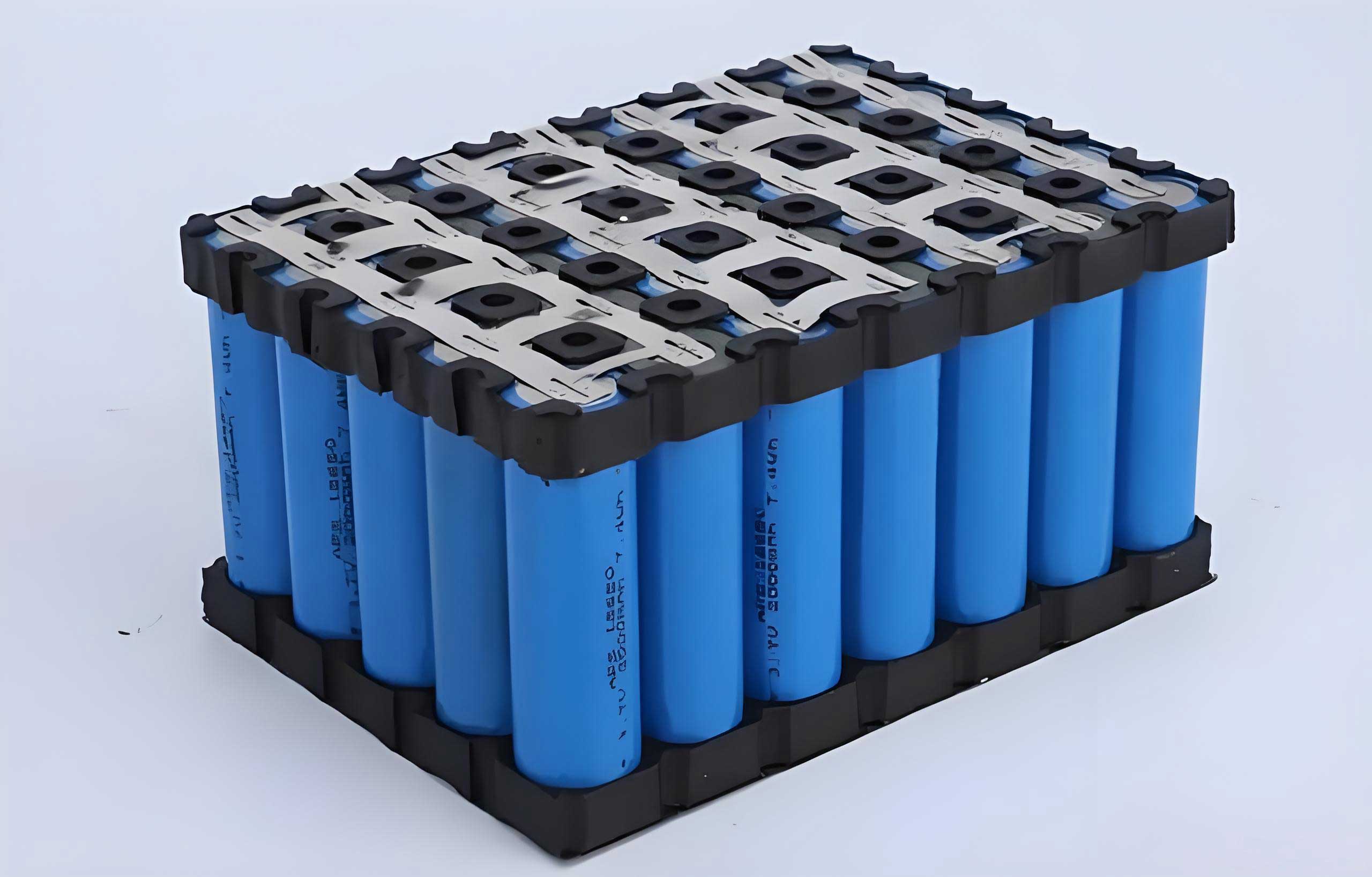
The health of a LiFePO4 battery is often defined in terms of its capacity fade or impedance increase over cycles. SOH is typically expressed as a percentage, comparing the current capacity or impedance to their initial values. For instance, based on capacity, SOH can be defined as:
$$ \text{SOH}_C = \frac{C_{\text{current}}}{C_{\text{initial}}} \times 100\% $$
where \( C_{\text{current}} \) is the current available capacity and \( C_{\text{initial}} \) is the nominal capacity. Alternatively, using internal resistance, SOH can be defined as:
$$ \text{SOH}_R = \frac{R_{\text{end}} – R_{\text{current}}}{R_{\text{end}} – R_{\text{start}}} \times 100\% $$
where \( R_{\text{current}} \) is the current internal resistance, \( R_{\text{start}} \) is the resistance at the beginning of life, and \( R_{\text{end}} \) is the resistance at the end of life. However, relying on a single factor may not capture the complex degradation mechanisms of LiFePO4 batteries. Therefore, our method incorporates three health factors derived from an optimized charging voltage segment.
The first step in our approach is to identify the optimal charging voltage segment using a genetic algorithm. During constant-current charging, the voltage rises monotonically, and the amount of charge inserted within a specific voltage interval correlates with the battery’s total capacity. We define the voltage segment from \( U_A \) to \( U_B \), where \( U_A \) and \( U_B \) are the start and end voltages, respectively. The goal is to find the segment that minimizes the estimation error between the charge capacity within that segment and the actual battery capacity. The genetic algorithm is configured with a population size of 100, a stall limit of 60, a crossover rate of 0.6, and a mutation rate of 0.4. The objective function is the mean squared error between estimated and actual capacities across multiple battery cycles. The optimization constraints are set based on typical operating ranges for LiFePO4 batteries:
$$ 85\% U_N < U_A < 90\% U_N $$
$$ 90\% U_N < U_B < 95\% U_N $$
$$ 3\% U_N < U_B – U_A < 5\% U_N $$
where \( U_N \) is the nominal voltage of the LiFePO4 battery. This ensures the segment is within a practical SOC range (approximately 30% to 90%) where internal resistance variations are relatively stable. The optimization process yields an optimized segment \( U_A’ \) to \( U_B’ \), which is used for subsequent health factor extraction.
Based on the optimized voltage segment, we extract three health factors: charge capacity \( C_{AB} \), charging time \( t_{AB} \), and internal impedance \( r_0 \). Each factor is then normalized to represent an individual SOH estimate. For charge capacity, we establish a linear relationship between \( C_{AB} \) and the actual capacity \( C \) using data from training cycles. The linear model is:
$$ C = k \cdot C_{AB} + b $$
where \( k \) and \( b \) are coefficients obtained through linear regression. The SOH based on charge capacity, denoted as \( H_1 \), is calculated as:
$$ H_1 = \frac{C}{C_0} \times 100\% $$
where \( C_0 \) is the initial capacity. For charging time, we use a support vector regression (SVR) model to correlate \( t_{AB} \) with SOH. The model is trained on historical data, and the output is the SOH estimate \( H_2 \). The correlation between \( t_{AB} \) and SOH is validated using Pearson and Spearman indices, which for our optimized segment are above 0.98, indicating strong monotonic relationships. For internal impedance, we measure \( r_0 \) within the optimized segment using an AC injection method, which minimizes measurement errors. The SOH based on internal impedance, \( H_3 \), is computed as:
$$ H_3 = \frac{r_{\text{old}} – r_0}{r_{\text{old}} – r_{\text{new}}} \times 100\% $$
where \( r_{\text{old}} \) and \( r_{\text{new}} \) are reference resistances at end-of-life and beginning-of-life, respectively.
To combine these individual estimates into a comprehensive SOH, we use a weighted linear model:
$$ H = \alpha_1 H_1 + \alpha_2 H_2 + \alpha_3 H_3 $$
where \( \alpha_1, \alpha_2, \alpha_3 \) are weight coefficients optimized via the sequential minimal optimization (SMO) algorithm. The weights are constrained to be positive and sum to one, ensuring a convex combination. The optimization minimizes the mean squared error between the combined estimate \( H \) and the actual SOH derived from discharge capacity. The SMO algorithm iteratively solves the quadratic programming problem, yielding optimal weights that balance the contributions of each health factor.
To validate our method, we conducted cycle charge-discharge experiments on LiFePO4 batteries in a controlled environment. The batteries had a nominal capacity of 6.56 Ah and a nominal voltage of 3.2 V. The experiments were performed at 25°C using a battery test system. We collected data from multiple cycles, recording voltage, current, and time during charging. The actual SOH was calculated from discharge capacities as a reference. We compared our multi-factor method with a single-factor method based solely on internal resistance. The results are summarized in the following tables and analyses.
| Experiment No. | Optimized Voltage Segment \( U_A’ \) (V) | Optimized Voltage Segment \( U_B’ \) (V) |
|---|---|---|
| 1 | 3.10 | 3.29 |
| 2 | 3.11 | 3.31 |
| 3 | 3.12 | 3.28 |
| 4 | 3.09 | 3.29 |
| 5 | 3.10 | 3.28 |
| 6 | 3.13 | 3.30 |
The table above shows the optimized voltage segments obtained from the genetic algorithm for six different LiFePO4 batteries. All segments fall within the typical operating range, ensuring practical applicability. Using these segments, we extracted the health factors and computed the SOH estimates. The weights from the SMO optimization were \( \alpha_1 = 0.519 \), \( \alpha_2 = 0.326 \), and \( \alpha_3 = 0.155 \), indicating that charge capacity contributes the most to the combined estimate, followed by charging time and internal impedance.
We evaluated the accuracy of our method using root mean square error (RMSE) and mean absolute percentage error (MAPE). The formulas are:
$$ \text{RMSE} = \sqrt{\frac{1}{n} \sum_{i=1}^n (Z_i – \hat{Z}_i)^2} $$
$$ \text{MAPE} = \frac{1}{n} \sum_{i=1}^n \left| \frac{Z_i – \hat{Z}_i}{Z_i} \right| \times 100\% $$
where \( Z_i \) is the actual SOH and \( \hat{Z}_i \) is the estimated SOH. The comparison between our multi-factor method and the internal resistance single-factor method is shown below:
| Method | RMSE | MAPE (%) |
|---|---|---|
| Internal Resistance Single-Factor | 0.02285 | 2.179 |
| Optimized Multi-Factor | 0.01484 | 1.535 |
The results demonstrate that our method significantly reduces estimation errors. The maximum error for the multi-factor method was below 2.6%, with an average error under 1.7%, whereas the single-factor method had errors up to 4.1%. This improvement highlights the effectiveness of incorporating multiple health factors. Furthermore, the lower RMSE and MAPE values indicate better adaptability and robustness for online SOH assessment of LiFePO4 batteries.
The degradation of LiFePO4 batteries is influenced by various factors, including cycling conditions, temperature, and charge-discharge rates. Our method addresses this complexity by integrating diverse health indicators. The optimized voltage segment ensures that the indicators are extracted from a stable region, minimizing noise and enhancing correlation with SOH. The genetic algorithm efficiently searches for the best segment without requiring exhaustive experimentation, making the method suitable for real-time applications. Additionally, the use of SMO for weight optimization allows the model to adapt to different battery aging patterns, further improving accuracy.
In practical scenarios, such as electric vehicles, the charging process is often more accessible and consistent than discharge. Our method leverages this by focusing on charging data, which can be easily collected via onboard battery management systems. The online estimation of SOH enables proactive maintenance and prevents unsafe operating conditions. For instance, if the SOH drops below a threshold, the system can alert the user or limit charging currents to extend battery life. This is particularly important for LiFePO4 batteries, which are widely used in safety-critical applications.
To further illustrate the benefits, we analyzed the correlation between each health factor and the actual SOH. The charge capacity factor showed a linear correlation coefficient above 0.98, confirming its reliability. The charging time factor, though slightly less correlated, still provided valuable information, especially when combined with other factors. The internal impedance factor had the lowest correlation, which explains its smaller weight in the combined estimate. However, including it adds redundancy and helps capture impedance-related degradation modes, such as increased polarization resistance.
The implementation of our method involves several steps that can be automated in a BMS. First, during each charging cycle, the voltage and current are monitored to identify the optimized segment. Then, the charge capacity, charging time, and internal impedance are calculated. These values are fed into the pre-trained models to compute individual SOH estimates. Finally, the combined SOH is obtained using the optimized weights. The entire process requires minimal computational resources, making it feasible for embedded systems.
We also investigated the impact of temperature variations on our method. Since the experiments were conducted at a constant 25°C, future work could explore temperature compensation techniques. However, the optimized voltage segment may inherently reduce temperature sensitivity by focusing on a stable SOC range. Moreover, the multi-factor approach could be extended to include temperature as an additional health factor, further enhancing accuracy under varying environmental conditions.
In conclusion, our proposed method offers a significant advancement in online SOH estimation for LiFePO4 batteries. By optimizing the charging voltage segment and integrating multiple health factors, we achieve higher precision and stronger applicability compared to traditional single-factor methods. The experimental results validate the effectiveness, with errors reduced by over 30% in terms of MAPE. This approach not only improves battery management but also contributes to the safety and longevity of energy storage systems. As the adoption of LiFePO4 batteries continues to grow, such advanced assessment methods will play a crucial role in ensuring reliable performance.
The robustness of our method stems from its holistic view of battery health. Instead of relying on a single indicator, it synthesizes information from charge behavior, time dynamics, and impedance characteristics. This is especially relevant for LiFePO4 batteries, which exhibit complex aging mechanisms. The genetic algorithm optimization ensures that the selected voltage segment maximizes the informational content of the health factors. Meanwhile, the SMO-based weighting adapts to individual battery differences, providing personalized SOH estimates.
For future developments, we plan to integrate this method with machine learning techniques for predictive maintenance. By analyzing trends in the health factors over time, we could forecast remaining useful life (RUL) and optimize charging strategies. Additionally, the method could be adapted to other battery chemistries, such as lithium nickel manganese cobalt oxide (NMC) or lithium titanate (LTO), by re-optimizing the voltage segments and health factors. This would broaden the impact of our research across various energy storage applications.
In summary, the optimized multi-factor online assessment method represents a practical and accurate solution for monitoring the health of LiFePO4 batteries. It leverages readily available charging data, employs efficient optimization algorithms, and delivers reliable SOH estimates. We believe this approach will facilitate the widespread deployment of LiFePO4 batteries in electric vehicles, renewable energy systems, and other critical domains, ultimately contributing to a more sustainable and safe energy future.