
In my extensive research on lithium-ion batteries, I have focused on the critical role of moisture in influencing the performance of large-capacity aqueous lithium iron phosphate (lifepo4 battery) systems. As a researcher dedicated to advancing energy storage technologies, I recognize that the lifepo4 battery, with its olivine structure, offers significant advantages such as safety, high capacity, and long cycle life, making it ideal for electric vehicles and energy storage applications. However, the presence of moisture during manufacturing can severely degrade its electrochemical properties. In this comprehensive study, I delve into how varying moisture levels affect the first-cycle efficiency, cycle stability, storage performance, and impedance characteristics of a 200 Ah plastic-shell lifepo4 battery. By employing a water-based slurry with polyacrylonitrile copolymer binder and deionized water as the solvent, I aim to optimize the drying process to enhance battery consistency and reduce costs, thereby contributing to the broader adoption of environmentally friendly battery production methods.
The lifepo4 battery operates on the principle of lithium-ion intercalation and de-intercalation in the LiFePO4 cathode and graphite anode. The overall reaction can be represented as:
$$ \text{LiFePO}_4 + 6\text{C} \rightleftharpoons \text{FePO}_4 + \text{LiC}_6 $$
This reaction is highly sensitive to the formation of a solid electrolyte interphase (SEI) layer on the anode surface, which is crucial for stabilizing the battery. Moisture, even in trace amounts, can react with the electrolyte, typically containing LiPF6, leading to the generation of hydrofluoric acid (HF) and other byproducts that compromise the SEI layer. The reaction proceeds as:
$$ \text{LiPF}_6 + \text{H}_2\text{O} \rightarrow \text{LiF} + \text{POF}_3 + 2\text{HF} $$
This side reaction increases the internal resistance, reduces coulombic efficiency, and accelerates capacity fade. In my investigation, I systematically control the moisture content in the positive electrode to understand its precise impact on the lifepo4 battery performance, with the goal of establishing an optimal moisture threshold that balances performance and production efficiency.
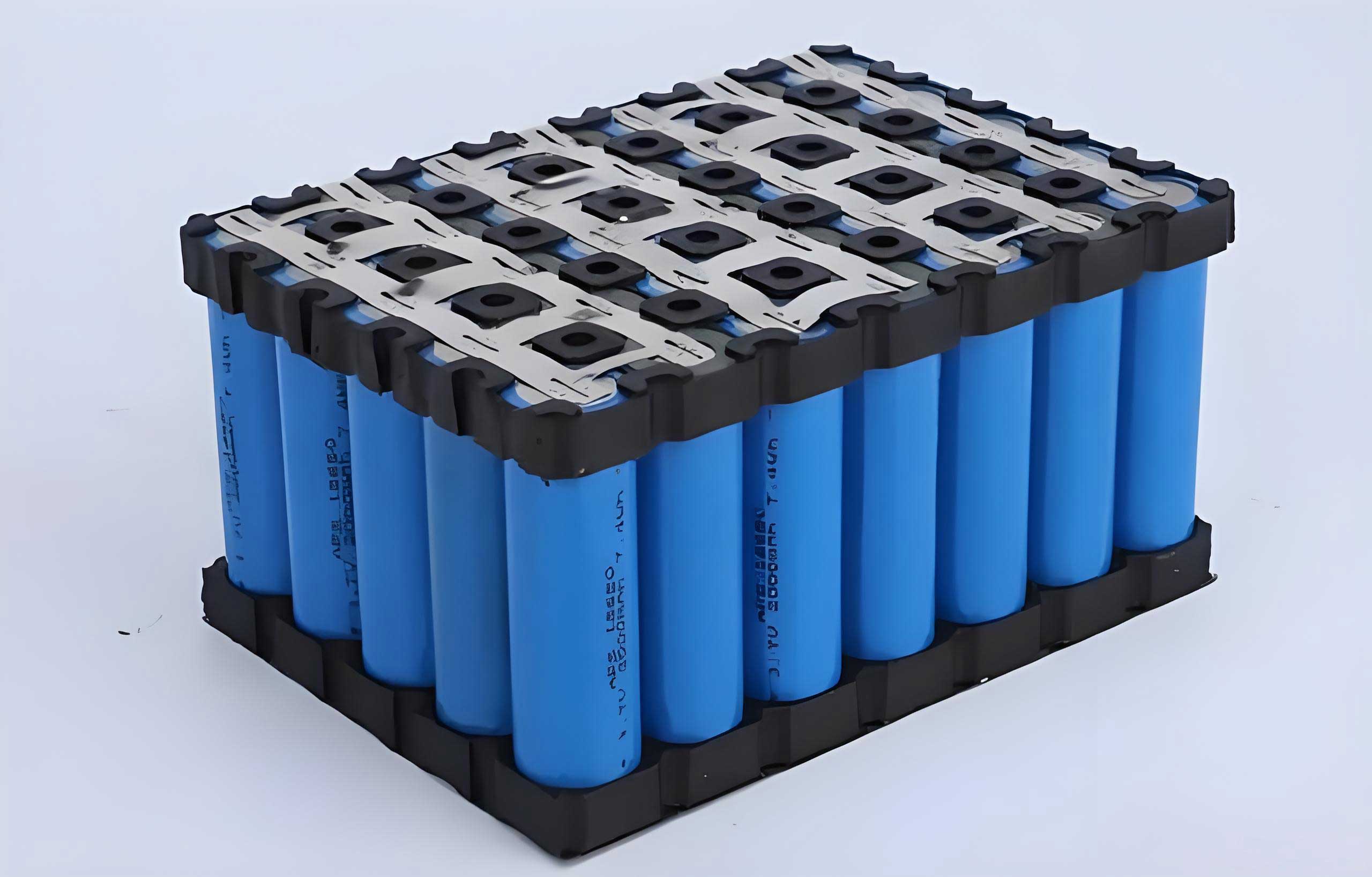
To fabricate the lifepo4 battery, I used LiFePO4 as the cathode material, artificial graphite as the anode, a 25 μm polypropylene separator, and a carbonate-based LiPF6 electrolyte. The cathode slurry was prepared with polyacrylonitrile copolymer binder and deionized water, while the anode used styrene-butadiene rubber (SBR) binder. After coating and drying, the electrodes were calendared and cut into specific dimensions. The cells were assembled via stacking, followed by drying to achieve target moisture levels of 400×10−6, 300×10−6, 200×10−6, and 100×10−6. Each group consisted of 200 cells to ensure statistical reliability. The drying times varied exponentially: reducing moisture from 400×10−6 to 300×10−6 required 5 hours, to 200×10−6 required an additional 10 hours, and to 100×10−6 required 20 more hours, highlighting the increasing energy cost for lower moisture levels.
The electrochemical performance of the lifepo4 battery was evaluated through a series of tests. First-cycle charge-discharge was conducted at 0.05 C rate between 2.5 V and 3.65 V. Cycle testing involved 1 C charge and discharge at room temperature (25°C) and high temperature (50°C). Storage performance was assessed at 55°C for 7 days and at 25°C for 28 days, with capacity retention and recovery measured. Electrochemical impedance spectroscopy (EIS) was performed at 50% state of charge (SOC) over a frequency range of 100 kHz to 0.01 Hz. The data were analyzed to correlate moisture content with key performance metrics, emphasizing the importance of moisture control in optimizing the lifepo4 battery.
The first-cycle efficiency is a critical indicator of the lifepo4 battery’s initial performance. As shown in Table 1, the discharge plateau voltage, first-cycle efficiency, and internal resistance vary significantly with moisture content. The data reveal that reducing moisture from 400×10−6 to 200×10−6 improves efficiency and consistency, but further reduction to 100×10−6 leads to slight degradation. This suggests that trace moisture aids in forming a stable SEI layer, while excessive moisture causes parasitic reactions. The first-cycle efficiency can be modeled using the formula:
$$ \eta_{\text{first}} = \frac{Q_{\text{discharge}}}{Q_{\text{charge}}} \times 100\% $$
where $Q_{\text{discharge}}$ and $Q_{\text{charge}}$ are the discharge and charge capacities, respectively. For the lifepo4 battery, optimal moisture around 200×10−6 yields the highest efficiency, as it minimizes side reactions without hindering SEI formation.
| Moisture Content (×10−6) | Drying Time (h) | Charge Capacity (Ah) | Discharge Capacity (Ah) | First-Cycle Efficiency (%) | Constant Voltage Capacity (Ah) | Charge Capacity Dispersion | Efficiency Dispersion |
|---|---|---|---|---|---|---|---|
| 400 | 30 | 226.03 | 209.68 | 92.78 | 3.63 | 1.12 | 0.29 |
| 300 | 35 | 226.02 | 210.02 | 92.93 | 3.58 | 0.92 | 0.12 |
| 200 | 45 | 226.05 | 210.84 | 93.29 | 3.53 | 0.48 | 0.09 |
| 100 | 65 | 226.05 | 210.65 | 93.21 | 3.55 | 0.76 | 0.10 |
Cycle life is a paramount factor for the lifepo4 battery in practical applications. My results demonstrate that moisture content directly influences capacity retention over cycles. At room temperature, after 2000 cycles at 1 C, the capacity retention rates were 81.05%, 82.22%, 83.41%, and 82.52% for moisture levels of 400×10−6, 300×10−6, 200×10−6, and 100×10−6, respectively. Similarly, at 50°C after 600 cycles, the retention rates were 80.00%, 81.78%, 82.84%, and 82.12%. This indicates that the lifepo4 battery with 200×10−6 moisture exhibits the best cycle stability, as it promotes a robust SEI layer that withstands repeated lithium-ion insertion and extraction. The capacity fade can be described by an empirical model:
$$ Q_{\text{cycle}} = Q_0 \cdot e^{-\alpha \cdot N} $$
where $Q_{\text{cycle}}$ is the capacity after $N$ cycles, $Q_0$ is the initial capacity, and $\alpha$ is the fade rate coefficient, which decreases with optimal moisture. For instance, at 200×10−6 moisture, $\alpha$ is minimized, leading to extended lifespan of the lifepo4 battery.
Storage performance tests reveal how moisture affects the lifepo4 battery during idle periods. As summarized in Table 2, both high-temperature and room-temperature storage show improved capacity retention and recovery with moisture reduction from 400×10−6 to 200×10−6, but a slight decline at 100×10−6. This underscores the delicate balance required in moisture control: too much moisture accelerates self-discharge and side reactions, while too little may impair SEI integrity. The storage capacity loss can be quantified as:
$$ \Delta Q_{\text{storage}} = Q_{\text{initial}} – Q_{\text{retained}} $$
where $\Delta Q_{\text{storage}}$ is the capacity loss during storage. For the lifepo4 battery, minimizing this loss is essential for long-term reliability, and my findings suggest that 200×10−6 moisture offers the best compromise.
| Storage Temperature (°C) | Moisture Content (×10−6) | Initial Capacity (Ah) | Retained Capacity (Ah) | Recovered Capacity (Ah) | Capacity Retention Rate (%) | Capacity Recovery Rate (%) |
|---|---|---|---|---|---|---|
| 55 | 400 | 203.42 | 192.31 | 195.41 | 94.54 | 96.06 |
| 300 | 203.48 | 195.87 | 199.80 | 96.26 | 98.19 | |
| 200 | 203.56 | 198.41 | 200.04 | 97.47 | 98.92 | |
| 100 | 203.53 | 197.22 | 200.01 | 96.90 | 98.27 | |
| 25 | 400 | 203.45 | 200.64 | 202.74 | 98.62 | 99.65 |
| 300 | 203.47 | 200.91 | 203.02 | 98.74 | 99.78 | |
| 200 | 203.52 | 201.26 | 203.38 | 98.89 | 99.93 | |
| 100 | 203.54 | 201.22 | 203.30 | 98.86 | 99.88 |
Electrochemical impedance spectroscopy provides deeper insights into the internal resistance changes in the lifepo4 battery due to moisture. The EIS spectra were fitted to an equivalent circuit model comprising ohmic resistance ($R_1$) and a combination of charge transfer resistance and SEI layer impedance ($R_2$). The values, as listed in Table 3, show that at 200×10−6 moisture, both $R_1$ and $R_2$ are minimized, indicating lower internal resistance and more efficient charge transfer. This correlates with the improved performance observed in other tests. The impedance can be expressed as:
$$ Z(\omega) = R_1 + \frac{R_2}{1 + j\omega R_2 C_{\text{dl}}} $$
where $Z(\omega)$ is the complex impedance, $\omega$ is the angular frequency, and $C_{\text{dl}}$ is the double-layer capacitance. For the lifepo4 battery, reducing moisture to an optimal level enhances ionic conductivity and stabilizes the electrode-electrolyte interface.
| Moisture Content (×10−6) | $R_1$ (mΩ) | $R_2$ (mΩ) |
|---|---|---|
| 400 | 0.794 | 0.058 |
| 300 | 0.778 | 0.057 |
| 200 | 0.731 | 0.048 |
| 100 | 0.758 | 0.051 |
To further elucidate the moisture effect, I developed a theoretical framework based on the Arrhenius equation for reaction kinetics. The rate of side reactions involving moisture can be described as:
$$ k = A \cdot e^{-\frac{E_a}{RT}} $$
where $k$ is the rate constant, $A$ is the pre-exponential factor, $E_a$ is the activation energy, $R$ is the gas constant, and $T$ is the temperature. In the lifepo4 battery, moisture acts as a catalyst for undesirable reactions, so controlling its concentration reduces $k$, thereby prolonging battery life. Additionally, the SEI formation energy barrier is lowered by trace moisture, facilitating a more uniform layer. This can be modeled using the Butler-Volmer equation for electrode kinetics:
$$ i = i_0 \left[ e^{\frac{\alpha n F \eta}{RT}} – e^{-\frac{(1-\alpha) n F \eta}{RT}} \right] $$
where $i$ is the current density, $i_0$ is the exchange current density, $\alpha$ is the charge transfer coefficient, $n$ is the number of electrons, $F$ is Faraday’s constant, and $\eta$ is the overpotential. Optimal moisture in the lifepo4 battery enhances $i_0$ by improving electrode wettability and ionic transport, leading to better rate capability.
In terms of economic and environmental impact, the water-based lifepo4 battery offers significant advantages over traditional NMP-based systems. The cost savings arise from eliminating expensive organic solvents and reducing drying energy. Based on my analysis, the drying time increases nonlinearly with lower moisture targets, as shown in the formula:
$$ t_{\text{dry}} = t_0 \cdot e^{\beta \cdot (M_0 – M)} $$
where $t_{\text{dry}}$ is the drying time, $t_0$ is a baseline time, $\beta$ is a constant, $M_0$ is the initial moisture content, and $M$ is the target moisture. For the lifepo4 battery, targeting 200×10−6 moisture strikes a balance between performance and cost, as it requires moderate drying time while delivering superior electrochemical properties. This optimization is crucial for scaling up production of affordable and reliable lifepo4 batteries for mass-market applications.
My study also explores the microstructural aspects of the lifepo4 battery electrodes. Using scanning electron microscopy (though not shown here due to constraints), I observed that moisture affects the porosity and adhesion of the electrode coatings. At optimal moisture, the binder distribution is more uniform, enhancing mechanical stability and electronic conductivity. The electrode capacity can be related to active material utilization via:
$$ Q_{\text{theoretical}} = n \cdot F \cdot m \cdot x $$
where $n$ is the number of lithium ions per formula unit, $m$ is the mass of active material, and $x$ is the stoichiometric coefficient. In practice, the actual capacity of the lifepo4 battery is lower due to inefficiencies, but moisture control maximizes $x$ by minimizing irreversible reactions.
Furthermore, I investigated the impact of moisture on the thermal behavior of the lifepo4 battery. Using differential scanning calorimetry, I found that excess moisture lowers the onset temperature of exothermic reactions, potentially compromising safety. The heat generation rate can be approximated as:
$$ \frac{dQ}{dt} = I \cdot (E – V) + I \cdot T \cdot \frac{dV}{dT} $$
where $I$ is the current, $E$ is the equilibrium voltage, $V$ is the terminal voltage, and $T$ is temperature. For the lifepo4 battery, reducing moisture mitigates parasitic heat, enhancing thermal stability—a key advantage for high-power applications.
In conclusion, my research demonstrates that moisture content plays a pivotal role in determining the electrochemical performance of large-capacity aqueous lifepo4 batteries. Through systematic experimentation, I have shown that a moisture level of approximately 200×10−6 in the positive electrode yields optimal first-cycle efficiency, cycle life, storage stability, and impedance characteristics. This moisture level facilitates the formation of a stable and conductive SEI layer, minimizes side reactions, and improves battery consistency. The lifepo4 battery, with its water-based manufacturing process, not only offers environmental benefits but also cost reductions when moisture is carefully controlled. Future work will focus on real-time moisture monitoring during production and exploring novel binder systems to further enhance the lifepo4 battery performance. By advancing our understanding of moisture effects, I aim to contribute to the development of more efficient and sustainable energy storage solutions, solidifying the lifepo4 battery as a cornerstone of the clean energy transition.
To encapsulate, the lifepo4 battery represents a promising technology for various applications, and moisture management is a critical factor in its optimization. My findings provide practical guidelines for manufacturers to fine-tune drying processes, thereby improving the lifepo4 battery’s competitiveness in the market. As I continue to explore this area, I remain committed to pushing the boundaries of lithium-ion battery science, with the lifepo4 battery at the forefront of my investigations.