
In recent years, the growing concerns over energy shortages and environmental pollution have driven significant advancements in energy storage technologies. Among these, lithium-ion batteries have emerged as a cornerstone due to their high energy density, long cycle life, and eco-friendliness, finding widespread applications in consumer electronics, electric vehicles, and grid storage systems. Specifically, lithium iron phosphate (LiFePO4) batteries have gained prominence for their safety, stability, and cost-effectiveness. However, optimizing the performance of LiFePO4 batteries remains a critical challenge, with one key parameter being the negative-to-positive capacity ratio (N/P ratio). This ratio, defined as the capacity of the negative electrode relative to the positive electrode, plays a pivotal role in determining battery efficiency, rate capability, and longevity. In this article, we explore how varying N/P ratios impact the electrochemical properties of LiFePO4 batteries, drawing on experimental data to provide insights for battery design and development.
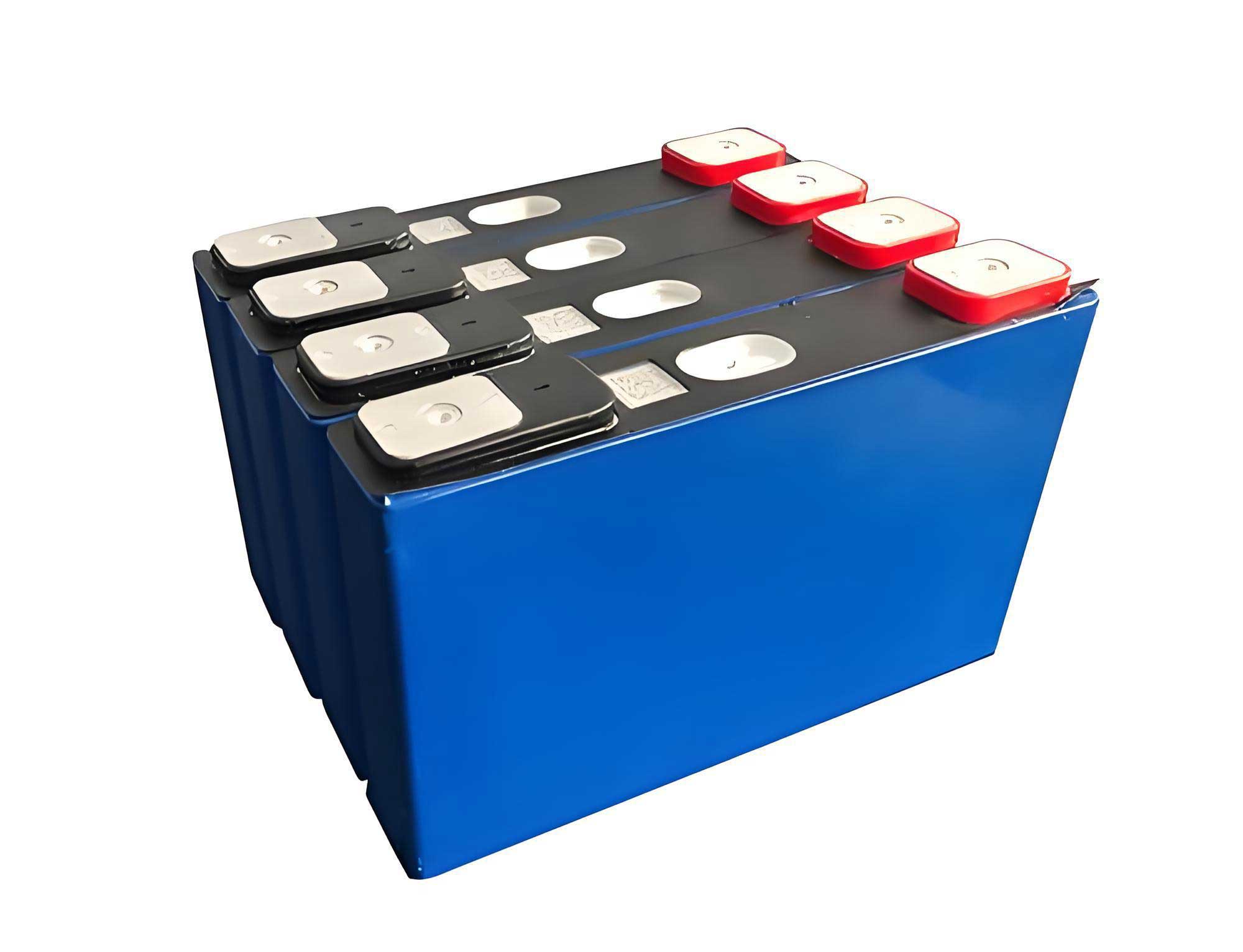
The N/P ratio is a fundamental design parameter in lithium-ion batteries, including LiFePO4 battery systems. It influences the balance of lithium-ion intercalation and de-intercalation during charge-discharge cycles. An optimal N/P ratio ensures sufficient lithium storage in the negative electrode to prevent lithium plating, which can lead to safety hazards like thermal runaway, while avoiding excessive inactive material that reduces energy density. Typically, the N/P ratio is calculated based on the reversible capacities of the electrodes, accounting for factors such as coulombic efficiency and active material content. For a LiFePO4 battery, the positive electrode uses LiFePO4 as the active material, while the negative electrode employs graphite. The N/P ratio can be expressed mathematically as:
$$ N/P = \frac{C_{1,\text{neg}}}{C_{1,\text{pos}} \cdot \eta_{1,\text{neg}} \cdot \eta_{2,\text{neg}} \cdot \eta_{3,\text{neg}}} $$
where \( C_{1,\text{neg}} \) is the reversible capacity per unit area of the negative electrode at 0.1 C rate, \( C_{1,\text{pos}} \) is the initial charge capacity per unit area of the positive electrode at 0.1 C rate, and \( \eta_{1,\text{neg}}, \eta_{2,\text{neg}}, \eta_{3,\text{neg}} \) are the coulombic efficiencies of the negative electrode material in coin cells during the first, second, and third cycles, respectively. This formula highlights the importance of electrode characteristics in defining the N/P ratio for LiFePO4 battery configurations.
In our study, we fabricated soft-pack LiFePO4 batteries with a nominal capacity of 1.6 Ah using a stacking process. The positive electrode consisted of LiFePO4, conductive additives (carbon black and carbon nanotubes), and polyvinylidene fluoride (PVDF) binder coated on carbon-coated aluminum foil. The negative electrode comprised artificial graphite, carboxymethyl cellulose sodium (CMC), and styrene-butadiene rubber (SBR) coated on copper foil. We prepared four groups of batteries with N/P ratios of 1.02, 1.06, 1.10, and 1.14 by adjusting the negative electrode areal density while keeping the positive electrode constant. The electrolyte was 1 M LiPF6 in a mixture of ethylene carbonate (EC), dimethyl carbonate (DMC), and ethyl methyl carbonate (EMC) in a 1:1:1 volume ratio. After assembly, the cells were subjected to formation, aging, and electrochemical testing to evaluate performance metrics such as first-cycle efficiency, rate capability, direct current resistance (DCR), high-low temperature discharge, and cycle life at 45°C. All tests were conducted under controlled conditions to ensure reproducibility, and we analyzed the data to draw conclusions about the optimal N/P ratio for LiFePO4 battery applications.
The first-cycle efficiency, often referred to as the initial coulombic efficiency, is a critical indicator of battery performance, reflecting the loss of lithium ions due to solid electrolyte interphase (SEI) formation and other irreversible reactions. For LiFePO4 batteries, we calculated the first-cycle efficiency using the formula:
$$ \eta = \frac{Q_1}{q_1 + q_2} $$
where \( Q_1 \) is the discharge capacity in the first cycle at 0.2 C rate during capacity grading, \( q_1 \) is the charge capacity during formation, and \( q_2 \) is the charge capacity in the first cycle at 0.2 C rate. Our results, summarized in Table 1, show a clear trend: as the N/P ratio increases, the first-cycle efficiency decreases. This is attributed to the higher amount of negative electrode material, which leads to greater consumption of lithium ions for SEI formation, reducing the reversible lithium available for cycling. This phenomenon underscores the trade-off between N/P ratio and initial efficiency in LiFePO4 battery design.
| N/P Ratio | First-Cycle Efficiency (%) | Observations |
|---|---|---|
| 1.02 | 90.57 | Highest efficiency due to minimal lithium loss |
| 1.06 | 89.85 | Moderate efficiency, balanced design |
| 1.10 | 89.45 | Lower efficiency, increased SEI formation |
| 1.14 | 89.23 | Lowest efficiency, significant lithium consumption |
Rate capability is another crucial aspect of LiFePO4 battery performance, especially for applications requiring fast charging and discharging. We evaluated the charge and discharge rate performance by measuring the constant current ratio during charging and the capacity retention rate during discharging at various C-rates. The constant current ratio is defined as the proportion of capacity charged at a constant current relative to the total charge capacity, while the discharge capacity retention rate is the ratio of discharge capacity at a given rate to that at 0.1 C. Figure 2(a) in the experimental data illustrates that as the charge current increases, the constant current ratio decreases due to heightened polarization. However, for LiFePO4 batteries with higher N/P ratios (e.g., 1.10 and 1.14), the constant current ratio at 2 C charging is significantly higher compared to lower N/P ratios (e.g., 1.02 and 1.06). Specifically, at 2 C charging, the constant current ratio was 88.25% for N/P 1.14, but only 67.12% for N/P 1.02, indicating a nearly 3-minute difference in charging time. This improvement is likely due to the increased negative electrode areal density in higher N/P ratios, which provides more space for lithium-ion accommodation, thereby reducing polarization and enhancing charge acceptance. In contrast, the discharge capacity retention rate across different rates showed minimal variation with N/P ratio, as seen in Figure 2(b), suggesting that discharge rate performance is less sensitive to N/P adjustments in LiFePO4 battery systems.
To quantify the polarization effects, we measured the direct current resistance (DCR) during charge and discharge at 25°C. DCR is a key parameter reflecting internal resistance and polarization, calculated as:
For charging: $$ \text{Charge DCR} = \frac{V_1 – V_0}{I} $$
For discharging: $$ \text{Discharge DCR} = \frac{V_2 – V_3}{I} $$
where \( V_0 \) and \( V_2 \) are the open-circuit voltages after rest, \( V_1 \) and \( V_3 \) are the voltages after 10 seconds of constant current charge or discharge, and \( I \) is the current. Our findings, presented in Table 2, reveal that LiFePO4 batteries with N/P ratios of 1.10 and 1.14 exhibit lower charge DCR values, particularly at 30% and 60% state of charge (SOC), compared to those with N/P ratios of 1.02 and 1.06. For instance, at 60% SOC, the charge DCR for N/P 1.10 and 1.14 is approximately 47 mΩ, about 4 mΩ lower than the other groups. This reduction in charge DCR implies reduced polarization during high-rate charging and low-temperature operations, contributing to better performance. On the other hand, discharge DCR showed consistent trends across all N/P ratios, indicating that discharge polarization is largely independent of N/P variations in LiFePO4 battery configurations.
| N/P Ratio | Charge DCR at 30% SOC (mΩ) | Charge DCR at 60% SOC (mΩ) | Discharge DCR at 30% SOC (mΩ) | Discharge DCR at 60% SOC (mΩ) |
|---|---|---|---|---|
| 1.02 | 52.1 | 51.3 | 48.5 | 47.8 |
| 1.06 | 50.8 | 50.0 | 47.9 | 47.2 |
| 1.10 | 48.2 | 47.5 | 48.0 | 47.3 |
| 1.14 | 47.5 | 46.9 | 47.8 | 47.1 |
Temperature performance is vital for LiFePO4 batteries operating in diverse environments. We assessed the discharge capacity retention rate at 0°C and 55°C, normalized to the capacity at 25°C and 1 C rate. At 0°C, as shown in Figure 4(a), all LiFePO4 battery groups exhibited capacity retention below 100% due to decreased ionic conductivity of the electrolyte and increased Li+ migration barriers. However, higher N/P ratios led to improved capacity retention; for example, N/P 1.14 showed around 85% retention, while N/P 1.02 was near 80%. This enhancement can be attributed to the larger negative electrode buffer in high N/P ratios, which mitigates polarization under low-temperature conditions. At 55°C, as depicted in Figure 4(b), capacity retention exceeded 100% for all groups, ranging from 104% to 105%, with negligible differences across N/P ratios. The increased ionic conductivity at elevated temperatures boosts Li+ mobility, but the N/P ratio does not significantly influence this effect in LiFePO4 battery systems. These results highlight the importance of N/P tuning for low-temperature applications while indicating its limited role in high-temperature discharge.
Cycle life is a defining factor for the longevity and reliability of LiFePO4 batteries. We conducted cycle tests at 45°C, charging and discharging at 1 C rate, and monitored capacity retention over 1000 cycles. The capacity retention rate is calculated as the ratio of discharge capacity at a given cycle to the initial capacity. As illustrated in Figure 5, capacity fade occurred gradually across all groups, but LiFePO4 batteries with N/P ratios of 1.10 and 1.14 demonstrated superior retention compared to those with lower N/P ratios. After 1000 cycles, the capacity retention was 91.8% for N/P 1.10, while N/P 1.02 dropped to 88.3%. This disparity stems from the risk of lithium plating at low N/P ratios, which accelerates degradation through SEI growth and active material loss. Conversely, higher N/P ratios provide a safety margin against lithium depletion, though excessive ratios may increase irreversible reactions. Thus, an N/P ratio around 1.10 appears optimal for balancing cycle life and energy density in LiFePO4 battery designs.
To further analyze the interplay between N/P ratio and battery performance, we can model the relationship using empirical equations. For instance, the dependence of first-cycle efficiency on N/P ratio can be approximated by a linear decay function:
$$ \eta_{\text{first}} = \alpha – \beta \cdot (N/P) $$
where \( \alpha \) and \( \beta \) are constants derived from experimental data. Similarly, the charge DCR at a given SOC might follow a power-law relation with N/P ratio, reflecting reduced polarization at higher ratios. These mathematical models aid in predicting battery behavior and optimizing N/P for specific applications. Additionally, the energy density of a LiFePO4 battery is inversely related to the N/P ratio, as a higher ratio implies more negative electrode material, increasing weight and volume. The gravimetric energy density \( E_g \) can be expressed as:
$$ E_g = \frac{C_{\text{pos}} \cdot V_{\text{avg}}}{m_{\text{cell}}} $$
where \( C_{\text{pos}} \) is the positive electrode capacity, \( V_{\text{avg}} \) is the average discharge voltage, and \( m_{\text{cell}} \) is the total cell mass. Since the negative electrode mass scales with N/P ratio, adjusting it involves trade-offs between energy density and performance metrics like cycle life and rate capability.
In practical terms, designing a LiFePO4 battery requires careful consideration of the N/P ratio based on application needs. For electric vehicles, where fast charging and long cycle life are prioritized, an N/P ratio of 1.10 may be ideal, as it offers low charge DCR, good low-temperature performance, and high cycle retention. For stationary storage, where energy density is less critical, a higher N/P ratio like 1.14 could enhance safety and longevity. Our experimental data, summarized in Table 3, provides a comprehensive comparison of key performance indicators across different N/P ratios, serving as a guideline for battery engineers.
| Performance Metric | N/P 1.02 | N/P 1.06 | N/P 1.10 | N/P 1.14 | Optimal N/P |
|---|---|---|---|---|---|
| First-Cycle Efficiency | High (90.57%) | Moderate (89.85%) | Lower (89.45%) | Low (89.23%) | 1.02 for efficiency |
| Charge Rate (2 C Constant Current Ratio) | 67.12% | 75.30% | 84.50% | 88.25% | 1.14 for fast charging |
| Discharge Rate (3 C Capacity Retention) | ~95% | ~95% | ~96% | ~96% | All similar |
| Charge DCR at 60% SOC | 51.3 mΩ | 50.0 mΩ | 47.5 mΩ | 46.9 mΩ | 1.14 for low polarization |
| 0°C Discharge Capacity Retention | ~80% | ~82% | ~84% | ~85% | 1.14 for low-temperature |
| 55°C Discharge Capacity Retention | ~104% | ~104% | ~105% | ~105% | All similar |
| 45°C Cycle Retention (1000 cycles) | 88.3% | 89.5% | 91.8% | 90.9% | 1.10 for cycle life |
Beyond these metrics, the N/P ratio also affects other aspects of LiFePO4 battery behavior, such as thermal stability and safety. A higher N/P ratio can reduce the risk of lithium plating during overcharge or low-temperature charging, thereby improving safety—a critical advantage for LiFePO4 batteries known for their inherent stability. However, excessively high N/P ratios may lead to increased electrolyte decomposition and gas generation, potentially offsetting safety benefits. Future research could explore these trade-offs through accelerated aging tests and post-mortem analysis of electrode materials.
In conclusion, our investigation into the influence of N/P ratio on LiFePO4 battery performance reveals nuanced relationships across various electrochemical parameters. We found that increasing the N/P ratio from 1.02 to 1.14 reduces first-cycle efficiency due to greater lithium consumption but enhances charge rate capability, lowers charge DCR, improves low-temperature discharge, and extends cycle life at 45°C. Notably, an N/P ratio of 1.10 strikes a balance, offering excellent cycle retention (91.8% after 1000 cycles) alongside good rate and temperature performance. These insights underscore the importance of tailored N/P design in optimizing LiFePO4 batteries for specific applications, whether in electric mobility or energy storage systems. As the demand for efficient and durable energy solutions grows, mastering parameters like the N/P ratio will be key to advancing LiFePO4 battery technology. We hope this work provides a valuable foundation for researchers and engineers seeking to harness the full potential of LiFePO4 batteries in a sustainable energy future.
To further elucidate these findings, we can derive generalized equations for performance prediction. For example, the cycle life \( L \) in cycles as a function of N/P ratio might be modeled as:
$$ L = L_0 \cdot \exp\left(-\gamma \cdot \frac{1}{N/P}\right) $$
where \( L_0 \) is a baseline cycle life and \( \gamma \) is a degradation constant. Similarly, the low-temperature capacity retention \( R_{LT} \) could be expressed as:
$$ R_{LT} = R_{\infty} + \frac{k}{N/P} $$
with \( R_{\infty} \) and \( k \) as fitting parameters. Such models, when calibrated with experimental data, enable proactive design adjustments for LiFePO4 battery systems. Additionally, we recommend integrating these results with multi-physics simulations to account for thermal and mechanical effects, further refining N/P ratio selection. Ultimately, the journey toward optimal LiFePO4 battery performance is iterative, blending empirical insights with theoretical frameworks to achieve energy storage solutions that are both high-performing and reliable.