
The widespread adoption of renewable energy sources and the global push for electrification have created an unprecedented demand for efficient, safe, and long-lasting energy storage solutions. Among the various technologies, lithium iron phosphate (LiFePO4 or LFP) batteries have emerged as a leading candidate, particularly for large-scale stationary energy storage systems (ESS). Their appeal lies in a favorable combination of high energy density, excellent thermal and chemical stability, intrinsic safety due to the strong P-O bond in the phosphate cathode material, and a relatively long cycle life. However, like all electrochemical systems, LiFePO4 batteries are subject to performance degradation over time and use, a process broadly termed “aging.” Understanding and quantifying this aging is paramount for designing reliable systems, accurately predicting lifespan for financial models, and implementing effective battery management strategies. This article, based on extensive research and literature review, delves into the fundamental aging mechanisms of LiFePO4 batteries, analyzes the key influencing factors, and discusses models for life prediction and characterization.
At its core, a LiFePO4 battery operates on the principle of reversible lithium-ion shuttling between electrodes. The cathode is composed of LiFePO4 olivine structure, the anode is typically graphite (C6), and the electrolyte is a lithium salt (e.g., LiPF6) dissolved in organic carbonates. During discharge, lithium ions de-intercalate from the graphite anode, travel through the electrolyte, and intercalate into the LiFePO4 cathode, while electrons flow through the external circuit providing power. The charging process reverses this flow. The key reactions are:
Cathode: LiFePO4 ⇌ FePO4 + Li+ + e–
Anode: C6 + Li+ + e– ⇌ LiC6
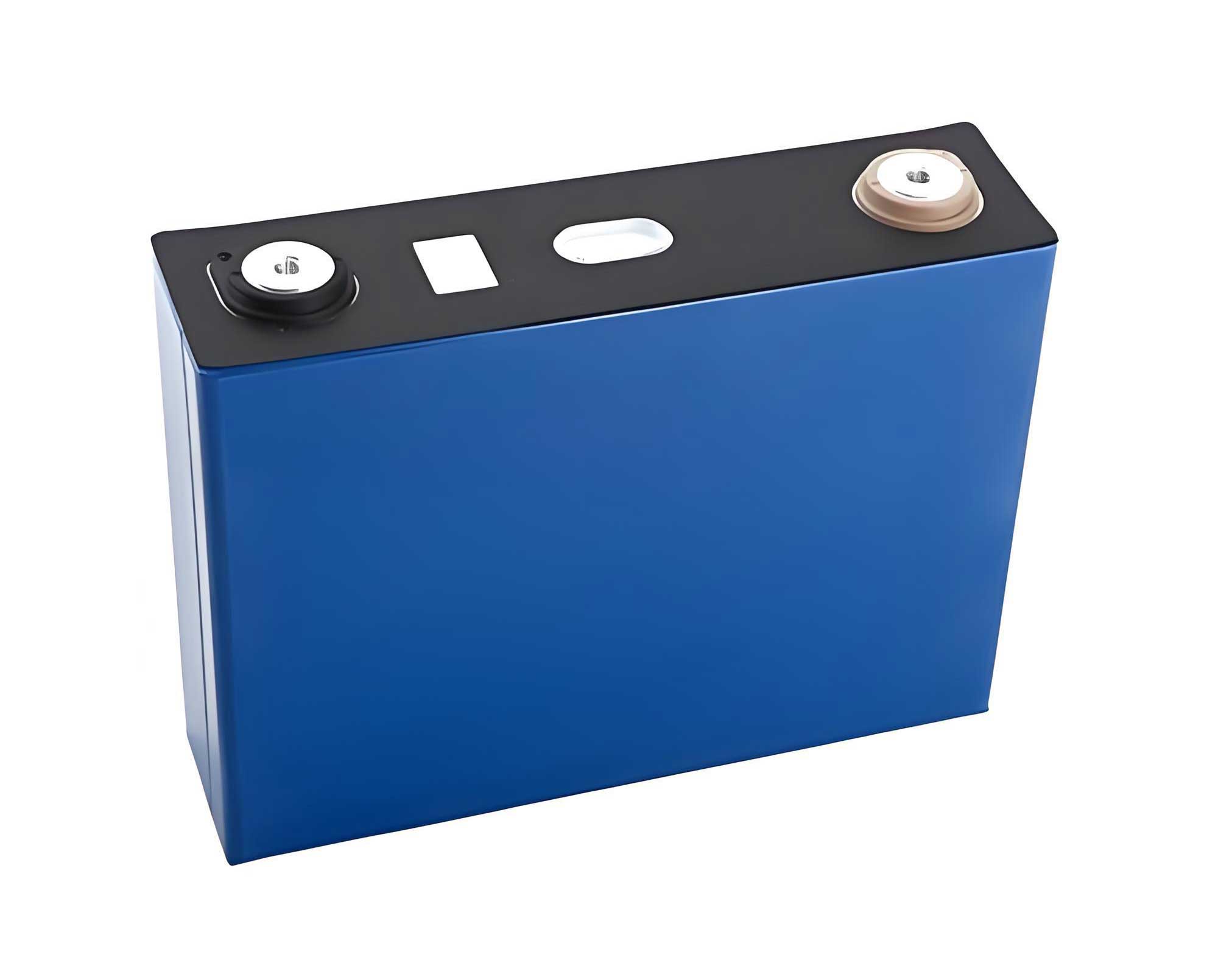
Degradation in a LiFePO4 battery manifests primarily as a gradual loss of usable capacity and an increase in internal resistance. These symptoms stem from three root causes: (1) Loss of Lithium Inventory (LLI), (2) Loss of Active Material (LAM), and (3) Increase in resistance. LLI is primarily attributed to the continuous growth and reformation of the Solid Electrolyte Interphase (SEI) layer on the graphite anode and, in extreme cases, lithium plating. LAM can occur due to structural disordering, particle cracking, or dissolution of active materials in either electrode. Resistance rise is often a consequence of SEI layer thickening, electrolyte degradation, and contact loss within the electrode structure. The aging of a LiFePO4 battery is typically categorized into two regimes: calendar aging and cycle aging.
1. Calendar Aging: Degradation at Rest
Calendar aging refers to the irreversible capacity loss and impedance growth that occurs while the battery is in storage or at open-circuit, even when no charge/discharge cycles are performed. It is driven by thermodynamic instability, particularly at the electrode-electrolyte interfaces. The dominant mechanism for calendar aging in graphite-based LiFePO4 batteries is the continued, slow growth of the SEI layer. This growth consumes active lithium ions from the electrolyte and the anode, permanently trapping them in the passive SEI film, leading to LLI. The kinetics of this parasitic reaction are strongly influenced by storage conditions.
1.1 Key Influencing Factors for Calendar Aging
The primary stress factors for calendar aging are State of Charge (SOC), temperature, and storage time.
1.1.1 State of Charge (SOC)
The potential of the graphite anode increases with SOC. A higher anode potential reduces the thermodynamic driving force for SEI-forming reactions, but it also increases the electrode’s reactivity with the electrolyte. Research indicates that the impact of SOC is more pronounced at elevated temperatures. At room temperature (e.g., 25°C), the effect of SOC on capacity fade may be moderate. However, as storage temperature increases, high SOC levels significantly accelerate degradation. For instance, a LiFePO4 battery stored at 100% SOC and 40°C will degrade much faster than one stored at 50% SOC at the same temperature.
1.1.2 Temperature
Temperature is the most critical accelerator of calendar aging. According to the Arrhenius law, the rate of chemical reactions, including SEI growth, increases exponentially with temperature. Elevated temperature provides more energy for solvent molecules to decompose and for lithium ions to diffuse through the growing SEI layer, perpetuating its growth. Studies show that capacity fade over a fixed period can be several times higher at 40°C compared to 25°C. Therefore, maintaining a cool storage environment is one of the most effective ways to extend the calendar life of a LiFePO4 battery.
1.1.3 Storage Time
Aging is a cumulative process. The capacity loss $\Delta Q_{cal}$ due to calendar aging often follows a square-root-of-time dependency, which can be described by a semi-empirical model:
$$ \Delta Q_{cal} = \alpha \cdot \exp\left(\frac{-\beta}{RT}\right) \cdot (SOC – \gamma) \cdot \sqrt{t} $$
where $\alpha$, $\beta$, $\gamma$ are fitting parameters, $R$ is the gas constant, $T$ is absolute temperature, $SOC$ is the state of charge, and $t$ is time. This relationship implies that the rate of capacity loss slows down over time, which is consistent with the SEI layer becoming more protective as it thickens, thereby limiting further reaction kinetics.
| Factor | Effect on Aging | Underlying Mechanism | Mitigation Strategy |
|---|---|---|---|
| High SOC | Increases degradation rate, especially at high T. | Higher anode potential increases reactivity; promotes electrolyte oxidation at cathode. | Store at partial SOC (e.g., 30-50%). |
| High Temperature | Exponentially increases degradation rate. | Accelerates all parasitic side reactions (SEI growth, electrolyte decomposition). | Provide active cooling; maintain storage T < 25°C. |
| Long Storage Time | Cumulative, irreversible capacity loss. | Continuous, though slowing, growth of SEI layer consuming Li⁺. | Implement periodic “refreshing” cycles if stored for very long periods. |
2. Cycle Aging: Degradation from Use
Cycle aging results from the repeated insertion and extraction of lithium ions during charging and discharging. It involves mechanical stress on electrode particles, repetitive SEI breakdown and reformation, and possible structural changes. For LiFePO4 batteries, the consensus is that LLI through SEI evolution remains a primary cycle aging mechanism, but other factors become significant under harsh cycling conditions.
2.1 Key Influencing Factors for Cycle Aging
The main stress factors for cycle aging are temperature, charge/discharge rate (C-rate), and Depth of Discharge (DOD).
2.1.1 Temperature
Similar to calendar aging, high temperature during cycling accelerates side reactions. However, during cycling, elevated temperature also promotes lithium-ion diffusion, which can reduce polarization and potentially improve performance in the short term. The long-term effect, however, is detrimental. Research shows that cycling a LiFePO4 battery at 45°C or 55°C leads to a much faster capacity fade compared to cycling at 25°C under identical C-rate and DOD. The Arrhenius relationship is also applicable here for modeling the temperature dependence of cycle life.
2.1.2 Charge/Discharge Rate (C-rate)
The C-rate defines the current relative to the battery’s capacity (e.g., 1C means a current that charges/discharges the full capacity in one hour). High C-rates induce several damaging effects:
- High Overpotential: Causes the anode potential to drop into the lithium plating region, leading to metallic lithium deposition. This is a direct and severe form of LLI and a safety hazard.
- Mechanical Stress: Rapid lithiation/delithiation creates steep concentration gradients within electrode particles, leading to inhomogeneous volume changes, particle cracking, and loss of electrical contact (LAM).
- Joule Heating: High currents generate more internal heat, locally raising the temperature and further accelerating parasitic reactions.
Studies indicate that for LiFePO4 batteries, using C-rates above 3C for accelerated aging testing may introduce failure mechanisms (like severe active material detachment) not representative of real-world, lower-rate usage. Therefore, for meaningful accelerated cycle tests, the C-rate should generally not exceed 3C.
2.1.3 Depth of Discharge (DOD)
DOD refers to the percentage of capacity used in a cycle (100% DOD = full cycle). Cycling at a high DOD subjects the electrodes to their full working range of volume change, inducing more mechanical fatigue. A well-established relationship for many battery chemistries is that cycle life ($N_{f}$) relates to DOD via a power law, often associated with the “Coffin-Manson” relationship:
$$ N_{f} = k \cdot (DOD)^{-\eta} $$
where $k$ and $\eta$ are constants. This means that cycling at a lower DOD (e.g., 20% instead of 80%) can dramatically increase the number of cycles until end-of-life. This principle is the basis for workload management in battery energy storage systems to optimize longevity.
| Factor | Effect on Aging | Underlying Mechanism | Mitigation Strategy |
|---|---|---|---|
| High Temperature | Accelerates capacity fade and resistance growth. | Promotes SEI growth, electrolyte decomposition, and possible transition metal dissolution. | Implement efficient thermal management to keep T < 35°C during operation. |
| High C-rate (>1C) | Significantly increases aging rate; risk of Li plating >3C. | High polarization, mechanical stress, local heating, possible Li plating. | Design system with appropriate power-to-energy ratio; limit peak C-rate in BMS. |
| High DOD | Reduces total cycle life according to a power law. | Maximizes volume change stress in electrodes, accelerating mechanical degradation. | Operate within a reduced SOC window (e.g., 20%-80%) where possible. |
3. Accelerated Aging Models and Lifetime Prediction
Testing a LiFePO4 battery under real-world conditions for its entire lifespan (often 10-20 years) is impractical. Therefore, accelerated aging tests and predictive models are essential.
3.1 The Arrhenius-Based Acceleration Model
The temperature dependence of aging is most commonly modeled using the Arrhenius equation. The capacity loss $\Delta Q$ or the time/cycles to failure $L$ can be expressed as:
$$ L = A \cdot \exp\left(\frac{E_a}{R T}\right) $$
where $A$ is a pre-exponential factor, $E_a$ is the apparent activation energy for the dominant aging process (in J/mol), $R$ is the gas constant (8.314 J/mol·K), and $T$ is the absolute temperature (K). For LiFePO4 batteries, typical reported $E_a$ values for calendar aging range from 40 to 60 kJ/mol.
By performing tests at elevated temperatures ($T_{test}$), one can predict the lifetime at a reference temperature ($T_{ref}$, e.g., 25°C):
$$ L_{ref} = L_{test} \cdot \exp\left[ \frac{E_a}{R} \left( \frac{1}{T_{ref}} – \frac{1}{T_{test}} \right) \right] $$
Critical Boundary: It is crucial that the acceleration stress does not alter the fundamental aging mechanism. For LiFePO4 batteries, research suggests that using temperatures above 60-68°C for acceleration can trigger new degradation modes (e.g., massive binder decomposition, electrolyte boiling, different SEI composition) not seen at normal operating temperatures. Therefore, a conservative upper limit of 60°C is recommended for accelerated temperature testing of LiFePO4 batteries.
3.2 Semi-Empirical Combined Aging Model
A more comprehensive model can combine calendar and cycle aging effects. A commonly cited semi-empirical model from literature takes the form:
For capacity fade: $$ \Delta Q_{total} = B \cdot (C-rate)^{m} \cdot \exp\left(\frac{-E_a}{RT}\right) \cdot (Ah_{throughput})^{n} + \alpha \cdot \exp\left(\frac{-\beta}{RT}\right) \cdot (SOC) \cdot \sqrt{t} $$
For resistance growth: $$ \Delta R = \kappa \cdot \sqrt{L} $$
where $B$, $m$, $n$, $\alpha$, $\beta$, $\kappa$ are fitting parameters determined from experimental data, $Ah_{throughput}$ is the total charge passed, and $L$ is the lifetime in equivalent full cycles or time.
4. State of Health (SOH) Indicators for LiFePO4 Batteries
Monitoring the State of Health (SOH) of a LiFePO4 battery in the field is critical. While direct capacity measurement is the most accurate SOH indicator, it requires a full discharge/charge cycle, which is often disruptive. Therefore, proxy indicators are used:
1. End-of-Discharge Voltage (EODV): As a LiFePO4 battery ages and its internal resistance increases, the terminal voltage under load drops more rapidly. Monitoring the voltage at the end of a known, repetitive discharge pulse can be a simple and effective indicator of increasing resistance and capacity loss.
2. Internal Resistance: The increase in internal resistance, particularly the ohmic resistance ($R_{\Omega}$), is a strong indicator of aging. It can be estimated online from the instantaneous voltage drop/rise when a load is applied/removed ($R_{\Omega} = \Delta V / \Delta I$). Studies on aged LiFePO4 batteries show that the ohmic resistance component increases more significantly than the polarization resistance during both calendar and cycle aging.
3. Incremental Capacity Analysis (ICA) / Differential Voltage Analysis (DVA): These are advanced diagnostic techniques that analyze the shape of the voltage curve during a slow, constant-current charge. The peaks and valleys in the dQ/dV or dV/dQ plots correspond to phase transitions in the electrode materials. Shifts and fading of these peaks are characteristic fingerprints of different aging modes (LLI vs. LAM).
5. Conclusion
The aging of LiFePO4 batteries is a complex interplay of electrochemical and mechanical processes, primarily driven by the loss of lithium inventory to the SEI layer and, under stressful conditions, loss of active material. This analysis leads to several key conclusions for the design and operation of long-life, safe energy storage systems based on LiFePO4 battery technology:
- Calendar Aging is predominantly governed by storage temperature and SOC, with time acting as the integrating factor. The degradation kinetics often follow a square-root-of-time dependency. For maximum calendar life, LiFePO4 batteries should be stored at low temperatures (preferably below 25°C) and at a partial state of charge (e.g., 30-50%).
- Cycle Aging is critically influenced by the operating temperature, the charge/discharge rate (C-rate), and the Depth of Discharge (DOD). Operating within moderate temperature bounds (e.g., 15-35°C), using low to moderate C-rates, and minimizing the DOD per cycle (by using a smaller SOC window) can dramatically extend the cycle life of a LiFePO4 battery system.
- Accelerated Testing of LiFePO4 batteries can be effectively designed using the classical Arrhenius model. However, to avoid mechanism shift, the accelerated temperature should not exceed 60°C, and the cycling rate for acceleration should generally remain below 3C.
- Health Monitoring can be effectively performed by tracking the evolution of the End-of-Discharge Voltage (EODV) under standardized loads and the trend in ohmic internal resistance. These provide practical, on-line indicators of the LiFePO4 battery’s state of health without requiring full diagnostic cycles.
By integrating these insights into the thermal management system design, the battery management system (BMS) algorithms, and the operational strategy of the energy storage system, engineers can significantly enhance the longevity, reliability, and economic viability of installations utilizing LiFePO4 battery technology, thereby supporting the global transition to sustainable energy.