
In the evolving landscape of energy storage, lithium-ion batteries, particularly LiFePO4 batteries, have become pivotal due to their high energy density, long cycle life, and enhanced safety profiles. As electric vehicles (EVs) proliferate, the retirement of LiFePO4 battery packs once their capacity degrades to 70–80% of the initial value has emerged as a critical issue. However, these retired LiFePO4 batteries often retain significant residual capacity, making them prime candidates for secondary applications such as grid storage, backup power, or low-power mobility solutions. Understanding the aging behavior of these retired LiFePO4 battery modules is essential for safe and efficient reuse. This study delves into the degradation patterns of a retired EV battery system, focusing on module-level capacity distribution, cyclic aging under accelerated conditions, and material-level analysis to unravel the underlying mechanisms. The findings underscore the importance of module-level sorting and the impact of operational conditions on the longevity of retired LiFePO4 batteries.
The retired battery system under investigation originated from an early-model electric vehicle, comprising two packs in series with a total nominal capacity of 40 Ah and voltage of 320 V. Each pack consisted of 11 modules configured as 15P4S and one module as 15P6S, utilizing 26650 cylindrical cells with LiFePO4 cathodes and graphite anodes. The electrolyte was a standard mixture of LiPF6 in carbonate solvents. This system, akin to a “blind box” due to its uncertain internal state, was dismantled to assess the health of individual modules. Capacity calibration was performed at (20 ± 1)°C using a constant current discharge at (1/3)C rate to determine the state of health (SOH), defined as:
$$ \text{SOH} = \frac{\text{Remaining Capacity}}{\text{Nominal Capacity}} \times 100\% $$
The results revealed a striking disparity: while the entire system was retired based on an overall SOH below 80%, most modules exhibited SOH values far exceeding this threshold. This highlights the “bucket effect,” where a few underperforming modules dictate the system’s retirement, emphasizing the potential for module-level repurposing of LiFePO4 batteries to maximize residual value.
To quantify the aging behavior, a selected LiFePO4 battery module with an initial capacity of 39.33 Ah was subjected to cyclic aging under harsh conditions: a 2C rate and 100% depth of discharge (DOD) at 20°C. The cycling protocol involved constant-current discharge until the module voltage reached 10.8 V (2.7 V per cell) or any single cell hit 2.5 V, followed by constant-current charge to 14.6 V (3.65 V per cell) with a constant-voltage taper. Capacity checks were conducted every 50 cycles using the (1/3)C rate. The module’s SOH degradation is summarized in Table 1, illustrating the rapid decline under such strenuous conditions.
| Cycle Number (N) | SOH (%) | Remarks |
|---|---|---|
| 0 | 100.0 | Initial capacity |
| 50 | 94.2 | Slow degradation phase |
| 100 | 88.7 | |
| 150 | 82.5 | |
| 200 | 76.3 | Transition point |
| 250 | 68.9 | Accelerated degradation |
| 300 | 61.4 | |
| 350 | 55.1 | |
| 400 | 48.7 | Test terminated below 60% SOH |
The aging curve displayed a biphasic trend: the first 200 cycles saw a gradual SOH drop, followed by a steeper decline in the subsequent 200 cycles. This can be modeled using a piecewise linear fit, where the SOH as a function of cycle count N is approximated by:
$$ \text{SOH}(N) = \begin{cases}
100 – 0.12N & \text{for } 0 \leq N \leq 200 \\
124 – 0.24N & \text{for } 200 < N \leq 400
\end{cases} $$
The voltage profiles during capacity calibration (Figure 1) further elucidate this degradation. As cycling progressed, the charge-discharge plateaus shortened, with charging voltages rising and discharging voltages falling, indicating increased internal resistance and reduced active material utilization. The constant-voltage phase during charging diminished, pointing to growing cell-to-cell inconsistencies within the LiFePO4 battery module. Such insights advocate for gentle usage conditions—lower C-rates and partial DOD—to extend the cycle life of retired LiFePO4 batteries in secondary applications.
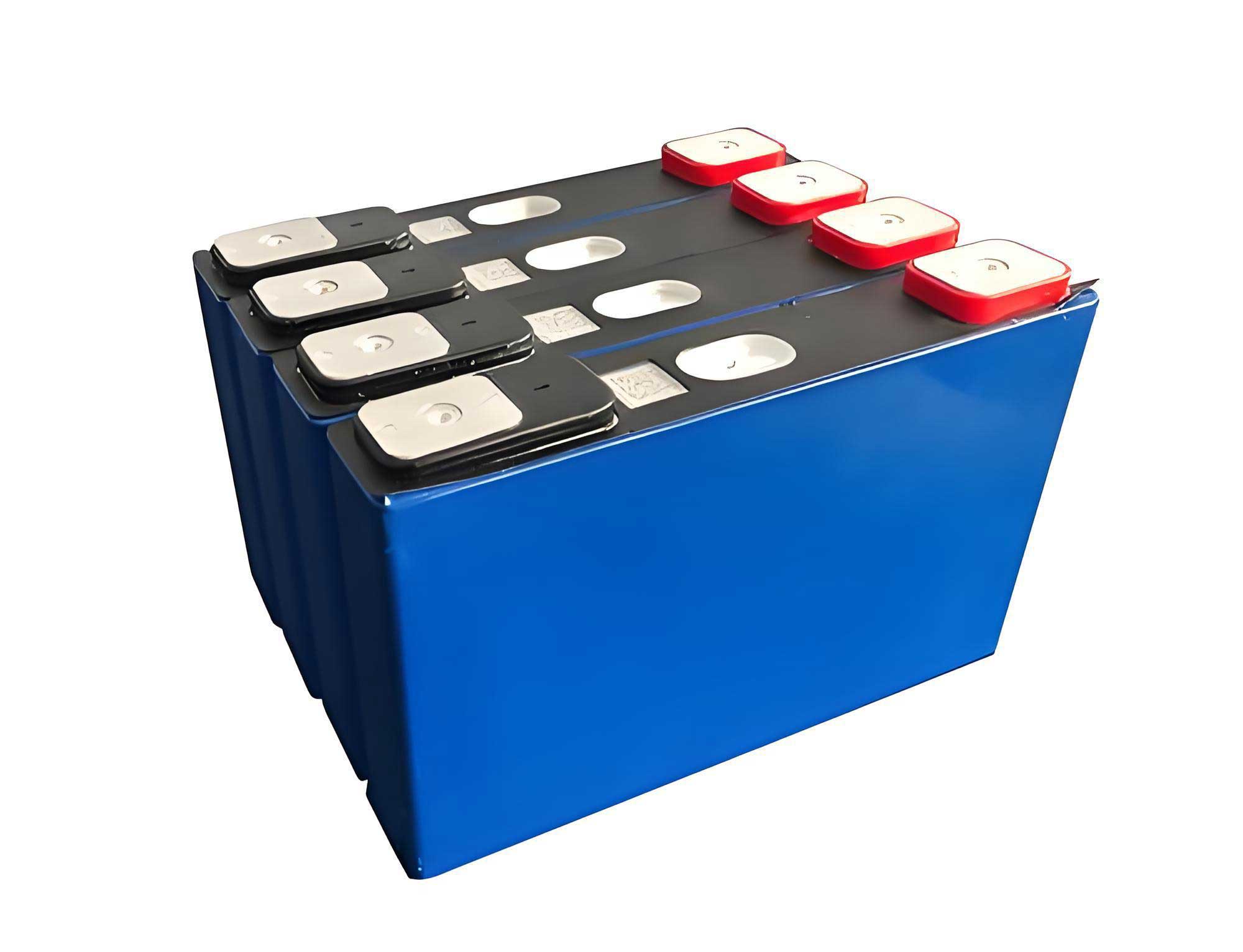
To probe the material-level changes, post-aging analysis was conducted on electrodes from a cycled module (SOH < 60%) and a fresh retired module (SOH ~90%). Cells were discharged to 0 V, disassembled in an argon-filled glovebox, and electrodes were rinsed in dimethyl carbonate (DMC) to remove residual electrolytes. Field-emission scanning electron microscopy (FE-SEM), energy-dispersive X-ray spectroscopy (EDS), and X-ray diffraction (XRD) were employed to examine morphological, compositional, and crystallographic alterations.
The FE-SEM images revealed stark contrasts between anodes and cathodes. Graphite anodes from the aged LiFePO4 battery showed agglomerated particles and fractures, whereas fresh anodes displayed uniform, well-distributed grains. In contrast, LiFePO4 cathodes exhibited minimal morphological changes, suggesting anode degradation dominates the aging process. EDS analysis quantified elemental shifts, as detailed in Table 2.
| Element | Fresh Anode | Aged Anode | Fresh Cathode | Aged Cathode |
|---|---|---|---|---|
| C | 76.49 | 69.36 | 15.22 | 14.87 |
| O | 19.13 | 24.49 | 52.34 | 53.01 |
| F | 2.15 | 3.87 | 0.00 | 0.00 |
| P | 1.22 | 1.95 | 16.45 | 16.32 |
| Fe | 0.00 | 0.33 | 15.99 | 15.80 |
The aged anode showed a decrease in carbon content (from 76.49% to 69.36%), likely due to graphite detachment, and increases in fluorine (2.15% to 3.87%) and phosphorus (1.22% to 1.95%), indicative of thickened solid electrolyte interphase (SEI) layers. Oxygen content also rose, signaling oxidation side reactions. Conversely, cathode elements remained stable, reinforcing that anode deterioration is more severe in retired LiFePO4 batteries.
XRD patterns provided crystallographic insights. For graphite anodes, the (002) peak shifted to lower angles after aging, implying lattice expansion from lithium intercalation stress, describable by Bragg’s law:
$$ n\lambda = 2d\sin\theta $$
where \( d \) is the interplanar spacing, \( \theta \) the diffraction angle, and \( \lambda \) the X-ray wavelength. The shift suggests \( d \)-spacing increased, potentially compromising structural integrity. For LiFePO4 cathodes, aged samples exhibited pronounced FePO4 peaks, absent in fresh ones. This phase transformation signifies lithium loss, as FePO4 forms when lithium ions are trapped in the anode due to irreversible reactions. The capacity fade can be modeled as a function of lithium inventory loss:
$$ C_{\text{loss}} = C_0 \cdot (1 – \eta_{\text{Li}}) $$
where \( C_0 \) is the initial capacity and \( \eta_{\text{Li}} \) the fraction of recyclable lithium consumed. The growth of SEI and other side reactions consume lithium, accelerating degradation in LiFePO4 batteries under high-stress conditions.
The module-level capacity distribution of the retired system further informs reuse strategies. As shown in Table 3, out of 24 modules, only two had SOH below 80%, while 14 exceeded 90% SOH. This skewness underscores that module-level sorting can salvage high-value units, whereas pack-level retirement wastes resources. Temperature gradients within the EV battery pack, with Pack1 near the intake (cooler) and Pack2 near the exhaust (warmer), exacerbated disparities, highlighting thermal management’s role in LiFePO4 battery aging.
| Pack | Module Count | SOH Range (%) | Average SOH (%) |
|---|---|---|---|
| Pack1 | 12 | 85–97 | 92.4 |
| Pack2 | 12 | 72–95 | 86.7 |
| Overall | 24 | 72–97 | 89.5 |
Expanding on aging mechanisms, the degradation of LiFePO4 batteries is governed by multiple factors: SEI growth, lithium plating, active material loss, and increased impedance. The SEI thickening, particularly on graphite anodes, follows a parabolic growth model often expressed as:
$$ \delta_{\text{SEI}} = \sqrt{k t} $$
where \( \delta_{\text{SEI}} \) is the SEI thickness, \( k \) a rate constant dependent on temperature and current, and \( t \) time. This consumes lithium ions and increases resistance, aligning with the observed voltage plateau shifts. For retired LiFePO4 batteries, the anode’s vulnerability is exacerbated by prior EV usage, which may involve high currents and thermal cycles. Thus, in secondary applications, operating LiFePO4 batteries at low C-rates (e.g., below 1C) and moderate DOD (e.g., 50–80%) can mitigate these effects, as described by the Arrhenius equation for reaction rates:
$$ k = A e^{-E_a/(RT)} $$
where \( E_a \) is activation energy, \( R \) the gas constant, and \( T \) temperature. Lower currents and temperatures reduce \( k \), slowing degradation.
Moreover, the economic and environmental implications of reusing LiFePO4 battery modules are profound. By extending service life, carbon footprints are reduced, and resource efficiency improved. A life-cycle assessment model for retired LiFePO4 batteries could incorporate SOH decay rates:
$$ \text{Lifetime} = \int_{0}^{N_{\text{end}}} \frac{d\text{SOH}}{dN} dN $$
where \( N_{\text{end}} \) is cycles until failure. Our data suggests that under gentle conditions, retired LiFePO4 batteries might achieve thousands of cycles, making them viable for long-term storage.
In conclusion, this study elucidates the aging behavior of retired LiFePO4 battery modules through comprehensive testing. The module-level capacity heterogeneity in retired systems advocates for disassembly and sorting to harness residual value. Cyclic aging under 2C, 100% DOD conditions led to rapid SOH decline, with a biphasic trend linked to anode degradation, SEI growth, and lithium loss. Material analysis confirmed anode deterioration predominates in LiFePO4 batteries, with graphite damage and SEI thickening driving capacity fade. Therefore, for secondary use, retired LiFePO4 batteries should be operated under mild regimes—low currents, partial DOD, and controlled temperatures—to maximize longevity. Future work could explore predictive models for SOH based on real-time data, enhancing the sustainability of LiFePO4 battery ecosystems.