
In recent years, the rapid expansion of electrochemical energy storage, driven by the global push for carbon neutrality, has positioned lithium-ion batteries as a cornerstone technology due to their high energy density and long cycle life. Among these, the LiFePO4 battery, with lithium iron phosphate as the cathode material, is widely adopted for stationary energy storage systems because of its inherent thermal stability and safety. However, under conditions of thermal, mechanical, or electrical abuse, even LiFePO4 batteries can undergo thermal runaway—a dangerous, self-accelerating exothermic reaction that releases substantial heat and flammable gases, posing significant fire and explosion hazards. Incidents like the “4·16” Beijing energy storage station fire underscore the urgent need for effective suppression methods. While traditional extinguishing agents such as water or perfluorinated compounds have limitations, liquid nitrogen emerges as a promising candidate due to its high latent heat of vaporization, ability to inert the atmosphere, and environmental friendliness. This study investigates the suppression effect of liquid nitrogen on thermal runaway in large-capacity LiFePO4 energy storage batteries, examining the influence of injection timing and dose through experimental analysis.
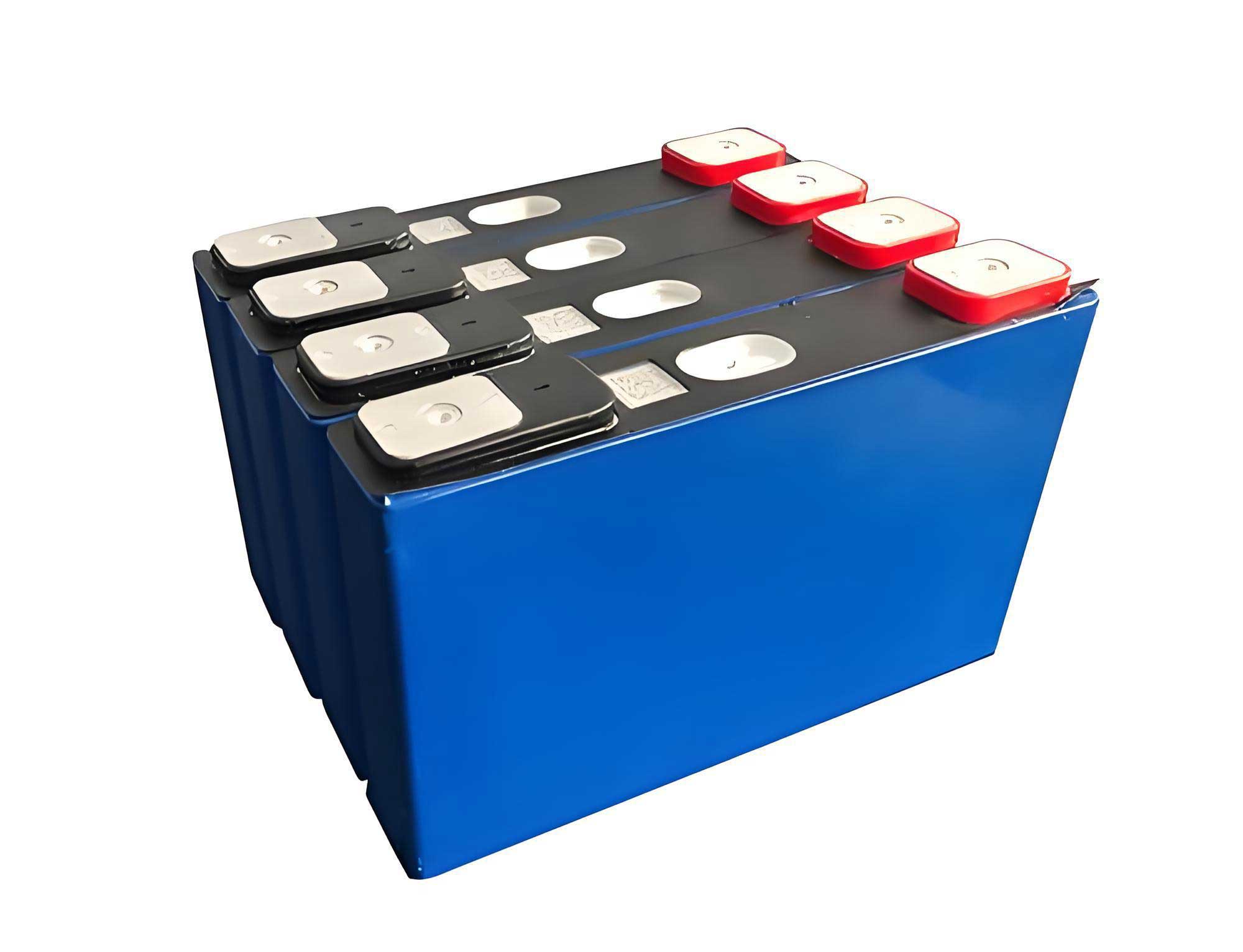
The LiFePO4 battery represents a critical component in modern energy storage, but its safety under fault conditions cannot be overlooked. Thermal runaway in a LiFePO4 battery is a complex process involving sequential reactions: decomposition of the solid-electrolyte interphase (SEI), reaction between the anode and electrolyte, cathode decomposition, and electrolyte combustion. The heat release rate can be modeled using Arrhenius-type equations. For instance, the total heat generation during thermal runaway can be expressed as the sum of contributions from each reaction:
$$Q_{\text{total}} = \sum_{i=1}^{n} A_i \exp\left(-\frac{E_{a,i}}{RT}\right) \Delta H_i$$
where \(A_i\) is the pre-exponential factor, \(E_{a,i}\) is the activation energy, \(R\) is the universal gas constant, \(T\) is the absolute temperature, and \(\Delta H_i\) is the enthalpy change for reaction \(i\). In a LiFePO4 battery, the cathode material LiFePO4 is relatively stable, but at elevated temperatures, reactions with the electrolyte can still occur, contributing to heat accumulation. The onset of thermal runaway is often defined by a critical temperature or temperature rise rate. In this study, we consider thermal runaway to have initiated when the temperature rise rate exceeds 0.2 °C/s, as observed in preliminary experiments.
To understand the suppression mechanism of liquid nitrogen, we must consider its thermodynamic properties. Liquid nitrogen at -196 °C has a latent heat of vaporization of 199.3 kJ/kg. When injected onto a hot LiFePO4 battery, it vaporizes rapidly, absorbing heat from the battery and its surroundings. The cooling effect can be described by the heat balance equation:
$$m_b c_b \frac{dT_b}{dt} = \dot{Q}_{\text{gen}} – \dot{Q}_{\text{loss}} – \dot{Q}_{\text{LN}}$$
where \(m_b\) is the battery mass, \(c_b\) is the specific heat capacity of the LiFePO4 battery (approximately 1.1 kJ/(kg·K)), \(T_b\) is the battery temperature, \(\dot{Q}_{\text{gen}}\) is the heat generation rate from internal reactions, \(\dot{Q}_{\text{loss}}\) is the heat loss to the environment, and \(\dot{Q}_{\text{LN}}\) is the heat absorption rate by liquid nitrogen. The latter can be approximated as:
$$\dot{Q}_{\text{LN}} = \dot{m}_{\text{LN}} \left[ r + c_{p,\text{N}_2} (T_{\text{sat}} – T_{\text{LN}}) \right]$$
where \(\dot{m}_{\text{LN}}\) is the mass flow rate of liquid nitrogen, \(r\) is the latent heat, \(c_{p,\text{N}_2}\) is the specific heat of nitrogen gas, \(T_{\text{sat}}\) is the saturation temperature, and \(T_{\text{LN}}\) is the initial temperature of liquid nitrogen. This equation highlights the dual role of liquid nitrogen: cooling through phase change and subsequent gas heating. Additionally, the nitrogen gas produced dilutes oxygen, creating an inert atmosphere that suppresses combustion of ejected gases from the LiFePO4 battery.
Our experimental setup was designed to simulate thermal runaway in a single LiFePO4 battery and assess liquid nitrogen suppression. The LiFePO4 battery used had a nominal capacity of 65 Ah, dimensions of 173 mm × 120 mm × 45 mm, and a mass of 1.73 kg. It was charged to 100% state-of-charge (SOC) using a constant-current-constant-voltage protocol. Thermal runaway was triggered by a 450 W heating pad attached to one side of the LiFePO4 battery, simulating thermal abuse. The battery was placed in a metal explosion-proof chamber, and liquid nitrogen was injected from a nozzle positioned above the safety valve. Temperature was monitored at multiple points on the battery surface and inside the chamber using K-type thermocouples. The injection system allowed precise control of timing and dose.
Before conducting suppression tests, we performed blank experiments to characterize the thermal runaway behavior of the LiFePO4 battery without intervention. The temperature profiles revealed four distinct stages: external heating, self-heating, thermal runaway, and smoldering cooling. Key parameters are summarized in Table 1.
| Stage | Description | Average Temperature Range (°C) | Max Temperature Rise Rate (°C/s) |
|---|---|---|---|
| External Heating | Heat input from pad dominates | 25 to ~90 | ~0.5 |
| Self-Heating | SEI decomposition and gas release | ~90 to ~120 | 0.2 to 1.0 |
| Thermal Runaway | Rapid exothermic reactions | ~120 to ~380 | Up to 10.85 |
| Smoldering Cooling | Heat dissipation after reactions cease | ~380 to ambient | Negative |
For the LiFePO4 battery at 100% SOC, the maximum average temperature reached 375.8 °C, with a peak temperature rise rate of 10.85 °C/s at 293.1 °C. The safety valve opened at around 90 °C, accompanied by a sudden temperature drop due to gas venting. These findings informed our selection of injection timings for liquid nitrogen suppression tests.
We defined three injection occasions based on the thermal runaway stages of the LiFePO4 battery: before safety valve opening (90 °C, termed “pre-venting”), early thermal runaway (135 °C, termed “early-TR”), and intense thermal runaway (320 °C, termed “intense-TR”). The liquid nitrogen dose was varied from 1.2 kg to 8.0 kg. The experimental matrix is detailed in Table 2.
| Test Case | Injection Occasion | Liquid Nitrogen Dose (kg) | Injection Duration (s) | Objective |
|---|---|---|---|---|
| 1 | Pre-venting (90 °C) | 1.2 | 40 | Assess prevention capability |
| 2 | Early-TR (135 °C) | 1.2 | 40 | Evaluate minimal dose effect |
| 3 | Early-TR (135 °C) | 6.7 | 150 | Determine sufficient dose |
| 4 | Intense-TR (320 °C) | 7.2 | 160 | Test suppression at peak heat release |
| 5 | Early-TR (135 °C) | 6.2 | 140 | Compare dose response |
| 6 | Early-TR (135 °C) | 6.7 | 150 | Same as Case 3 for consistency |
| 7 | Early-TR (135 °C) | 8.0 | 180 | Explore upper dose limit |
Upon injection, liquid nitrogen immediately vaporized, generating a dense cloud of nitrogen gas. In cases where flaming occurred due to ignited ejecta, the flame was quickly extinguished without re-ignition, demonstrating the inerting effect. The cooling effect was evident from rapid temperature drops measured on the LiFePO4 battery surface. For instance, in Test Case 1 (pre-venting, 1.2 kg), the battery average temperature decreased from 78.4 °C to 44.5 °C, and after injection, it stabilized at 58 °C without escalating into thermal runaway. This indicates that early intervention can halt the progression of reactions in the LiFePO4 battery. The temperature evolution follows an exponential decay during cooling:
$$T_b(t) = T_{\text{amb}} + (T_{\text{initial}} – T_{\text{amb}}) e^{-kt}$$
where \(k\) is a cooling constant dependent on liquid nitrogen flow and battery geometry.
In contrast, Test Case 2 (early-TR, 1.2 kg) showed only a transient temperature reduction; the average temperature rebounded quickly, and thermal runaway proceeded with a maximum average temperature of 304.1 °C, though lower than the blank test’s 375.8 °C. This underscores that once exothermic reactions in the LiFePO4 battery become self-sustaining, a small dose of liquid nitrogen is insufficient to absorb the generated heat. The heat balance becomes positive for the battery:
$$\dot{Q}_{\text{gen}} > \dot{Q}_{\text{LN}} + \dot{Q}_{\text{loss}}$$
When the dose was increased to 6.7 kg in Test Case 3, the LiFePO4 battery average temperature plummeted from 132.6 °C to 4.7 °C, and post-injection, it peaked at 66.7 °C with a temperature rise rate below 0.2 °C/s, confirming successful suppression. Similarly, in Test Case 4 (intense-TR, 7.2 kg), the average temperature dropped from 313.1 °C to 75.6 °C, stabilizing at 87.2 °C. These results highlight that higher liquid nitrogen doses can overcome the heat release rate even during vigorous thermal runaway in a LiFePO4 battery.
To quantify the cooling effect, we define \(\Delta T_{m-r}\) as the difference between the maximum average temperature after injection begins (\(T_{\text{max}}\)) and the maximum average temperature after injection ceases (\(T_{\text{re,peak}}\)):
$$\Delta T_{m-r} = T_{\text{max}} – T_{\text{re,peak}}$$
This metric reflects the net temperature reduction attributable to liquid nitrogen. Values for different doses are plotted in Figure 1 (conceptual). Additionally, we calculate the heat absorbed by the LiFePO4 battery from liquid nitrogen, \(Q_{b,\text{LN}}\), using the lumped heat capacity model:
$$Q_{b,\text{LN}} = m_b c_b (T_{\text{max}} – T_{\text{re,peak}})$$
The total heat accumulated in the LiFePO4 battery after injection starts is \(Q_{\text{total}} = m_b c_b (T_{\text{max}} – T_{\text{initial}})\), where \(T_{\text{initial}}\) is the temperature at injection onset. The cooling efficiency \(\eta_c\) is the fraction of total heat absorbed by liquid nitrogen:
$$\eta_c = \frac{Q_{b,\text{LN}}}{Q_{\text{total}}}$$
The theoretical heat absorption capacity of liquid nitrogen is \(Q_{\text{LN}} = m_{\text{LN}} r\), with \(r = 199.3 \, \text{kJ/kg}\). The effective utilization efficiency \(\eta_e\) is:
$$\eta_e = \frac{Q_{b,\text{LN}}}{Q_{\text{LN}}}$$
Table 3 compiles these parameters for Test Cases 5, 6, and 7, where dose was varied at the early-TR occasion.
| Test Case | Liquid Nitrogen Dose (kg) | \(T_{\text{max}}\) (°C) | \(T_{\text{re,peak}}\) (°C) | \(\Delta T_{m-r}\) (°C) | \(Q_{b,\text{LN}}\) (kJ) | \(\eta_c\) (%) | \(\eta_e\) (%) |
|---|---|---|---|---|---|---|---|
| 5 | 6.2 | 117.7 | 100.1 | 17.6 | 33.4 | 18.0 | 13.9 |
| 6 | 6.7 | 132.6 | 66.7 | 65.9 | 125.4 | 57.8 | 16.2 |
| 7 | 8.0 | 132.4 | 28.7 | 103.7 | 197.3 | 89.1 | 15.0 |
The data show that as the liquid nitrogen dose increases, \(Q_{b,\text{LN}}\) and \(\eta_c\) rise significantly. For example, with 8.0 kg, the cooling efficiency reaches 89.1%, meaning nearly all subsequent heat accumulation is offset. The temperature reduction \(\Delta T_{m-r}\) for 8.0 kg is about 5.8 times that for 6.2 kg. However, \(\eta_e\) peaks at 16.2% for 6.7 kg and slightly decreases for 8.0 kg, indicating that higher doses may lead to greater losses to the environment rather than to the LiFePO4 battery itself. This suggests an optimal range for liquid nitrogen application in suppressing thermal runaway in LiFePO4 batteries.
The suppression mechanism can be further analyzed through the kinetics of reactions in the LiFePO4 battery. The heat generation rate during thermal runaway is temperature-dependent, often modeled as:
$$\dot{Q}_{\text{gen}} = A \exp\left(-\frac{E_a}{RT}\right) \Delta H$$
Liquid nitrogen injection abruptly lowers \(T\), reducing \(\dot{Q}_{\text{gen}}\) exponentially. If cooling is sufficient to push the system below a critical temperature threshold, reactions decelerate, and thermal runaway is arrested. For the LiFePO4 battery, this threshold is likely around 80-100 °C, based on our observations. Moreover, the nitrogen atmosphere suppresses combustion of ejected electrolytes, which otherwise contributes additional heat. The combined effect can be expressed as a modified critical condition for suppression:
$$\int_{t_0}^{t_f} \dot{Q}_{\text{LN}} \, dt \geq \int_{t_0}^{t_f} \dot{Q}_{\text{gen}} \, dt + Q_{\text{comb}}$$
where \(t_0\) and \(t_f\) are the start and end times of injection, and \(Q_{\text{comb}}\) is the heat from combustion that is prevented by inerting.
Our findings align with prior studies on smaller batteries but extend to large-format LiFePO4 energy storage batteries. The importance of early detection and intervention is clear: injecting liquid nitrogen before safety valve opening in a LiFePO4 battery can prevent thermal runaway with minimal dose. However, in real-world energy storage systems, multiple LiFePO4 batteries are packed together, and thermal runaway propagation is a concern. The cooling effect of liquid nitrogen might also inhibit propagation by reducing the temperature of adjacent LiFePO4 batteries. Future work could explore this aspect using module-scale experiments.
In conclusion, liquid nitrogen is highly effective in suppressing thermal runaway in LiFePO4 batteries. The suppression outcome depends critically on injection timing and dose. For the studied LiFePO4 battery, 1.2 kg injected pre-venting prevents thermal runaway, while 6.7 kg or more is required during early thermal runaway, and 7.2 kg during intense thermal runaway. The cooling efficiency improves with dose, but utilization efficiency peaks at moderate doses. These insights can guide the design of safety systems for LiFePO4 battery-based energy storage, potentially incorporating liquid nitrogen injection triggered by early warning sensors. As the deployment of LiFePO4 batteries expands, such proactive safety measures will be vital for mitigating risks and ensuring sustainable energy storage solutions.
To further contextualize, the LiFePO4 battery market is projected to grow steadily, and safety advancements like liquid nitrogen suppression could enhance public confidence. Mathematical modeling of the heat transfer during liquid nitrogen application to a LiFePO4 battery could optimize injection parameters. For instance, computational fluid dynamics simulations could predict the temperature distribution in a LiFePO4 battery pack under liquid nitrogen cooling. Additionally, lifecycle assessments might evaluate the environmental impact of using liquid nitrogen compared to other suppressants. Overall, this study contributes to the broader effort to make LiFePO4 batteries safer and more reliable for large-scale energy storage applications.