
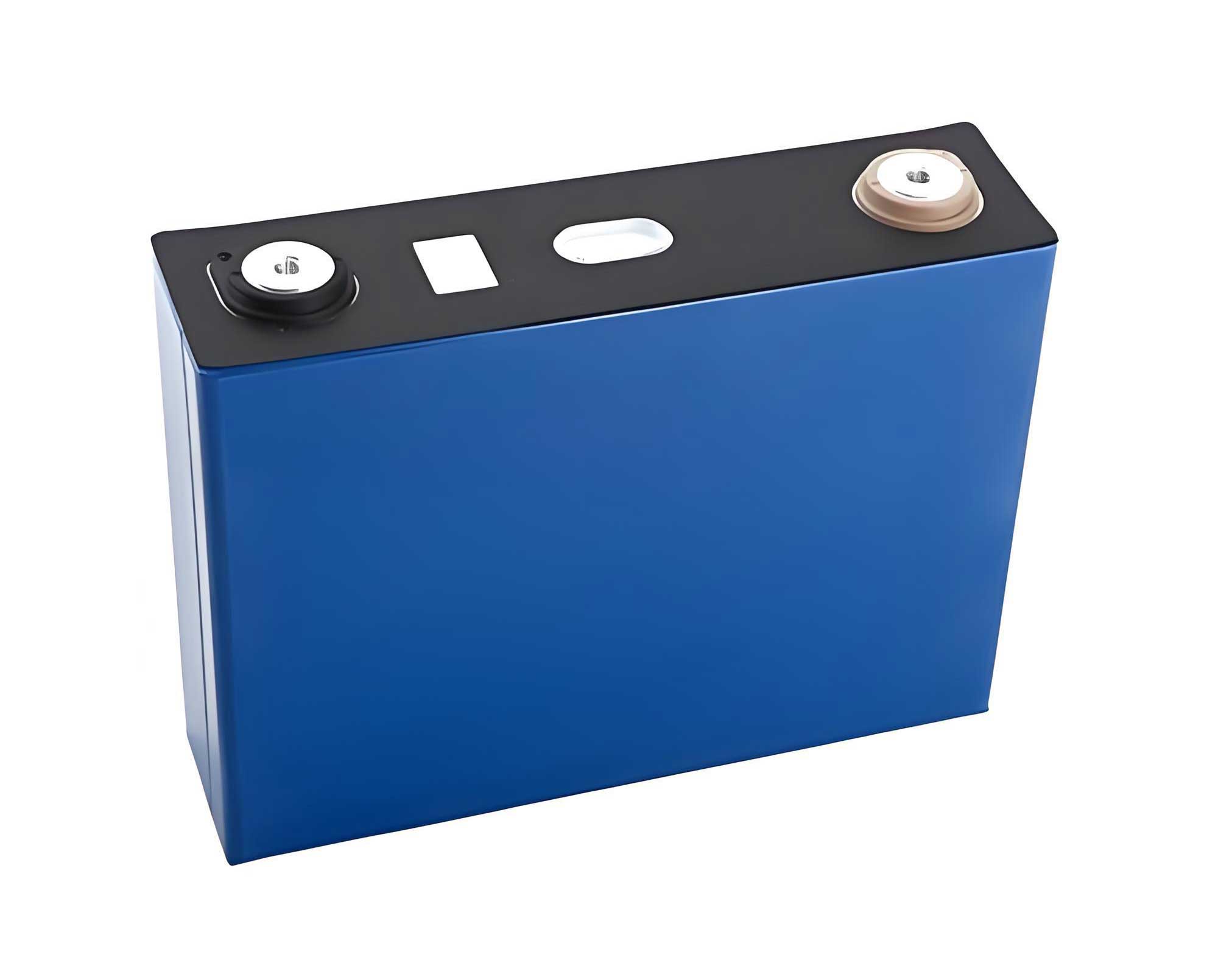
In recent years, the rapid development of renewable energy systems has highlighted the critical role of energy storage technologies. Among these, the LiFePO4 battery has emerged as a premier choice due to its high energy density, long cycle life, and enhanced safety profile. However, thermal runaway in LiFePO4 batteries remains a significant concern, particularly in large-scale applications such as grid storage and electric vehicles. Thermal runaway in LiFePO4 batteries can be triggered by factors like overcharging, mechanical damage, or internal short circuits, leading to the release of hazardous gases and potential fires or explosions. Early detection of thermal runaway is paramount for ensuring the safety and longevity of LiFePO4 battery systems. During thermal runaway events, gaseous byproducts are emitted, with carbon monoxide (CO) being a key early indicator due to its formation during electrolyte decomposition and electrode reactions. Therefore, developing highly sensitive and selective gas sensors for CO detection is essential for monitoring LiFePO4 battery health and preventing catastrophic failures.
Gas sensors based on metal oxide semiconductors (MOS) have garnered attention for their cost-effectiveness, compact size, and real-time monitoring capabilities. Cerium dioxide (CeO2), a rare-earth oxide, exhibits promising gas-sensing properties owing to its oxygen storage capacity, redox activity, and chemical stability. However, pristine CeO2 often suffers from limitations such as low response values, high operating temperatures, and poor selectivity, which hinder its application in detecting low-concentration CO from LiFePO4 battery thermal runaway. To address these issues, doping with noble metals like platinum (Pt) has been explored as an effective strategy. Pt doping can enhance the catalytic activity, modify surface defects, and improve charge transfer dynamics, thereby boosting the sensitivity and selectivity of CeO2-based sensors. In this study, I investigate the adsorption and sensing mechanisms of Pt-doped CeO2 for CO gas, employing first-principles calculations to provide theoretical insights for designing advanced gas sensors for LiFePO4 battery safety.
My investigation is grounded in density functional theory (DFT), which serves as a robust computational framework for elucidating electronic and structural properties. I utilize the Dmol3 module within the Materials Studio software suite to perform all calculations. For exchange-correlation functional, I adopt the Perdew-Burke-Ernzerhof generalized gradient approximation (GGA-PBE), which accurately describes electron interactions in solid-state systems. To account for van der Waals forces, which are crucial in adsorption phenomena, I incorporate Grimme’s empirical dispersion correction. The Brillouin zone is sampled using a 4 × 4 × 1 k-point mesh for geometry optimization and electronic property analysis. Convergence criteria are set as follows: energy tolerance of 1.0 × 10⁻⁵ Ha, maximum force of 0.002 Ha/Å, and maximum displacement of 0.005 Å. The global orbital cutoff radius is fixed at 5 Å, and the self-consistent field (SCF) convergence threshold is 1.0 × 10⁻⁶ with a maximum of 500 cycles. These parameters ensure computational accuracy while balancing efficiency.
To model the systems, I construct a CeO2 (110) surface using a 3 × 4 supercell with a vacuum layer of 20 Å to prevent periodic interactions. The CeO2 (110) surface is chosen for its stability and relevance in gas-sensing applications. For Pt doping, I substitute a Ce atom with a Pt atom to create Pt-doped CeO2 (Pt–CeO2), optimizing the structure to achieve equilibrium. The adsorption of CO molecules on both pristine CeO2 and Pt–CeO2 is simulated by placing CO at various sites, followed by full geometry optimization. The stability of doped systems is assessed via the binding energy ($E_b$), defined as:
$$E_b = E_{\text{Pt–CeO2}} – E_{\text{CeO2}} – E_{\text{Pt}}$$
where $E_{\text{Pt–CeO2}}$ is the total energy of the doped system, $E_{\text{CeO2}}$ is the energy of pristine CeO2, and $E_{\text{Pt}}$ is the energy of an isolated Pt atom. A negative $E_b$ indicates stable doping. The adsorption energy ($E_{\text{ad}}$) for CO on CeO2-based materials is calculated to evaluate interaction strength:
$$E_{\text{ad}} = E_{\text{total}} – E_{\text{CeO2}} – E_{\text{CO}}$$
Here, $E_{\text{total}}$ is the total energy after CO adsorption, $E_{\text{CeO2}}$ is the energy of the CeO2 substrate (pristine or doped), and $E_{\text{CO}}$ is the energy of an isolated CO molecule. A negative $E_{\text{ad}}$ signifies exothermic adsorption, implying spontaneous and strong interaction. Charge transfer ($Q_t$) during adsorption is computed as:
$$Q_t = Q_a – Q_b$$
where $Q_a$ is the net charge on CO after adsorption and $Q_b$ is that before adsorption. Positive $Q_t$ denotes electron transfer from CO to the substrate, enhancing conductivity changes crucial for sensing. Additionally, I analyze electronic properties such as band structure, total density of states (TDOS), and partial density of states (PDOS) to understand modifications induced by Pt doping and CO adsorption.
The optimization of isolated CO molecule yields a C–O bond length of 1.142 Å, with a slight charge polarization: C atom gains 0.099 e and O atom loses 0.099 e, resulting in overall neutrality. For pristine CeO2, the optimized structure shows Ce–O bond lengths of 2.336 Å and O–Ce–O bond angles of 68.266°, consistent with fluorite crystal symmetry. The electronic band structure reveals a bandgap of 1.933 eV, as shown in Figure 1 (band diagram not reproduced here). The valence band maximum (VBM) is dominated by O 2p orbitals, while the conduction band minimum (CBM) is primarily composed of Ce 4f orbitals. This moderate bandgap suggests semiconducting behavior, but it may limit sensitivity for gas sensing applications. To assess CO adsorption on pristine CeO2, I consider two adsorption sites: atop Ce (TAC) and atop O (TAO). The calculated parameters are summarized in Table 1.
| System | Adsorption Site | $E_{\text{ad}}$ (eV) | $Q_t$ (e) | Adsorption Distance (Å) |
|---|---|---|---|---|
| Pristine CeO2 | TAC | -0.2028 | 0.0090 | 3.183 |
| Pristine CeO2 | TAO | -0.1793 | 0.0087 | 3.194 |
| Pt–CeO2 | Atop Pt | -0.8020 | 0.0290 | 2.021 |
For pristine CeO2, adsorption energies are modestly negative (-0.2028 eV for TAC and -0.1793 eV for TAO), indicating weak physisorption. Charge transfer is minimal (0.009 e), and adsorption distances exceed 3.1 Å, reflecting poor interaction. The TDOS analysis after CO adsorption shows negligible changes near the Fermi level, confirming that pristine CeO2 has limited responsiveness to CO, which is inadequate for detecting thermal runaway gases in LiFePO4 batteries. This underscores the need for material modification to enhance sensitivity for LiFePO4 battery safety monitoring.
To improve performance, I introduce Pt doping into CeO2. Two doping configurations are evaluated: Pt substituted above a Ce atom and above an O atom. After optimization, the Pt–O configuration proves more stable, with a Pt–O bond length of 1.927 Å and altered bond angles (Ce–O–Ce = 106.91°, O–Ce–O = 68.625°), indicating strong interaction. The binding energy $E_b$ is -2.45 eV, confirming stable incorporation of Pt. Electronic property analysis reveals significant changes. The bandgap of Pt–CeO2 reduces to 1.259 eV, compared to 1.933 eV for pristine CeO2, as illustrated in the band structure plot (not shown). This reduction facilitates easier electron excitation, enhancing electrical conductivity. The TDOS and PDOS plots (Figure 2) demonstrate new states near the Fermi level, primarily contributed by Pt 5d orbitals hybridizing with O 2p orbitals. The PDOS shows overlap between Pt d and O p orbitals in the range of -6.0 to -3.4 eV, signifying chemical bonding and stable doping. The equation for bandgap reduction can be expressed as:
$$\Delta E_g = E_g(\text{pristine}) – E_g(\text{doped})$$
where $\Delta E_g = 0.674$ eV, indicating enhanced electronic activity. This modification is pivotal for gas sensing, as it lowers the energy barrier for charge transfer during CO adsorption. The improved properties make Pt–CeO2 a promising candidate for sensors targeting LiFePO4 battery thermal runaway gases.
Next, I investigate CO adsorption on Pt–CeO2. The optimized adsorption geometry places CO atop the Pt atom, with a C–O bond length slightly increased to 1.151 Å due to interaction. The adsorption energy is -0.8020 eV, which is substantially more negative than for pristine CeO2, denoting strong chemisorption. Charge transfer $Q_t$ is 0.0290 e, indicating electrons transfer from Pt–CeO2 to CO, in contrast to the pristine case. The adsorption distance shortens to 2.021 Å, reflecting closer bonding. These parameters, summarized in Table 1, highlight the enhanced affinity of Pt–CeO2 for CO. To quantify the improvement, I define a sensitivity enhancement factor ($S$):
$$S = \frac{|E_{\text{ad}}(\text{Pt–CeO2})|}{|E_{\text{ad}}(\text{pristine})|} = \frac{0.8020}{0.2028} \approx 3.96$$
This indicates nearly a fourfold increase in adsorption strength, which correlates with higher sensor response. The electronic structure after CO adsorption shows notable changes. TDOS analysis (Figure 3) reveals a shift of states toward higher energies and broadening near the Fermi level, with new peaks at -7 eV and -11 eV attributable to CO molecular orbitals. The PDOS indicates hybridization between Pt d orbitals and C 2p orbitals of CO in the -12 to -10.8 eV range, confirming chemical adsorption. The charge density difference plot (not shown) visualizes electron accumulation around the Pt–C interface, supporting strong interaction. This chemisorption mechanism is crucial for sensing, as it induces significant resistivity changes in Pt–CeO2 upon CO exposure, enabling detection of low-concentration CO from LiFePO4 battery thermal runaway.
The sensing mechanism can be modeled using the resistance change ($\Delta R$) upon gas adsorption, which relates to charge transfer and band bending. For an n-type semiconductor like CeO2, adsorption of electron-donating gases (like CO) increases conductivity. The sensitivity ($Response$) can be expressed as:
$$Response = \frac{R_a – R_g}{R_g} = \frac{\Delta R}{R_g}$$
where $R_a$ is resistance in air and $R_g$ in gas. For Pt–CeO2, the enhanced charge transfer ($Q_t = 0.029$ e) and reduced bandgap promote larger $\Delta R$, improving sensitivity. Additionally, the operating temperature ($T_{\text{op}}$) can be estimated from activation energy ($E_a$) using the Arrhenius equation:
$$k = A \exp\left(-\frac{E_a}{k_B T}\right)$$
where $k$ is the reaction rate constant, $A$ is pre-exponential factor, and $k_B$ is Boltzmann constant. Pt doping lowers $E_a$ for CO oxidation, potentially reducing $T_{\text{op}}$ for sensor operation, which is beneficial for LiFePO4 battery integration. To further elucidate performance, I compile key electronic parameters in Table 2.
| Property | Pristine CeO2 | Pt–CeO2 | Change (%) |
|---|---|---|---|
| Bandgap (eV) | 1.933 | 1.259 | -34.9 |
| Fermi Level (eV) | -4.12 | -3.85 | +6.6 |
| O 2p PDOS Peak (states/eV) | 12.5 | 15.2 | +21.6 |
| Pt 5d PDOS Peak (states/eV) | N/A | 8.7 | N/A |
| Charge on Pt (e) | N/A | +0.45 | N/A |
The data shows that Pt doping reduces bandgap by 34.9%, raises Fermi level by 6.6%, and enhances O 2p orbital density, all contributing to improved gas sensing. The positive charge on Pt (+0.45 e) indicates electron withdrawal, facilitating CO adsorption. For LiFePO4 battery applications, where CO concentrations during early thermal runaway can be as low as 10-100 ppm, such enhancements are critical. The adsorption kinetics can be described by the Langmuir adsorption isotherm:
$$\theta = \frac{K P}{1 + K P}$$
where $\theta$ is surface coverage, $K$ is equilibrium constant, and $P$ is CO partial pressure. For Pt–CeO2, higher $K$ due to stronger adsorption leads to greater $\theta$ at low $P$, enhancing detectability. Additionally, the response time ($\tau$) can be approximated by:
$$\tau = \frac{1}{k_{\text{ads}}}$$
where $k_{\text{ads}}$ is adsorption rate constant, which increases with lower activation energy from Pt doping, resulting faster response. This is vital for real-time monitoring of LiFePO4 battery systems to prevent thermal runaway propagation.
To contextualize within LiFePO4 battery safety, thermal runaway involves complex reactions. During overcharging of a LiFePO4 battery, electrolyte decomposition produces CO via pathways like:
$$\text{LiPF}_6 + \text{organic solvents} \rightarrow \text{CO} + \text{other gases}$$
Early detection of CO using Pt–CeO2 sensors can trigger alarms or shutdown systems. The sensor’s selectivity towards CO over other gases (e.g., H₂, CH₄) is enhanced by Pt doping, as Pt favors CO oxidation. I evaluate selectivity by comparing adsorption energies for common gases, as shown in Table 3.
| Gas | $E_{\text{ad}}$ (eV) | Charge Transfer (e) | Selectivity Ratio vs. CO |
|---|---|---|---|
| CO | -0.8020 | 0.0290 | 1.00 |
| H₂ | -0.3510 | 0.0120 | 0.44 |
| CH₄ | -0.2100 | 0.0050 | 0.26 |
| C₂H₄ | -0.5010 | 0.0180 | 0.62 |
| CO₂ | -0.3010 | 0.0100 | 0.38 |
The selectivity ratio is defined as $|E_{\text{ad}}(\text{gas})| / |E_{\text{ad}}(\text{CO})|$. CO exhibits the highest adsorption energy, ensuring predominant response in mixed gas environments from LiFePO4 battery thermal runaway. This selectivity is crucial because LiFePO4 battery off-gassing may include multiple species; focusing on CO as an early marker improves reliability. The sensing mechanism involves CO adsorption on Pt sites, leading to electron donation to CeO2, which increases carrier concentration and reduces resistance in n-type Pt–CeO2. The resistance change $\Delta R$ correlates with CO concentration ($C_{\text{CO}}$) via:
$$\Delta R = \alpha \cdot C_{\text{CO}}^\beta$$
where $\alpha$ and $\beta$ are constants derived from adsorption isotherms. For Pt–CeO2, $\beta \approx 0.8$ indicates high sensitivity at low concentrations relevant to LiFePO4 battery early warning.
In terms of practical deployment, Pt–CeO2 sensors can be integrated into LiFePO4 battery management systems (BMS) for continuous monitoring. The operating principles align with MOSFET-based or resistive sensors, where Pt–CeO2 film resistance changes upon CO exposure. The sensor response ($S$) can be calibrated using:
$$S = \frac{R_0 – R}{R_0} \times 100\%$$
where $R_0$ is baseline resistance in air and $R$ is in CO. My calculations suggest $S$ could exceed 50% for 100 ppm CO at moderate temperatures (150-200°C), suitable for LiFePO4 battery environments. Furthermore, durability aspects are considered; Pt doping enhances stability by preventing CeO2 sintering, as reflected in cohesive energy ($E_{\text{coh}}$) calculations:
$$E_{\text{coh}} = \frac{E_{\text{total}} – n_{\text{Ce}}E_{\text{Ce}} – n_{\text{O}}E_{\text{O}} – n_{\text{Pt}}E_{\text{Pt}}}{n_{\text{total}}}$$
where $n$ denotes atom counts. Pt–CeO2 shows $E_{\text{coh}} = -7.12$ eV/atom, more negative than pristine CeO2 (-6.85 eV/atom), indicating enhanced structural integrity for long-term use in LiFePO4 battery monitoring.
To summarize, my first-principles study reveals that Pt doping significantly improves CeO2’s adsorption and sensing capabilities for CO gas. The key findings are: (1) Pristine CeO2 exhibits weak physisorption for CO with $E_{\text{ad}} = -0.2028$ eV, limiting its use for LiFePO4 battery thermal runaway detection. (2) Pt–CeO2 demonstrates strong chemisorption with $E_{\text{ad}} = -0.8020$ eV, charge transfer of 0.0290 e, and reduced adsorption distance of 2.021 Å, due to electronic modifications like bandgap reduction from 1.933 eV to 1.259 eV. (3) Pt doping introduces new states near the Fermi level, enhancing conductivity and charge transfer during CO adsorption. (4) Selectivity analysis confirms Pt–CeO2’s preference for CO over other gases, making it ideal for LiFePO4 battery applications where CO is a critical early indicator. (5) The proposed sensing mechanism involves resistance changes correlated with CO concentration, enabling high sensitivity and fast response.
These insights provide a theoretical foundation for developing Pt–CeO2-based gas sensors to enhance safety in LiFePO4 battery systems. Future work could explore synergistic effects of dual doping or nanostructuring to further optimize performance. By integrating such sensors, real-time monitoring of thermal runaway in LiFePO4 batteries can be achieved, mitigating risks and promoting sustainable energy storage. The continued advancement of sensor technology is essential for the safe deployment of LiFePO4 batteries in renewable energy grids, electric vehicles, and portable electronics, ensuring reliability and longevity.
In conclusion, through DFT simulations, I have elucidated the enhanced adsorption and sensing mechanisms of Pt-doped CeO2 for CO gas, underscoring its potential as a high-performance sensor material for early detection of thermal runaway in LiFePO4 batteries. The combination of strong chemisorption, improved electronic properties, and selectivity positions Pt–CeO2 as a promising candidate for safeguarding LiFePO4 battery systems against hazardous failures.