
As the world shifts towards sustainable energy solutions, electric vehicles (EVs) have emerged as a pivotal technology in reducing carbon emissions. However, their performance in cold climates remains a significant hurdle, largely due to the sensitivity of lithium-ion batteries to low temperatures. Among these, the lifepo4 battery is widely favored for its stability, safety, and longevity, but it suffers from substantial capacity loss and charging inefficiencies in sub-zero environments. This issue not only limits the range and reliability of EVs in寒冷 regions but also poses safety concerns during charging. To address this, I have developed a segmented preheating strategy specifically designed for lifepo4 batteries operating in extreme cold, such as -40°C. This approach integrates electric heating film technology with a partitioned power control method, aiming to rapidly and uniformly raise the battery temperature to a safe charging threshold while minimizing energy consumption and thermal gradients. The strategy is optimized using response surface methodology (RSM), which balances preheating time and temperature uniformity. In this article, I will detail the modeling, experimentation, and optimization processes, demonstrating how this method can effectively preheat lifepo4 batteries within 0.5 hours, ensuring a minimum temperature above 5°C and a temperature difference below 5°C. The findings provide a practical framework for enhancing the thermal management of lifepo4 batteries in低温 applications, thereby supporting the broader adoption of EVs in cold climates.
The lifepo4 battery, or lithium iron phosphate battery, is a type of lithium-ion battery known for its robust thermal and chemical stability. Despite its advantages, the lifepo4 battery experiences severe performance degradation in低温 conditions due to increased internal resistance and slowed electrochemical kinetics. At temperatures below 0°C, the ionic conductivity of the electrolyte decreases, leading to reduced power output and capacity. Moreover, charging a lifepo4 battery at low temperatures can cause lithium plating on the anode, which not only diminishes battery life but also raises safety risks such as short circuits or thermal runaway. Therefore, preheating the lifepo4 battery before charging in cold environments is essential to restore its performance and ensure safe operation. Various preheating methods have been explored, including internal heating (e.g., self-heating via alternating current) and external heating (e.g., air, liquid, or electric heating). External heating methods, particularly using electric heating films, offer advantages like simplicity, low cost, and ease of integration. However, a common challenge with electric heating films is the uneven temperature distribution within battery packs, which can lead to局部过热 and accelerated degradation. To overcome this, I propose a segmented preheating strategy that divides the heating process into stages with optimized power levels for different sections of the battery pack. This approach leverages the thermal properties of the lifepo4 battery and employs RSM to fine-tune the heating parameters, ensuring efficient and uniform preheating.
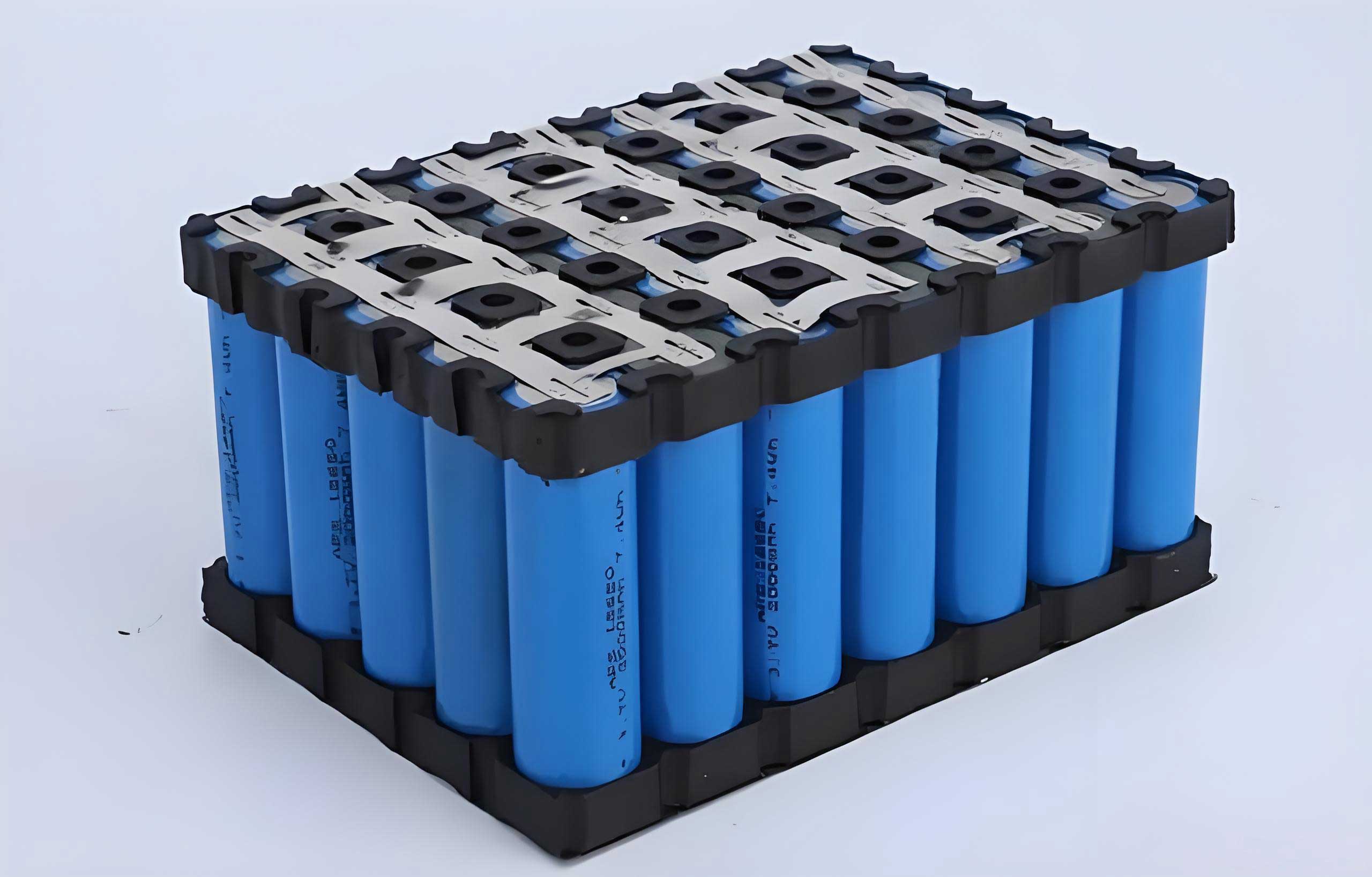
To develop an effective preheating strategy, I first established a comprehensive thermal model for the lifepo4 battery. The model is based on energy conservation principles, accounting for heat generation, conduction, and convection. The general heat transfer equation for a battery cell can be expressed as:
$$ \rho c \frac{\partial T}{\partial t} = \lambda_x \frac{\partial^2 T}{\partial x^2} + \lambda_y \frac{\partial^2 T}{\partial y^2} + \lambda_z \frac{\partial^2 T}{\partial z^2} + q $$
Here, \(\rho\) is the density, \(c\) is the specific heat capacity, \(T\) is the temperature, \(t\) is time, \(\lambda_x\), \(\lambda_y\), and \(\lambda_z\) are the thermal conductivities in the x, y, and z directions, and \(q\) is the heat generation rate per unit volume. For the lifepo4 battery, the heat generation primarily arises from electrochemical reactions, polarization, and Joule heating. The Bernardi model is widely used to estimate \(q\) for lithium-ion batteries, and it is given by:
$$ q = \frac{I}{V_b} \left[ (E – E_0) + T \frac{dE_0}{dT} \right] $$
In this equation, \(I\) is the current (positive for discharge, negative for charge), \(V_b\) is the battery volume, \(E\) is the open-circuit voltage, \(E_0\) is the operating voltage, and \(\frac{dE_0}{dT}\) is the temperature coefficient of the voltage. This model captures the reversible and irreversible heat effects in the lifepo4 battery during operation. To validate the thermal model, I conducted experiments on a single lifepo4 battery cell under various discharge rates at 25°C. The battery parameters are summarized in Table 1.
| Parameter | Value |
|---|---|
| Weight (g) | 2392 |
| Dimensions (mm) | 245.6 × 173.9 × 28.0 |
| Rated Capacity (Ah) | 100 |
| Rated Voltage (V) | 3.2 |
| Charge Cut-off Voltage (V) | 3.65 |
| Discharge Cut-off Voltage (V) | 2.0 |
| Charge Temperature Range (°C) | 0 to 45 |
| Discharge Temperature Range (°C) | -40 to 60 |
The experimental setup included a thermal chamber, a battery testing system, and data loggers. The lifepo4 battery was discharged at 1C, 2C, and 3C rates, and the surface temperature was measured. The simulation results from the thermal model showed excellent agreement with experimental data, with a maximum temperature deviation of only 0.6°C. This validated model serves as the foundation for extending to battery pack analysis. The lifepo4 battery pack in this study consists of four prismatic cells connected in series, each equipped with electric heating films on both large faces. The heating films are made of silicone rubber, and their properties are listed in Table 2.
| Parameter | Value |
|---|---|
| Thickness (mm) | 2 |
| Density (kg/m³) | 650–950 |
| Rated Voltage (V) | 14.6 |
| Rated Power (W) | 50.4 |
| Specific Heat Capacity (J/kg·K) | 920 |
| Thermal Conductivity (W/m·K) | 0.4 |
The battery pack model was built using finite element methods, with mesh refinement to ensure accuracy. The grid comprised 45,783 domain elements, 16,177 boundary elements, and 2,180 edge elements. Boundary conditions included convective heat transfer with the environment, set at a coefficient of 10 W/m²·K. To verify the pack model, a heating test was performed at 18°C, applying a constant current of 10 A to five parallel heating films for 78 minutes. Temperature data from three monitoring points were compared with simulation results, showing a maximum difference of 2°C, which confirms the model’s reliability for preheating studies.
The core of this research is the segmented preheating strategy for the lifepo4 battery pack. The strategy divides the preheating process into two stages: rapid preheating (Stage 1) and uniform preheating (Stage 2). In Stage 1, all heating films operate at a high power level \(P_1\) to quickly raise the maximum temperature of the lifepo4 battery pack to 5°C. In Stage 2, the power is adjusted to three different levels—\(P_{21}\), \(P_{22}\), and \(P_{23}\)—for different heating films to homogenize the temperature, ensuring the minimum temperature reaches 5°C while keeping the temperature difference within 5°C. This approach addresses the trade-off between heating speed and uniformity, which is critical for the lifepo4 battery’s safety and longevity. The optimization of these power parameters is conducted using response surface methodology, a statistical technique that models the relationship between multiple input variables and output responses. The goal is to minimize preheating time subject to constraints on temperature uniformity. The factors and their levels for the RSM design are shown in Table 3.
| Factor | Lower Level | Upper Level | Levels |
|---|---|---|---|
| \(P_1\) (W) | 190 | 210 | 3 |
| \(P_{21}\) (W) | 14 | 18 | 3 |
| \(P_{22}\) (W) | 32 | 40 | 3 |
| \(P_{23}\) (W) | 32 | 40 | 3 |
The responses are the temperature difference (\(\Delta T\)) after preheating and the total preheating time (\(t\)). The constraints are \(\Delta T \leq 5°C\) and the lifepo4 battery pack’s minimum temperature \(\geq 5°C\). A series of simulations were run based on a four-factor, three-level experimental design, resulting in 27 combinations. The data were analyzed to develop regression models for the responses. The quadratic model for preheating time, for instance, can be expressed as:
$$ t = \beta_0 + \beta_1 P_1 + \beta_2 P_{21} + \beta_3 P_{22} + \beta_4 P_{23} + \beta_{11} P_1^2 + \beta_{22} P_{21}^2 + \beta_{33} P_{22}^2 + \beta_{44} P_{23}^2 + \beta_{12} P_1 P_{21} + \beta_{13} P_1 P_{22} + \beta_{14} P_1 P_{23} + \beta_{23} P_{21} P_{22} + \beta_{24} P_{21} P_{23} + \beta_{34} P_{22} P_{23} $$
Similarly, a model for temperature difference was derived. The coefficients were estimated using least squares regression, and analysis of variance (ANOVA) confirmed the models’ significance. The optimization sought to minimize \(t\) while satisfying \(\Delta T \leq 5°C\). The solution space was explored, and the optimal power parameters were found to be \(P_1 = 208.836 \, \text{W}\), \(P_{21} = 17.980 \, \text{W}\), \(P_{22} = 39.982 \, \text{W}\), and \(P_{23} = 35.679 \, \text{W}\). For practical implementation, these values were rounded to \(P_1 = 209 \, \text{W}\), \(P_{21} = 18 \, \text{W}\), \(P_{22} = 40 \, \text{W}\), and \(P_{23} = 36 \, \text{W}\). These parameters ensure that the lifepo4 battery pack is preheated efficiently and uniformly under -40°C conditions.
To evaluate the optimized strategy, simulations were conducted with the lifepo4 battery pack initially at -40°C. The preheating process was simulated using the derived power parameters. In Stage 1, with all heating films at 209 W, the lifepo4 battery pack’s maximum temperature reached 5°C in 392.1 seconds. However, the temperature difference was high at 17.6°C, indicating non-uniform heating. In Stage 2, the power was switched to 18 W, 40 W, and 36 W for different heating films, respectively. After 1164 seconds total (including Stage 1), the lifepo4 battery pack achieved a minimum temperature of 5°C and a temperature difference of 4.87°C, within the 5°C limit. The temperature distribution across the lifepo4 battery pack at the end of preheating is shown in Figure 1 (simulated). The results demonstrate that the segmented strategy successfully meets the preheating objectives for the lifepo4 battery. The temperature profiles for monitoring points and cell average temperatures are plotted in Figure 2. These curves reveal that the lifepo4 battery pack heats rapidly in Stage 1 and then stabilizes in Stage 2, with temperatures converging to a narrow range. This behavior is crucial for preventing thermal stress in the lifepo4 battery cells, which can lead to degradation or failure.
The effectiveness of this segmented preheating strategy for lifepo4 batteries can be attributed to several factors. First, the use of electric heating films provides direct and controllable heat input to the lifepo4 battery surfaces, minimizing energy loss compared to air or liquid heating. Second, the partitioned power adjustment in Stage 2 compensates for thermal inertia and asymmetries in the lifepo4 battery pack layout, promoting uniform temperature rise. Third, the optimization via RSM ensures that the preheating process is tailored to the specific thermal characteristics of the lifepo4 battery, balancing speed and uniformity. Compared to other methods, such as self-heating or phase-change materials, this approach offers a simpler and more cost-effective solution for lifepo4 batteries in extreme cold. However, there are limitations. The strategy assumes ideal conditions in simulations; real-world factors like aging of the lifepo4 battery, variable ambient conditions, and manufacturing tolerances may affect performance. Future work could involve experimental validation at -40°C and integration with battery management systems for adaptive control. Additionally, the energy consumption of preheating should be considered—in this study, the total energy used is approximately 0.5 kWh, which is acceptable for most EV applications given the restored charging capability of the lifepo4 battery.
In conclusion, this study presents a novel segmented preheating strategy for lifepo4 batteries operating in extreme low-temperature environments. By combining electric heating film technology with response surface methodology optimization, the strategy achieves rapid and uniform preheating of the lifepo4 battery pack, ensuring a minimum temperature above 5°C and a temperature difference below 5°C within 0.5 hours at -40°C. The thermal modeling and validation provide a reliable framework for analyzing lifepo4 battery behavior, while the optimized power parameters offer a practical solution for thermal management. This approach addresses a critical barrier to EV adoption in cold regions and enhances the safety and efficiency of lifepo4 batteries. Future advancements may explore hybrid heating methods or real-time optimization algorithms to further improve the performance of lifepo4 batteries under diverse operating conditions. Ultimately, the insights from this research contribute to the development of robust battery thermal management systems, supporting the global transition to electric mobility.
The lifepo4 battery continues to be a cornerstone of energy storage for electric vehicles, and its performance in低温 settings is paramount. Through this segmented preheating strategy, we can mitigate the challenges posed by extreme cold, extending the operational range and lifespan of lifepo4 batteries. The methodology outlined here—from modeling to optimization—serves as a blueprint for engineers and researchers working on thermal management solutions. As battery technology evolves, integrating such strategies with advanced materials and control systems will be key to unlocking the full potential of lifepo4 batteries in all climates. The lifepo4 battery’s inherent safety and durability, combined with effective preheating, make it an ideal choice for sustainable transportation. This study underscores the importance of interdisciplinary approaches in solving complex engineering problems, paving the way for more reliable and efficient energy storage systems.