
The widespread adoption of lithium-ion batteries, particularly the lifepoe4 battery, is driven by their high energy density, long cycle life, and environmental benefits. In the highly competitive battery market, cost reduction through the use of recycled cathode and anode materials has become a significant trend. However, the integration of these regenerated materials, especially when combined with specialized electrolyte formulations designed for low-temperature performance, can introduce manufacturing challenges. One such critical challenge is the occurrence of abnormally low initial open-circuit voltage (OCV) after electrolyte filling and before formation, often accompanied by the appearance of interfacial “black spots” on the negative electrode after full charging. The stability and consistency of the initial OCV are vital indicators, as they are intrinsically linked to the electrochemical stability of the electrode/electrolyte interfaces and can profoundly impact subsequent battery performance, including cycle life and capacity retention. This work delves into the causal factors behind low initial OCV, its correlation with interfacial black spot formation, and the resulting synergistic effect on the performance of the lifepoe4 battery.
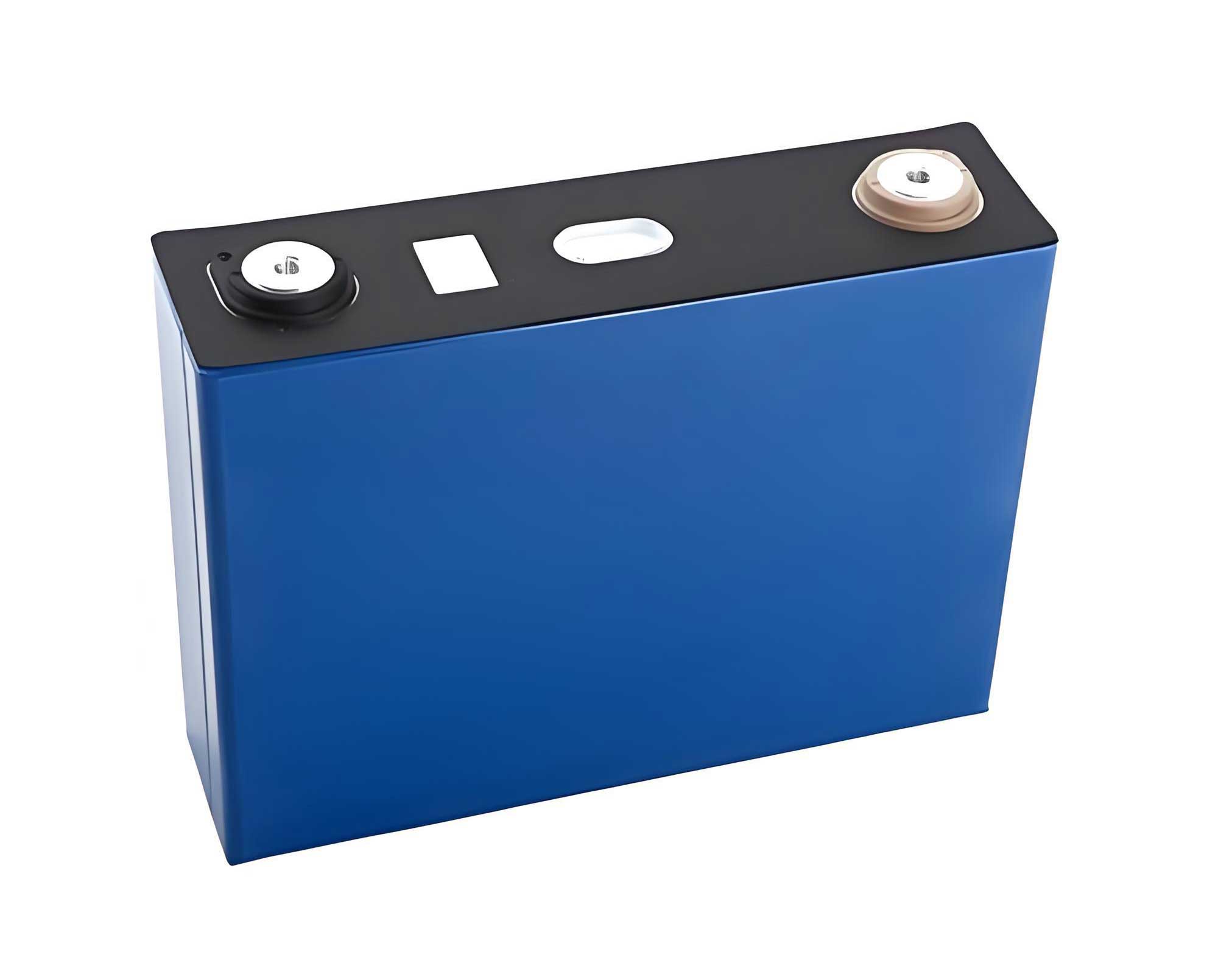
The initial OCV of a lifepoe4 battery is established spontaneously after the dried cell is immersed in electrolyte. It represents the equilibrium potential difference between the positive and negative electrodes before any external current is applied. This potential, $V_{OCV}$, can be expressed as the difference between the equilibrium potentials of the positive ($\phi_{+}$) and negative ($\phi_{-}$) electrodes versus a common reference:
$$ V_{OCV} = \phi_{+} – \phi_{-} $$
Any factor that alters the surface chemistry or the ionic concentration at the electrode-electrolyte interface can shift these equilibrium potentials, thereby changing the initial OCV. Our investigation systematically validated the influencing factors from five key perspectives: electrolyte type and chemical stability, standing time, individual electrode potentials, post-baking moisture content of the cell, and impurity content in the anode active material. Concurrently, the interfacial characteristics at full state-of-charge (SOC) and the overall performance of cells exhibiting low initial OCV were examined.
The experimental work utilized 100 Ah prismatic cells. Different material systems were employed, as summarized in the table below. The performance and phenomena associated with the initial OCV were primarily observed in systems incorporating regenerated graphite.
| Component | Material Designation | Description |
|---|---|---|
| Cathode | RZ | Regenerated Lithium Iron Phosphate (Lifepoe4) |
| Cathode | FZ | Virgin Lithium Iron Phosphate (Lifepoe4) |
| Anode | RF-A | Regenerated Graphite |
| Anode | FF-A, FF-B | Virgin Graphite |
| Electrolyte | LB-A | Low-Temperature Electrolyte (with TMSP additive) |
| Electrolyte | LB-B, LB-C | Low-Temperature Electrolyte (with DTD additive) |
| Electrolyte | SS-A | Low-Temperature Electrolyte (Baseline) |
| Electrolyte | SS-B | Room-Temperature Electrolyte (Baseline) |
The first critical factor investigated was the type and inherent stability of the electrolyte. Cells with the RRA (Regenerated Lifepoe4 / Regenerated Graphite) system were filled with three different electrolytes: LB-A (containing Tris(trimethylsilyl) phosphate, TMSP), SS-A, and SS-B. The distribution of initial OCV after high-temperature standing revealed a striking difference. While cells with SS-A and SS-B electrolytes showed a consistent, high initial OCV averaging around 225 mV, cells with LB-A electrolyte exhibited a bimodal distribution, with a significant population showing OCV values close to or below 20 mV. This pointed directly to the electrolyte formulation as a primary suspect. To understand this, the chemical stability of different electrolytes was probed by monitoring free acid (HF) and moisture content during high-temperature storage (≈42°C).
| Electrolyte | Additive | Free Acid Change (After 62h @ 42°C) | Relative Stability |
|---|---|---|---|
| LB-A | TMSP | Very Large Increase (e.g., from ~130 ppm to >1000 ppm) | Least Stable |
| LB-C | DTD | Moderate Increase | Moderately Stable |
| SS-B | None (Baseline) | Minimal Change | Most Stable |
The data is clear: the electrolyte containing the TMSP additive, while beneficial for high-temperature cycling performance in a lifepoe4 battery, undergoes significant decomposition or reaction under storage conditions, generating large amounts of free acid (HF). This degradation is a key driver for the observed initial OCV depression. The relationship between standing time and OCV evolution was also characterized. For the RRA system with different electrolytes, the OCV typically stabilized after 24 hours of standing, though the trajectory (increasing or decreasing) varied. This stabilization time is critical for defining process parameters in lifepoe4 battery manufacturing.
To deconvolute the contributions of each electrode, a three-electrode experiment was conducted. A dried RRA cell was immersed in electrolyte, and the potentials of the positive ($\phi_{+}$) and negative ($\phi_{-}$) electrodes were measured independently against a lithium metal reference. The OCV is their difference: $V_{OCV}(t) = \phi_{+}(t) – \phi_{-}(t)$. The results showed that while $\phi_{+}$ stabilized quickly, $\phi_{-}$ exhibited a significant and gradual increase over time before plateauing. Crucially, the final $\phi_{-}$ in the unstable LB-A electrolyte was markedly higher than in the stable SS-A electrolyte, whereas $\phi_{+}$ was similar. This leads to a fundamental conclusion for the lifepoe4 battery system:
$$ \Delta V_{OCV} \approx -\Delta \phi_{-} $$
The depression in initial OCV is predominantly caused by an upward shift in the negative electrode’s equilibrium potential, not a change in the positive lifepoe4 electrode’s potential.
The role of cell moisture was investigated by constructing cells with “high” and “low” moisture content (post-baking). As anticipated, cells with higher moisture levels showed a dramatically increased probability of developing low initial OCV, especially when paired with less stable electrolytes. Moisture reacts with LiPF₆ salt in the electrolyte, further amplifying HF generation:
$$ \text{LiPF}_6 + \text{H}_2\text{O} \rightarrow \text{LiF} + \text{POF}_3 + 2\text{HF} $$
Thus, high cell moisture and unstable electrolyte synergistically create an acidic environment conducive to OCV depression.
The most revealing insights came from analyzing the electrolyte and materials. Electrolyte extracted from low-OCV RRA cells was analyzed via Inductively Coupled Plasma (ICP). The results were striking:
| Cell Group (Initial OCV) | Average Cu²⁺ Concentration in Electrolyte | Factor Increase vs. Normal |
|---|---|---|
| Normal (OCV > 200 mV) | ~0.25 mg/kg | 1x |
| Low (OCV < 20 mV) | > 8.8 mg/kg | > 35x |
This massive increase in copper ions was traced back to the anode material. ICP analysis of different graphite sources showed that regenerated graphite (RF-A) contained significantly higher levels of copper impurities (several ppm) compared to virgin graphite (FF-A with ~0 ppm, FF-B with <1 ppm). The correlation was perfect: low initial OCV phenomena occurred predominantly in systems using copper-contaminated regenerated graphite. In a lifepoe4 battery, copper impurities (present as Cu⁰ or CuO) dissolve in the presence of HF:
$$ \text{Cu} + 2\text{HF} \rightarrow \text{CuF}_2 + \text{H}_2 \uparrow $$
$$ \text{CuO} + 2\text{HF} \rightarrow \text{CuF}_2 + \text{H}_2\text{O} $$
The dissolved Cu²⁺ ions adsorb onto the graphite anode surface, altering its electrochemical interface and shifting its potential $\phi_{-}$ positively. This mechanistic chain explains the OCV drop:
$$ \text{High [Cu] in Anode} \xrightarrow{\text{HF}} \text{High [Cu²⁺] in Electrolyte} \rightarrow \text{Increase in } \phi_{-} \rightarrow \text{Decrease in } V_{OCV} = \phi_{+} – \phi_{-} $$
The connection to interfacial black spots was established through post-mortem analysis. Cells with low initial OCV, when fully charged to 3.65 V, consistently exhibited a dark, circular “black spot” at the center of the negative electrode. This phenomenon worsened with increased charging current. Scanning Electron Microscopy (SEM) and Energy-Dispersive X-ray Spectroscopy (EDS) mapping confirmed that the black spot region had a markedly higher atomic percentage of copper compared to the normal electrode area. This is direct evidence that the dissolved Cu²⁺ ions are not inert; during the subsequent formation and charging processes, they are electrochemically reduced and deposited onto the graphite surface, likely forming copper dendrites or clusters that catalyze further electrolyte decomposition and, critically, induce localized lithium plating. The black spot is thus a composite of plated lithium and copper deposits. This severely degrades the performance and safety of the lifepoe4 battery, leading to accelerated capacity fade, increased impedance, and potential internal short-circuit risks.
The performance implications were also measured. While the initial capacity of low-OCV cells was similar to normal cells, their internal self-discharge (measured as voltage difference after aging) was significantly worse for some electrolyte systems. More importantly, the chronic degradation due to the compromised interface leads to poor long-term cycle life, a key metric for any commercial lifepoe4 battery.
In conclusion, this investigation provides a comprehensive mechanistic understanding of the low initial OCV issue in lifepoe4 batteries, particularly those employing regenerated materials. The problem originates from a synergistic trifecta: 1) the presence of copper impurities in regenerated graphite, 2) an electrolyte environment rich in free acid (HF) due to either inherent additive instability (e.g., TMSP) or excessive cell moisture, and 3) sufficient standing time for the dissolution and adsorption processes to occur. The dissolved Cu²⁺ shifts the anode potential upward, lowering the OCV, and later deposits as metallic copper during charging, inducing localized lithium plating visible as interfacial black spots. To enhance the manufacturing consistency and final performance of the lifepoe4 battery, stringent controls must be implemented: strict limitation of copper impurities in recycled graphite, precise control of electrode and cell moisture after baking, and careful evaluation of electrolyte additive stability under processing conditions. By addressing these root causes, the reliability and competitiveness of advanced, cost-effective lifepoe4 batteries can be significantly improved.