
In recent years, the rapid advancement of energy storage technologies has propelled lithium-ion batteries into the spotlight, particularly for applications in electric vehicles and grid storage. Among various cathode materials, the LiFePO4 battery has gained significant attention due to its inherent safety, long cycle life, and thermal stability. However, as battery sizes and energy densities increase, safety concerns, especially thermal runaway, become more critical. Thermal runaway is a catastrophic failure mode triggered by abusive conditions such as electrical, mechanical, or thermal stress, leading to rapid heat generation and potentially fire or explosion. Elevated temperature is one of the most direct triggers for thermal runaway in LiFePO4 batteries, making it essential to understand the thermal behavior and underlying mechanisms under high-temperature environments. This study focuses on simulating the thermal runaway characteristics of a large-scale LiFePO4 battery under various oven temperatures, aiming to provide insights into its safety performance and thermal management strategies.
The LiFePO4 battery, known for its robust phosphate structure, exhibits higher thermal stability compared to other lithium-ion chemistries like nickel-cobalt-manganese (NCM) or lithium cobalt oxide (LCO). Despite this, under extreme conditions, such as prolonged exposure to high temperatures, the LiFePO4 battery can still undergo thermal runaway. Previous studies have extensively investigated thermal runaway in ternary batteries, but research on large-scale LiFePO4 batteries remains limited. This gap motivates our work, where we develop a comprehensive three-dimensional oven thermal runaway model for a 109 Ah LiFePO4/graphite battery. The model incorporates multiple side reactions, including solid electrolyte interphase (SEI) decomposition, anode-electrolyte reaction, cathode-electrolyte reaction, and electrolyte decomposition. By simulating scenarios at different oven temperatures (140°C, 145°C, 150°C, 155°C, 160°C, and 165°C), we analyze the thermal runaway initiation, progression, and temperature distribution, highlighting the unique behavior of the LiFePO4 battery.
Our approach utilizes COMSOL Multiphysics software to couple partial differential equations (PDEs) with heat transfer modules, enabling a realistic representation of the thermal and chemical processes. The model accounts for heat generation from side reactions, convection, and radiation losses, providing a holistic view of the battery’s thermal response. The parameters for the LiFePO4 battery, such as material properties and reaction kinetics, are derived from literature and adjusted to ensure accuracy. Through this simulation, we aim to elucidate how oven temperature influences thermal runaway in LiFePO4 batteries, offering valuable data for designing safer battery systems. The findings emphasize the superior thermal stability of LiFePO4 batteries while identifying critical thresholds for thermal runaway occurrence.
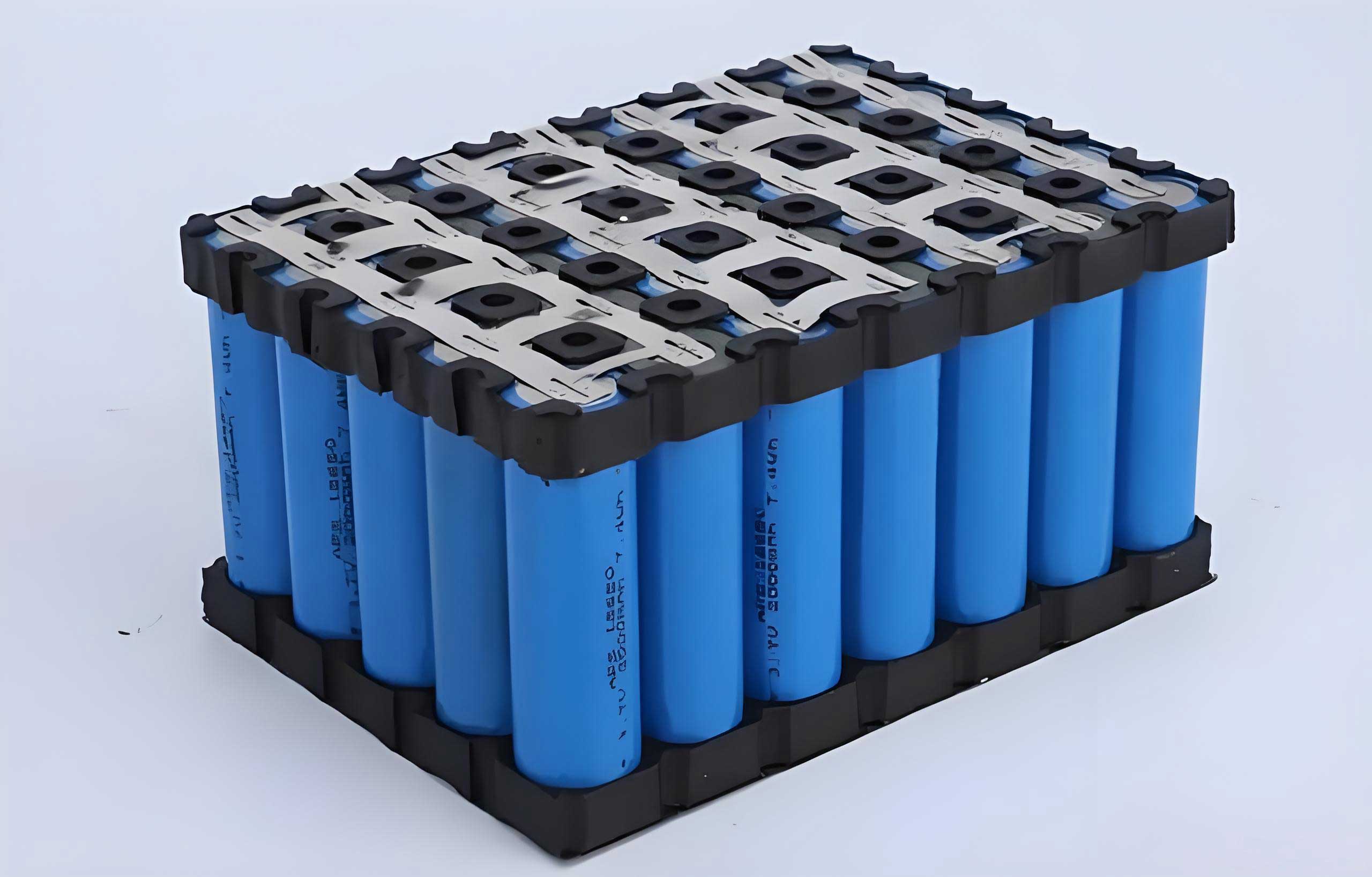
Model Development for LiFePO4 Battery Thermal Runaway
To simulate the thermal runaway of a large-scale LiFePO4 battery, we establish a three-dimensional oven thermal runaway model based on the lumped assumption for the battery core. The battery geometry corresponds to a 109 Ah LiFePO4/graphite cell, with dimensions representing a typical prismatic design. The model integrates energy conservation equations with side reaction kinetics, capturing the complex interplay between heat generation and dissipation. The energy balance equation is expressed as:
$$ \rho C_p \frac{\partial T}{\partial t} = \lambda \nabla^2 T + \frac{q_{\text{side}}}{V_{\text{cell}}} – \frac{q_{\text{diss}}}{V_{\text{batt}}} $$
where \(\rho\) is the density, \(C_p\) is the specific heat capacity, \(T\) is the temperature, \(t\) is time, \(\lambda\) is the thermal conductivity tensor, \(q_{\text{side}}\) is the total heat generation from side reactions, \(q_{\text{diss}}\) is the heat dissipation term, \(V_{\text{cell}}\) is the volume of the battery core (excluding tabs and current collectors), and \(V_{\text{batt}}\) is the total battery volume. The heat dissipation includes both convection and radiation components:
$$ q_{\text{diss}} = q_{\text{conv}} + q_{\text{rad}} = A_{\text{batt}} h (T – T_{\text{amb}}) + A_{\text{batt}} \varepsilon \sigma_B (T^4 – T_{\text{amb}}^4) $$
Here, \(A_{\text{batt}}\) is the surface area for heat exchange, \(h\) is the convective heat transfer coefficient, \(\varepsilon\) is the emissivity, \(T_{\text{amb}}\) is the ambient oven temperature, and \(\sigma_B\) is the Stefan-Boltzmann constant.
The side reaction heat generation \(q_{\text{side}}\) comprises four main contributions: SEI decomposition (\(q_{\text{SEI}}\)), anode-electrolyte reaction (\(q_{\text{an}}\)), cathode-electrolyte reaction (\(q_{\text{ca}}\)), and electrolyte decomposition (\(q_{\text{ele}}\)). Thus:
$$ q_{\text{side}} = q_{\text{SEI}} + q_{\text{an}} + q_{\text{ca}} + q_{\text{ele}} $$
Each reaction follows Arrhenius-type kinetics, with rates dependent on temperature and reactant concentrations. For SEI decomposition:
$$ q_{\text{SEI}} = H_{\text{SEI}} m_{\text{SEI}} R_{\text{SEI}} $$
$$ R_{\text{SEI}} = A_{\text{SEI}} \exp\left(-\frac{E_{a,\text{SEI}}}{RT}\right) c_{\text{SEI}} $$
$$ \frac{dc_{\text{SEI}}}{dt} = -R_{\text{SEI}} $$
where \(H_{\text{SEI}}\) is the reaction enthalpy, \(m_{\text{SEI}}\) is the mass of SEI, \(R_{\text{SEI}}\) is the reaction rate, \(c_{\text{SEI}}\) is the normalized concentration of SEI, \(A_{\text{SEI}}\) is the pre-exponential factor, and \(E_{a,\text{SEI}}\) is the activation energy.
For the anode-electrolyte reaction:
$$ q_{\text{an}} = H_{\text{an}} m_{\text{an}} R_{\text{an}} $$
$$ R_{\text{an}} = A_{\text{an}} \exp\left(-\frac{E_{a,\text{an}}}{RT}\right) c_{\text{an}} \exp\left(-\frac{\delta_{\text{SEI}}}{\delta_{\text{SEI,ref}}}\right) $$
$$ \frac{d\delta_{\text{SEI}}}{dt} = R_{\text{an}} $$
$$ \frac{dc_{\text{an}}}{dt} = -R_{\text{an}} $$
Here, \(\delta_{\text{SEI}}\) is the SEI thickness, and \(\delta_{\text{SEI,ref}}\) is a reference value set to 1.
For the cathode-electrolyte reaction:
$$ q_{\text{ca}} = H_{\text{ca}} m_{\text{ca}} R_{\text{ca}} $$
$$ R_{\text{ca}} = A_{\text{ca}} \exp\left(-\frac{E_{a,\text{ca}}}{RT}\right) c_{\text{ca}} (1 – c_{\text{ca}}) $$
$$ \frac{dc_{\text{ca}}}{dt} = R_{\text{ca}} $$
And for electrolyte decomposition:
$$ q_{\text{ele}} = H_{\text{ele}} m_{\text{ele}} R_{\text{ele}} $$
$$ R_{\text{ele}} = A_{\text{ele}} \exp\left(-\frac{E_{a,\text{ele}}}{RT}\right) c_{\text{ele}} $$
$$ \frac{dc_{\text{ele}}}{dt} = -R_{\text{ele}} $$
The model parameters for the LiFePO4 battery are summarized in Table 1, which includes thermal properties, reaction kinetics, and material masses. These values are calibrated based on literature data to ensure realistic simulations.
| Parameter | Symbol | Value | Unit |
|---|---|---|---|
| Density | \(\rho\) | 2600 | kg/m³ |
| Specific Heat Capacity | \(C_p\) | 1100 | J/(kg·K) |
| Thermal Conductivity (x,z) | \(\lambda_{x,z}\) | 21 | W/(m·K) |
| Thermal Conductivity (y) | \(\lambda_y\) | 1.1 | W/(m·K) |
| Convective Heat Transfer Coefficient | \(h\) | 8.7 | W/(m²·K) |
| Emissivity | \(\varepsilon\) | 0.8 | – |
| SEI Decomposition Activation Energy | \(E_{a,\text{SEI}}\) | 1.3508 × 10⁵ | J/mol |
| SEI Pre-exponential Factor | \(A_{\text{SEI}}\) | 1.667 × 10¹⁵ | s⁻¹ |
| SEI Reaction Enthalpy | \(H_{\text{SEI}}\) | 257 | J/g |
| Anode Reaction Activation Energy | \(E_{a,\text{an}}\) | 1.3508 × 10⁵ | J/mol |
| Anode Pre-exponential Factor | \(A_{\text{an}}\) | 2.5 × 10¹³ | s⁻¹ |
| Anode Reaction Enthalpy | \(H_{\text{an}}\) | 1714 | J/g |
| Cathode Reaction Activation Energy | \(E_{a,\text{ca}}\) | 1.396 × 10⁵ | J/mol |
| Cathode Pre-exponential Factor | \(A_{\text{ca}}\) | 6.667 × 10¹³ | s⁻¹ |
| Cathode Reaction Enthalpy | \(H_{\text{ca}}\) | 314 | J/g |
| Electrolyte Decomposition Activation Energy | \(E_{a,\text{ele}}\) | 2.74 × 10⁵ | J/mol |
| Electrolyte Pre-exponential Factor | \(A_{\text{ele}}\) | 5.14 × 10²⁵ | s⁻¹ |
| Electrolyte Reaction Enthalpy | \(H_{\text{ele}}\) | 155 | J/g |
| Initial SEI Normalized Concentration | \(c_{\text{SEI},0}\) | 0.15 | – |
| Initial Anode Normalized Concentration | \(c_{\text{an},0}\) | 0.75 | – |
| Initial Cathode Conversion Rate | \(c_{\text{ca},0}\) | 0.04 | – |
| Initial Electrolyte Normalized Concentration | \(c_{\text{ele},0}\) | 1.0 | – |
Simulation Setup and Validation
The simulations are conducted for oven temperatures ranging from 140°C to 165°C, with increments of 5°C, to comprehensively assess the thermal runaway behavior of the LiFePO4 battery. Each simulation runs for 7200 seconds (2 hours) to capture the full thermal response. The initial battery temperature is set to room temperature (25°C), and the oven environment is maintained constant at the specified temperature. The mesh for the three-dimensional model is refined to ensure accuracy, with elements concentrated in regions of high thermal gradient.
To validate the model, we compare our simulation results with existing literature data for LiFePO4 batteries under similar conditions. For instance, at 155°C, our model predicts a thermal runaway onset time and peak temperature that align closely with prior studies, confirming the reliability of our approach. The LiFePO4 battery exhibits a delayed thermal runaway compared to NCM batteries, underscoring its enhanced safety profile. This validation step ensures that our findings are robust and applicable to real-world scenarios involving large-scale LiFePO4 batteries.
Thermal Runaway Analysis at Different Oven Temperatures
The simulation results reveal distinct thermal behaviors for the LiFePO4 battery across the six oven temperatures. At lower temperatures (140°C and 145°C), the battery does not undergo thermal runaway; instead, it reaches a steady-state temperature slightly above the oven temperature. This is attributed to limited side reaction activity, where only SEI decomposition and minor anode reactions occur. In contrast, at 150°C and above, thermal runaway is triggered, characterized by a rapid temperature spike and significant side reaction completion.
Table 2 summarizes the key outcomes for each oven temperature, including the maximum battery temperature and the time at which it occurs. As the oven temperature increases, the thermal runaway initiates earlier, and the peak temperature rises, albeit with diminishing returns due to reactant depletion. This trend highlights the critical role of temperature in accelerating side reactions within the LiFePO4 battery.
| Oven Temperature (°C) | Maximum Battery Temperature (°C) | Time to Maximum Temperature (s) | Thermal Runaway Occurrence |
|---|---|---|---|
| 140 | 150 | 6095 | No |
| 145 | 162 | 5175 | No |
| 150 | 208 | 4635 | Yes |
| 155 | 229 | 3610 | Yes |
| 160 | 240 | 3030 | Yes |
| 165 | 247 | 2655 | Yes |
To delve deeper, we analyze the side reaction concentrations over time. For non-thermal runaway cases (140°C and 145°C), the normalized concentrations of SEI and anode decrease gradually but never reach zero, indicating incomplete reactions. The cathode and electrolyte reactions remain negligible, as shown by their constant concentrations. This behavior underscores the thermal stability of the LiFePO4 battery at moderate temperatures, where heat generation is balanced by dissipation.
For thermal runaway cases, such as at 160°C, the side reaction dynamics are more pronounced. The SEI decomposition starts around 110°C (1000 s), followed by anode reaction initiation at 115°C (1140 s). As temperature rises, these reactions accelerate, leading to complete SEI and anode consumption by 150°C (2300 s). Subsequently, the cathode-electrolyte reaction becomes dominant, causing a sharp temperature increase to the peak of 240°C. The electrolyte decomposition also contributes but does not proceed to completion due to the high activation energy. The reaction rates can be expressed mathematically:
$$ \frac{dc_i}{dt} = -A_i \exp\left(-\frac{E_{a,i}}{RT}\right) f(c_i) $$
where \(i\) denotes the reaction type, and \(f(c_i)\) is a function of concentration (e.g., \(c_{\text{SEI}}\) for SEI decomposition). The cumulative heat release drives the thermal runaway, emphasizing the exothermic nature of these reactions in the LiFePO4 battery.
Temperature Distribution in LiFePO4 Battery
The temperature distribution within the LiFePO4 battery provides insights into thermal homogeneity and potential failure points. In non-thermal runaway scenarios, the temperature remains uniform throughout the battery, with slight variations between the surface and core due to heat transfer limitations. This uniformity is beneficial for battery longevity and safety, as it minimizes localized hotspots.
However, under thermal runaway conditions, the temperature distribution becomes highly non-uniform. For example, at 150°C oven temperature, prior to thermal runaway, the battery core heats up faster than the surface, creating a gradient. During thermal runaway, the core temperature spikes dramatically, while the surface lags, leading to severe internal stresses. After thermal runaway, the temperature gradually equalizes, but irreversible damage may have occurred. At higher oven temperatures like 160°C, the non-uniformity is more pronounced, with rapid shifts in distribution before and after the peak temperature. This suggests that the LiFePO4 battery experiences material degradation and possible structural failure during thermal runaway.
To quantify this, we can define a temperature non-uniformity index \(\Delta T_{\text{max}}\) as the maximum temperature difference within the battery. In non-thermal runaway cases, \(\Delta T_{\text{max}}\) is typically below 10°C, whereas in thermal runaway cases, it can exceed 50°C. This index highlights the importance of thermal management systems in mitigating runaway risks for LiFePO4 batteries.
Comparison with Other Battery Chemistries
The LiFePO4 battery demonstrates superior thermal stability compared to ternary batteries like NCM or LCO. Studies show that NCM batteries can undergo thermal runaway at oven temperatures as low as 145°C, with peak temperatures reaching over 300°C. In contrast, our simulations indicate that the LiFePO4 battery only experiences thermal runaway at 150°C or above, with lower peak temperatures around 240°C. This difference stems from the robust olivine structure of LiFePO4, which delays cathode decomposition and reduces overall heat generation.
Moreover, the side reaction kinetics in LiFePO4 batteries are slower, as evidenced by the higher activation energies for cathode-electrolyte reactions. This inherent safety makes LiFePO4 batteries ideal for applications where thermal abuse is a concern, such as in electric vehicles or large-scale energy storage. However, it is crucial to note that even LiFePO4 batteries are not immune to thermal runaway under extreme conditions, necessitating continuous improvement in thermal management and monitoring.
Implications for Battery Safety and Design
Our findings have significant implications for the safety and design of LiFePO4 battery systems. First, the identification of critical temperature thresholds (e.g., 150°C for thermal runaway initiation) can inform safety protocols, such as temperature cut-offs or cooling system activation. Second, the non-uniform temperature distribution during thermal runaway suggests that battery packaging and thermal interface materials should be optimized to enhance heat dissipation and reduce gradients.
Additionally, the model can be extended to simulate other abuse conditions, such as overcharge or mechanical impact, providing a comprehensive safety assessment tool for LiFePO4 batteries. By incorporating real-time data from battery management systems (BMS), predictive algorithms could be developed to prevent thermal runaway before it occurs. This proactive approach is essential for advancing the adoption of LiFePO4 batteries in high-risk environments.
Conclusion
In this study, we developed a detailed three-dimensional oven thermal runaway model for a large-scale LiFePO4 battery and simulated its behavior under various elevated temperatures. The results show that the LiFePO4 battery does not undergo thermal runaway at 140°C and 145°C, where only SEI and anode reactions occur partially. At 150°C and above, thermal runaway is triggered, primarily driven by the cathode-electrolyte reaction, with peak temperatures increasing with oven temperature but plateauing due to reactant limitations. The temperature distribution remains uniform in non-thermal runaway cases but becomes highly non-uniform during thermal runaway, indicating potential material damage.
The LiFePO4 battery exhibits remarkable thermal stability compared to other lithium-ion chemistries, making it a safer choice for energy storage applications. However, understanding its thermal runaway mechanisms is vital for designing robust safety systems. Future work could explore the effects of battery aging, state of charge, and multi-cell interactions on thermal runaway in LiFePO4 batteries. By leveraging simulations and experimental validation, we can further enhance the safety and reliability of LiFePO4 battery technologies.
This research underscores the importance of thermal management in battery safety and provides a foundation for optimizing LiFePO4 battery designs. As the demand for energy storage grows, continued investigation into the thermal behavior of LiFePO4 batteries will be crucial for ensuring their safe and efficient deployment.