
For decades, the railway industry has relied on robust and reliable backup power systems to ensure the continuous operation of critical infrastructure such as signaling, communications, and uninterruptible power supplies (UPS). The integrity of these systems is paramount, as any failure can lead to significant operational disruptions and safety concerns. The backup battery, often described as the last line of defense in a power supply system, has traditionally been dominated by valve-regulated lead-acid (VRLA) batteries. Their mature technology and perceived stability made them the default choice. However, the evolving demands of modern railways—calling for higher efficiency, reduced maintenance, smaller footprints, and greener solutions—have exposed the limitations of this legacy technology. Issues such as low energy density, poor performance at temperature extremes, significant weight and volume, and environmental hazards associated with lead and acid have driven the search for superior alternatives. The rise of lithium-ion battery technology has provided a compelling answer, and among the various chemistries available, the Lithium Iron Phosphate (LiFePO4) battery has emerged as particularly well-suited for the stringent requirements of railway backup power applications.
The push towards clean, green, and low-carbon energy sources has accelerated the development and deployment of various advanced energy storage systems. Within the lithium-ion family, several cathode chemistries coexist, each with distinct performance profiles. A comparative analysis is essential to understand why the LiFePO4 battery stands out for safety-critical industries like railways.
| Battery Chemistry | Nominal Voltage (V) | Specific Capacity (mAh·g⁻¹) | Cycle Life (cycles) | Safety | Cost |
|---|---|---|---|---|---|
| Lithium Cobalt Oxide (LCO) | 3.6 | 150-200 | 500-1000 | Poor | Very High |
| Lithium Manganese Oxide (LMO) | 3.7 | 90-120 | 300-700 | Fair | Low |
| Lithium Nickel Manganese Cobalt Oxide (NMC) | 3.6 | 130-220 | 1000-2000 | Fair to Poor | High |
| Lithium Iron Phosphate (LiFePO4) | 3.2 | 130-150 | >3000 | Excellent | Low to Medium |
As illustrated in the table, while NMC and LCO batteries offer higher specific capacity, they compromise significantly on safety and, in the case of LCO, cost. LMO batteries, though low-cost, suffer from shorter cycle life and thermal stability issues. The LiFePO4 battery, in contrast, presents a uniquely balanced portfolio: exceptional safety due to its stable olivine crystal structure, unparalleled cycle life exceeding 3000 cycles, good power capability allowing for sustained high-current discharge (up to 10C or even 30C pulse), and relatively low cost. This combination directly addresses the core needs of railway backup systems: long-term reliability, operational safety, and total cost-effectiveness.
Fundamentals of LiFePO4 Battery Technology
Working Principle
The operation of a LiFePO4 battery is based on the movement of lithium ions between the cathode (LiFePO₄) and the anode (typically graphite) through an electrolyte, coupled with the flow of electrons through an external circuit. The electrochemical reactions during charge and discharge are given by:
Charge: $$ \text{LiFePO}_4 \rightarrow (1-x)\text{LiFePO}_4 + x\text{FePO}_4 + x\text{Li}^+ + x e^- $$
During charging, lithium ions are extracted from the LiFePO₄ cathode, migrating through the electrolyte and separator to be inserted into the graphite anode. The cathode becomes a mixture of LiFePO₄ and FePO₄.
Discharge: $$ \text{FePO}_4 + x\text{Li}^+ + x e^- \rightarrow x\text{LiFePO}_4 + (1-x)\text{FePO}_4 $$
During discharge, the process reverses. Lithium ions de-intercalate from the anode and travel back to the cathode, recombining with FePO₄ to reform LiFePO₄. This two-phase reaction mechanism contributes to the remarkable thermal and structural stability of the LiFePO4 battery.
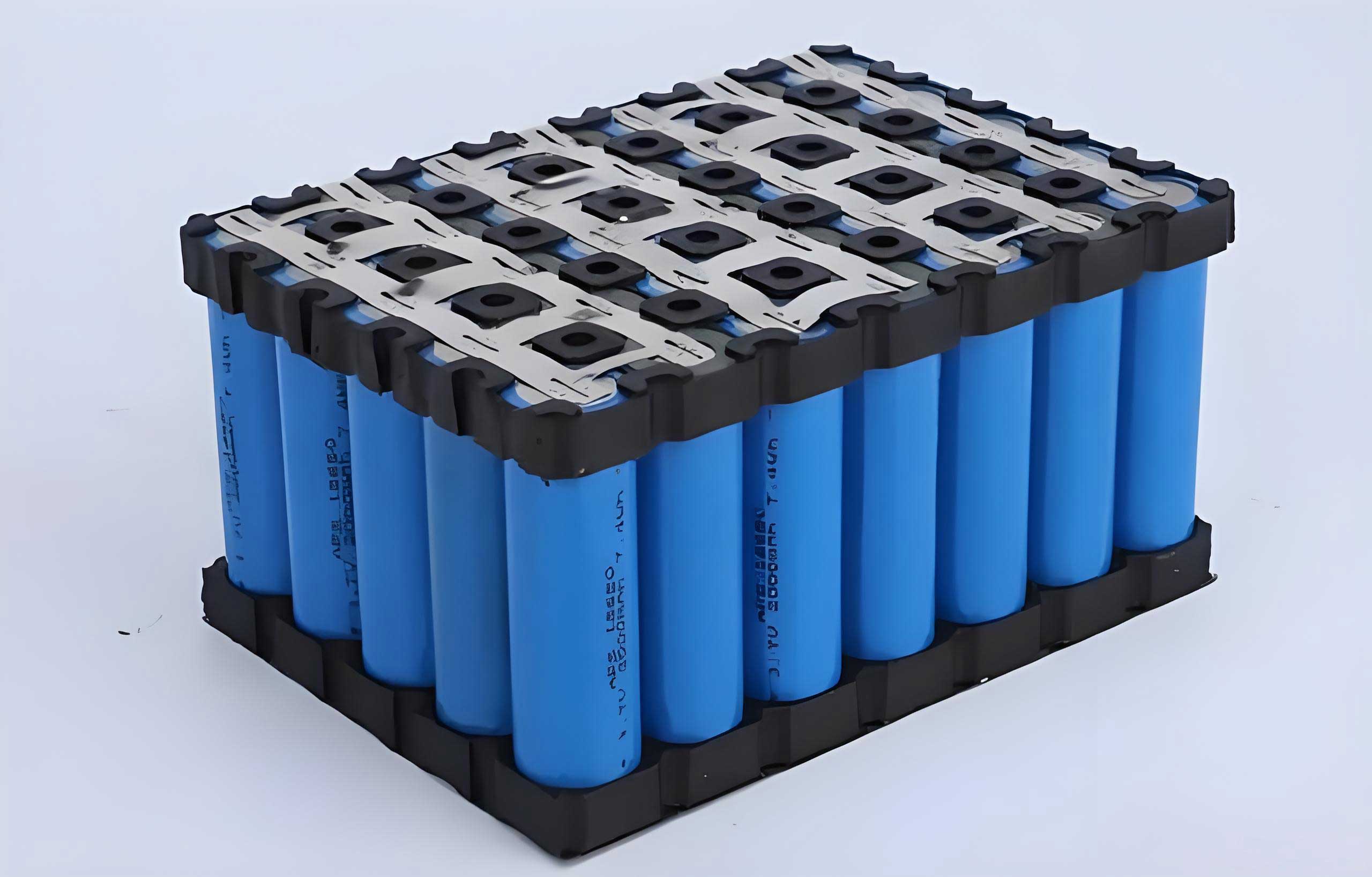
Performance Characteristics: A Direct Comparison with VRLA
To fully appreciate the advantages of the LiFePO4 battery in railway applications, a direct, point-by-point comparison with the traditional VRLA battery is indispensable.
| Performance Parameter | Valve-Regulated Lead-Acid (VRLA) Battery | Lithium Iron Phosphate (LiFePO4) Battery |
|---|---|---|
| Nominal Cell Voltage | 2.0 V | 3.2 V |
| Operating Temperature Range | Charge/Discharge: -10°C to 35°C | Charge: 0°C to 45°C; Discharge: -20°C to 60°C |
| Energy Density | Gravimetric: 35-45 Wh/kg Volumetric: 60-80 Wh/L |
Gravimetric: 130-140 Wh/kg Volumetric: 270-290 Wh/L (~3-4 times that of VRLA) |
| Charge/Discharge Efficiency | ~80% | ~95% |
| Cycle Life / Service Life | 300-500 cycles, ~5-6 years | >2000 cycles, >10 years |
| Recommended Discharge Rate | 0.1C | 0.3C to 1C |
| Maximum Discharge Rate | Up to 5C (short pulse) | Up to 30C (short pulse) |
| Spatial Requirements & Installation | Requires external racks or cabinets; floor space is typically 3x that of an equivalent LiFePO4 system. | Standard 19-inch rack-mount design possible; high installation density, superior space utilization. |
| Inherent Safety | Risk of thermal runaway, hydrogen emission, and acid leakage under fault conditions. | Excellent thermal and chemical stability; very resistant to thermal runaway, combustion, or explosion. |
| Environmental Impact | Contains lead, antimony, and sulfuric acid; poses significant recycling and contamination hazards. | Non-toxic materials; considered environmentally benign. |
| Maintenance & Monitoring | Requires regular manual checks for voltage, temperature, and terminal corrosion. | Integrated Battery Management System (BMS) enables real-time monitoring of voltage, current, temperature, and State of Health (SoH), enabling predictive maintenance. |
The table elucidates the transformative benefits of the LiFePO4 battery. Its wider operating temperature range enhances reliability in non-climate-controlled environments like trackside cabinets. The dramatic increase in energy density is perhaps the most visually obvious advantage; a LiFePO4 battery system with equivalent energy capacity can be one-third the size and weight of a VRLA installation. This directly translates to freed-up space in valuable equipment rooms and reduced structural loading. The cycle life advantage is equally profound. Where a VRLA battery may need replacement every 5-6 years, a LiFePO4 battery can reliably serve for over a decade, drastically reducing lifecycle waste and long-term capital expenditure.
The integrated Battery Management System (BMS) is a critical component that elevates the LiFePO4 battery from a simple energy storage device to an intelligent system. The BMS continuously monitors each cell for voltage balance, temperature, and current, preventing overcharge, deep discharge, and short circuits. It provides vital data on the battery’s State of Health (SoH) and State of Charge (SoC), enabling condition-based monitoring and eliminating the need for frequent manual巡检. From a sustainability perspective, the absence of heavy metals and corrosive electrolytes makes the LiFePO4 battery a clearly greener choice, aligning with global environmental policies and corporate sustainability goals.
Total Cost of Ownership Analysis
A common initial barrier to the adoption of LiFePO4 battery technology is the higher unit cost per cell or module compared to VRLA. However, a holistic Total Cost of Ownership (TCO) analysis over the system’s lifespan reveals a compelling economic argument. The superior energy density reduces the number of batteries and associated hardware (racks, cabling, switches) required. The extended service life means fewer replacement cycles. Reduced maintenance translates into lower labor costs. Consider the following simplified cost comparison for a representative backup power system:
| Component | VRLA Battery System | LiFePO4 Battery System |
|---|---|---|
| Number of Battery Units Required | 90 | 30 |
| Estimated Unit Price | $5,400 | $17,920 |
| Total Battery Cost | $486,000 | $537,600 |
| Additional Hardware (Racks, Panels) | $55,000 | $0 (rack-integrated) |
| Initial System Total Cost | $541,000 | $537,600 |
| Assumed Service Life | 5 years | 10 years |
| Cost per Operational Year (Initial) | $108,200 | $53,760 |
This analysis shows that even the initial investment for a LiFePO4 battery system can be comparable to a VRLA system when system integration savings are accounted for. More importantly, when the lifespan is considered, the annualized cost of the LiFePO4 solution is roughly half that of the VRLA system. Factoring in savings from reduced energy losses (higher efficiency) and eliminated maintenance visits further solidifies the TCO advantage of the LiFePO4 battery.
Application in Railway Systems: Practical Implementations
The theoretical advantages of the LiFePO4 battery are being realized in practical railway projects worldwide. The primary application remains as backup power for critical systems: signaling interlockings, telecommunications networks, station operational systems, and UPS for central control rooms. The transition involves replacing bulky VRLA banks with compact, rack-mounted LiFePO4 battery cabinets.
A compelling example can be observed in the retrofit of power systems at certain railway depots and signaling equipment rooms. Prior to retrofit, the battery room was dominated by large, floor-standing VRLA battery racks, consuming significant space and requiring dedicated ventilation and spill containment. After upgrading to a LiFePO4 battery system, the backup power is now housed in a single, standard telecommunications rack. This transformation liberates substantial floor space for other equipment or future expansion. The visual contrast is stark: from a crowded, maintenance-intensive setup to a neat, integrated, and intelligent power reserve. The integrated BMS provides remote monitoring capabilities, allowing maintenance teams to assess the health of the backup power system from a central control room, thereby enhancing operational efficiency and responsiveness.
Such retrofits and new installations on metro lines and mainline railway projects demonstrate the tangible benefits: maximized space utilization, enhanced reliability through continuous monitoring, reduced operational expenditure on maintenance and cooling, and a lower environmental footprint. The high-power capability of the LiFePO4 battery also makes it suitable for applications requiring high in-rush currents, further expanding its utility in the railway sector.
Conclusion and Future Perspective
The backup battery is the cornerstone of reliability for railway power systems. The shift from traditional VRLA batteries to advanced lithium-ion chemistry, specifically the Lithium Iron Phosphate (LiFePO4) battery, represents a significant technological leap forward. Through a detailed comparison of performance parameters, safety attributes, environmental impact, and total cost of ownership, the LiFePO4 battery proves to be a superior solution tailored to the demanding requirements of the railway industry. Its exceptional safety profile, long cycle life, high energy and power density, minimal maintenance needs, and environmental benignity directly address the limitations of legacy systems.
The successful deployment of LiFePO4 battery systems in various railway projects validates its readiness and reliability. As the technology continues to mature, with ongoing research aimed at improving low-temperature performance and energy density, its value proposition will only strengthen. The trajectory is clear: the LiFePO4 battery is not merely an alternative but is becoming the new standard for backup power in the railway industry, providing a robust, efficient, and sustainable foundation for safe and continuous railway operations. The adoption of LiFePO4 battery technology is a strategic investment in the future resilience and efficiency of railway infrastructure.