
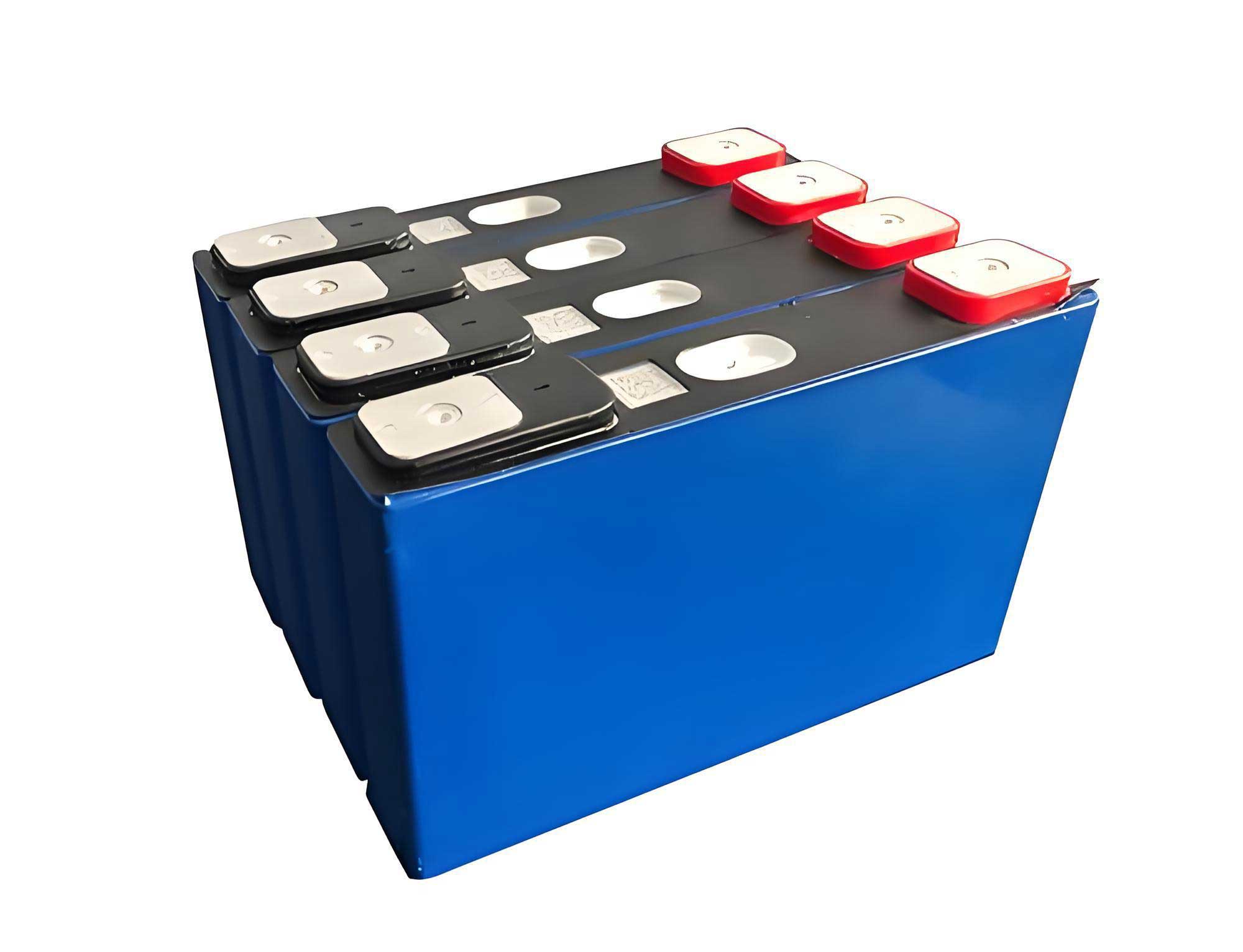
In the relentless pursuit of advanced energy storage solutions, lithium-ion batteries stand out for their high energy density, power capability, and versatility. Among the various cathode chemistries, lithium iron phosphate (LiFePO4) has garnered significant attention for applications demanding high safety, long cycle life, and cost-effectiveness, such as in energy storage systems and electric vehicles. Its inherent thermal stability, flat charge-discharge plateau, and abundance of raw materials make it a compelling choice. However, the widespread adoption of LiFePO4 battery technology, particularly in high-power scenarios, is hindered by its poor intrinsic electronic and ionic conductivity. While material-level optimizations like nano-sizing, carbon coating, and doping have been extensively researched, electrode engineering remains a critical frontier for unlocking superior performance. One such pivotal innovation is the use of carbon-coated aluminum foils as current collectors. This article delves into a first-hand, detailed investigation of how different carbon coatings—specifically carbon black and graphene—fundamentally alter the electrochemical landscape of a LiFePO4 battery, offering a path to enhanced power, longevity, and reliability.
The fundamental challenge with conventional bare aluminum foil in a LiFePO4 battery cathode lies at the interface between the active material particles and the current collector. LiFePO4 particles are typically micro-sized spheres. When coated onto a smooth, rigid aluminum foil with a polymeric binder, the contact is primarily point-like, leaving numerous voids and creating a high interfacial contact resistance. This “triangular zone” between the particle and the foil is a dead space for electron transfer. Furthermore, the mismatch in mechanical properties can lead to delamination during cycling, especially under high current or prolonged use. The introduction of a carbon coating on the aluminum foil aims to transform this interface. The coating acts as a conductive, mechanically compliant layer that fills these voids, establishes a more uniform electronic network, and enhances adhesion. To quantify the expected reduction in contact resistance, one can consider a simplified model where the effective contact area increases significantly. The resistance at the interface, $R_{contact}$, can be expressed as inversely proportional to the effective contact area $A_{eff}$ and the conductivity of the interface layer $\sigma_{interface}$:
$$
R_{contact} \propto \frac{1}{A_{eff} \cdot \sigma_{interface}}
$$
A high-performance coating maximizes $A_{eff}$ and $\sigma_{interface}$, thereby minimizing $R_{contact}$.
In our study, we evaluated three distinct types of aluminum foil: one coated with a conventional carbon black dispersion (CCF), another coated with a graphene-based dispersion (GCF), and a standard bare aluminum foil (BAF) as a baseline. Prior to cell assembly, scanning electron microscopy (SEM) revealed stark morphological differences. The CCF surface showed agglomerates of nano-sized carbon black particles partially covering the foil, intentionally leaving some direct contact points between the LiFePO4 and aluminum. The GCF surface, in contrast, was uniformly covered with a thin, flat layer of graphene nanosheets, lying parallel to the foil substrate. The BAF exhibited only the typical rolling marks and surface roughness. These structural differences foreshadow their divergent impacts on LiFePO4 battery performance.
We then fabricated identical 6.5 Ah pouch cells using these foils as the cathode current collector, with the cathodes formulated with 93.5% LiFePO4. The electrochemical impedance spectroscopy (EIS) results provided the first clear, quantitative evidence of the interfacial transformation. The Nyquist plots for cells with CCF and GCF displayed a classic single semicircle in the high-medium frequency region followed by a Warburg tail in the low-frequency region. The equivalent circuit consists of a solution resistance ($R_s$), a charge transfer resistance ($R_{ct}$) in parallel with a constant phase element (CPE), and a Warburg element ($W$). Critically, the high-frequency intercept on the real axis, representing the ohmic resistance ($R_{\Omega}$), which includes bulk electrolyte resistance, electrode material resistance, and crucially, the contact resistance, was markedly lower for carbon-coated foils. The cell with BAF presented a distinctly different spectrum with two discernible semicircles. The additional semicircle at higher frequencies is attributed to the contact impedance and double-layer capacitance ($C_{dl}$) at the poor, non-uniform interface between the LiFePO4 and the bare foil. The equivalent circuit thus requires an extra $R_{contact}$-$C_{dl}$ pair. The fitted resistance values are summarized below:
| Cell Designation | Foil Type | Ohmic Resistance, $R_{\Omega}$ (mΩ) | Contact + Charge Transfer Resistance (mΩ) |
|---|---|---|---|
| Cell-CCF | Carbon Black Coated | 2.5 | ~18 |
| Cell-GCF | Graphene Coated | 3.7 | ~15 |
| Cell-BAF | Bare Aluminum | 5.0 | ~25 (Contact) + ~20 (Charge Transfer) |
The data unequivocally shows that both carbon coatings drastically reduce the overall internal resistance of the LiFePO4 battery. The graphene coating, despite a slightly higher $R_{\Omega}$ than carbon black, showed a lower combined interfacial resistance, hinting at superior charge transfer kinetics.
The reduced internal resistance has a direct and profound impact on the LiFePO4 battery power capability. Rate performance tests from 0.5C to 4C were conducted. The polarization during charge and discharge, which is the deviation from the equilibrium voltage, is a direct consequence of the internal resistance. The total cell polarization ($\eta_{total}$) can be described as the sum of ohmic ($\eta_{ohm}$), electrochemical ($\eta_{ct}$), and concentration ($\eta_{conc}$) overpotentials:
$$
\eta_{total} = \eta_{ohm} + \eta_{ct} + \eta_{conc} = I \cdot R_{\Omega} + \frac{RT}{\alpha nF} \ln\left(\frac{I}{I_0}\right) + \frac{RT}{nF} \ln\left(\frac{C_s}{C_b}\right)
$$
where $I$ is current, $I_0$ is exchange current density, and $C_s$ and $C_b$ are surface and bulk concentrations. A lower $R_{\Omega}$ directly reduces $\eta_{ohm}$, which is particularly dominant at high rates. This manifests in two key metrics: the constant current (CC) charge ratio and the discharge median voltage. The CC charge ratio is the percentage of total capacity charged before the upper voltage limit (3.65V) is reached during the constant current phase; a higher ratio indicates less voltage “sag” due to polarization. The discharge median voltage is the voltage at 50% depth of discharge (DOD); a higher value indicates less voltage “drop” during discharge.
| Performance Metric | 1C Rate | 4C Rate | ||||
|---|---|---|---|---|---|---|
| Cell-CCF | Cell-GCF | Cell-BAF | Cell-CCF | Cell-GCF | Cell-BAF | |
| CC Charge Ratio (%) | ~99.5 | ~99.5 | ~99.0 | 93.0 | 93.0 | 84.0 |
| Discharge Median Voltage (V) | 3.19 | 3.19 | 3.17 | 3.00 | 3.05 | 2.97 |
| Capacity Retention vs. 0.5C (%) | 98.5 | 99.0 | 97.0 | 89.0 | 92.5 | 85.0 |
The superiority of carbon-coated foils, especially GCF, at high rates is striking. The 4C CC charge ratio for coated foils is 9 percentage points higher than for BAF, making fast-charging practically feasible. Furthermore, the higher discharge voltage of GCF directly translates to higher energy delivery and system efficiency under high-power loads.
This advantage extends to challenging low-temperature operation. At -20°C, the kinetics of a LiFePO4 battery slow down dramatically, increasing the apparent internal resistance. The initial voltage drop upon load application and the recoverable capacity are critical indicators. Cells with carbon-coated foils exhibited a smaller initial voltage drop and a higher operating voltage plateau throughout the discharge. The reduced interfacial resistance ensures that more voltage is available for useful work rather than being lost as heat within the cell at the poor contacts. The enhanced electronic network also facilitates more uniform current distribution, preventing local over-discharge and lithium plating.
Long-term cycling stability is paramount for commercial LiFePO4 battery applications. The improved adhesion and more uniform current distribution afforded by the carbon coating mitigate degradation mechanisms such as active material detachment and localized overheating. We evaluated cycle life at both 1C and 3C rates. The results demonstrate that while both coatings improve cycle life, the graphene coating (GCF) offers exceptional benefits, particularly under high-stress conditions.
| Cycle Test Condition | Cell Type | Cycles to 80% Capacity Retention | Key Observation |
|---|---|---|---|
| 1C Charge/1C Discharge | Cell-CCF | 1691 | Good improvement over baseline. |
| Cell-GCF | 1756 | Best performance, showing superior long-term interface stability. | |
| Cell-BAF | 1358 | Baseline performance. | |
| 3C Charge/3C Discharge | Cell-CCF | 562 | Significant improvement, demonstrating power capability. |
| Cell-GCF | 800 | Outstanding performance, nearly 2.4x the baseline cycle life. | |
| Cell-BAF | 338 | Rapid degradation due to high interfacial stress and polarization. |
The stark difference in 3C cycling highlights the critical role of the coating’s nature. The graphene nanosheets, lying flat on the foil, create an excellent two-dimensional conductive plane that not only improves electron transport parallel to the electrode but also enhances lateral heat dissipation. This reduces localized hot spots during high-current cycling, a key factor in prolonging the life of a high-power LiFePO4 battery. The carbon black coating, while effective, relies on point contacts between particles, leading to a more tortuous and potentially less efficient conductive path for both electrons and heat.
Finally, storage performance, which reflects the stability of the electrode-electrolyte interface and the rate of self-discharge, was also improved. After 28 days of storage at 100% State of Charge (SOC) and 25°C, cells with carbon-coated foils showed higher capacity retention and recovery. After a more aggressive 7-day storage at 60°C, the difference became more pronounced. The carbon layer acts as a protective barrier, reducing direct parasitic reactions between the electrolyte and the bare aluminum foil, which can lead to corrosion and gas generation. This is especially important for the long-term shelf life and calendar life of a LiFePO4 battery system.
In conclusion, the integration of carbon-coated aluminum foils is not merely an incremental improvement but a transformative electrode-level technology for enhancing LiFePO4 battery performance. By fundamentally restructuring the current collector-active material interface, it addresses the core limitations of contact resistance and adhesion. Our comparative study demonstrates that while conventional carbon black coatings offer substantial benefits, graphene-based coatings represent a significant leap forward, particularly for applications demanding high power, fast charging, exceptional cycle life under stress, and reliable low-temperature operation. The graphene layer’s unique 2D morphology optimizes electronic and thermal transport in the plane of the electrode, making it an ideal interfacial material for next-generation, high-performance LiFePO4 battery systems destined for the most demanding energy storage and electric mobility applications.