
In recent years, the rapid development of electrochemical energy storage projects has heightened societal concern over the safety of batteries used in energy storage systems. As a researcher focused on battery safety, I recognize that to effectively prevent and control thermal runaway risks in lithium-ion batteries, a clear understanding of their thermal runaway behavior is essential. This study delves into the thermal runaway mechanisms of large-capacity LiFePO4 batteries commonly employed in energy storage applications. Using an overheating method to trigger thermal runaway in an 86 Ah LiFePO4 battery, we analyze the heat and gas generation processes in detail. The findings aim to provide insights for early warning systems and safety designs in energy storage stations.
The global shift towards renewable energy sources, driven by climate change agreements like the Paris Accord, has underscored the need for reliable energy storage solutions. Electrochemical energy storage, particularly using lithium-ion batteries, offers advantages such as high power density, rapid response, and cost-effectiveness. Among various battery chemistries, LiFePO4 batteries are noted for their enhanced safety profile, making them suitable for large-scale energy storage where safety is paramount. However, thermal runaway remains an inherent risk, especially under abusive conditions like overheating. Incidents such as fires in energy storage facilities highlight the urgent need for comprehensive studies on thermal runaway behavior. In this work, we employ experimental approaches to simulate overheating scenarios and unravel the complex processes during thermal runaway.
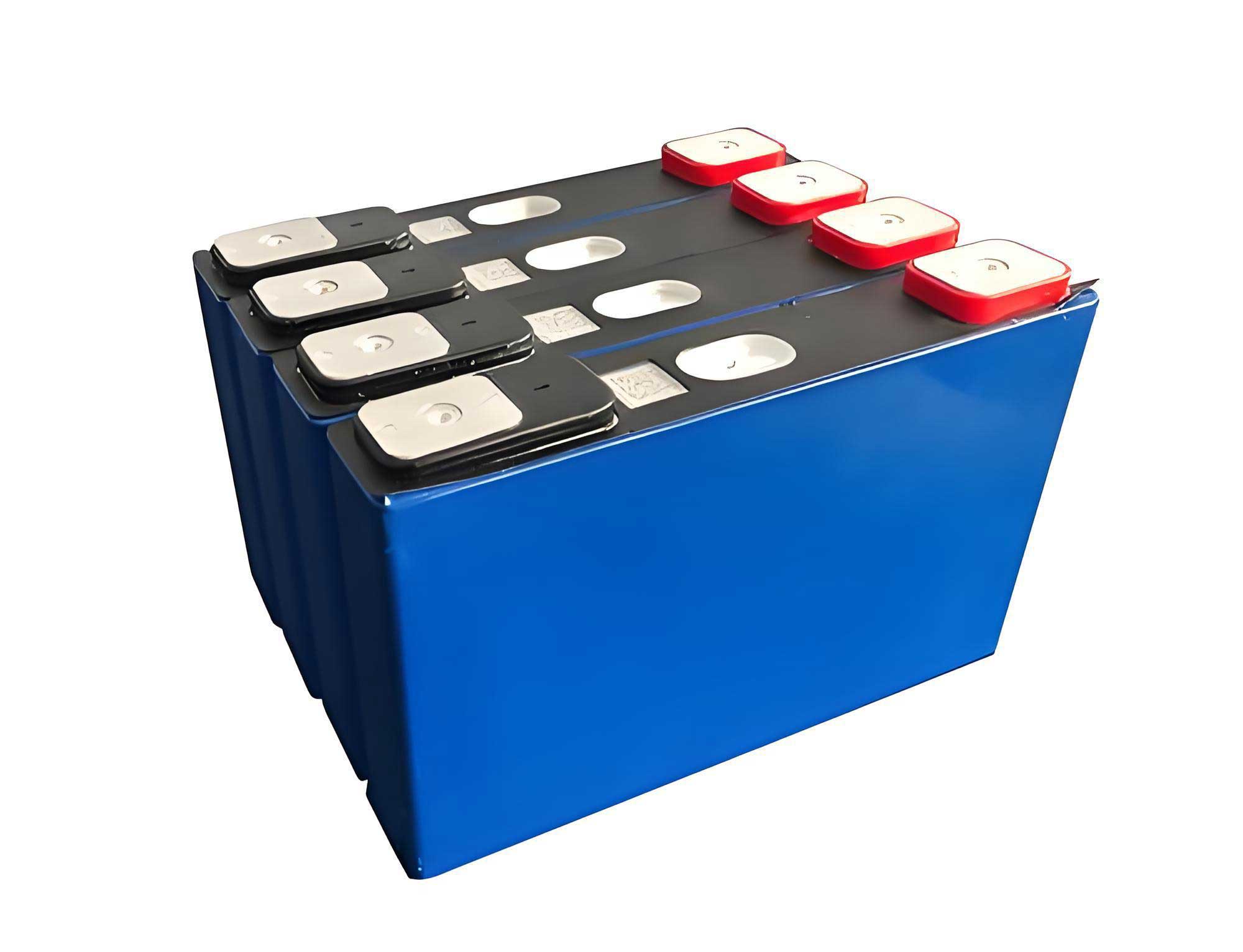
Our experimental setup is designed to mimic real-world overheating conditions. We use a custom-built thermal runaway platform that allows for precise control and measurement. The battery sample is an 86 Ah LiFePO4 battery with a nominal voltage of 3.65 V. Key specifications are summarized in Table 1.
| Parameter | Value |
|---|---|
| Geometric Dimensions (L × W × H) | 205 mm × 175 mm × 30 mm |
| Rated Capacity | 86 Ah |
| Charge Termination Voltage | 3.65 V |
| Discharge Termination Voltage | 2.0 V |
| State of Charge (SOC) | 100% |
| Mass | 1979.8 g |
The battery is heated using a 500 W heating plate, and insulation materials minimize heat loss to the environment. Temperature measurements are taken at multiple points on the battery surface and near the vent. Mass loss is monitored in real-time using a balance, and gas emissions are analyzed via Fourier Transform Infrared (FTIR) spectroscopy and a hydrogen probe. The experimental platform ensures stable data acquisition throughout the thermal runaway event.
Upon initiating heating, the battery undergoes distinct stages during thermal runaway. We define three stages based on critical events: vent opening and peak temperature. Initially, heating causes a gradual temperature rise without visible changes. At approximately 838 seconds, the pressure relief valve opens abruptly, releasing a white mist composed of electrolyte droplets. This marks the onset of intense gas generation. Subsequently, the battery temperature escalates rapidly, reaching a peak of around 353°C before cooling down. The entire process lasts about 461 seconds from vent opening to termination.
Temperature data reveal intricate dynamics. The average surface temperature, denoted as θ, is calculated from three diagonal points on the non-heated side:
$$ \theta = \frac{\theta_4 + \theta_5 + \theta_6}{3} $$
where θ₄, θ₅, and θ₆ are temperature readings. The rate of temperature rise, dθ/dt, shows two distinct peaks, as illustrated in Figure 1 (conceptual representation). The first peak occurs near 110°C, and the second near 225°C. This bimodal pattern suggests multiple exothermic reactions driving thermal runaway. Possible explanations include internal short circuits from separator collapse and decomposition of electrode materials. Additionally, mass loss rate peaks coincide with gas ejection events, which may temporarily slow temperature rise due to heat dissipation via hot gas emissions.
Mass loss during thermal runaway is significant. The battery loses about 400.1 g, accounting for 20.2% of its initial mass. This loss primarily results from electrolyte vaporization and decomposition products. The mass loss rate, dm/dt, peaks at temperatures around 133°C and 143°C, correlating with vigorous gas release. Table 2 summarizes key thermal parameters.
| Parameter | Value |
|---|---|
| Vent Opening Temperature | 112°C |
| Peak Temperature (θ_max) | 353°C |
| Total Mass Loss | 400.1 g |
| Mass Loss Percentage | 20.2% |
| Duration of Thermal Runaway | 461 s |
Gas analysis provides crucial insights into chemical reactions during thermal runaway. Using FTIR and hydrogen probes, we detect gases such as hydrogen (H₂), carbon dioxide (CO₂), carbon monoxide (CO), methane (CH₄), ethylene (C₂H₄), and others. The real-time gas composition helps identify reaction pathways. For instance, hydrogen generation is linked to reactions between lithium and binders like PVdF or CMC:
$$ \text{PVdF} + \text{Li} \rightarrow \text{LiF} + \text{-CH=CF-} + \frac{1}{2}\text{H}_2 $$
$$ \text{CMC} + \text{Li} \rightarrow \text{CMC-OLi} + \frac{1}{2}\text{H}_2 $$
Carbon dioxide originates from decomposition of the solid electrolyte interphase (SEI) and carbonate electrolytes:
$$ (\text{CH}_2\text{OCO}_2\text{Li})_2 \rightarrow \text{Li}_2\text{CO}_3 + \text{C}_2\text{H}_4 + \text{CO}_2 + \frac{1}{2}\text{O}_2 $$
Carbon monoxide forms via reduction of CO₂ or electrolyte solvents:
$$ 2\text{CO}_2 + 2\text{Li}^+ + 2e^- \rightarrow \text{Li}_2\text{CO}_3 + \text{CO} $$
$$ \text{EC} + 2\text{Li}^+ + 2e^- \rightarrow (\text{CH}_2\text{OCO}_2\text{Li})_2 + \text{CO} $$
Methane and ethylene are produced from electrolyte reduction reactions. Integrating gas volumes over the entire event, we obtain the composition fractions shown in Table 3.
| Gas Species | Volume Fraction (%) |
|---|---|
| Hydrogen (H₂) | 39.5 |
| Carbon Dioxide (CO₂) | 30.15 |
| Carbon Monoxide (CO) | 12.1 |
| Methane (CH₄) | 8.2 |
| Ethylene (C₂H₄) | 5.5 |
| Others (e.g., aldehydes) | 4.65 |
Hydrogen and carbon dioxide dominate the gas emissions, together comprising nearly 70% of the total. This has implications for safety, as hydrogen is flammable and CO₂ can displace oxygen, posing suffocation risks. The high hydrogen content underscores the importance of ventilation in battery enclosures.
To further understand the heat generation, we consider reaction kinetics. The overall heat release rate can be modeled using Arrhenius equations for key reactions. For example, the exothermic reaction from SEI decomposition may follow:
$$ \frac{dQ}{dt} = A \exp\left(-\frac{E_a}{RT}\right) $$
where Q is heat, A is pre-exponential factor, E_a is activation energy, R is gas constant, and T is temperature. Combining multiple reactions leads to complex heat flow profiles. Previous studies using calorimetry on LiFePO4 cells show two heat flow peaks, aligning with our observed temperature rise rate peaks. The first peak corresponds to internal short circuits, and the second to active material decomposition. This reinforces the staged nature of thermal runaway in LiFePO4 batteries.
The gas temperature near the vent also provides clues. Measurements show vent gas temperatures around 200-250°C, initially higher than battery surface temperature but later lower due to air entrainment. This cooling effect from gas ejection may temporarily moderate temperature rise, but intense internal reactions soon overwhelm it.
Our findings have practical implications for energy storage systems. Early warning systems can monitor temperature rise rates and gas emissions, especially hydrogen and CO₂, to detect incipient thermal runaway. Safety designs should incorporate venting pathways and fire suppression agents that address gas flammability. For LiFePO4 batteries, while safer than other chemistries, thermal runaway still poses significant hazards under overheating conditions.
In summary, this study elucidates the thermal runaway behavior of an 86 Ah LiFePO4 battery under overheating. We identify three stages, bimodal temperature rise peaks, substantial mass loss, and gas composition dominated by hydrogen and carbon dioxide. The reactions driving these phenomena involve SEI decomposition, electrolyte reduction, and binder interactions. These insights contribute to safer deployment of LiFePO4 batteries in energy storage, informing risk assessment and mitigation strategies. Future work could explore effects of state of charge, aging, and module-level interactions to further enhance safety protocols.
Expanding on these points, we can delve deeper into the mathematical modeling of thermal runaway. The energy balance during heating can be expressed as:
$$ mC_p \frac{dT}{dt} = P_{\text{heat}} + Q_{\text{rxn}} – Q_{\text{loss}} $$
where m is battery mass, C_p is specific heat capacity, P_heat is external heating power, Q_rxn is reaction heat, and Q_loss is heat loss to surroundings. During thermal runaway, Q_rxn becomes dominant, leading to exponential temperature rise. For LiFePO4 batteries, the reaction heat can be partitioned into contributions from different mechanisms. Table 4 estimates these contributions based on literature data.
| Reaction Type | Approximate Heat Contribution (%) |
|---|---|
| SEI Decomposition | 20-30 |
| Electrolyte Decomposition | 25-35 |
| Positive-Negative Reactions | 30-40 |
| Binder Decomposition | 5-10 |
These values vary with battery design and conditions, but highlight the complex interplay of exothermic processes. Additionally, gas generation rates can be correlated with temperature. For hydrogen, the production rate might follow:
$$ \frac{dV_{H_2}}{dt} = k_{H_2} \exp\left(-\frac{E_{a,H_2}}{RT}\right) $$
where V_H₂ is hydrogen volume, and k_H₂ and E_a,H₂ are constants. Similar equations apply for other gases. Integrating these over time yields total gas volumes, which align with our measured fractions.
Another aspect is the impact of pressure build-up. Before vent opening, internal pressure rises due to gas generation, which can be described by the ideal gas law if volume is constant:
$$ P = \frac{nRT}{V} $$
where P is pressure, n is moles of gas, R is gas constant, T is temperature, and V is internal volume. Once pressure exceeds the vent threshold, rapid gas release occurs, causing mass loss and cooling. This pressure dynamics is crucial for designing pressure relief devices in LiFePO4 batteries.
Furthermore, we compare LiFePO4 batteries with other chemistries like NMC or LCO. LiFePO4 generally has higher thermal stability due to strong P-O bonds in the phosphate structure, delaying oxygen release and reducing combustion risks. However, as shown here, overheating can still trigger severe thermal runaway with significant gas emissions. This underscores that no battery is entirely risk-free, and safety measures must be tailored to specific chemistries.
In terms of experimental limitations, our setup uses external heating, which may not perfectly replicate internal faults like short circuits. However, it provides controlled conditions for studying fundamental responses. Future experiments could incorporate nail penetration or overcharging to explore other abuse scenarios.
From an application perspective, energy storage systems using LiFePO4 batteries should implement thermal management systems to keep batteries within safe temperature ranges. Monitoring parameters like temperature gradient and gas sensors can enhance early detection. For instance, a sudden rise in hydrogen concentration could trigger alarms before temperature peaks.
In conclusion, our detailed analysis of thermal runaway in an 86 Ah LiFePO4 battery reveals critical behaviors that inform safety engineering. The combination of thermal and gas data provides a comprehensive view of the hazards. By leveraging this knowledge, stakeholders can develop more robust energy storage solutions that harness the benefits of LiFePO4 batteries while minimizing risks. Continued research into reaction mechanisms and real-time monitoring will further advance battery safety in the evolving landscape of renewable energy integration.