
In the rapidly evolving field of electric vehicles, the LiFePO4 battery has emerged as a critical lithium-ion battery technology due to its high energy density, long cycle life, and excellent safety profile. However, during long-term storage or usage, the LiFePO4 battery often exhibits self-discharge phenomena, leading to capacity loss and performance degradation, which severely impacts its application efficiency and reliability. Self-discharge is inherently determined by internal battery factors, but external environmental changes, such as temperature and state of charge (SOC), also influence it. Therefore, studying and improving the self-discharge screening process for LiFePO4 batteries holds significant importance. This article explores the mechanisms behind self-discharge in LiFePO4 batteries, investigates the relationship between charging voltage and open-circuit voltage after storage, and focuses on batteries in the 10% SOC to 33% SOC range to monitor voltage drop trends under different temperatures. By comparing differential curves of battery voltage and capacity (dV/dQ vs. SOC), and further validating through long-term monitoring at 13% SOC, 18% SOC, and 23% SOC, we aim to derive optimized and feasible self-discharge screening conditions.
Self-discharge in LiFePO4 batteries refers to the spontaneous consumption of stored electrical energy when the battery is in an open-circuit state, typically accompanied by a drop in open-circuit voltage. This process is complex and can be broadly categorized into physical self-discharge and chemical self-discharge. Physical self-discharge often results from external contaminants introduced during manufacturing, such as dust from welding or metal burrs and beads from processes like cutting, slitting, or laser cutting, which can penetrate the separator and cause internal short circuits. Chemical self-discharge involves reactions between electrode materials and the electrolyte, such as the positive electrode material reacting with the electrolyte, the negative electrode material reacting with the electrolyte, and irreversible reactions triggered by impurities in the electrolyte. For LiFePO4 batteries, understanding these mechanisms is crucial for developing effective screening methods to identify abnormal cells in production.
The electrochemical reactions during charge and discharge of a LiFePO4 battery can be represented as follows. The positive electrode reaction is given by: $$ \text{LiFePO}_4 \rightleftharpoons \text{Li}_{1-x}\text{FePO}_4 + x\text{Li}^+ + x e^- $$ and the negative electrode reaction is: $$ x\text{Li}^+ + x e^- + 6\text{C} \rightleftharpoons \text{Li}_x\text{C}_6 $$ During charging, lithium ions deintercalate from the positive electrode and migrate through the electrolyte to intercalate into the negative electrode, causing a gradual increase in open-circuit voltage. After charging ceases, the battery voltage experiences a rapid drop followed by a slow decline before stabilizing, a phenomenon known as polarization. Polarization includes ohmic polarization, concentration polarization, and electrochemical polarization, with ohmic polarization being more pronounced immediately after charging, while concentration and electrochemical polarizations dominate during the stabilization phase.
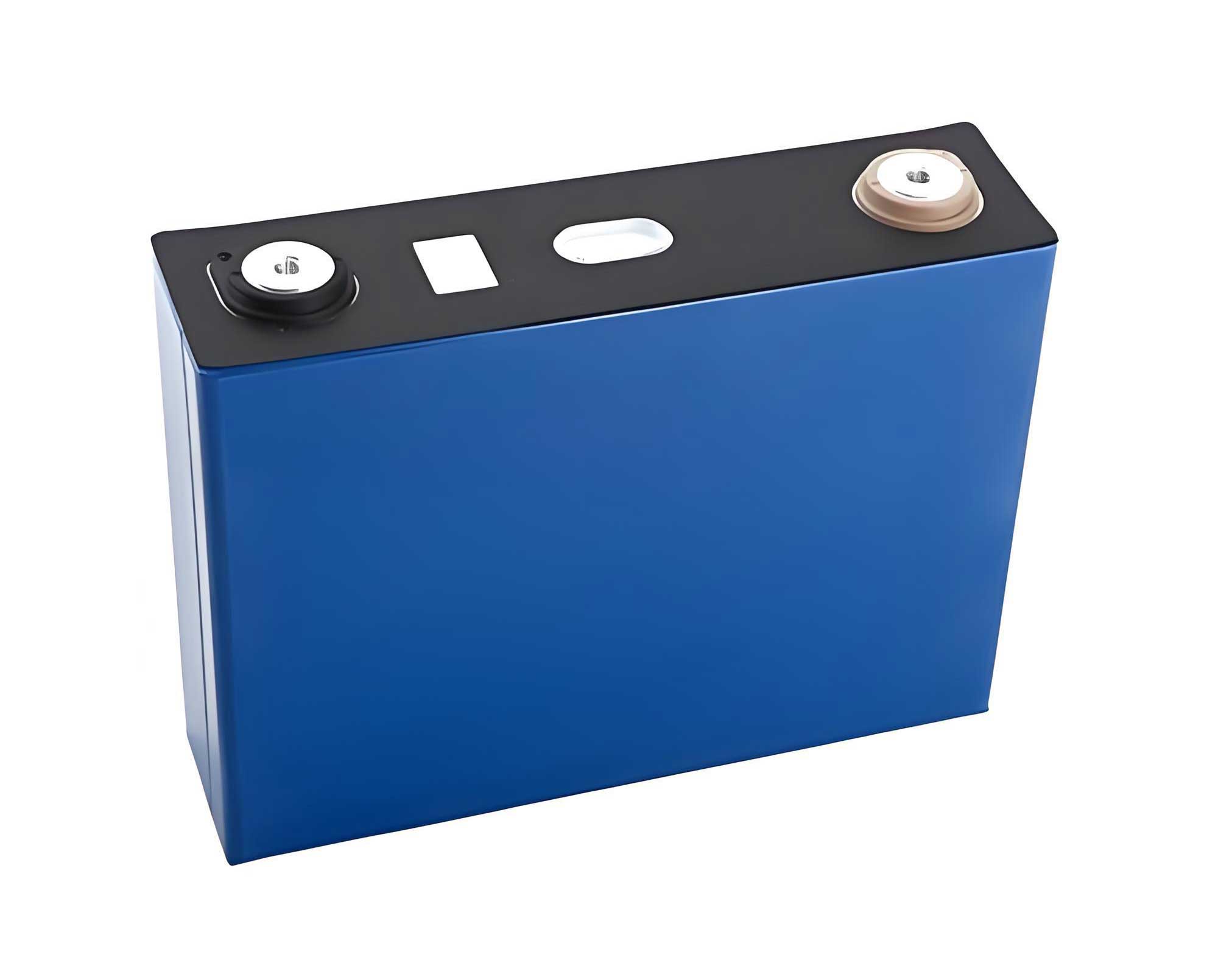
To investigate self-discharge in LiFePO4 batteries, we conducted experiments using 50 Ah soft-pack LiFePO4 cells prepared via wet process technology. The electrode slurries were mixed uniformly from active materials, solvents, conductive agents, and binders in specific ratios using a homogenizer, then coated onto electrode surfaces via a coater. After drying, rolling, and slitting, the electrode rolls were assembled with separators using a stacking machine to form cell stacks. These underwent assembly, baking, electrolyte injection, sealing, and formation to produce the final LiFePO4 battery. Throughout manufacturing, temperature was controlled at ≤ -40°C and dust levels at a 10,000-class standard. This meticulous process ensures consistency in LiFePO4 battery performance for self-discharge analysis.
In the first experiment, we selected 105 post-formation LiFePO4 batteries under mass production conditions. At 25°C, we performed capacity calibration with 0.5C cycles for five rounds to calculate the average capacity, then plotted the charging voltage curve. The batteries were divided into 21 groups of 5 cells each. The first group was discharged to 2.5 V, while the other 20 groups were discharged to 2.5 V and then charged to specific SOC levels—5% SOC, 10% SOC, 15% SOC, up to 100% SOC—based on time termination. After resting for 24 hours, we measured the open-circuit voltage using a Hioki BT4560 instrument. The results revealed the standard open-circuit voltage curve for the LiFePO4 battery, showing that in the 30% SOC to 60% SOC and 70% SOC to 100% SOC ranges, the voltage remains relatively stable, making it difficult to identify self-discharge using voltage drop or K-value methods. In contrast, below 10% SOC and in the 10% SOC to 30% SOC and 60% SOC to 70% SOC intervals, the open-circuit voltage changes significantly. Considering safety risks at high SOC and deviations from normal usage at low SOC, we focused on the 10% SOC to 30% SOC range for long-term storage observations in LiFePO4 batteries.
Next, we examined voltage changes under different temperature conditions. We selected 80 LiFePO4 batteries from mass production, divided into two groups. Each group had 8 cells adjusted to 10% SOC, 15% SOC, 20% SOC, 25% SOC, and 30% SOC. One group was stored at 25°C, and the other at 45°C, with long-term monitoring of voltage drops. The initial open-circuit voltage after 24 hours of rest was recorded as \( V_0 \) at time \( t_0 \). After one day, the voltage \( V_1 \) was measured at time \( t_1 \), with the first-day voltage drop defined as \( \Delta V_1 = V_0 – V_1 \). Monitoring continued for 30 days to obtain \( V_{30} \) and \( \Delta V_{30} = V_0 – V_{30} \). The rate of open-circuit voltage change over time, or K-value, is defined as \( K = \Delta V / \Delta t \), with the first-day self-discharge rate as \( K_1 = (V_0 – V_1) / (t_1 – t_0) \). The table below summarizes the voltage changes and K-values after 7 days of storage for LiFePO4 batteries at different SOC levels and temperatures.
| Condition | SOC State | ΔV₇ (mV) | K₇ |
|---|---|---|---|
| 25°C | 10% SOC | 5.106 | 0.729 |
| 15% SOC | 5.020 | 0.717 | |
| 20% SOC | 4.719 | 0.674 | |
| 25% SOC | 4.804 | 0.686 | |
| 30% SOC | 3.023 | 0.432 | |
| 45°C | 10% SOC | 8.159 | 1.360 |
| 15% SOC | 7.571 | 1.262 | |
| 20% SOC | 7.372 | 1.229 | |
| 25% SOC | 6.366 | 1.061 | |
| 30% SOC | 5.683 | 0.947 |
The data indicates that higher temperatures accelerate self-discharge in LiFePO4 batteries due to increased internal reaction activity. At 45°C, voltage drops are more pronounced and exhibit greater dispersion compared to 25°C. For instance, at 10% SOC to 25% SOC, batteries stored at 25°C show slower voltage declines with minimal dispersion, while those at 45°C display faster drops and higher variability. This underscores the importance of avoiding high-temperature environments during storage and transportation of LiFePO4 batteries to mitigate self-discharge. Additionally, lower SOC states within the 10% SOC to 30% SOC range result in more noticeable voltage drops, with 30% SOC cells at 25°C showing minimal change due to being at the end of the voltage plateau, whereas at 45°C, enhanced activation leads to observable declines.
To further analyze the behavior of LiFePO4 batteries, we employed differential voltage analysis, which reflects the rate of voltage change relative to capacity. The differential curve (dV/dQ vs. SOC) for the experimental LiFePO4 battery during charging is depicted below. This curve reveals a distinct voltage change around 13% SOC, corresponding to phase transitions during charging. Based on prior findings that lower SOC levels (10% SOC to 25% SOC) exhibit larger voltage change rates during storage, and considering practical constraints like energy consumption in high-temperature screening and manufacturing feasibility, we selected 13% SOC, 18% SOC, and 23% SOC states for further validation at 25°C. The differential curve can be represented mathematically as: $$ \frac{dV}{dQ} = f(SOC) $$ where peaks in the curve indicate phase transformations in the LiFePO4 battery, providing insights into its electrochemical properties.
For bulk validation, we increased the sample size to 288 LiFePO4 batteries, evenly divided into three groups adjusted to 13% SOC, 18% SOC, and 23% SOC, and stored them at 25°C for 30 days while monitoring voltage drops. The results showed that at 13% SOC, abnormal voltage drop dispersion appeared as early as day 2, with new outliers emerging by day 5, and continued occurrences up to day 30, posing risks of missed detections or false judgments in screening. At 18% SOC, abnormal batteries were only detected on day 22, leading to high storage costs in practical manufacturing. In contrast, at 23% SOC, abnormal points emerged on day 5 and day 7, with no new anomalies thereafter, and this SOC aligns closely with the 24.5% SOC used in formation processes, making it suitable for production. Therefore, we propose 23% SOC at 25°C for 7 days as the optimal self-discharge screening condition for LiFePO4 batteries.
The self-discharge rate K can be modeled using an Arrhenius-type equation to account for temperature dependence: $$ K = A \exp\left(-\frac{E_a}{RT}\right) $$ where \( A \) is a pre-exponential factor, \( E_a \) is the activation energy for self-discharge in LiFePO4 batteries, \( R \) is the gas constant, and \( T \) is the absolute temperature. This equation helps explain why higher temperatures exacerbate self-discharge in LiFePO4 batteries. Additionally, the voltage drop over time can be approximated by a linear model for short periods: $$ \Delta V = K \cdot \Delta t + V_{\text{offset}} $$ where \( V_{\text{offset}} \) accounts for initial polarization effects. For long-term storage, a logarithmic model might be more accurate: $$ V(t) = V_0 – \alpha \ln(1 + \beta t) $$ where \( \alpha \) and \( \beta \) are constants specific to the LiFePO4 battery’s chemistry and SOC.
In production settings, implementing self-discharge screening for LiFePO4 batteries involves balancing detection accuracy with operational efficiency. Based on our experiments, we recommend the following protocol for LiFePO4 batteries: after formation, adjust cells to 23% SOC, store them at 25°C ± 2°C for 7 days, and measure open-circuit voltage daily. Cells with voltage drops exceeding a threshold (e.g., 10 mV over 7 days) should be flagged as abnormal. This method leverages the pronounced voltage changes in the 10% SOC to 30% SOC range while avoiding the safety and cost issues associated with extreme SOCs or temperatures. To enhance screening, we can incorporate statistical process control (SPC) charts to monitor K-values across batches of LiFePO4 batteries, ensuring consistency and early detection of deviations.
Future research on self-discharge in LiFePO4 batteries should explore additional influencing factors, such as electrolyte composition, electrode porosity, and aging effects, to refine screening precision. For example, varying the lithium salt concentration or using additives like vinylene carbonate could mitigate chemical self-discharge in LiFePO4 batteries. Moreover, studying different LiFePO4 battery formats (e.g., cylindrical, prismatic) and capacities could lead to tailored screening approaches for diverse applications. Integrating artificial intelligence and big data analytics could enable predictive models for real-time monitoring of LiFePO4 battery health, using parameters like voltage, temperature, and impedance to forecast self-discharge trends. Such advancements would support the growing demand for reliable energy storage in electric vehicles and grid systems.
In conclusion, this study systematically investigates self-discharge screening for LiFePO4 batteries by analyzing voltage platform characteristics, temperature effects, and differential curves. We identified that in the 10% SOC to 30% SOC range, lower SOC states and higher temperatures accelerate voltage drops, with 23% SOC at 25°C for 7 days proving optimal for identifying abnormal cells in manufacturing. The LiFePO4 battery’s robustness makes it a cornerstone of modern electrification, but addressing self-discharge is vital for maximizing performance and longevity. As the electric vehicle industry advances, continued innovation in screening technologies and battery management systems will be essential to harness the full potential of LiFePO4 batteries in sustainable transportation and energy storage solutions.