
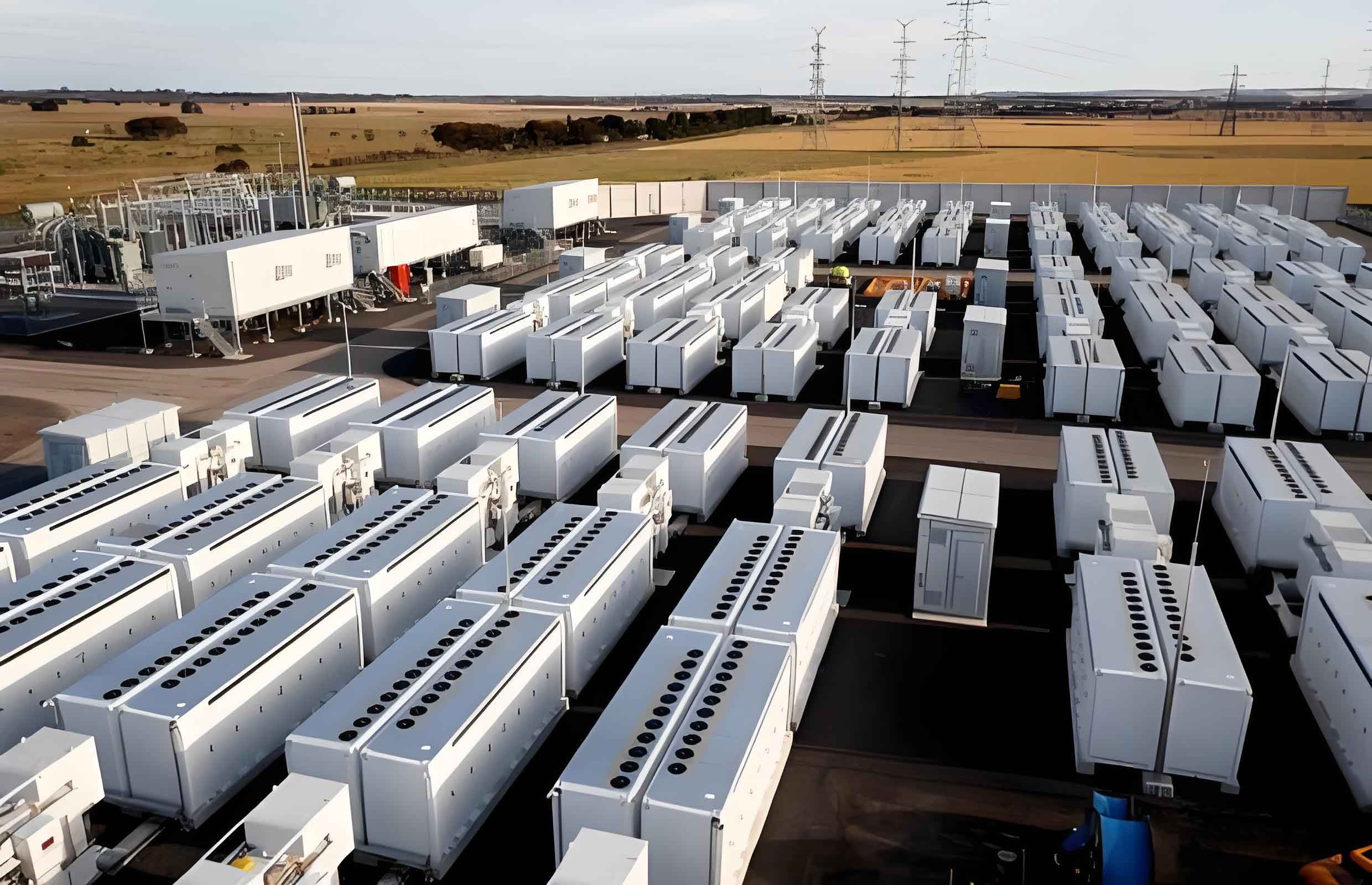
The global shift towards renewable energy integration has fundamentally increased the importance of electrochemical energy storage. Within this landscape, the safety and reliability of battery energy storage system operations are paramount. Lithium-ion batteries, particularly LiFePO4 for their inherent stability, are the workhorse of modern battery energy storage system installations. However, the high packing density and substantial charge/discharge rates demanded by grid-scale applications lead to significant heat generation. Managing this thermal load is critical; exceeding the optimal temperature window not only accelerates degradation but also elevates the risk of thermal runaway, posing a severe safety threat. Consequently, advanced thermal management systems, particularly liquid cooling for its superior heat transfer capability, have become a focal point for both academia and industry. My work centered on optimizing the liquid cooling performance for a large-capacity LiFePO4 battery module, aiming to achieve an efficient and energy-conscious design. This narrative details the thought process behind the design choices, simulation-led optimizations, and the experimental validation that followed.
The starting point was a commercial 30-cell module (3 columns × 10 rows) using 208 Ah LiFePO4 cells. The primary challenge in liquid-cooled battery energy storage system design is balancing cooling performance with pumping power. A traditional serpentine channel offers excellent cooling by forcing coolant past each cell but creates high flow resistance, leading to excessive energy consumption for pumping. Conversely, a traditional parallel channel minimizes pressure drop but often results in poor flow distribution and higher temperature spreads. I hypothesized that a hybrid structure could offer a favorable compromise. Thus, three cold plate designs were conceived and modeled: the Traditional Serpentine, the Traditional Parallel, and our proposed hybrid, the Parallel-Serpentine channel.
Computational Fluid Dynamics (CFD) simulations under a 1C charging scenario provided clear insights. The performance metrics are summarized below:
| Flow Channel Design | Max. Module Temp. (°C) | Max. Temp. Difference (°C) | Inlet-Outlet Pressure Drop (Pa) | Relative Pumping Energy* |
|---|---|---|---|---|
| Traditional Serpentine | 32.50 | 6.95 | 1252.5 | 100% (Baseline) |
| Traditional Parallel | 32.88 | 7.48 | 101.2 | ~8% |
| Parallel-Serpentine | 32.61 | 7.08 | 748.6 | ~60% |
*Estimated, proportional to pressure drop at constant flow rate.
The data confirmed the trade-off. While the serpentine design had the best thermal performance (lowest max temp and delta-T), its pressure drop was an order of magnitude higher. The parallel design, while efficient hydraulically, suffered thermally. Our Parallel-Serpentine channel struck an excellent balance, reducing the pressure drop by over 40% compared to the serpentine while nearly matching its thermal performance. The pumping energy, proportional to the pressure drop for a given flow rate $$(P_{pump} \propto \Delta p \cdot Q)$$, was estimated to be only about 60% of the serpentine’s requirement. This justified moving forward with the Parallel-Serpentine design for the physical prototype, as it promised significant energy savings for the auxiliary systems in a battery energy storage system without compromising safety margins.
Transitioning from simulation to hardware required practical considerations. The CFD model idealized the geometry, but manufacturing imposes limits. The flow paths were adjusted to accommodate machining and welding processes (like friction stir welding for the aluminum plates) without altering the core thermal-hydraulic function. The experimental module faithfully replicated the 3×10 cell arrangement, with custom-machined Parallel-Serpentine cold plates placed between cell columns. To accurately capture thermal behavior, 20 temperature sensors were positioned at the geometric center of selected cells, focusing on the outer and center columns where gradients were expected to be highest. The entire system was housed in an enclosure to mimic a real battery energy storage system cabinet environment.
The experimental validation was structured in phases. First, a baseline test with no cooling established the severity of the problem: the module temperature rose to 40.3°C under 1C charging. This underscored the critical need for active thermal management in such dense battery energy storage system packs. With the liquid cooling system active (coolant at 25°C, 0.1 m/s inlet velocity), the focus shifted to optimizing the system’s inherent configuration.
The first optimization lever was the cold plate arrangement. The intuitive, symmetric layout has all coolant inlets on the same side. I theorized that a staggered arrangement, where adjacent cold plates have inlets on opposite sides, could improve temperature uniformity. The rationale was to prevent the cumulative heating of coolant along the flow path from disproportionately affecting one side of the module. Experiments confirmed this: the staggered arrangement reduced the maximum temperature in the critical center column by 0.3°C and improved temperature uniformity. This was a simple, no-cost modification with a measurable benefit for the battery energy storage system thermal consistency.
The second lever was flow distribution. The standard approach uses identical flow rates for all cold plates. However, heat generation is not uniform; cells in the module’s center experience less natural convection from the environment and may be thermally “crowded.” I proposed a differentiated flow strategy: assigning a higher flow rate (0.3 m/s) to the two cold plates cooling the inner columns and a lower rate (0.1 m/s) to the cold plates on the outer columns. The goal was to direct more cooling capacity to the thermal “hot spots” while reducing pumping power where it was less needed. The total system flow rate remained constant to ensure a fair comparison. The results were promising. Compared to a uniform 0.2 m/s flow, the differentiated strategy further lowered the peak module temperature. This demonstrated that intelligent, non-uniform flow control could extract better performance from the same hydraulic resources, a valuable strategy for optimizing the energy efficiency of a large-scale battery energy storage system.
The final experimental data validated the overall design efficacy. The optimized system (staggered plates + differentiated flow) maintained the module’s maximum temperature at 32.7°C under 1C charging, a dramatic 7.6°C reduction from the natural convection baseline. The table below summarizes the progression:
| Test Condition | Module Max Temperature (°C) | Key Observation |
|---|---|---|
| Natural Convection (Baseline) | 40.3 | Unacceptable temperature rise. |
| Liquid Cooling (Symmetric, 0.1 m/s) | 34.6 | Effective but has optimization potential. |
| + Staggered Arrangement | 34.3 | Improved uniformity and lowered peak. |
| + Differentiated Flow (0.1/0.3 m/s) | 32.7 | Best performance, optimal resource use. |
A consistent finding was that the center column consistently reported the highest temperatures, confirming it as the thermal bottleneck. This insight is crucial for designing monitoring and control systems for a battery energy storage system. Discrepancies between simulation and experimental results (errors < 2°C, rate < 6%) were analyzed and attributed to factors like simplified battery heat source models in simulation $$(\dot{q}_{gen} = I(V_{ocv} – V_{terminal}))$$, ideal vs. real contact resistance, and environmental control tolerances. These errors are within acceptable engineering margins for such a complex system.
In conclusion, this journey from concept to validation underscores a systematic approach to thermal management in LiFePO4 battery energy storage system. The Parallel-Serpentine cold plate design itself provided a foundational improvement in the energy efficiency ratio. More importantly, the experimental work proved that system-level optimizations—like staggered cold plate installation and differentiated flow control—can yield significant additional benefits without hardware changes. These strategies enhance thermal homogeneity and peak temperature control, directly contributing to the safety, longevity, and operational efficiency of the battery energy storage system. Future work will focus on integrating these findings into adaptive control algorithms that dynamically adjust flow distribution based on real-time thermal loads, pushing towards even smarter and more efficient thermal management solutions.