
In my extensive experience analyzing power systems, I have observed that the foundational requirement for any electrical grid is safety and stability, encompassing both steady-state and transient stability. Traditionally, grids reliant on synchronous generators connected via alternating current systems benefit from the inherent inertia and stability provided by rotating machines operating at fixed speeds. This rotational inertia acts as a buffer against disturbances, maintaining frequency and voltage within acceptable limits. However, the rapid integration of renewable energy sources, such as wind and solar power, has fundamentally altered the grid’s source structure. As these intermittent resources replace conventional generation, the overall rotational inertia decreases, posing severe challenges to grid stability. This shift necessitates innovative solutions, and in my view, the battery energy storage system emerges as a pivotal technology to address these issues. Throughout this discussion, I will emphasize how the battery energy storage system can mimic traditional inertia and enhance grid resilience, ensuring reliable power delivery in the era of renewable energy dominance.
The transition to a grid dominated by variable renewables is accelerating. For instance, by the end of 2023, the combined installed capacity of grid-connected wind and solar power in China reached approximately 1.05 terawatts, accounting for about 36% of the total national generation capacity. This trend is global, driven by decarbonization goals. However, wind and solar generation are inherently intermittent, dependent on weather conditions, and cannot provide sustained, stable power output. Unlike synchronous generators, which directly contribute to grid stability through electromechanical dynamics, renewable sources connect via power electronic inverters. These inverters convert direct current from renewables into alternating current synchronized with the grid, but they lack the innate inertia of rotating masses. Consequently, as penetration increases, the grid becomes more susceptible to frequency deviations and voltage fluctuations during disturbances. This scenario underscores the urgent need for auxiliary stability supports, where the battery energy storage system plays a crucial role.
To quantify the stability challenge, consider the frequency dynamics of a power system. The rate of change of frequency (RoCoF) following a power imbalance is given by:
$$ \frac{df}{dt} = \frac{\Delta P}{2H f_0} $$
where $\Delta P$ is the power imbalance, $H$ is the inertia constant (in seconds), and $f_0$ is the nominal frequency. With high renewable penetration, $H$ decreases, leading to a higher RoCoF, which can trigger protective relays and cause cascading failures. The battery energy storage system can mitigate this by providing fast frequency response, effectively emulating inertia. This capability, often termed “synthetic inertia” or “virtual inertia,” allows the battery energy storage system to inject or absorb power within milliseconds, stabilizing frequency. The power output from a battery energy storage system during a frequency event can be modeled as:
$$ P_{\text{BESS}} = -K \frac{df}{dt} $$
where $K$ is a gain factor representing the virtual inertia contribution. By integrating such controls, the battery energy storage system enhances grid robustness, making it indispensable for modern power networks.
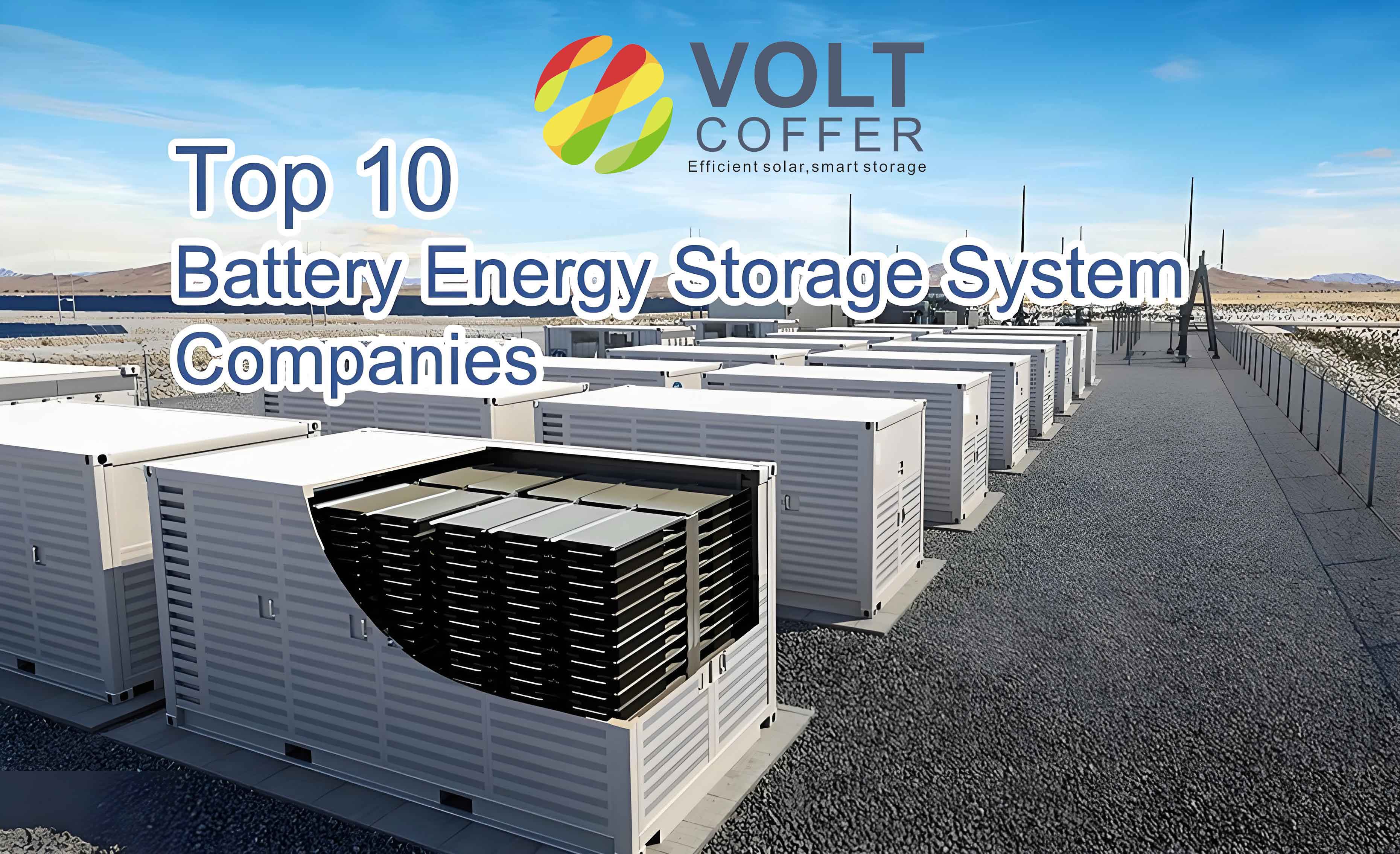
The core component enabling this functionality is the power conditioning system, which integrates the battery energy storage system with inverters and control systems. Often referred to as a grid-forming inverter or power converter, this system can operate in voltage-source mode, similar to synchronous generators, providing voltage and frequency regulation. In my analysis, this configuration transforms the battery energy storage system into a dynamic grid asset capable of both energy shifting (e.g., peak shaving and load leveling) and real-time stability support. The power converter’s ability to maintain synchronization with the grid, especially in weak grids with low synchronous generation, demonstrates superior steady-state stability and control performance. It is important to distinguish this from typical renewable source inverters, which are mere interface devices for unidirectional power flow. The battery energy storage system’s power converter, in contrast, handles bidirectional energy flow, acting as either a load or a source as needed, thus offering higher technical sophistication and versatility.
Several types of battery energy storage systems are deployed in grids, each with distinct characteristics. Below, I present a comparative table summarizing key performance metrics for three prominent technologies: sodium-sulfur (NaS) batteries, lithium-ion (Li-ion) batteries, and redox flow batteries (RFBs). This comparison highlights trade-offs between efficiency, lifespan, energy density, and cost, which are critical for selecting appropriate battery energy storage system solutions.
| Parameter | Sodium-Sulfur Battery | Lithium-Ion Battery | Redox Flow Battery |
|---|---|---|---|
| Energy Efficiency | 90% | 95% | 85% |
| Calendar Life | 15 years | 10 years | 20 years |
| Cycle Life | 4,500 cycles | 15,000 cycles | 100,000 cycles |
| Energy Density | 87 Wh/kg, 83 Wh/L | 92 Wh/kg, 176 Wh/L | 10 Wh/kg, 15 Wh/L |
| Key Features | Low unit capacity cost; multiple safety considerations; extensive grid application history. | Suitable for high power; multiple safety considerations; extensive grid application history. | Long cycle life; low energy density; power and capacity can be designed independently, offering flexibility. |
From my perspective, each battery energy storage system technology has merits and drawbacks. For example, while lithium-ion batteries offer high efficiency and power density, they require stringent safety measures due to thermal runaway risks. Redox flow batteries excel in cycle life and scalability but suffer from low energy density, making them bulky for high-energy applications. Sodium-sulfur batteries provide a balanced option but operate at high temperatures, necessitating robust thermal management. The choice depends on grid requirements, such as response time, duration, and spatial constraints. Importantly, the battery energy storage system must be integrated with advanced control algorithms to optimize performance. The state of charge (SoC) management, for instance, is crucial for longevity and can be expressed as:
$$ \text{SoC}(t) = \text{SoC}_0 + \frac{1}{C} \int_0^t \eta P(\tau) d\tau $$
where $C$ is the battery capacity, $\eta$ is efficiency, and $P(\tau)$ is power flow. Proper SoC control ensures the battery energy storage system remains ready for stability services.
Globally, the deployment of battery energy storage systems for grid stabilization is expanding. In my review of international practices, Japan offers insightful examples. One approach involves standalone battery energy storage system configurations, such as the use of sodium-sulfur batteries paired with wind farms to smooth power output fluctuations. A notable case is a wind farm with 408 MW capacity coupled with a 18 MW/130 MWh sodium-sulfur battery energy storage system, operational since 2019. This system charges during high wind periods and discharges during lulls, ensuring consistent grid injection. Another innovative method is hybrid battery energy storage system setups, combining different battery types to address both short-term and long-term variability. For instance, lithium-ion batteries handle rapid frequency regulation due to their high power capability, while redox flow batteries manage energy shifting over hours or days. This hybrid strategy optimizes cost and performance, adapting to complex weather patterns. Similarly, in other regions, large-scale battery energy storage system projects, like the 100 MW/200 MWh sodium-ion battery storage station in China, demonstrate the scalability of these technologies. Such projects underscore the battery energy storage system’s role in enhancing renewable integration, with single charge capacities sufficient to power thousands of households and reduce carbon emissions significantly.
Beyond frequency regulation, the battery energy storage system contributes to voltage stability and fault ride-through capabilities. In weak grids with high renewable penetration, voltage sags and swells are common. The battery energy storage system can provide reactive power support, obeying the power flow equation:
$$ Q = \frac{V^2}{X} – \frac{EV}{X} \cos(\delta) $$
where $Q$ is reactive power, $V$ is voltage, $E$ is internal voltage, $X$ is reactance, and $\delta$ is phase angle. By modulating reactive power, the battery energy storage system helps maintain voltage profiles within limits. Additionally, during grid faults, the battery energy storage system can inject current to support voltage, preventing disconnection of sensitive loads. This multifunctionality makes the battery energy storage system a cornerstone of modern grid architecture.
However, the widespread adoption of battery energy storage systems faces hurdles. Cost remains a barrier, with high upfront capital expenditures for equipment. Lifetime limitations, influenced by cycling degradation, also pose economic challenges. The degradation of a battery energy storage system over time can be modeled using empirical formulas, such as capacity fade related to cycle count and operating temperature. For example, a simplified degradation model for lithium-ion batteries is:
$$ C_{\text{loss}} = \alpha \cdot N^{\beta} \cdot e^{-\frac{E_a}{RT}} $$
where $C_{\text{loss}}$ is capacity loss, $N$ is cycle number, $\alpha$ and $\beta$ are constants, $E_a$ is activation energy, $R$ is gas constant, and $T$ is temperature. Addressing these issues requires ongoing research into novel battery chemistries, like solid-state or sodium-ion batteries, which promise higher safety, longer life, and lower costs. Moreover, standardization of grid codes and interoperability protocols is essential for seamless battery energy storage system integration. In my assessment, collaborative efforts among utilities, manufacturers, and regulators will accelerate innovation, making the battery energy storage system more accessible and reliable.
Safety is paramount for battery energy storage system deployment. Incidents like thermal runaway in lithium-ion batteries highlight the need for robust design and monitoring. A comprehensive safety framework includes thermal management systems, fault detection algorithms, and fire suppression mechanisms. The heat generation in a battery energy storage system during operation can be described by:
$$ q = I^2 R + \left| \frac{dU}{dT} \right| I $$
where $q$ is heat generation rate, $I$ is current, $R$ is internal resistance, and $U$ is open-circuit voltage. Effective cooling systems must dissipate this heat to prevent overheating. Furthermore, grid-scale battery energy storage system installations require cybersecurity measures to protect against malicious attacks that could destabilize the grid. Thus, a holistic approach encompassing technical, economic, and safety aspects is vital for sustainable battery energy storage system implementation.
Looking ahead, the evolution of smart grids and digitalization will amplify the role of battery energy storage systems. With artificial intelligence and machine learning, predictive control of battery energy storage systems can optimize grid operations. For instance, forecast-based scheduling of battery energy storage system charge/discharge cycles, using renewable generation predictions, enhances economic efficiency. The optimization problem can be formulated as:
$$ \min \sum_{t=1}^T \left( c_t P_t^{\text{grid}} + \lambda \cdot \text{SoC}_t^2 \right) $$
subject to power balance constraints and battery limits, where $c_t$ is electricity price, $P_t^{\text{grid}}$ is grid power, and $\lambda$ is a penalty factor for SoC deviations. Such advanced controls enable the battery energy storage system to participate in energy markets and ancillary services, creating revenue streams while bolstering grid stability.
In conclusion, the integration of high levels of wind and solar power inherently destabilizes grids due to reduced inertia. The battery energy storage system emerges as a transformative solution, emulating synchronous generator characteristics through power electronic interfaces. By providing fast frequency response, voltage support, and energy shifting, the battery energy storage system mitigates the volatility of renewables. My analysis confirms that advancements in battery technology, coupled with intelligent controls, will further enhance the efficacy of battery energy storage systems. As we transition to a sustainable energy future, the battery energy storage system is not merely an accessory but a fundamental component for ensuring grid security and resilience. Continued innovation in battery energy storage system design and deployment will pave the way for a stable, clean, and efficient power system worldwide.