
As an energy systems analyst, I have witnessed firsthand the transformative impact of renewable energy integration on power grids worldwide. The rapid deployment of wind and solar power, while essential for decarbonization, introduces fundamental challenges to grid stability. In this article, I will delve into the critical role of battery energy storage systems in addressing these challenges, providing a detailed examination of their technology, applications, and the emerging concept of virtual inertia. The stability of a power grid—encompassing both steady-state and transient stability—is the bedrock of reliable electricity supply. Traditionally, this stability was inherently provided by synchronous generators, whose rotating masses offered inertial response and frequency regulation. However, the large-scale integration of variable renewable energy (VRE) sources like wind and solar has fundamentally altered the grid’s generation mix, reducing system inertia and complicating stability management. This paradigm shift necessitates innovative solutions, and I argue that advanced battery energy storage systems are at the forefront of this necessary evolution.
The inherent intermittency of wind and solar power means they cannot provide the persistent, stable power output of conventional thermal or hydro plants. These resources connect to the grid via power electronic inverters, which differ radically from the electromechanical coupling of synchronous machines. While both are sources of power, the grid-forming capabilities are not native to typical grid-following inverters used in solar PV or wind turbines. This creates a new operational paradigm: a grid with diminishing rotational inertia. The percentage of VRE in the total generation portfolio is rising swiftly. By the end of 2023, for instance, grid-connected wind and solar capacity in a major economy reached approximately 36% of total installed capacity. This high penetration level underscores the urgency of finding supplemental stability resources, a role for which the battery energy storage system is uniquely suited.
The core function of a large-scale battery energy storage system in this context is twofold: energy arbitrage (shifting energy from periods of surplus to periods of deficit) and fast-responding grid services. However, its most valuable contribution in a renewable-heavy grid may be its ability to emulate synchronous generator behavior. When integrated with advanced grid-forming inverters, a battery energy storage system can actively regulate voltage and frequency, effectively acting as a controlled voltage source. This capability to provide synthetic or “virtual” inertia is a game-changer. Virtual inertia refers to the ability of a static power electronic system to mimic the inertial response of a rotating mass by injecting or absorbing real power in response to frequency deviations. The power injection is governed by a control law that simulates the swing equation. A simplified representation of the inertial response from a battery energy storage system can be expressed as:
$$ P_{virt} = -K_{inv} \frac{d\Delta f}{dt} $$
where $P_{virt}$ is the additional active power output from the battery energy storage system, $\Delta f$ is the frequency deviation from nominal, and $K_{inv}$ is a gain coefficient that emulates the inertial constant (H) of a synchronous generator. This equation highlights how a battery energy storage system can provide a stabilizing force during transient events, much like a spinning rotor. It is crucial to distinguish between a grid-forming battery energy storage system inverter and a standard grid-following PV inverter. The former is a self-synchronizing voltage source that can operate in weak grid conditions and provide stability, while the latter is essentially a current source interface that requires a stable grid voltage to follow. The technical sophistication of a grid-forming battery energy storage system inverter is significantly higher, as it must manage bidirectional power flow and maintain synchronization under all grid conditions.
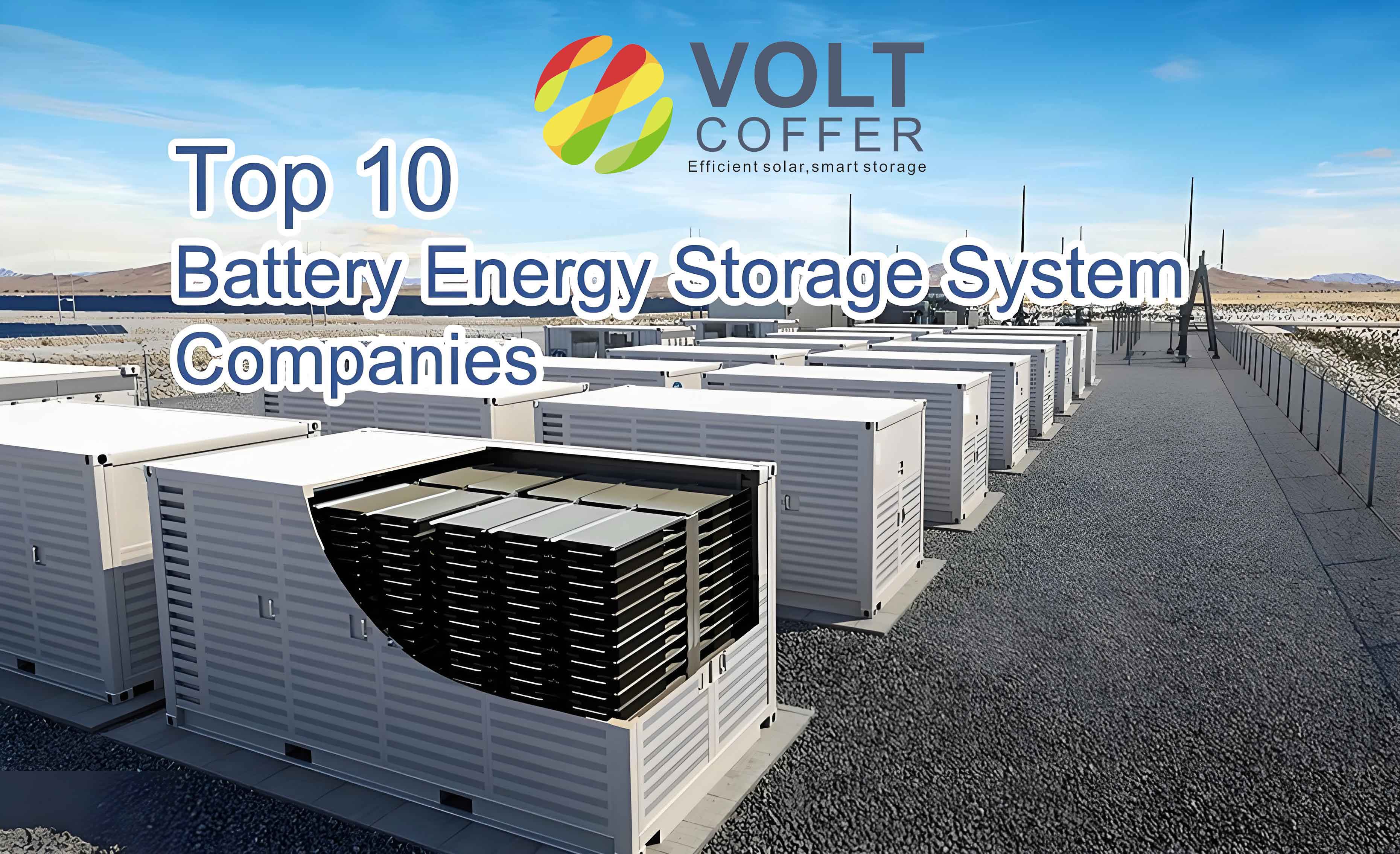
To appreciate the practical implementation, we must examine the core technologies. Several battery chemistries are competing for grid-scale applications, each with distinct performance trade-offs. The selection of a specific battery energy storage system technology depends on the required discharge duration, power rating, cycle life, and safety considerations. The following table expands on the basic performance parameters of three prominent technologies, adding critical metrics for grid application analysis.
| Parameter | Sodium-Sulfur (NaS) Battery | Lithium-Ion (Li-ion) Battery | Vanadium Redox Flow Battery (VRFB) |
|---|---|---|---|
| Round-Trip Efficiency (%) | ~85 – 90 | ~92 – 97 | ~75 – 85 |
| Calendar Life (Years) | 15 – 20 | 10 – 15 | 20+ |
| Cycle Life (at 80% DoD) | ~4,500 cycles | ~5,000 – 10,000 cycles | >15,000 cycles |
| Volumetric Energy Density (Wh/L) | 150 – 250 | 200 – 700 | 15 – 30 |
| Gravimetric Energy Density (Wh/kg) | 150 – 240 | 100 – 265 | 10 – 25 |
| Typical Power-to-Energy Ratio | 0.5 – 5 h (Energy-centric) | 0.25 – 4 h (Balanced) | 1 – 10+ h (Energy-centric) |
| Key Operational Advantages | High energy density, mature grid-scale track record. | High efficiency, fast response, declining cost. | Independent power/energy scaling, long cycle life, inherent safety. |
| Primary Safety & Cost Considerations | High operating temperature (~300°C), thermal management critical, moderate cost. | Thermal runaway risk requires sophisticated BMS and fire suppression, currently lowest $/kWh for shorter duration. | Lower energy density, higher footprint, higher upfront $/kWh for energy capacity. |
The economic analysis of a battery energy storage system project involves calculating the Levelized Cost of Storage (LCOS), which accounts for all lifetime costs. A simplified LCOS formula is:
$$ LCOS = \frac{C_{cap} + \sum_{t=1}^{n} \frac{C_{O\&M,t} + C_{replace,t}}{(1+r)^t}}{\sum_{t=1}^{n} \frac{E_{disch,t} \cdot \eta_{rt}}{(1+r)^t}} $$
where $C_{cap}$ is capital cost, $C_{O\&M,t}$ is annual operation and maintenance cost, $C_{replace,t}$ is battery replacement cost in year t, $E_{disch,t}$ is annual discharged energy, $\eta_{rt}$ is round-trip efficiency, $r$ is discount rate, and $n$ is system lifetime. This calculation clearly shows why cycle life and calendar life are as important as upfront cost. For long-duration storage applications, a battery energy storage system based on flow batteries might offer a lower LCOS despite a higher initial $/kWh, due to its exceptional cycle life. The quest for a safer, cheaper, and longer-lasting battery energy storage system is therefore central to the “Generation, Grid, Load, Storage” coordinated development model.
The application of battery energy storage systems for grid stabilization can be categorized by time scale and architecture. I will outline several functional modes, each supported by conceptual formulas.
1. Frequency Regulation (Primary and Secondary): A battery energy storage system can respond to frequency deviations within milliseconds. The droop control for primary frequency response is:
$$ P_{BESS,FR} = P_0 – \frac{1}{R} (f – f_0) $$
where $P_0$ is the setpoint power, $R$ is the droop coefficient, $f$ is measured frequency, and $f_0$ is nominal frequency. The speed and accuracy of a battery energy storage system in this role far exceed that of traditional generators.
2. Ramp Rate Control for VRE: To smooth the power output of a wind or solar farm, a battery energy storage system absorbs or injects power to limit the rate of change. If the raw VRE power is $P_{VRE}(t)$, the smoothed plant output $P_{plant}(t)$ is:
$$ P_{plant}(t) = P_{VRE}(t) + P_{BESS}(t) $$
subject to: $$ \left| \frac{dP_{plant}(t)}{dt} \right| \leq R_{max} $$
where $R_{max}$ is the maximum allowed ramp rate, and $P_{BESS}(t)$ is the power from the co-located battery energy storage system.
3. Voltage Support and Reactive Power Control: A grid-forming battery energy storage system inverter can independently control voltage magnitude at its point of interconnection by managing reactive power Q. The relationship is approximated by:
$$ \Delta V \approx \frac{X \cdot \Delta Q}{V_0} $$
where $\Delta V$ is voltage change, $X$ is line reactance, $\Delta Q$ is reactive power injection/absorption, and $V_0$ is nominal voltage. This is vital in weak grids with high VRE penetration.
Globally, deployment strategies vary. A common approach is the single-technology battery energy storage system, where one chemistry (e.g., lithium-ion) is used for multiple services. A more sophisticated, cost-optimized approach is the hybrid energy storage system, which combines technologies with complementary characteristics. For example, a hybrid system might pair a high-power, fast-responding lithium-ion battery energy storage system for frequency regulation with a high-energy, long-duration flow battery energy storage system for energy shifting. The operational strategy for such a hybrid system can be formulated as an optimization problem minimizing total cost:
$$ \min \sum_{t} \left( C_{LI} \cdot P_{LI}(t) + C_{VRFB} \cdot E_{VRFB}(t) \right) $$
subject to:
$$ P_{LI}(t) + P_{VRFB}(t) = P_{grid\_req}(t) $$
$$ SOC_{LI}^{min} \leq SOC_{LI}(t) \leq SOC_{LI}^{max} $$
$$ SOC_{VRFB}^{min} \leq SOC_{VRFB}(t) \leq SOC_{VRFB}^{max} $$
$$ |P_{LI}(t)| \leq P_{LI}^{rated}, \quad |P_{VRFB}(t)| \leq P_{VRFB}^{rated} $$
where $C$ represents operational cost coefficients, $P(t)$ is power, $E(t)$ is energy state, and $SOC$ is state of charge. This illustrates the operational complexity and potential of advanced battery energy storage system configurations.
Safety is the non-negotiable foundation for any battery energy storage system deployment. The risk profiles differ by chemistry. For lithium-ion systems, the central concern is thermal runaway, a chain exothermic reaction that can be initiated by overcharge, internal short circuit, or mechanical damage. The Frank-Kamenetskii equation can be adapted to model thermal stability:
$$ \frac{dT}{dt} = \frac{1}{\rho C_p} \left( \sigma \cdot I^2 + A \cdot e^{-E_a/(R T)} \right) – \frac{hA_s}{\rho C_p V} (T – T_{\infty}) $$
where $T$ is cell temperature, $\rho$ is density, $C_p$ is heat capacity, $\sigma$ is electrical resistivity, $I$ is current, $A$ is pre-exponential factor, $E_a$ is activation energy for exothermic reactions, $R$ is gas constant, $h$ is heat transfer coefficient, $A_s$ is surface area, $V$ is volume, and $T_{\infty}$ is ambient temperature. This underscores the need for a multi-layered Battery Management System (BMS) with precise monitoring, active cooling, and failure propagation isolation. For flow batteries, the safety considerations shift to electrolyte containment and management of potentially corrosive or toxic solutions. A comprehensive safety standard for a battery energy storage system must encompass cell design, module and pack construction, system integration, fire suppression, and site planning.
Looking forward, the innovation pipeline for battery energy storage systems is vibrant. Sodium-ion batteries are emerging as a promising alternative to lithium-ion, offering potential cost savings and improved safety due to the abundance of sodium and the use of aluminum current collectors. Their performance in low temperatures is notably better. Other technologies like solid-state batteries, zinc-air, and advanced flow battery chemistries (e.g., iron-based, organic) are in various stages of development. Each aims to improve on the iron triangle of cost, safety, and performance. Furthermore, the integration of a battery energy storage system with other grid assets like hydrogen electrolyzers or flywheels will create even more resilient and flexible grid nodes, often termed “grid boosters” or “stability hubs.”
The regulatory and market framework must evolve in tandem with technology. Markets need to properly value the milliseconds-fast services and synthetic inertia that a battery energy storage system provides, which are currently undervalued or not monetized in many regions. Ancillary service products must be designed to accommodate the unique characteristics of a battery energy storage system, such as its state-of-charge management needs. A holistic grid planning model that co-optimizes transmission expansion, generation, and storage deployment will be essential for cost-effective decarbonization.
In conclusion, the integration of massive volumes of variable renewable energy is an irreversible global trend that fundamentally challenges traditional grid stability mechanisms. In this new paradigm, the battery energy storage system ceases to be merely an energy storage device and transforms into a primary grid stability asset. Its ability to provide virtual inertia, fast frequency response, voltage support, and ramp control is indispensable for maintaining a secure and reliable power system. While challenges remain in terms of cost, lifetime, and safety, relentless innovation in battery chemistries, power electronics, and system integration is rapidly addressing these hurdles. The future grid will undoubtedly be a digital, decentralized, and decarbonized system, and at its heart, ensuring its stability, will be the advanced, safe, and highly intelligent battery energy storage system. The journey towards a fully sustainable energy system is complex, but with the continued development and deployment of robust battery energy storage systems, a stable and clean grid is not just a vision but an achievable reality.