
The relentless advancement of energy storage technology represents a cornerstone for modern aerospace engineering. As the primary power guarantee for space vehicles, the maturity and reliability requirements for onboard energy storage cell systems are exceptionally stringent. The evolution of lithium-ion technology, in particular, has been remarkable. From its initial adoption in spacecraft using lithium cobalt oxide (LiCoO₂) cathodes and graphite anodes, the technology has rapidly diversified. Today, we see a shift towards high-nickel NCM/NCA cathodes, silicon-carbon composite anodes, and advanced liquid electrolytes tailored for high voltage and wide temperature ranges. The future roadmap points decisively towards solid-state electrolytes, promising transformative gains in specific energy and intrinsic safety.
This accelerating pace of innovation presents a critical challenge for spaceflight applications. While new energy storage cell chemistries offer compelling advantages in mass reduction and performance, their adoption on high-value, long-duration missions—especially crewed vehicles like space stations and crewed spacecraft—is inherently constrained by the imperative for proven reliability. The spacecraft development cycle, with its high costs and profound societal impact, cannot easily accommodate unproven technologies. The core of the problem lies in the inadequacy of ground-based testing to fully replicate the space environment. Long-term exposure to microgravity significantly affects fundamental processes within an energy storage cell, such as ion transport kinetics, solid-electrolyte interphase (SEI) formation and evolution, electrode volume changes, and stress distribution within electrode stacks. These factors are pivotal in determining cycle life and degradation mechanisms, yet they cannot be authentically simulated terrestrially.
Therefore, a crucial gap exists between promising laboratory results and flight-qualified hardware. To bridge this gap, systematic in-orbit application verification is not merely beneficial but essential. The successful establishment and sustained operation of a space station have now created the perfect, unprecedented opportunity for such work. It provides a stable, long-duration, and accessible platform for conducting rigorous scientific experiments in the actual space environment. In this context, we have designed a novel, versatile in-orbit verification platform specifically for evaluating next-generation energy storage cell technologies. This platform aims to provide a standardized, efficient, and resource-conscious means to mature new battery systems for future space missions.
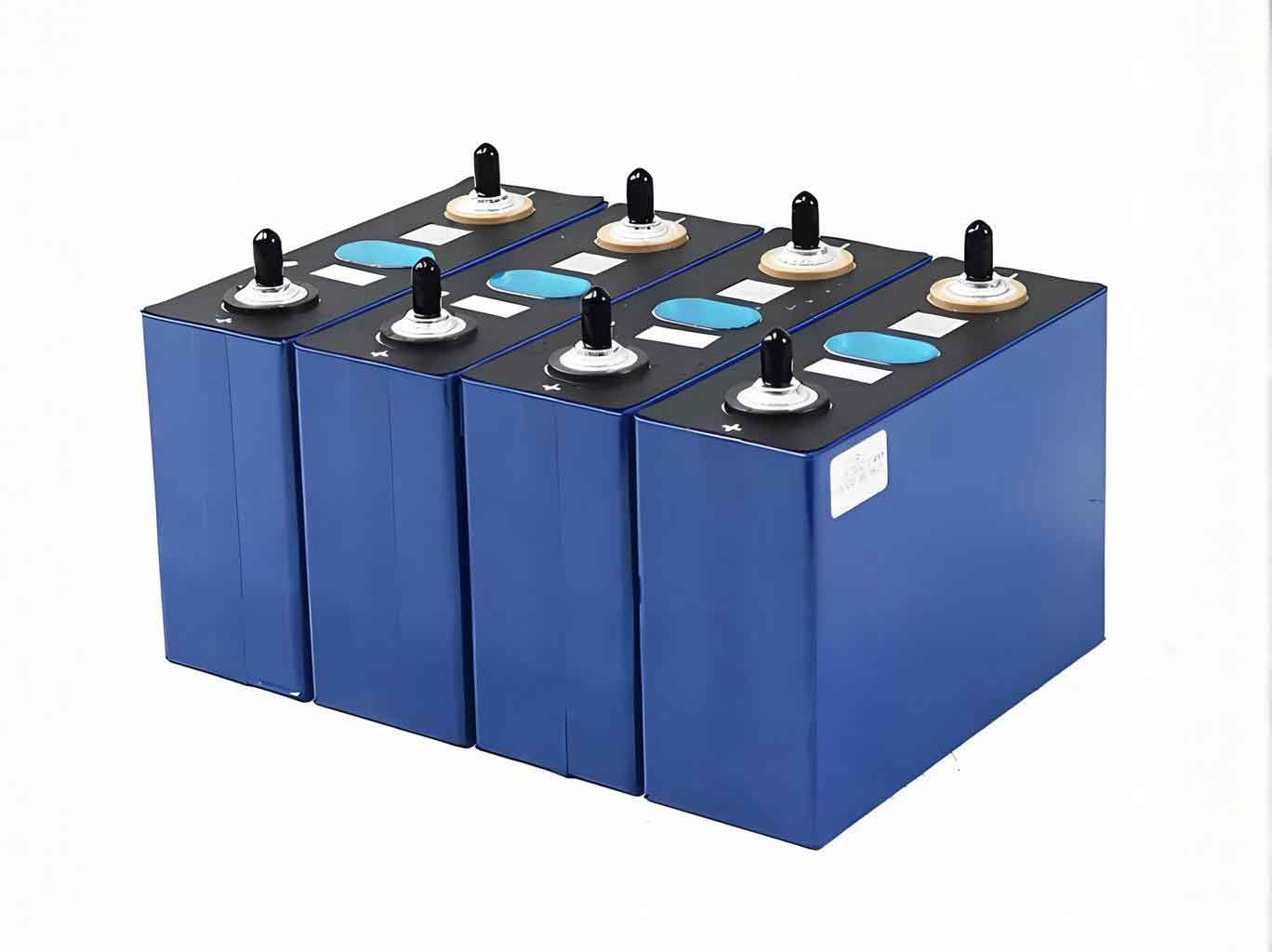
The primary objective of our platform is to enable the simultaneous, comparative testing of two different energy storage cell packs under realistic space conditions while minimizing the demand on the space station’s precious power resources. The core innovation lies in its operational methodology, which employs a mutual charge-discharge cycle between the two battery packs. This approach stands in contrast to traditional verification methods that would require continuous power from the station to charge and independent resistive loads to discharge the test units. By having one pack charge the other in a controlled, alternating fashion, the electrical energy is recirculated between them. The station’s power system is only required to intermittently replenish the relatively small losses incurred due to inefficiencies in the energy conversion process. This design philosophy ensures high energy utilization efficiency and reduces the operational burden on the host platform.
Platform Architecture and Functional Design
The platform is conceived as a standardized payload unit, compliant with the mechanical, electrical, thermal, and data interface specifications of a space station experiment rack. It comprises four primary Orbital Replacement Units (ORUs): two distinct Lithium-Ion Battery Packs (Pack 1 and Pack 2), a central Charge-Discharge Controller (CDC), and a Discharge Load Unit. All components are mounted on a structural platform designed for easy installation and, crucially, in-orbit replacement of the battery packs by crew members.
The functional requirements are driven by the need for comprehensive data acquisition and flexible test protocols. Each battery pack must contain a sufficient number of series-connected cells to provide meaningful statistical data on cell-to-cell variation and degradation. We specify a minimum of five series cells per pack. The CDC is the intelligent heart of the system. Its mandated functions include:
- High-precision sampling of individual cell voltages, pack total voltage, and temperature at multiple points for each pack.
- Bidirectional power conversion to facilitate controlled mutual charging and discharging between Pack 1 and Pack 2.
- Unidirectional charging capability for either pack from the station’s 100V power bus.
- Implementation of robust protection algorithms against over-voltage, under-voltage, over-temperature, and over-current conditions.
- Communication via a 1553B data bus for telemetry downlink and command uplink.
- Provision of secondary power rails for its internal circuitry.
The Discharge Load is a simpler unit, consisting of programmable power resistors, whose primary function is to safely discharge a battery pack to a specific State-of-Charge (SOC) prior to its return to Earth or disposal.
Operational Modes and Energy Flow Analysis
The platform operates in four distinct modes, which are summarized in the table below:
| Mode | Purpose | Primary Actors | Energy Source |
|---|---|---|---|
| 1. Initialization Charge | To bring both energy storage cell packs to a predefined initial SOC before testing commences. | CDC, Station Bus | Station Power Bus |
| 2. Mutual Cycle Testing | Core verification mode. Simulates spacecraft cycling by having the packs charge each other. | CDC, Pack 1, Pack 2 | Internal Energy Recirculation + Station Top-up |
| 3. Pre-Return Discharge | To adjust the SOC of a pack to a safe level for transportation back to Earth. | Discharge Load, Target Pack | Internal Pack Energy |
| 4. Cell/Balance Adjustment | To correct voltage imbalances between parallel strings within a pack. | CDC | Internal Pack Energy (dissipated) |
Mode 2 is the most significant and innovative. Here, one energy storage cell pack acts as a “source” to charge the other “sink” pack through the CDC’s bi-directional converter. After completing a charge phase, the roles reverse. The net energy loss in one complete mutual cycle \(E_{\text{loss}}\) is the sum of losses in both packs and the CDC:
$$ E_{\text{loss}} = (1 – \eta_{\text{chg, pack}}) \cdot E_{\text{transferred}} + (1 – \eta_{\text{dis, pack}}) \cdot E_{\text{transferred}} + (1 – \eta_{\text{CDC}}) \cdot E_{\text{transferred}} $$
Where \(E_{\text{transferred}}\) is the nominal energy moved per half-cycle, and \(\eta\) represents the efficiency of charging, discharging, and DC-DC conversion. The station’s power system periodically injects energy equal to \(E_{\text{loss}}\) to maintain the test’s energy balance. This approach drastically reduces the average station power draw compared to independent testing. The effective station power required \(P_{\text{station}}\) over a test period \(T\) is:
$$ P_{\text{station}} = \frac{N_{\text{cycles}} \cdot E_{\text{loss}}}{T} $$
where \(N_{\text{cycles}}\) is the number of mutual cycles completed. This efficiency enables long-duration, high-cycle-count testing with minimal impact on station resources.
Safety-Centric Energy Storage Cell Pack Designs
Given that the platform operates inside a crewed space station module, safety is the paramount, non-negotiable design driver. We have developed two sealed enclosure designs, tailored to the different technology maturity levels of the energy storage cell packs under test.
Design 1 (For Low-Maturity Cells): This design assumes the individual cell’s sealing integrity is not fully proven for the space environment. Therefore, the pack employs a hermetically sealed “bathtub” structure. The base and sidewalls are machined from a single aluminum alloy block with a minimum wall thickness of 2 mm, eliminating any seams on the sides and bottom. The top cover is a separate plate, fastened via screws onto a flange, with an elastomeric O-ring compressed in a dedicated groove to form a hermetic seal. Electrical feedthroughs use sealed connectors. The entire assembly is leak-checked using helium mass spectrometry to verify an extremely low leak rate (\( \leq 1 \times 10^{-5} \, \text{Pa·m}^3/\text{s} \)). This design ensures that even if a single cell were to vent, all gaseous or liquid effluents are absolutely contained within the pack, protecting the cabin environment.
Design 2 (For Higher-Maturity Cells): This design is for energy storage cell technologies where the cell-level sealing is considered robust based on extensive ground testing. The enclosure is a sealed (though not hermetically welded) box, assembled from six aluminum plates (front, back, left, right, bottom, cover). The joints between the side plates and the base are screwed and sealed with space-qualified silicone adhesive (e.g., GD414C). The cover is attached with screws, compressing a gasket in a groove for a reliable seal. This design, validated to a leak rate of \( \leq 1 \times 10^{-4} \, \text{Pa·m}^3/\text{s} \), offers a high level of safety with slightly easier manufacturability and accessibility compared to Design 1.
Both designs share critical safety and operational features: internal voids filled with flame-retardant and thermally insulating material to mitigate thermal runaway propagation; a thermally conductive base plate for heat rejection to the rack’s cold plate; top-mounted connectors for easy crew access; and standardized mechanical interfaces (e.g., M10 captive screw holes) to ensure they are interchangeable and compatible with the ORU mounting system on the platform.
The Charge-Discharge Controller: System Intelligence
The CDC hardware is built around a high-reliacity microprocessor managing multiple functional blocks. The power stage is based on bi-directional, multi-phase synchronous buck-boost converter topology, chosen for its ability to efficiently transfer energy between battery packs at varying voltage levels. Its control law is designed to follow precise current and voltage profiles (\(I_{\text{chg}}(t), V_{\text{limit}}\)) programmable from ground. The core control equation for the charging phase from Pack A to Pack B can be conceptualized as a regulated current source:
$$ I_{\text{chg}}(t) = f(SOC_B, T, V_{\text{cell}}, t) $$
subject to constraints: $$ V_{\text{cell, min}} \leq V_{\text{cell, i}}(t) \leq V_{\text{cell, max}} \quad \forall i $$
$$ T_{\text{min}} \leq T_j(t) \leq T_{\text{max}} \quad \forall j $$
The protection logic continuously monitors these parameters and will terminate charge/discharge if any limit is violated. The data acquisition system logs comprehensive time-series data, including individual cell voltages, which is vital for post-test analysis of performance divergence and degradation modeling.
In-Orbit Test Methodology and Accelerated Verification
The platform is designed for a service life exceeding five years, supporting the validation of multiple energy storage cell pack pairs. A typical validation cycle for one pair is projected to be two years, aligning with planned logistics cycles for cargo spacecraft.
A key aspect of the methodology is the implementation of scientifically accelerated testing protocols. The mutual cycling mode allows us to apply stress factors at an enhanced rate compared to typical satellite duty cycles. For example, we can implement deeper Depth-of-Discharge (DOD) cycles or increased charge rates (\(C\)-rates) to precipitate and observe degradation mechanisms within a manageable timeframe. The relationship between test acceleration and real-world lifetime must be carefully modeled. An empirical acceleration factor \(AF\) for calendar or cycle life can be estimated using models like the Arrhenius equation for temperature or power-law models for rate:
$$ AF_{\text{temp}} = \exp\left[\frac{E_a}{k}\left(\frac{1}{T_{\text{use}}} – \frac{1}{T_{\text{test}}}\right)\right] $$
$$ AF_{\text{rate}} \propto \left(\frac{I_{\text{test}}}{I_{\text{use}}}\right)^n $$
where \(E_a\) is the activation energy, \(k\) is Boltzmann’s constant, \(T\) is temperature, \(I\) is current, and \(n\) is an empirical coefficient. By conducting such accelerated in-orbit tests and comparing the results with parallel ground tests under identical electrical profiles (but in 1g), we can isolate and quantify the specific impact of the microgravity environment on the energy storage cell aging process. This data is invaluable for building predictive lifetime models for future missions.
Logistically, the platform itself and subsequent spare energy storage cell packs are launched via cargo spacecraft. Astronauts install the platform into a designated rack and later replace validated packs with new ones. Upon completion of testing, battery packs can be disposed of via destructive re-entry in a cargo vehicle. Ultimately, with the advent of next-generation crewed spacecraft possessing enhanced downmass capability, there is the compelling prospect of returning fully characterized, space-aged energy storage cell packs to Earth. This would allow for unparalleled post-mortem analysis—using techniques like synchrotron X-ray tomography, scanning electron microscopy, and mass spectrometry—to directly observe microstructural and chemical changes induced by the space environment, closing the loop between performance data and fundamental degradation physics.
Conclusion and Future Perspectives
We have presented the design rationale and architecture for a novel in-orbit verification platform dedicated to advancing energy storage cell technologies for spaceflight. Its core innovation—the mutual charge-discharge methodology—provides a resource-efficient, flexible, and powerful tool for the comparative evaluation of new battery chemistries and designs in the actual space environment. This platform directly addresses the critical “last mile” challenge in technology maturation, where ground testing is insufficient.
By enabling long-duration, accelerated life testing in microgravity, the platform will generate unique datasets that correlate electrochemical performance with spatial environmental factors. This will significantly de-risk the integration of next-generation, high-specific-energy, and high-safety energy storage cell systems into future spacecraft, from deep-space probes to next-generation space stations. Furthermore, the platform’s modular and standardized design makes it adaptable, potentially serving as a testbed not only for lithium-ion variants but also for emerging post-lithium technologies such as lithium-sulfur or solid-state batteries. In conclusion, this verification platform represents a vital piece of infrastructure, leveraging the unique capabilities of an orbiting space station to propel the evolution of power systems essential for humanity’s continued exploration and utilization of space.