
As a researcher focused on modern energy infrastructure, I have observed the rapid adoption of cell energy storage systems globally. These systems, often referred to as battery energy storage systems, are pivotal in transitioning to renewable energy grids due to their short construction cycles, flexible control, rapid response, and significant peak-shaving capabilities. The cell energy storage system represents a transformative technology, enabling efficient energy management and grid stability. However, the construction of such systems involves substantial capital investment, making cost control and optimization critical for stakeholders. In this analysis, I aim to delve into the factors influencing the cost of cell energy storage systems using statistical methods, particularly principal component analysis (PCA), to provide actionable insights for cost management. This study is driven by the need to enhance the economic viability of cell energy storage system deployments, ensuring that these systems contribute effectively to energy sustainability.
The cell energy storage system is an integral component of contemporary power networks, serving as a key enabler for integrating intermittent renewable sources like solar and wind. By storing excess energy and releasing it during demand peaks, the cell energy storage system improves grid reliability and reduces reliance on fossil fuels. From a technical standpoint, a cell energy storage system typically comprises battery units, power conversion systems, control modules, and auxiliary facilities, all integrated into a cohesive infrastructure. The cost structure of a cell energy storage system is multifaceted, involving expenses related to construction, equipment, installation, and ancillary services. Understanding these cost drivers is essential for project planners and investors seeking to maximize returns. In this context, I employ PCA to distill the complex cost variables into manageable components, highlighting the most influential factors. This approach not only simplifies analysis but also directs attention to areas where cost-control measures can be most effective.
To begin, let me outline the methodology of principal component analysis. PCA is a dimensionality-reduction technique that transforms multiple correlated variables into a smaller set of uncorrelated variables, known as principal components. This is particularly useful when dealing with cost data, where variables like equipment and installation expenses often overlap in their impact. The mathematical model for PCA can be expressed as follows: given a set of standardized variables \(X_1, X_2, \ldots, X_p\), the principal components \(F_1, F_2, \ldots, F_m\) are linear combinations defined by:
$$F_1 = a_{11}X_1 + a_{21}X_2 + \cdots + a_{p1}X_p$$
$$F_2 = a_{12}X_1 + a_{22}X_2 + \cdots + a_{p2}X_p$$
$$\vdots$$
$$F_m = a_{1m}X_1 + a_{2m}X_2 + \cdots + a_{pm}X_p$$
Here, \(a_{ij}\) represents the eigenvectors derived from the covariance matrix of the original variables, and \(m\) is the number of principal components retained based on criteria such as eigenvalues greater than 1 or cumulative variance contribution exceeding 85%. The steps involved in PCA include data collection and standardization, correlation assessment, component extraction, and interpretation. In this study, I utilized SPSS software to perform PCA on cost data from multiple cell energy storage system projects, ensuring robust and replicable results. The goal is to identify which cost elements—such as equipment procurement or construction fees—dominate the overall expenditure for a cell energy storage system.
Before delving into the analysis, it is important to contextualize the cost components of a cell energy storage system. Typically, the total investment can be categorized into four major areas: construction engineering costs, equipment purchase costs, installation engineering costs, and other expenses. Each category encompasses sub-items that collectively determine the financial outlay. For instance, equipment purchase costs include items like power distribution devices, control systems, and notably, the battery units themselves. As the core of any cell energy storage system, battery technology—especially lithium iron phosphate (LFP) batteries—plays a crucial role in cost dynamics. These batteries are favored for their safety, high discharge depth, and modular design, often housed in prefabricated cabins with integrated thermal management and safety systems. The following table summarizes a typical cost breakdown for a cell energy storage system based on sample data:
| Cost Category | Description | Approximate Percentage of Total Cost |
|---|---|---|
| Equipment Purchase | Includes battery units, power conversion systems, switchgear, and control hardware. | 70-80% |
| Construction Engineering | Covers site preparation, building structures, and civil works. | 5-10% |
| Installation Engineering | Involves assembly, wiring, and commissioning of equipment. | 5-10% |
| Other Expenses | Encompasses land acquisition, project management, design services, and contingencies. | 10-15% |
To apply PCA, I collected data from several cell energy storage system projects, focusing on these four cost categories. The sample comprised seven projects in a similar regional context, with capacities ranging from 10.08 MW/17.6 MWh to 110.88 MW/193.6 MWh. All projects utilized LFP battery technology in a modular configuration, ensuring comparability. The data were standardized to eliminate unit differences, and correlation coefficients were computed to confirm the suitability for PCA. As shown in the correlation matrix below, the variables exhibit strong interdependencies, justifying the use of PCA for dimensionality reduction.
| Variable | Construction (A1) | Equipment (A2) | Installation (A3) | Other (A4) |
|---|---|---|---|---|
| Construction (A1) | 1.000 | 0.976 | 0.981 | 0.978 |
| Equipment (A2) | 0.976 | 1.000 | 0.995 | 0.990 |
| Installation (A3) | 0.981 | 0.995 | 1.000 | 0.992 |
| Other (A4) | 0.978 | 0.990 | 0.992 | 1.000 |
The high correlation values (all above 0.976) indicate significant overlap in information, making PCA an efficient tool. Upon running the analysis in SPSS, the eigenvalues and variance contributions were obtained. The first principal component had an eigenvalue of 3.973, accounting for 99.315% of the total variance, which exceeds the 85% threshold. Thus, a single principal component suffices to capture the essential cost information for these cell energy storage system projects. The component loadings, which reflect the correlation between each variable and the principal component, are presented in the following table:
| Cost Variable | Component Loading (F1) | Interpretation |
|---|---|---|
| Equipment Purchase (A2) | 0.999 | Highest influence on overall cost |
| Other Expenses (A4) | 0.998 | Second most influential |
| Installation Engineering (A3) | 0.997 | Moderate influence |
| Construction Engineering (A1) | 0.995 | Least influential among the four |
From this analysis, it is evident that equipment purchase costs are the predominant factor affecting the total investment in a cell energy storage system. This aligns with the technical nature of these systems, where battery units and associated electrical hardware constitute the bulk of expenses. To delve deeper, I examined the sub-components of equipment purchase costs for the sample projects. The distribution is summarized below:
| Sub-category | Percentage of Total Equipment Cost | Key Elements |
|---|---|---|
| Power Distribution Devices | 94.52% | Includes switchgear, transformers, and circuit breakers. |
| Control and DC Systems | 4.07% | Encompasses battery management systems and control hardware. |
| Communication and Remote Systems | 0.80% | Involves SCADA and data communication infrastructure. |
| Station Power Systems | 0.60% | Covers auxiliary power supplies for the cell energy storage system. |
| Cables and Grounding | 0.01% | Minor but necessary electrical connections. |
Within power distribution devices, which dominate equipment costs, the storage electrical equipment—primarily the battery units—accounts for approximately 98.29% of expenses. Further decomposition reveals that battery procurement alone constitutes about 81.10% of storage electrical equipment costs. This underscores the critical role of battery technology in the economics of a cell energy storage system. The cost of batteries is influenced by two main factors: unit price and quantity (i.e., system scale). Battery prices fluctuate based on market trends, material costs, and technological advancements, while scale is determined by project requirements such as energy capacity and power rating. To optimize costs, stakeholders can leverage bulk procurement strategies and careful capacity planning during the feasibility phase. For instance, selecting LFP batteries, which offer a balance of performance and affordability, can reduce expenses without compromising safety or efficiency. The modular design of these batteries, as illustrated below, facilitates scalable deployments for cell energy storage systems.
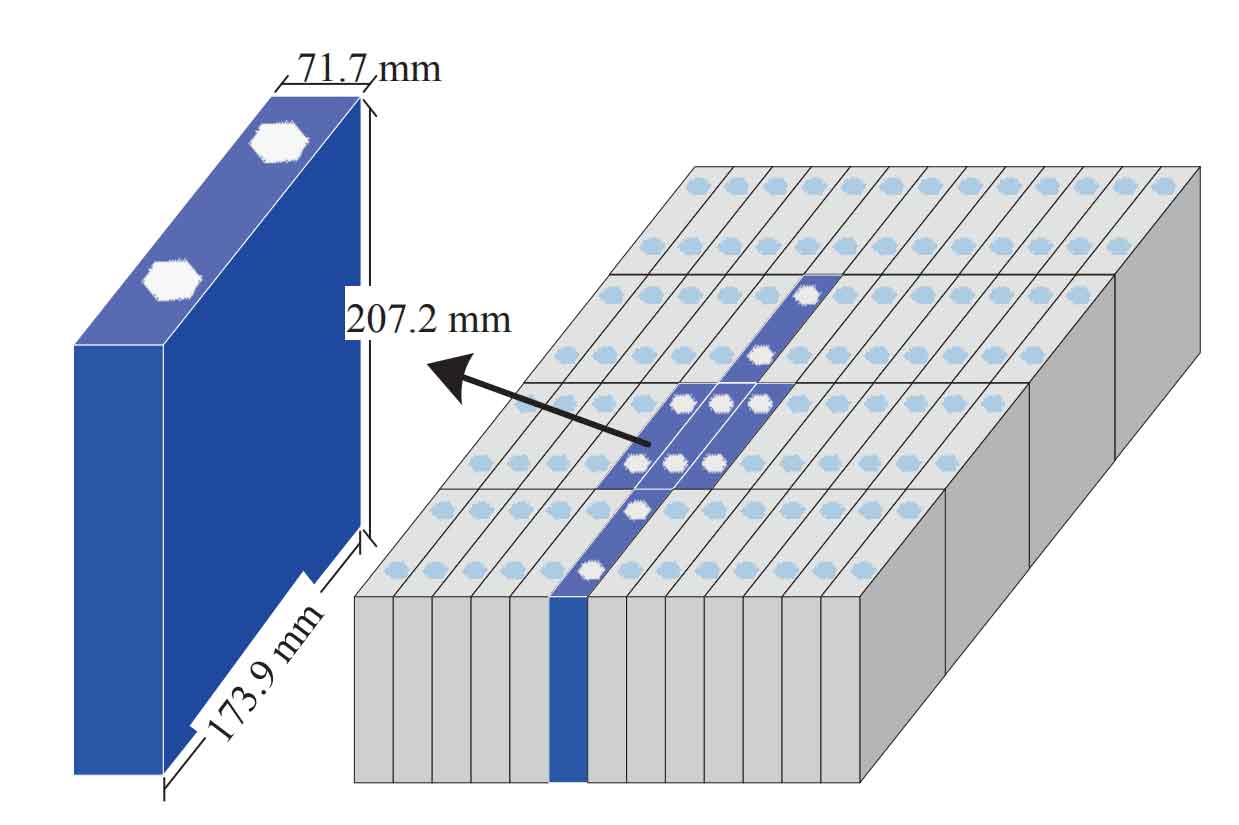
Moving to other expenses, which rank second in influence, a detailed analysis shows that project construction services fees, project management fees, and land acquisition fees are the top contributors. Specifically, for the sample cell energy storage system projects, the breakdown is as follows: project construction services fees account for 45.98%, project management fees for 32.10%, and land acquisition fees for 16.61%. Within project construction services, design and survey fees represent the largest subset at 62.01%, highlighting the importance of thorough planning and engineering in cost control. Similarly, in project management, supervision fees constitute 32.54%, emphasizing the need for efficient oversight during construction. These findings suggest that proactive management of design and supervision activities can significantly curb overall costs for a cell energy storage system.
To formalize the relationship between cost factors, I developed a simplified cost model for a cell energy storage system. Let \(C_{\text{total}}\) denote the total cost, which can be expressed as a function of the principal components:
$$C_{\text{total}} = \beta_0 + \beta_1 F_1 + \epsilon$$
Where \(F_1\) is the first principal component derived from the standardized cost variables, \(\beta_0\) and \(\beta_1\) are coefficients, and \(\epsilon\) represents residual error. Given that \(F_1\) heavily loads on equipment purchase costs, we can approximate:
$$F_1 \approx w_1 \cdot \text{Equipment} + w_2 \cdot \text{Other} + w_3 \cdot \text{Installation} + w_4 \cdot \text{Construction}$$
With weights \(w_i\) proportional to the component loadings. For practical purposes, a more granular model can be formulated to account for battery-specific costs. If \(P_b\) is the battery unit price per kWh and \(Q_b\) is the total battery capacity in kWh, then the battery cost component \(C_b\) is:
$$C_b = P_b \times Q_b$$
Assuming batteries constitute a fraction \(\alpha\) of equipment costs, we have:
$$C_{\text{equipment}} = \frac{C_b}{\alpha} + C_{\text{other equipment}}$$
Where \(C_{\text{other equipment}}\) includes costs for power conversion and control systems. Integrating this into the total cost, the cell energy storage system investment becomes:
$$C_{\text{total}} = \frac{P_b Q_b}{\alpha} + C_{\text{other equipment}} + C_{\text{construction}} + C_{\text{installation}} + C_{\text{other expenses}}$$
This model highlights the sensitivity of total cost to battery price and capacity, reinforcing the need for strategic procurement and scale optimization. Additionally, it underscores how advancements in battery technology, which reduce \(P_b\), can dramatically lower the cost of deploying a cell energy storage system.
Beyond direct costs, indirect factors such as regulatory policies, geographic location, and grid integration requirements also impact the economics of cell energy storage systems. For example, regions with incentives for energy storage may offset some expenses through subsidies or tax credits. Moreover, the design of a cell energy storage system must consider site-specific conditions like climate and grid connectivity, which can affect construction and installation costs. However, the PCA results indicate that these factors are secondary to equipment and project service fees in the sample set. This suggests that while external variables matter, internal cost management focused on procurement and planning is paramount for financial efficiency.
The implications of this analysis are manifold for industry practitioners. First, prioritizing cost control in equipment procurement—especially batteries—can yield substantial savings. This involves negotiating bulk purchase agreements, monitoring market trends, and selecting technologies like LFP batteries that offer cost-effectiveness. Second, streamlining project management and design processes can reduce other expenses. Employing standardized designs and digital tools for project oversight can minimize delays and overheads. Third, stakeholders should adopt life-cycle cost assessments rather than focusing solely on upfront investment, as operational and maintenance costs also influence the long-term viability of a cell energy storage system. For instance, battery degradation and replacement costs should be factored into financial models.
To further illustrate the cost dynamics, consider the following comparative table of two hypothetical cell energy storage system projects with different scales and cost structures:
| Cost Item | Scenario A: 20 MW/40 MWh System | Scenario B: 100 MW/200 MWh System | Cost per kWh (Scenario A) | Cost per kWh (Scenario B) |
|---|---|---|---|---|
| Battery Procurement | $8,000,000 | $35,000,000 | $200/kWh | $175/kWh |
| Power Conversion Systems | $1,500,000 | $6,000,000 | $37.5/kWh | $30/kWh |
| Construction Engineering | $600,000 | $2,000,000 | $15/kWh | $10/kWh |
| Installation Engineering | $400,000 | $1,500,000 | $10/kWh | $7.5/kWh |
| Other Expenses | $1,000,000 | $3,500,000 | $25/kWh | $17.5/kWh |
| Total Cost | $11,500,000 | $48,000,000 | $287.5/kWh | $240/kWh |
This table demonstrates economies of scale: as the capacity of the cell energy storage system increases, the cost per kWh decreases, primarily due to lower unit costs for batteries and equipment. Such insights are valuable for planners determining optimal system sizes based on budget and performance requirements.
In conclusion, this analysis underscores the critical cost drivers for cell energy storage systems, with equipment purchase—especially battery procurement—being the most significant factor. By applying PCA, I have distilled complex cost data into interpretable components, revealing that managing equipment and project service expenses is key to controlling overall investment. The cell energy storage system, as a cornerstone of modern energy infrastructure, requires careful financial planning to realize its full potential. Future research could expand this analysis to include operational costs and regional variations, further refining cost models. For now, stakeholders can use these findings to guide procurement strategies, design optimizations, and policy frameworks, ultimately fostering more affordable and widespread adoption of cell energy storage systems. The journey toward cost-effective energy storage is ongoing, but with data-driven approaches like PCA, we can navigate it more effectively, ensuring that cell energy storage systems play a pivotal role in the clean energy transition.