
As a researcher deeply involved in the field of renewable energy integration, I have observed the rapid growth of new energy generation technologies worldwide. These technologies, such as wind and solar power, offer low-cost, low-pollution, and low-dependency advantages, making them increasingly prevalent in global markets. However, their inherent intermittency and geographical constraints pose significant challenges to grid stability and efficiency. In this context, the cell energy storage system emerges as a critical enabler, transforming electrical energy forms and enhancing power quality. Despite its potential, practical applications face hurdles like low power density, imperfect mechanisms, and harsh operating conditions. This article delves into the application scenarios, characteristics, and optimization strategies for cell energy storage systems in new energy generation, drawing on the latest technological advancements. My aim is to propose macro-level strategies that balance效益 (benefits) and safety while fostering a green and efficient energy landscape.
The integration of cell energy storage systems into new energy generation is not merely an option but a necessity. From my perspective, these systems act as a buffer, mitigating the variability of renewable sources. For instance, solar power generation peaks during daylight hours, while wind energy fluctuates with weather patterns. Without storage, excess energy is wasted, and supply gaps can lead to blackouts. The cell energy storage system addresses this by storing surplus electricity and releasing it when demand arises. This functionality is pivotal for achieving a reliable and sustainable energy grid. In the following sections, I will explore the current state of cell energy storage technology, its匹配 (matching) scenarios, and optimization approaches, emphasizing the repeated importance of the cell energy storage system throughout.
Current Applications of Cell Energy Storage Technology in New Energy Generation
In my research, I have categorized cell energy storage technologies based on their electrochemical principles. The most prominent include lithium-ion batteries, sodium-ion batteries, flow batteries, and supercapacitors. Each type has unique characteristics that suit specific applications within new energy systems. The cell energy storage system, as a whole, comprises not only the电池 (battery) cells but also power conversion systems, battery management systems, and energy management systems. This integration is crucial for seamless operation.
Lithium-ion batteries, particularly lithium iron phosphate (LFP) and ternary lithium-ion variants, dominate the market due to their rechargeability and longevity. For example, LFP batteries are widely used in grid-scale storage because of their safety and cycle life. Innovations in lithium-ion隔膜 (separator) technology, such as ceramic-coated wet-process separators, have enhanced thermal stability and puncture resistance, reducing the risk of short circuits caused by lithium dendrites. This advancement directly improves the reliability of cell energy storage systems in harsh environments. Moreover, developments in lithium extraction from贫锂卤水 (lithium-poor brines) have made resource procurement more sustainable, aligning with green energy goals.
Sodium-ion batteries are gaining traction as an alternative, leveraging abundant sodium resources. Technologies like sodium-sulfur and sodium-air batteries offer potential for large-scale storage. Based on polyanion技术路线 (technical routes), batteries like sodium iron sulfate provide open frameworks for rapid sodium ion diffusion, extending cycle life. Prussian blue-based approaches, though still in exploration, focus on controlling crystallographic water and vacancies to ensure stability. The compatibility of sodium-ion battery production with existing lithium-ion infrastructure accelerates their adoption. In my view, sodium-ion cell energy storage systems could revolutionize cost-effective储能 (energy storage) for renewable integration.
Flow batteries, such as vanadium redox flow batteries, excel in long-duration storage due to their decoupled power and capacity. They allow deep discharge without degradation, making them ideal for applications requiring stable output over extended periods. Supercapacitors, on the other hand, offer high power density for rapid charge-discharge cycles, useful in smoothing power fluctuations in wind turbines. The versatility of these technologies underscores the need for tailored cell energy storage system designs.
To summarize the technical aspects, I present a table comparing key cell energy storage technologies:
| Technology | Energy Density (Wh/kg) | Power Density (W/kg) | Cycle Life (cycles) | Typical Application in New Energy |
|---|---|---|---|---|
| Lithium-ion (LFP) | 120-160 | 200-500 | 2000-6000 | Grid-scale storage, rooftop solar |
| Sodium-ion | 80-140 | 150-400 | 1000-3000 | Large-scale储能电站 (energy storage power stations) |
| Flow Battery | 20-50 | 50-150 | >10000 | Long-duration wind/solar farm storage |
| Supercapacitor | 5-10 | 1000-10000 | >500000 | Frequency regulation, peak shaving |
This table highlights how different cell energy storage system components cater to diverse needs. For instance, lithium-ion batteries balance energy and power density, while supercapacitors prioritize rapid response. The choice depends on factors like discharge duration and cost, which I will discuss later.
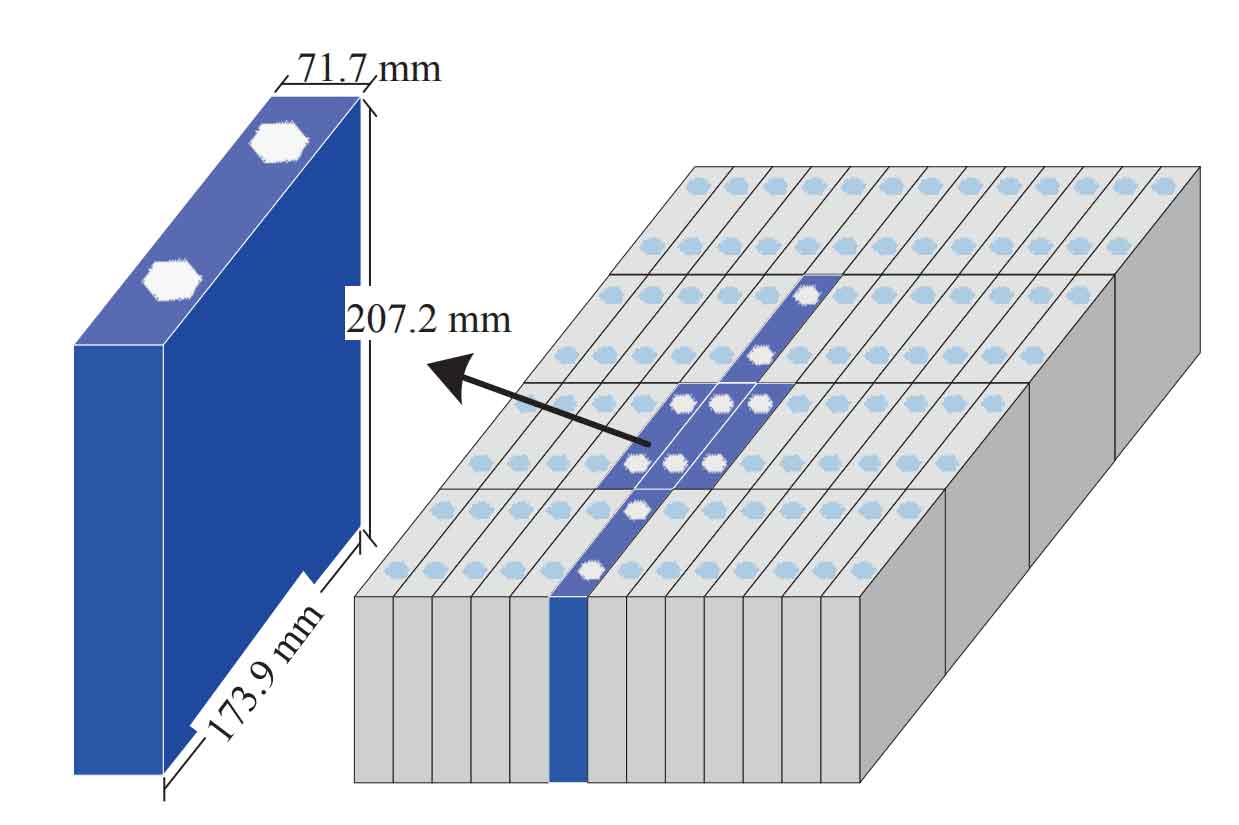
The image above illustrates the physical form of lithium iron phosphate batteries, often used in cell energy storage systems. It shows both single cells and grouped modules, emphasizing the scalability of these systems. From my experience, such modular designs facilitate easy maintenance and expansion, critical for adapting to growing renewable capacity.
Matching Scenarios for Cell Energy Storage Systems
In practice, the deployment of cell energy storage systems varies across three primary scenarios: generation side, transmission/distribution side, and consumption side. Each scenario demands specific性能 (performance) metrics, and understanding these匹配 (matches) is essential for optimal integration.
On the generation side, cell energy storage systems are installed near renewable power plants, such as wind farms or solar parks. Here, they mitigate intermittency by storing excess energy during peak production and supplying it during lulls. For example, a photovoltaic plant paired with a lithium-ion cell energy storage system can smooth output fluctuations, reducing strain on grid frequency regulation. My analysis suggests that sodium-sulfur batteries, with their high energy density, are well-suited for large-scale generation-side storage, especially in areas with abundant solar resources.
At the transmission and distribution level, cell energy storage systems enhance grid stability by providing ancillary services like voltage support and black-start capabilities. Flow batteries, due to their long cycle life, can be used for负荷跟踪 (load following) in分布式能源 (distributed energy resources) networks. Supercapacitors excel in this scenario for rapid frequency response, compensating for sudden drops in wind power. I have seen projects where supercapacitor-based cell energy storage systems are integrated with smart grids to enable real-time energy交换 (exchange), improving overall efficiency.
On the consumption side, cell energy storage systems empower end-users, such as households or industries, to manage their energy usage. This includes peak shaving, where storage reduces electricity costs by drawing power during off-peak hours and using it during peak demand. Lithium-ion batteries dominate this market due to their compact size and declining costs. In my research, I advocate for hybrid systems that combine multiple cell energy storage technologies to cater to diverse consumer needs, such as using supercapacitors for short bursts and batteries for sustained supply.
To elucidate these scenarios, I propose a matching framework based on technical requirements. The following table summarizes the ideal cell energy storage system types for each scenario:
| Scenario | Key Requirements | Recommended Cell Energy Storage System | Example Application |
|---|---|---|---|
| Generation Side | High energy capacity, long discharge (2+ hours) | Sodium-ion batteries, flow batteries | Solar farm with daily storage cycles |
| Transmission/Distribution Side | Fast response, high power density | Supercapacitors, lithium-ion (power type) | Grid frequency regulation |
| Consumption Side | Cost-effectiveness, scalability | Lithium-ion (LFP), advanced lead-acid | Residential solar-plus-storage |
This matching ensures that the cell energy storage system aligns with operational demands. For instance, in generation-side applications, energy density is prioritized over power density, whereas the opposite holds for transmission-side uses. My observations indicate that a one-size-fits-all approach fails; instead, customized cell energy storage system designs yield better outcomes.
Optimization Strategies for Cell Energy Storage Systems
To maximize the benefits of cell energy storage systems in new energy generation, I propose several optimization strategies. These strategies focus on机制 (mechanisms) design, grid integration, and management expansion, all aimed at enhancing efficiency and profitability.
First, establishing an independent储能补偿体 (energy storage compensation body) mechanism is crucial. This mechanism involves creating standalone cell energy storage systems that operate as compensatory modules within the power grid. They absorb surplus electricity during periods of high renewable generation and discharge during shortages, effectively acting as a buffer. From my perspective, such mechanisms should incorporate intelligent control algorithms to optimize charge-discharge cycles based on real-time data. For example, a cell energy storage system can be programmed to store energy when electricity prices are low and release when prices are high, generating revenue through arbitrage. The mathematical formulation for this can be expressed as a profit maximization problem:
$$ \max \sum_{t=1}^{T} (P_{discharge}(t) \cdot \pi(t) – P_{charge}(t) \cdot \gamma(t)) $$
where \( P_{discharge}(t) \) is the discharge power at time \( t \), \( \pi(t) \) is the electricity price, \( P_{charge}(t) \) is the charge power, and \( \gamma(t) \) is the charging cost. This equation highlights how a cell energy storage system can be economically optimized. Additionally, the mechanism should include safety protocols, such as thermal management, to prevent battery degradation. I recommend using parameters like state-of-charge (SOC) and state-of-health (SOH) to monitor performance, with data logged for continuous improvement. A robust cell energy storage system in this context not only stabilizes the grid but also creates new business models, such as offering调峰 (peak shaving) and调频 (frequency regulation) services.
Second, strengthening grid integration and coordination is vital for seamless operation. Cell energy storage systems must comply with grid codes regarding voltage, frequency, and power quality. In my experience, this requires advanced power electronics, such as bi-directional inverters, that enable efficient energy conversion. Coordination between multiple cell energy storage systems and other grid assets can be achieved through centralized or distributed control schemes. For instance, a cloud-based energy management system can orchestrate multiple cell energy storage units to respond collectively to grid signals. The power flow equation illustrates this integration:
$$ P_{grid}(t) = P_{renewable}(t) + P_{storage}(t) – P_{load}(t) $$
where \( P_{grid}(t) \) is the net power注入 (injected) into the grid, \( P_{renewable}(t) \) is renewable generation, \( P_{storage}(t) \) is the output from the cell energy storage system (positive for discharge, negative for charge), and \( P_{load}(t) \) is the load demand. By optimizing \( P_{storage}(t) \), the cell energy storage system can balance supply and demand, reducing curtailment of renewables. I advocate for policy支持 (support) that incentivizes grid-friendly behavior, such as tariffs for ancillary services. Moreover, interoperability standards should be developed to ensure that cell energy storage systems from different manufacturers can communicate effectively, fostering a plug-and-play ecosystem.
Third, expanding the management coverage of cell energy storage systems involves精细化 (refined) parameter monitoring and comprehensive oversight. As the scale of energy storage grows, managing thousands of battery cells becomes complex. I propose using big data analytics and machine learning to predict failures and optimize maintenance. Key parameters like temperature, voltage, and current should be tracked in real-time to detect anomalies. For example, a sudden voltage drop in a cell might indicate an internal short, triggering an alarm. The health of a cell energy storage system can be modeled using degradation equations:
$$ \text{SOH}(t) = \text{SOH}_0 – \int_0^t \alpha \cdot e^{\beta \cdot T(\tau)} \, d\tau $$
where \( \text{SOH}_0 \) is the initial state-of-health, \( \alpha \) and \( \beta \) are degradation coefficients, and \( T(\tau) \) is the temperature over time. This formula helps in scheduling proactive replacements,延长 (extending) the lifespan of the cell energy storage system. Additionally, management should encompass the entire lifecycle, from manufacturing to recycling. I emphasize the importance of sustainable practices, such as using recycled materials in new batteries, to minimize environmental impact. By broadening management scope, operators can enhance safety and reduce operational costs, making cell energy storage systems more viable in the long run.
To synthesize these strategies, I present a table outlining optimization actions and their expected outcomes:
| Optimization Strategy | Key Actions | Expected Outcome | Role of Cell Energy Storage System |
|---|---|---|---|
| Independent Compensation Mechanism | Deploy standalone storage units; implement smart controls | Increased grid flexibility and revenue from energy arbitrage | Serves as a buffer, absorbing and releasing energy on demand |
| Grid Integration | Adhere to grid codes; use advanced inverters; coordinate with other assets | Improved power quality and reduced renewable curtailment | Acts as a grid stabilizer, providing ancillary services |
| Management Expansion | Monitor parameters in real-time; apply predictive maintenance; embrace lifecycle management | Enhanced safety, longer lifespan, and lower total cost of ownership | Operates efficiently with minimal downtime |
These strategies collectively empower the cell energy storage system to overcome existing challenges. In my view, continuous innovation in materials and software will further optimize performance. For instance, solid-state batteries could revolutionize cell energy storage systems by offering higher energy density and safety, though they are still in development.
Conclusion
In conclusion, cell energy storage systems are indispensable for the future of new energy generation. Through my analysis, I have highlighted their diverse applications, from generation-side smoothing to consumption-side cost savings. The matching of technologies to scenarios ensures that each cell energy storage system fulfills its intended role effectively. Optimization strategies, such as independent compensation mechanisms, grid integration, and expanded management, pave the way for higher efficiency and profitability. I firmly believe that by prioritizing these approaches, we can build a resilient energy infrastructure that leverages the full potential of renewables.
Looking ahead, the evolution of cell energy storage systems will likely focus on improving energy density, reducing costs, and enhancing sustainability. Emerging technologies like metal-air batteries and重力储能 (gravity storage) may complement existing systems. However, the core principle remains: a well-integrated cell energy storage system is key to unlocking a green and efficient energy future. As researchers and practitioners, we must collaborate to address technical hurdles and promote policies that support widespread adoption. The journey toward a sustainable grid is complex, but with continuous advancements in cell energy storage systems, it is undoubtedly achievable.