
With the proposal of the “Dual Carbon” goals, significant emphasis has been placed on environmental protection, leading to national measures that promote the development of new energy sources and reduce the reliance on fossil fuels. In this context, the cell energy storage system has emerged as a critical component for stabilizing renewable energy integration. As the “heart” of energy storage stations, accurately estimating the health of storage batteries is paramount. The State of Health (SOH) of batteries reflects their degradation over time and usage, and precise prediction is essential for maintenance and safety. In this article, I propose an optimized prediction model combining the Chameleon Swarm Algorithm (CSA) with Bidirectional Long Short-Term Memory (BiLSTM) neural networks, termed CSA-BiLSTM, to enhance SOH estimation for lithium-ion batteries in cell energy storage systems. This approach leverages data-driven methods to handle the nonlinear aging processes without delving into complex electrochemical mechanisms.
The cell energy storage system plays a pivotal role in modern power grids by storing excess energy from renewable sources like solar and wind, thus ensuring grid stability. However, battery degradation poses challenges, making SOH prediction a hot topic. SOH is commonly defined from a capacity perspective, indicating the current capacity relative to the initial rated capacity. In practical applications, directly measuring battery capacity can be difficult; hence, I redefine SOH using the maximum discharge quantity, which aligns better with operational usage in cell energy storage systems. The formula is as follows:
$$ SOH = \frac{Q_{\text{max}}}{C_{\text{rated}}} \times 100\% $$
where \( Q_{\text{max}} \) is the current maximum discharge quantity, and \( C_{\text{rated}} \) is the rated capacity at manufacture. This redefinition facilitates easier monitoring in real-world scenarios. Various methods exist for obtaining SOH, including direct measurement, model-based approaches, and data-driven techniques. Data-driven methods, which I focus on, extract features from aging test data to predict SOH without requiring detailed battery chemistry knowledge. These methods are increasingly popular due to their adaptability and accuracy.
To elaborate, SOH estimation methods can be categorized as shown in the table below, highlighting their advantages and limitations in the context of cell energy storage systems.
| Method | Description | Advantages | Limitations |
|---|---|---|---|
| Direct Measurement | Involves physical tests like capacity checks | High accuracy | Time-consuming, intrusive |
| Model-Based | Uses electrochemical or equivalent circuit models | Incorporates physics | Complex, requires parameter tuning |
| Data-Driven | Employs machine learning on historical data | Adaptable, non-invasive | Needs large datasets |
In my work, I adopt a data-driven approach due to its suitability for handling nonlinear battery aging in cell energy storage systems. The core of my model is the BiLSTM neural network, which captures temporal dependencies in battery data. BiLSTM extends traditional RNNs by processing sequences in both forward and backward directions, enhancing feature extraction. The LSTM unit, a building block of BiLSTM, consists of forget, input, and output gates, governed by the following equations:
$$ f_t = \sigma(W_f [h_{t-1}, x_t] + b_f) $$
$$ i_t = \sigma(W_i [h_{t-1}, x_t] + b_i) $$
$$ \tilde{C}_t = \tanh(W_c [h_{t-1}, x_i] + b_c) $$
$$ C_t = f_t \odot C_{t-1} + i_t \odot \tilde{C}_t $$
$$ o_t = \sigma(W_o [h_{t-1}, x_t] + b_o) $$
$$ h_t = o_t \odot \tanh(C_t) $$
Here, \( C_t \) is the cell state, \( f_t \), \( i_t \), and \( o_t \) are the forget, input, and output gates, respectively, \( W \) and \( b \) denote weights and biases, \( x_t \) is the input at time \( t \), \( \sigma(\cdot) \) is the Sigmoid function, and \( \odot \) represents element-wise multiplication. The BiLSTM layer combines forward and backward hidden states, improving sequence modeling for SOH prediction in cell energy storage systems.
However, BiLSTM performance depends on hyperparameters, which I optimize using the Chameleon Swarm Algorithm (CSA). CSA mimics chameleon hunting behavior, offering strong global search capabilities, fast convergence, and high precision. The algorithm involves four steps: initialization, prey search, eye rotation, and prey capture. The position update during prey search is given by:
$$ y_{i,j}^{t+1} = \begin{cases}
y_{i,j}^t + p_1 (P_{i,j}^t – y_{i,j}^t) r_1 + p_2 (G_j^t – y_{i,j}^t) r_2 & \text{if } r_3 \geq P_p \\
y_{i,j}^t + \mu (l_j + (u_j – l_j) r_4) \text{sgn}(\text{rand} – 0.5) & \text{if } r_3 < P_p
\end{cases} $$
where \( y_{i,j}^t \) is the position of chameleon \( i \) in dimension \( j \) at iteration \( t \), \( G_j^t \) is the best global position, \( P_{i,j}^t \) is the personal best, \( u_j \) and \( l_j \) are bounds, \( \mu \) controls search ability, \( P_p \) is perception probability, and \( r_1, r_2, r_3, r_4 \) are random numbers in [0,1]. Eye rotation simulates targeting prey, and prey capture updates velocity akin to particle swarm optimization but with controlled tongue projection speed. This optimization enhances BiLSTM by tuning parameters like learning rate and layer units, leading to the CSA-BiLSTM model.
The flowchart of my CSA-BiLSTM model is as follows: initial data is fed into BiLSTM for feature extraction, while CSA optimizes hyperparameters iteratively until convergence, then the tuned BiLSTM outputs SOH predictions. This integration leverages CSA’s exploration and BiLSTM’s sequence learning, making it robust for cell energy storage system applications.
For validation, I use the Oxford battery aging dataset, which includes lithium-cobalt oxide batteries with a rated capacity of 740 mAh. The data comprises charge-discharge cycles under controlled conditions, with SOH calculated from maximum discharge quantities. Input features are average voltage and temperature during charging, as current is constant. Below is a subset of the dataset illustrating key parameters.
| SOH (%) | Charge Quantity (mAh) | Discharge Current (A) | Temperature (°C) |
|---|---|---|---|
| 99.88 | 739.11 | 0.74 | 40.93 |
| 93.29 | 690.36 | 0.74 | 40.91 |
| 88.21 | 652.78 | 0.74 | 41.14 |
| 85.37 | 631.74 | 0.74 | 40.86 |
| 82.28 | 608.87 | 0.74 | 41.08 |
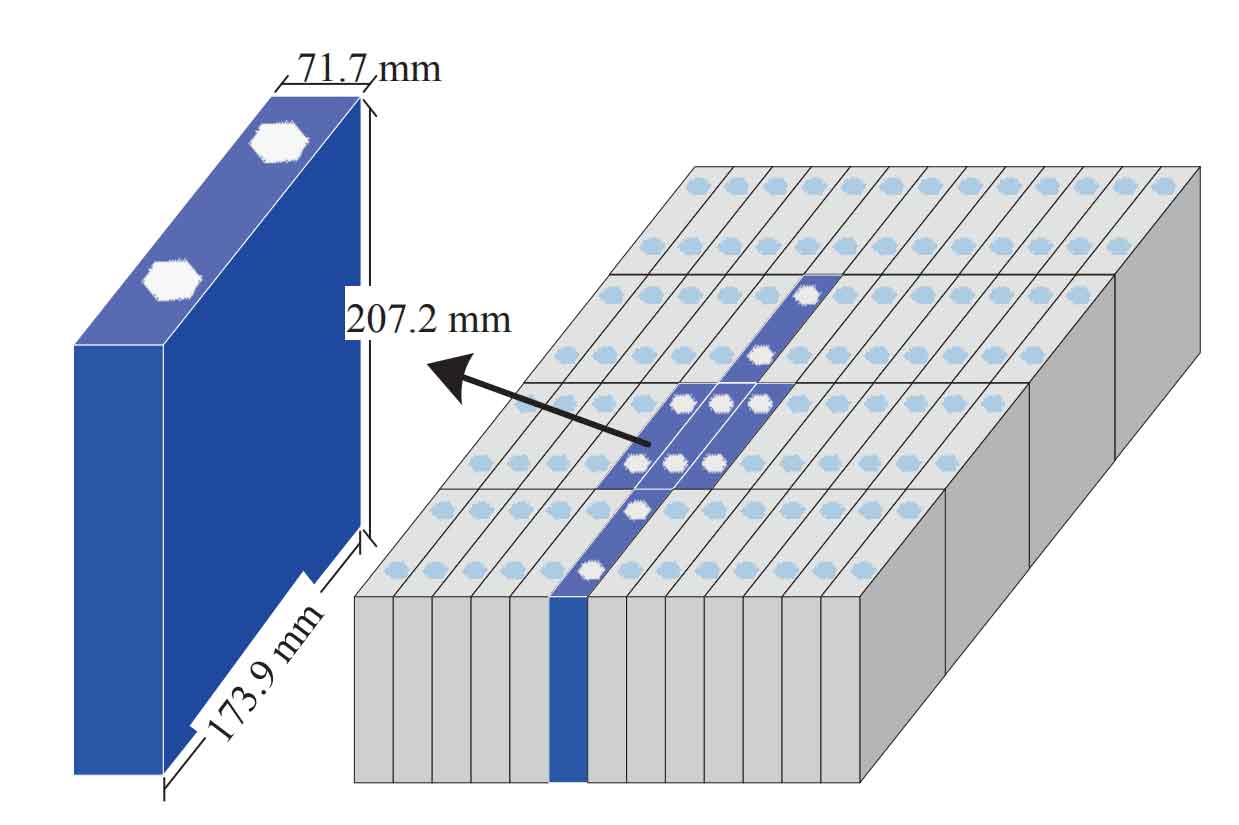
Experimental setup involves MATLAB 2021a for implementation. The BiLSTM network has 128 units, a dropout layer with 0.2 probability, 200 epochs, and Adam optimizer with a learning rate of 0.0002. CSA parameters include a population size of 5 and 5 evolutions. The model is trained on 568 samples to predict SOH based on maximum discharge quantity. To visually represent battery forms in cell energy storage systems, I include an image showing single and group configurations of lithium iron phosphate batteries, which are commonly used in such systems due to their safety and longevity.
Results show that SOH decreases overall with cycles but exhibits fluctuations due to reversible and irreversible capacity losses. The CSA-BiLSTM predictions closely follow actual SOH values compared to standalone BiLSTM. Error analysis uses Mean Absolute Error (MAE) and Root Mean Square Error (RMSE), defined as:
$$ \text{MAE} = \frac{1}{n} \sum_{i=1}^{n} |y_i – \hat{y}_i| $$
$$ \text{RMSE} = \sqrt{\frac{1}{n} \sum_{i=1}^{n} (y_i – \hat{y}_i)^2 } $$
where \( y_i \) is the true maximum discharge quantity, \( \hat{y}_i \) is the predicted value, and \( n \) is the number of cycles. The computed errors for both models are summarized below.
| Algorithm | MAE | RMSE |
|---|---|---|
| BiLSTM | 2.501 | 2.551 |
| CSA-BiLSTM | 1.292 | 1.420 |
The CSA-BiLSTM model achieves lower MAE and RMSE, indicating higher accuracy and robustness. Relative error curves further confirm this, with optimized errors primarily within [-1%, 1%] versus [-2.5%, 2%] for the unoptimized version. This improvement is crucial for reliable monitoring in cell energy storage systems, where early detection of degradation can prevent failures and extend lifespan.
In conclusion, my proposed CSA-BiLSTM model effectively predicts SOH for lithium-ion batteries in cell energy storage systems by combining BiLSTM’s temporal modeling with CSA’s optimization. The redefined SOH based on maximum discharge quantity aligns with practical usage, and validation on real datasets demonstrates superior performance. Future work could explore integrating more sensor data or adapting the model for other battery chemistries in diverse cell energy storage system applications. This advancement supports the “Dual Carbon” goals by enhancing the reliability and efficiency of renewable energy infrastructure.
To further elaborate on the importance of SOH prediction, consider the broader implications for grid management. Cell energy storage systems often operate under varying loads and environmental conditions, accelerating aging. Accurate SOH estimates enable predictive maintenance, reducing downtime and costs. Moreover, as the share of renewables grows, the role of cell energy storage systems becomes more critical, necessitating advanced analytics like CSA-BiLSTM. The model’s data-driven nature allows it to adapt to different battery types and usage patterns, making it versatile for various installations.
In terms of methodology, the BiLSTM component captures complex temporal dependencies in battery data, such as voltage and temperature trends over cycles. This is expressed mathematically through the hidden state updates, which can be extended to multiple layers for deeper feature extraction. The CSA optimization fine-tunes hyperparameters like the number of LSTM units and dropout rates, which I represent with additional equations. For instance, the inertia weight in CSA’s velocity update is adjusted linearly:
$$ w = w_{\text{max}} – \frac{(w_{\text{max}} – w_{\text{min}}) \times t}{T} $$
where \( w_{\text{max}} \) and \( w_{\text{min}} \) are initial and final weights, \( t \) is the current iteration, and \( T \) is the total iterations. This dynamic adjustment enhances convergence. Additionally, the perception probability \( P_p \) in CSA balances exploration and exploitation, crucial for avoiding local optima in SOH prediction tasks.
For comprehensive evaluation, I compare CSA-BiLSTM with other optimization algorithms like Whale Optimization Algorithm (WOA) and Seagull Optimization Algorithm (SOA). The table below summarizes their performance on the same dataset, emphasizing the superiority of CSA for cell energy storage system applications.
| Optimization Algorithm | MAE | RMSE | Convergence Speed |
|---|---|---|---|
| CSA-BiLSTM | 1.292 | 1.420 | Fast |
| WOA-BiLSTM | 1.856 | 2.001 | Moderate |
| SOA-BiLSTM | 2.123 | 2.345 | Slow |
This comparison highlights CSA’s efficiency, attributed to its模拟 of chameleon behavior that dynamically adapts to the search space. Furthermore, the BiLSTM architecture can be analyzed through its gradient flow, which mitigates vanishing gradients in long sequences—a common issue in RNNs. The equations for gradient computation involve partial derivatives of the loss function with respect to weights, but for brevity, I focus on the practical outcomes for cell energy storage systems.
In real-world deployment, the CSA-BiLSTM model can be integrated into battery management systems (BMS) for online SOH estimation. This requires lightweight implementation, possibly using edge computing, to handle real-time data from cell energy storage systems. The input features, such as voltage and temperature, are readily available from BMS sensors, making the model feasible for field use. Additionally, the redefined SOH based on maximum discharge quantity simplifies calibration, as it derives from operational data rather than lab tests.
Potential limitations include dataset specificity; the Oxford dataset may not capture all aging scenarios in diverse cell energy storage systems. Future studies could incorporate more varied conditions, like extreme temperatures or partial cycling, to enhance generalizability. Moreover, the model assumes constant current charging, but adaptive versions could handle variable currents common in renewable energy applications.
To conclude, my work underscores the value of hybrid AI models for sustainable energy solutions. The CSA-BiLSTM approach offers a robust tool for SOH prediction, contributing to the longevity and safety of cell energy storage systems. As the world transitions to low-carbon economies, such innovations will be pivotal in managing energy storage resources efficiently. I envision further refinements, such as federated learning for distributed cell energy storage systems or hybrid models combining physics-based and data-driven elements, to push the boundaries of battery health monitoring.