
In modern active distribution networks, the integration of cell energy storage systems has become pivotal for enhancing grid stability, promoting renewable energy absorption, and optimizing power flow. However, the efficient management of these systems poses significant challenges, particularly in balancing economic dispatch with real-time flexible control. Traditional approaches often focus on either optimization-based scheduling or control strategies, but rarely integrate both to achieve optimal performance. To address this gap, we propose a novel two-layer distributed energy negotiation management strategy for cell energy storage systems, leveraging ring communication topology and dual-mode balanced circuits. This strategy aims to synchronize state-of-charge (SOC) across groups and ensure consistency within groups, thereby improving the overall efficiency and cost-effectiveness of cell energy storage system operations.
The proliferation of cell energy storage systems in active distribution networks is driven by their ability to mitigate power fluctuations, facilitate renewable energy integration, and reduce infrastructure upgrade costs. Despite these benefits, uncoordinated usage can accelerate battery degradation, compromise system safety, and increase operational expenses. Therefore, developing advanced energy management strategies is crucial. Existing methods include empirical approaches, optimization-based techniques, and machine learning algorithms, each with limitations in terms of real-time adaptability or optimality. Moreover, control architectures vary from centralized to distributed, with the latter offering robustness but higher complexity. Our work focuses on a distributed framework that combines economic optimization with real-time control, specifically targeting the synchronization of SOC across multiple cell energy storage system groups.
To comprehensively evaluate the performance of cell energy storage systems, we first analyze the cost factors involved in their deployment and operation. These include investment and construction costs, state degradation costs, and online operational costs. The investment cost \(D\) encompasses procurement and construction expenses, modeled as follows: $$D_1 = \sum_{n=1}^{N} [k_n E_{n,max} + a_n (bat_{n,max})^2 + b_n bat_{n,max}]$$ where \(E_{n,max}\) is the maximum nominal capacity, \(bat_{n,max}\) is the maximum nominal power, and \(k_n\), \(a_n\), \(b_n\) are unit cost coefficients. The construction cost \(D_2\) is given by: $$D_2 = \sum_{n=1}^{N} (d_n T_{n,pro} + cost_{n,fix})$$ with \(d_n\) as labor cost per unit time, \(T_{n,pro}\) as the construction period, and \(cost_{n,fix}\) as fixed project fees. Thus, the total investment cost is \(D = D_1 + D_2\).
State degradation cost \(R\) accounts for battery aging over time, expressed as: $$R = \sum_{n=1}^{N} Q_n (SOH_{n,0} – SOH_{n,T})$$ where \(SOH_{n,0}\) and \(SOH_{n,T}\) are the initial and final states of health, and \(Q_n\) is the unit degradation cost. Online operational cost \(C\) relates to energy transactions during peak and off-peak periods: $$C = \sum_{t=1}^{T} C_t \left( \sum_{k=1}^{K} l_{k,t} + \sum_{m=1}^{M} g_{m,t} + \sum_{n=1}^{N} bat_{n,t} \right)$$ where \(C_t\) is the electricity pricing function, \(l_{k,t}\) is load power, \(g_{m,t}\) is distributed generation power, and \(bat_{n,t}\) is the charge/discharge power of the cell energy storage system. The overall objective function for energy negotiation management minimizes a weighted sum of these costs: $$\min F = \mu_1 D + \mu_2 R + \mu_3 C$$ with \(\mu_1\), \(\mu_2\), \(\mu_3\) as weight coefficients. Constraints include limits on capacity, power, SOC, and SOH to ensure safe operation.
The cell energy storage system dynamics are modeled using discrete-time nonlinear equations. The SOC update is: $$SOC_{n,t+1} = SOC_{n,t} + \frac{1}{E_{n,up}} (bat_{n,t})^{\alpha_n}$$ where \(E_{n,up}\) is the usable capacity and \(\alpha_n\) is a characteristic coefficient. The SOH degradation is: $$SOH_{n,t+1} = SOH_{n,t} – \beta_n \exp(\psi_n |bat_{n,t}| – \theta_n) – \phi_{n,1} E_{n,up} bat_{n,t}^{\alpha_n} – \phi_{n,2} – \sigma_{n,1} \exp[-\sigma_{n,2}(\sigma_{n,3} |bat_{n,t}|)^{-1}]$$ with parameters \(\beta_n\), \(\psi_n\), \(\theta_n\), \(\phi_{n,1}\), \(\phi_{n,2}\), \(\sigma_{n,1}\), \(\sigma_{n,2}\), \(\sigma_{n,3}\) capturing battery characteristics. These models are essential for optimizing the cell energy storage system performance over time.
To analyze the optimal solution for energy negotiation management, we employ the Lagrangian duality method. The Lagrangian function for the daily management problem (ignoring investment costs) is: $$L = \sum_{t=1}^{T} C_t \left( \sum_{k=1}^{K} l_{k,t} + \sum_{m=1}^{M} g_{m,t} + \sum_{n=1}^{N} bat_{n,t} \right) + \sum_{n=1}^{N} \sum_{t=1}^{T} A_{n,t} (E_{n,up} SOC_{n,t} – E_{n,up}) + \sum_{n=1}^{N} \sum_{t=1}^{T} B_{n,t} (E_{n,low} – E_{n,up} SOC_{n,t}) + \sum_{n=1}^{N} \sum_{t=1}^{T} X_{n,t} (bat_{n,t} – P_{n,disc}) + \sum_{n=1}^{N} \sum_{t=1}^{T} Y_{n,t} (P_{n,char} – bat_{n,t})$$ where \(A_{n,t}\), \(B_{n,t}\), \(X_{n,t}\), \(Y_{n,t}\) are Lagrange multipliers for constraints. Applying the Karush-Kuhn-Tucker conditions, the optimal solution requires that all cell energy storage systems operate in synchronized states, meaning their SOC increments must be equal over time. This insight guides the design of our distributed control strategy.
Based on this analysis, we propose a two-layer distributed energy negotiation management strategy for cell energy storage systems. The upper layer achieves SOC synchronization across groups using ring communication, while the lower layer ensures SOC consistency within groups via dual-mode balanced circuits. This hierarchical approach addresses both inter-group and intra-group coordination, crucial for scalable cell energy storage system deployments.
The upper layer utilizes a ring communication topology, where each cell energy storage system group communicates with its neighbors in a circular manner. This topology offers low latency and robustness, making it suitable for real-time negotiations. We define the SOC increment \(\gamma_{n,t}\) as: $$\gamma_{n,t} \equiv soc_n(bat_{n,t}) = SOC_{n,t+1} – SOC_{n,t}$$ The negotiation update rule is: $$\gamma_{1,t}^{\tau+1} = \gamma_{1,t}^* + a_{N,1} (\gamma_{N,t}^{\tau} – \gamma_{1,t}^{\tau})$$ $$\gamma_{n,t}^{\tau+1} = \gamma_{n,t}^{\tau} + a_{n-1,n} (\gamma_{n-1,t}^{\tau} – \gamma_{n,t}^{\tau}) \quad \forall n \neq 1$$ where \(\tau\) is the iteration index, \(\gamma_{n,t}^*\) is the steady-state command for group 1, and \(a_{n-1,n}\) are control parameters. The power command is derived as: $$bat_{n,t}^{\tau+1} = (E_{n,up} soc_{n,t}^{\tau+1})^{1/\alpha_n}$$ When convergence is achieved, all groups have equal SOC increments, and their power ratios satisfy: $$\frac{bat_m}{bat_n} = \left( \frac{E_{m,up}}{E_{n,up}} \right)^{1/\alpha}$$ This ensures optimal economic dispatch for the cell energy storage system network.
The lower layer focuses on intra-group SOC consistency using a dual-mode balanced circuit. This circuit facilitates active energy transfer between battery cells within a group, addressing imbalances that arise from manufacturing variations or operational differences. The circuit topology includes an AC side, a DC side, and a control module, with bridge switch matrices and inductors enabling efficient energy redistribution. During grid charging, the circuit operates in a Boost-Buck mode to discharge high-SOC cells and charge low-SOC cells; during discharging, it functions in a Buck mode to charge low-SOC cells. An SOC protection module prevents overcharging or over-discharging, and an alternating charge-discharge command strategy reduces the time to achieve consistency. This approach minimizes the capacity requirements for the balancing power source and enhances the longevity of the cell energy storage system.
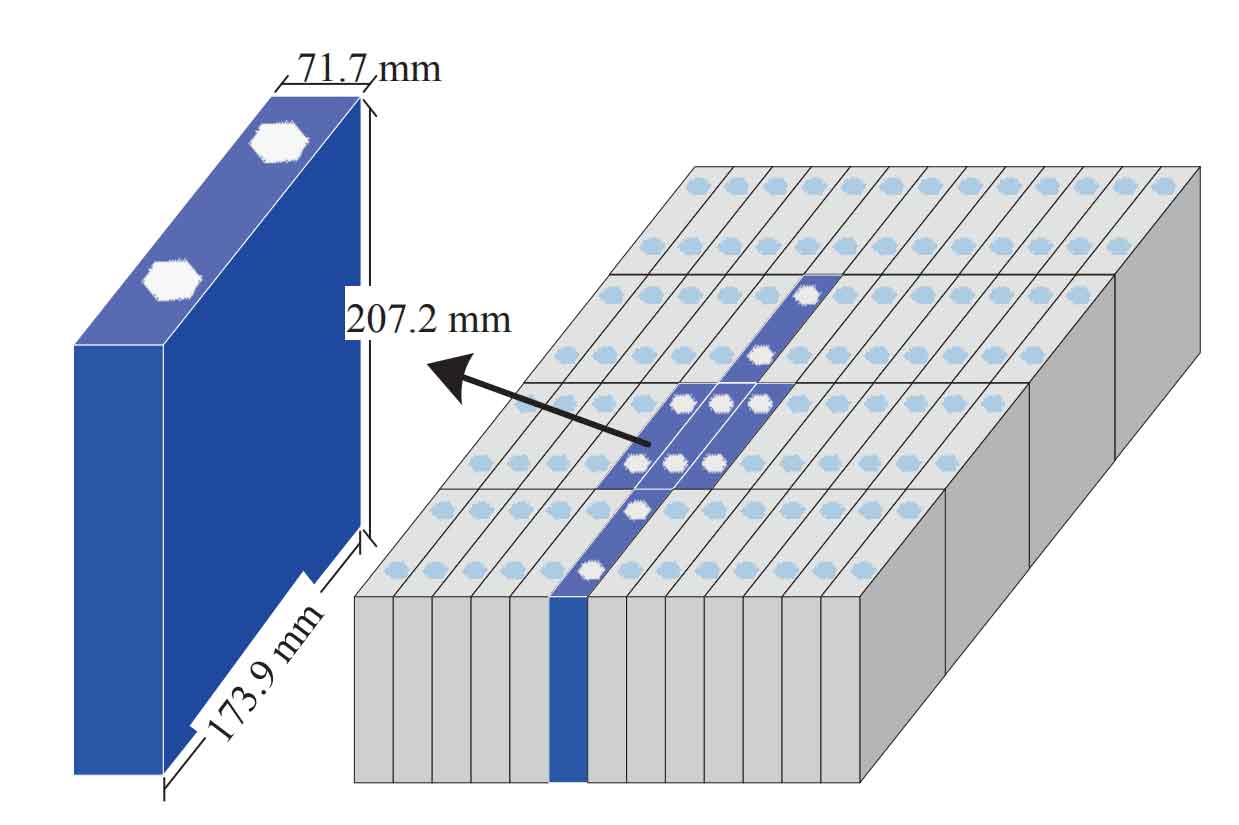
To validate the proposed strategy, we conduct simulations based on the IEEE 33 system, which includes multiple nodes, loads, distributed generators, and ten cell energy storage system groups. Each group comprises four battery cells, with parameters configured to represent diverse capacities and characteristics. The table below summarizes the key parameters for the cell energy storage system groups, highlighting variations in capacity and degradation coefficients.
| Parameter | Group 1 | Group 2 | Group 3 | Group 4 | Group 5 | Group 6 | Group 7 | Group 8 | Group 9 | Group 10 |
|---|---|---|---|---|---|---|---|---|---|---|
| \(\alpha_n\) | 1.15 | 1.15 | 1.15 | 1.15 | 1.15 | 1.15 | 1.15 | 1.15 | 1.15 | 1.15 |
| \(\beta_n\) | 31.6 | 31.8 | 30.3 | 31.8 | 31.2 | 30.2 | 30.6 | 31.1 | 31.9 | 31.9 |
| \(\psi_n\) | 0.02 | 0.02 | 0.02 | 0.02 | 0.02 | 0.02 | 0.02 | 0.02 | 0.02 | 0.02 |
| \(\theta_n\) | 19.3 | 20.9 | 20.9 | 19.9 | 20.6 | 19.2 | 19.8 | 20.8 | 20.5 | 20.9 |
| \(E_{n,up}\) (kWh) | 350 | 385 | 425 | 465 | 515 | 565 | 620 | 685 | 750 | 825 |
In charging scenarios, the total command is set to 200 kW for 0-110 seconds and 800 kW for 110-600 seconds. The ring negotiation process shows that group power allocations converge to values proportional to capacity ratios, with an average communication delay of approximately 4 seconds. The SOC increments synchronize across groups, as illustrated by the steady-state curves. Similarly, in discharging scenarios, the strategy maintains synchronization, demonstrating robustness for cell energy storage system operations. The intra-group consistency control is tested with alternating charge-discharge commands. For example, in a charging case, the maximum SOC difference among cells decreases from 18% to 0.2% within 600 seconds, while in discharging, it achieves consistency within 760 seconds. These results validate the effectiveness of the dual-mode balanced circuit in managing cell energy storage system imbalances.
To assess economic benefits, we compare our strategy with alternative management schemes using seasonal load data from a regional distribution network. Scheme 1 employs an empirical charge-discharge plan based on time-of-use tariffs, Scheme 2 uses a particle swarm optimization algorithm with our control strategy, and Scheme 3 directly solves the optimization model. The performance metrics include 24-hour electricity costs and the gradient square sum \(\delta\) of power commands, defined as: $$\delta = \sum_{t=1}^{T-1} (p_{t+1} – p_t)^2$$ where \(p_t\) is the load power. The table below presents the results for spring and autumn scenarios, showing that our strategy (Scheme 2) reduces costs and smooths power gradients effectively.
| Scenario | Scheme | 24-hour Cost (USD) | Gradient Square Sum \(\delta\) (×10^6) |
|---|---|---|---|
| Spring | Original Load | 108,513 | 2.86 |
| Scheme 1 | 107,680 | 2.61 | |
| Scheme 2 | 105,904 | 2.49 | |
| Scheme 3 | 105,829 | 2.69 | |
| Autumn | Original Load | 171,835 | 5.93 |
| Scheme 1 | 171,003 | 6.27 | |
| Scheme 2 | 169,226 | 6.00 | |
| Scheme 3 | 169,151 | 6.23 |
The proposed two-layer strategy not only lowers electricity expenses but also enhances grid stability by flattening load curves. For instance, in spring, it saves up to 2,609 USD compared to the original load, with a lower gradient sum, indicating smoother power transitions. This demonstrates the capability of cell energy storage systems to provide peak shaving and valley filling services while maintaining economic efficiency. The integration of ring communication and balanced circuits enables real-time adjustments, making the cell energy storage system adaptable to dynamic grid conditions.
In conclusion, we have developed a comprehensive two-layer distributed energy negotiation management strategy for cell energy storage systems under ring communication. By analyzing cost factors and applying Lagrangian duality, we derived optimal synchronization conditions for SOC increments. The upper layer utilizes ring-based fixed-point iteration to achieve inter-group synchronization, while the lower layer employs dual-mode balanced circuits for intra-group consistency. Simulation results on the IEEE 33 system confirm that the strategy achieves low-latency coordination and effective cost reduction, balancing economic dispatch with flexible control. Future work could explore the impact of electricity market dynamics, such as price elasticity, on cell energy storage system management, and enhance the robustness of communication topologies to handle information distortions. This approach paves the way for more resilient and efficient integration of cell energy storage systems in active distribution networks.