
The evolution of traditional power systems towards intelligent, flexible, and resilient networks is undeniable. At the heart of this transformation lies the integration of intermittent renewable energy sources and the critical need for stability. Large-scale battery energy storage systems (BESS) have emerged as a cornerstone technology to address these challenges, enabling load shifting, frequency regulation, and backup power. The core operational and safety unit of any BESS is the Battery Management System (BMS). A traditional BMS is responsible for monitoring individual cell voltages, temperatures, and currents, ensuring safe operating limits, estimating key states like State of Charge (SOC) and State of Health (SOH), and managing cell balancing. However, as the scale of cell energy storage system deployments grows—from containerized units to gigawatt-hour grid-scale facilities—the complexity and volume of data generated explode exponentially. This data deluge from thousands, even millions, of cells operating in diverse conditions presents a formidable challenge for conventional data processing architectures.
This is where big data technology offers a paradigm shift. The application of big data frameworks, advanced analytics, and machine learning to cell energy storage system management can unlock unprecedented levels of performance, reliability, and economic value. By moving beyond the limitations of isolated, real-time control to a holistic, data-driven management paradigm, we can achieve deeper insights into battery behavior, predict failures before they occur, optimize usage strategies for longevity, and seamlessly integrate storage assets into the smart grid. This article explores the architectural integration, core methodologies, and transformative applications of big data technology in managing large-scale cell energy storage system infrastructures.
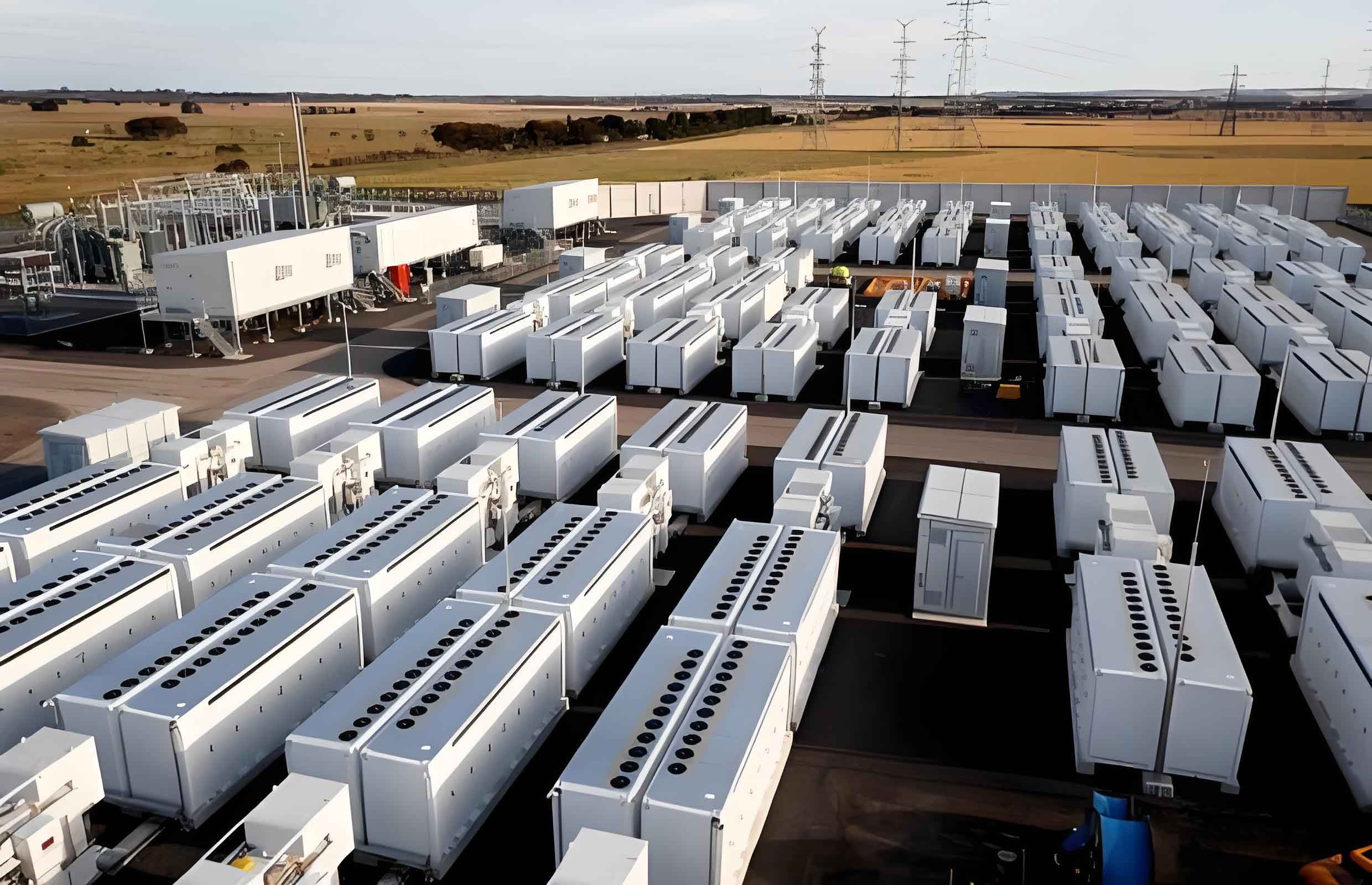
From Traditional BMS to a Big Data-Driven Architecture
A conventional BMS operates primarily as a closed-loop controller focused on safety and basic state estimation within a single pack or rack. Its data horizon is short, and its analytical capabilities are limited to predefined algorithms. In a large-scale cell energy storage system, this approach leads to information silos and missed opportunities. The fundamental challenge arises from cell heterogeneity. Despite manufacturing controls, variations in capacity, impedance, and aging rates exist across millions of cells. During operation, especially in long series strings, these differences are exacerbated by temperature gradients and uneven loading. A weak cell can limit the entire string’s capacity, lead to accelerated aging of neighboring cells, or, in worst-case scenarios, trigger safety events.
The core functions of a BMS, as outlined in the traditional framework, remain essential but must be supercharged with data. These functions include:
| BMS Function | Description | Big Data Enhancement |
|---|---|---|
| Cell State Monitoring | Real-time sampling of voltage, current, temperature per cell or module. | High-frequency, synchronized data ingestion from all system tiers into a centralized data lake. |
| Safety Protection | Triggering alerts/disconnects for over-voltage, under-voltage, over-temperature, over-current. | Predictive safety analytics using historical trends and cross-cell correlations to anticipate faults. |
| State Estimation (SOC/SOH) | Calculating State of Charge (energy remaining) and State of Health (capacity fade). | Fleet-wide learning models that improve estimation accuracy by learning from the behavior of thousands of similar cells. |
| Energy Control | Managing charge/discharge cycles, cell balancing (active/passive). | Optimal control strategies derived from system-wide aging models and grid service requirements. |
| Data Communication & Storage | Logging operational data and communicating with higher-level controllers. | Streaming data to cloud/edge platforms for persistent storage and large-scale analysis. |
To harness big data, the architecture of the cell energy storage system management must evolve. A layered, scalable data pipeline is required:
- Edge Layer (Data Acquisition): Distributed BMS units at the pack or rack level collect raw sensor data. This layer may perform initial filtering, compression, and time-stamping.
- Data Ingestion Layer: High-throughput message brokers (e.g., Apache Kafka, MQTT) stream time-series data from the edge to the processing platform, handling bursts of data from numerous data sources within the cell energy storage system.
- Storage & Processing Layer (Data Lake/Hadoop Ecosystem): This is the core big data engine. A platform like Apache Hadoop HDFS or cloud object storage (e.g., AWS S3) provides scalable, durable storage for vast historical datasets. Processing frameworks like Apache Spark and Apache Flink enable both batch analysis on historical data and real-time stream processing on live data feeds.
- Analytics & Model Serving Layer: Here, machine learning models for SOC, SOH, and fault prediction are trained, validated, and deployed. Model outputs and analytics results are stored for visualization and feedback.
- Application & Visualization Layer: Dashboards, alerting systems, and control interfaces consume the insights to provide operators with system health views, prognostic alerts, and performance reports.
Core Data Processing and State Estimation with Big Data
The true power of big data in a cell energy storage system is realized through advanced analytics applied to the ingested data. Two critical areas are enhanced state estimation and the underlying data processing architecture.
1. Advanced SOC Estimation Using Data-Driven and Hybrid Models
Accurate State of Charge (SOC) estimation is paramount. Traditional methods like Coulomb counting drift over time, while model-based methods like Kalman Filters depend on accurate battery models. Big data enables more robust approaches.
Model-Based Foundation with Data Refinement: A common starting point is an equivalent circuit model (ECM). The first-order PNGV (Partnership for a New Generation of Vehicles) model, for instance, includes a voltage source (open-circuit voltage, OCV), a series resistor (R0), and an RC parallel network (Rp, Cp) to model polarization dynamics.
The state-space representation for a first-order model, with state vector often including SOC and the polarization voltage Vp, can be used with a Kalman Filter. The process and measurement equations are:
Process Model (Discretized):
$$ x_k = A x_{k-1} + B u_k + w_k $$
where $x_k = [SOC_k, V_{p,k}]^T$, $u_k$ is the current, and $w_k$ is process noise.
Measurement Model:
$$ y_k = OCV(SOC_k) – V_{p,k} – R_0 i_k + v_k $$
where $y_k$ is the measured terminal voltage, and $v_k$ is measurement noise.
The Extended Kalman Filter (EKF) or Unscented Kalman Filter (UKF) linearizes or approximates the non-linear OCV(SOC) relationship. However, the model parameters (R0, Rp, Cp, OCV curve) change with SOC, temperature, aging (SOH), and current rate. This is where big data shines. By collecting operational data from the entire fleet, we can create massive lookup tables or train machine learning models (e.g., Neural Networks, Gaussian Processes) to predict these parameters in real-time based on present conditions. This creates a hybrid model where a Kalman Filter is dynamically parameterized by data-driven models, leading to significantly improved accuracy across diverse operating conditions of the cell energy storage system.
Purely Data-Driven SOC Estimation: With sufficient labeled historical data (current, voltage, temperature sequences correlated with true SOC from laboratory tests), deep learning models like Long Short-Term Memory (LSTM) networks can be trained to directly map time-series sensor data to SOC. These models implicitly learn the complex, non-linear battery dynamics without requiring an explicit circuit model.
2. Scalable Data Management: The Hadoop/Spark Ecosystem
To implement these advanced analytics, a robust data management backbone is essential. The Hadoop ecosystem, particularly when combined with Apache Spark, is exceptionally well-suited for the cell energy storage system domain.
| Component | Role in Cell Energy Storage System Management |
|---|---|
| HDFS (Hadoop Distributed File System) | Provides fault-tolerant, scalable storage for years of high-frequency time-series data from all cells, modules, and environmental sensors. Raw data, processed features, and model outputs are stored here. |
| Apache Spark | The core processing engine. Spark SQL can query historical data for trend analysis. Spark MLlib is used to train large-scale machine learning models for SOC/SOH prediction on historical batches. Spark Streaming or Structured Streaming can process real-time data streams for anomaly detection. |
| Apache Kafka | Acts as a high-throughput, low-latency message queue to ingest real-time data streams from thousands of BMS data points simultaneously, decoupling data producers (BMS) from consumers (Spark jobs). |
| NoSQL Databases (e.g., Cassandra, HBase) | Useful for storing and quickly retrieving the latest state (e.g., calculated SOC, alerts) for each cell or module, serving dashboards and control systems. |
This architecture allows for the creation of a unified data analytics framework. The framework can be logically divided into zones:
- Batch Processing Zone (Spark on Hadoop): Analyzes terabytes of historical data to train and retrain prognostic models, compute fleet-wide aging trends, and optimize operational schedules.
- Stream Processing Zone (Spark Streaming/Kafka Streams): Monitors live data feeds to execute real-time SOC estimation (using the latest models), detect instantaneous anomalies (e.g., sudden voltage drop), and trigger immediate alerts.
- Serving Zone: Hosts the trained models as scalable microservices (using frameworks like MLflow or TensorFlow Serving) to make predictions on-demand for incoming data.
Data-Driven Applications for Enhanced Performance and Safety
Integrating big data technology transforms the capabilities of a cell energy storage system from simple energy storage to an intelligent, self-optimizing asset.
1. Predictive Maintenance and Fault Prognosis: By analyzing historical and real-time data patterns, machine learning models can identify early signs of failure. For example, subtle changes in the voltage relaxation curve after a charge pulse, or a gradual increase in the internal resistance trend for a specific module, can predict thermal runaway or connection failure weeks in advance. This shifts maintenance from reactive or scheduled to condition-based, dramatically improving safety and reducing downtime.
2. Fleet-Wise SOH Estimation and Warranty Analytics: SOH is traditionally hard to estimate online. Big data enables “peer-to-peer” comparison. The aging trajectory of a particular cell can be compared to thousands of similar cells in the fleet that started operation at the same time. Deviations from the fleet norm highlight potential outliers requiring investigation. Aggregated SOH data across the entire cell energy storage system provides invaluable feedback to manufacturers and helps optimize warranty terms.
3. Optimal Control and Cell Balancing: Advanced balancing strategies can be developed using data insights. Instead of simple voltage-based balancing, a data-driven BMS can balance cells based on their actual capacity and internal resistance, maximizing usable energy and minimizing stress on weaker cells. Furthermore, charge/discharge profiles can be dynamically adjusted based on real-time SOH estimates and grid service requirements to trade-off between immediate performance and long-term degradation.
4. Digital Twin Creation: A comprehensive digital twin of the entire cell energy storage system can be built using the collected data. This high-fidelity virtual model, continuously updated with real-time data, can be used for simulation, “what-if” scenario analysis (e.g., testing new control algorithms), and operator training without risking the physical asset.
| Application | Big Data Enabler | Business/Operational Value |
|---|---|---|
| Predictive Safety Alerts | Real-time stream processing & anomaly detection on cross-cell correlations. | Prevents catastrophic failures, enhances site safety, protects capital investment. |
| Adaptive State Estimation | Fleet-wide machine learning models for SOC/SOH. | Increases usable capacity, improves dispatch accuracy, extends system lifespan. |
| Degradation-Optimized Dispatch | Batch analysis of aging models vs. revenue from grid services. | Maximizes lifetime economic return by optimizing operational strategy for profit vs. degradation. |
| Supply Chain & Design Feedback | Aggregate analysis of cell performance from field data across multiple installations. | Provides data to cell manufacturers for quality improvement and informs better system design for future projects. |
Challenges and Future Perspectives
While promising, the integration of big data into cell energy storage system management faces hurdles. Data quality and consistency from heterogeneous BMS hardware is a primary concern. The computational cost of training complex models and the need for edge computing to reduce latency for critical safety functions are significant. Furthermore, data privacy and security for critical energy infrastructure are paramount.
The future lies in the convergence of big data with edge AI and cloud computing—a hybrid edge-cloud analytics architecture. Lightweight models will run at the edge for ultra-fast safety control and basic state estimation, while the heavy-duty model training, fleet analytics, and digital twin simulations will occur in the cloud. The standardization of data formats and communication protocols (e.g., leveraging OPC UA, IEEE 2030.5) across BMS vendors will be crucial to enable seamless data aggregation from multi-vendor cell energy storage system fleets.
In conclusion, the application of big data technology is not merely an upgrade but a necessary evolution for the sustainable and efficient management of large-scale cell energy storage system infrastructures. By transitioning from isolated, reactive BMS units to a interconnected, data-driven management ecosystem, we can significantly enhance safety, maximize economic value, and accelerate the integration of storage into the future’s clean energy grid. The ability to learn from every cycle of every cell across a global fleet will drive advancements in battery technology itself, creating a virtuous cycle of improvement powered by data.