
The global energy landscape is undergoing a significant paradigm shift towards decentralization and decarbonization. The traditional reliance on fossil fuels for centralized power generation presents critical challenges, including resource depletion, volatile fuel costs, and severe environmental impacts such as greenhouse gas emissions. This has accelerated the exploration and integration of Distributed Energy Resources (DERs), primarily based on Renewable Energy Sources (RES) like solar photovoltaic (PV) and wind energy. However, the inherent intermittency and stochastic nature of RES introduce complexities regarding grid stability, power quality, and reliability. The concept of the microgrid has emerged as a robust solution to these challenges, enabling the localized management of generation, storage, and load. This article presents a comprehensive design, modeling, and simulation analysis of a standalone DC microgrid, with a particular focus on the critical role of the cell energy storage system in ensuring system stability and power continuity.
A microgrid is fundamentally a small-scale power system that integrates various DERs, energy storage devices, power conversion units, and local loads. It can operate in either grid-connected mode, interacting with the main utility grid, or in islanded (standalone) mode, autonomously serving its local load. The integration of a cell energy storage system is indispensable for standalone operation, as it provides the necessary energy buffer to mitigate the mismatch between variable generation and fluctuating demand. Compared to AC microgrids, DC microgrids offer distinct advantages for integrating modern RES and loads. They eliminate issues related to frequency synchronization, reactive power flow, and harmonic distortions, reduce the number of power conversion stages (as many RES and storage devices are inherently DC), and consequently offer potentially higher efficiency and simpler control architectures. This makes DC microgrids particularly suitable for applications like remote communities, telecom stations, data centers, and residential power systems.
Core Component: The Cell Energy Storage System
The cell energy storage system is the linchpin of any reliable standalone microgrid. Its primary functions include:
- Energy Time-Shifting: Storing surplus energy generated during periods of high RES output (e.g., midday for solar) and supplying it during periods of low generation or high demand (e.g., night).
- Power Smoothing: Mitigating short-term fluctuations in RES output (e.g., due to passing clouds) to provide a stable power supply to the load.
- Voltage and Frequency Support: In AC microgrids, storage provides inertia and frequency regulation. In DC microgrids, it is crucial for maintaining bus voltage stability.
- Seamless Transition and Black Start: Ensuring continuous power during transitions between operating modes and providing the initial energy to start up the microgrid.
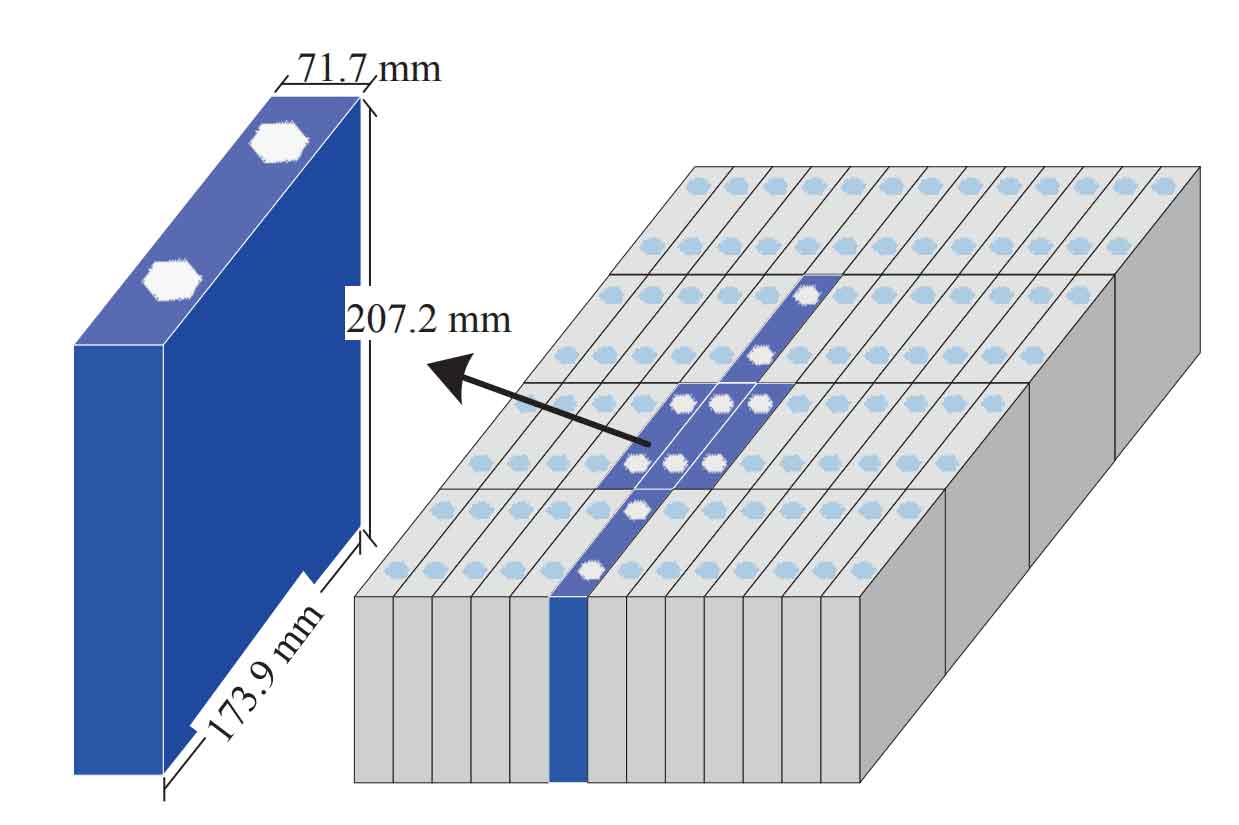
Lithium-ion batteries are currently the predominant technology for cell energy storage system applications due to their high energy density, high efficiency, and decreasing cost. A battery pack comprises numerous individual cells connected in series and parallel to achieve the desired voltage and capacity. The performance of the overall cell energy storage system is governed by the characteristics of its constituent cells. A simplified electrical model for a battery cell, often used for system-level simulation, is the equivalent circuit model. A common first-order model includes a voltage source ($V_{oc}$), an internal resistance ($R_{int}$), and a parallel RC network to represent transient dynamics.
The state-of-charge (SOC) is a critical parameter for battery management, defined as the ratio of remaining capacity to total capacity. A basic formula for SOC estimation using the Coulomb counting method is:
$$ SOC(t) = SOC(t_0) – \frac{1}{C_{nom}} \int_{t_0}^{t} \eta I_{bat}(\tau) d\tau $$
where $C_{nom}$ is the nominal battery capacity (Ah), $I_{bat}$ is the battery current (positive for discharge), and $\eta$ is the coulombic efficiency.
The design of a cell energy storage system involves careful sizing based on the microgrid’s energy autonomy requirements and peak power demands. Key characteristics of different cell energy storage system technologies are summarized below:
| Technology | Energy Density (Wh/kg) | Power Density (W/kg) | Cycle Life | Typical Efficiency | Key Application in Microgrid |
|---|---|---|---|---|---|
| Lithium-ion (NMC) | 150-220 | 250-340 | 1000-2000 | 95-98% | General-purpose energy time-shifting |
| Lithium Iron Phosphate (LFP) | 90-120 | 200-300 | 2000-3000 | 95-98% | High safety, long-duration storage |
| Lead-Acid (VRLA) | 30-50 | 75-300 | 500-1200 | 80-85% | Low-cost backup, less frequent cycling |
| Flow Battery (Vanadium) | 15-30 | ~100 | >10,000 | 70-85% | Very long-duration, bulk storage |
Architecture of the Standalone DC Microgrid
The proposed standalone DC microgrid architecture, simulated in this analysis, consists of the following primary components:
- Solar PV Array: The main generation source. Its output is highly dependent on solar irradiance (G) and cell temperature (T).
- Unidirectional DC-DC Boost Converter with MPPT: Steps up the variable PV voltage to a higher DC bus voltage. It is controlled by a Maximum Power Point Tracking (MPPT) algorithm to extract the maximum available power from the PV array under varying atmospheric conditions.
- DC Bus (48V): The common voltage link to which all sources, storage, and loads are connected.
- Bidirectional DC-DC Converter: The critical interface between the DC bus and the cell energy storage system. It operates in buck mode to charge the battery (when bus voltage > battery voltage) and in boost mode to discharge the battery to support the bus (when bus voltage < battery voltage).
- Cell Energy Storage System (Battery Bank): A 48V nominal lithium-ion battery pack providing energy buffering.
- DC Loads: Represent the local demand, which can be resistive, constant power, or a combination.
The power balance equation governing the DC bus at any instant is:
$$ P_{PV}(t) \cdot \eta_{boost} + P_{bat}(t) \cdot \eta_{bidir} = P_{load}(t) + P_{loss}(t) $$
where $P_{PV}$ is the PV power after the boost converter, $P_{bat}$ is the battery power (positive for discharge, negative for charge), $P_{load}$ is the load power, $\eta_{boost}$ and $\eta_{bidir}$ are converter efficiencies, and $P_{loss}$ represents other system losses. The cell energy storage system power $P_{bat}$ is the controlled variable that balances this equation.
System Modeling and Control Strategies
1. Solar PV Model
The I-V characteristic of a PV cell is derived from the single-diode model. The output current of a PV module is given by:
$$ I_{PV} = I_{ph} – I_0 \left[ \exp\left(\frac{q(V_{PV} + I_{PV}R_s)}{n k T}\right) – 1 \right] – \frac{V_{PV} + I_{PV}R_s}{R_{sh}} $$
where:
- $I_{ph}$: Photocurrent, proportional to irradiance G.
- $I_0$: Diode reverse saturation current.
- $V_{PV}$, $I_{PV}$: Module output voltage and current.
- $R_s$, $R_{sh}$: Series and shunt resistances.
- $q$: Electron charge ($1.602 \times 10^{-19}$ C).
- $n$: Diode ideality factor.
- $k$: Boltzmann constant ($1.381 \times 10^{-23}$ J/K).
- $T$: Cell temperature in Kelvin.
The power-voltage (P-V) curve is non-linear and features a unique Maximum Power Point (MPP) for given G and T conditions.
2. Maximum Power Point Tracking (MPPT)
To maximize energy harvest, a Perturb and Observe (P&O) MPPT algorithm is implemented. It adjusts the duty cycle ($D$) of the boost converter by a small perturbation ($\Delta D$) and observes the change in PV power ($\Delta P_{PV}$). The logic is:
$$
\text{If } (\Delta P_{PV} > 0): \text{Keep perturbation direction.} \\
\text{If } (\Delta P_{PV} < 0): \text{Reverse perturbation direction.}
$$
The duty cycle is updated as $D(k+1) = D(k) \pm \Delta D$. While simple, P&O can cause oscillations around the MPP. The integration of the cell energy storage system helps absorb minor power fluctuations resulting from these MPPT oscillations.
3. DC-DC Power Converters
Boost Converter (PV Interface): The governing equations for continuous conduction mode (CCM) are:
$$ V_{bus} = \frac{V_{PV}}{1 – D_{boost}} $$
$$ I_{L,boost} = \frac{I_{PV}}{1 – D_{boost}} $$
where $D_{boost}$ is the duty cycle controlled by the MPPT algorithm.
Bidirectional Buck-Boost Converter (Storage Interface): This converter is central to managing the cell energy storage system. Its operation is defined by two modes:
- Buck Mode (Charging): $V_{bat} = D_{buck} \cdot V_{bus}$, where $D_{buck}$ is the buck duty cycle ($0 < D_{buck} < 1$).
- Boost Mode (Discharging): $V_{bus} = \frac{V_{bat}}{1 – D_{boost\_bat}}$, where $D_{boost\_bat}$ is the boost duty cycle for the battery side ($0 < D_{boost\_bat} < 1$).
A PI (Proportional-Integral) controller is typically used to regulate either the battery current (for charge control) or the DC bus voltage (for discharge support), generating the appropriate duty cycle for the bidirectional converter.
4. Energy Management and Voltage Control
The primary control objective for the standalone DC microgrid is to maintain the DC bus voltage ($V_{bus}$) within a strict tolerance (e.g., 48V ± 2%). Since the PV source is uncontrolled (MPPT ensures maximum power extraction but not voltage regulation), the cell energy storage system, via the bidirectional converter, must provide the necessary voltage regulation and power balance.
A typical control strategy uses a cascaded control loop for the bidirectional converter in discharge mode:
- Outer Voltage Loop: Measures $V_{bus}$, compares it to the reference $V_{bus}^{*}$, and processes the error through a PI controller to generate a reference battery current $I_{bat}^{*}$.
- Inner Current Loop: Measures the actual battery current $I_{bat}$, compares it to $I_{bat}^{*}$, and uses a PI controller to generate the PWM duty cycle for the bidirectional converter.
This strategy ensures that the cell energy storage system injects or absorbs precisely the current needed to keep $V_{bus}$ constant despite changes in PV generation or load.
Simulation Results and Discussion
A detailed simulation model of the described DC microgrid was developed in MATLAB/Simulink. The key parameters for the simulation are listed below:
| Component | Parameter | Value |
|---|---|---|
| PV Array | Maximum Power ($P_{max}$) | 2.0 kW |
| Open-Circuit Voltage ($V_{oc}$) | 86 V | |
| Short-Circuit Current ($I_{sc}$) | 30 A | |
| Voltage at MPP ($V_{mpp}$) | 72 V | |
| MPPT Algorithm | Perturb & Observe | |
| DC-DC Converters | Switching Frequency | 20 kHz |
| Boost Converter Inductor | 2 mH | |
| Bidirectional Converter Inductor | 1.5 mH | |
| DC Bus Capacitor | 2200 µF | |
| Cell Energy Storage System | Battery Type | Lithium-Ion |
| Nominal Voltage | 48 V | |
| Rated Capacity | 100 Ah | |
| Initial State-of-Charge (SOC) | 60% | |
| DC Bus | Reference Voltage ($V_{bus}^{*}$) | 48 V |
The simulation was run under a dynamic scenario with varying solar irradiance and step changes in load to evaluate the performance of the overall system and the response of the cell energy storage system.
Scenario 1: Response to Step Increase in Load
Initially, the PV array operates at 800 W/m² irradiance, supplying a 1 kW load. At time t = 1.0s, the load increases stepwise to 2.5 kW. The PV system alone cannot meet this new demand. The results show:
- DC Bus Voltage: A minor transient dip occurs (~1.5V) but is rapidly corrected within 100ms by the action of the bidirectional converter control loop. The voltage recovers and stabilizes at 48V.
- Battery (Cell Energy Storage System) Response: The battery current ($I_{bat}$) swiftly changes from near-zero (floating) to a significant discharge current (approx. -30A, following the sign convention where discharge is negative). The SOC begins a gradual decrease. This demonstrates the critical role of the cell energy storage system in providing instantaneous power support to maintain bus stability.
- Power Balance: $P_{PV}$ remains constant at its MPPT value (~1.8 kW), while $P_{bat}$ increases negatively (discharge) to supply the additional 0.7 kW required, satisfying $P_{load} = P_{PV} + P_{bat}$.
Scenario 2: Response to Decrease in Solar Irradiance
Starting with a 2 kW load and high irradiance (1000 W/m²), the irradiance drops linearly to 400 W/m² between t=2.0s and t=2.5s. The PV power ($P_{PV}$) decreases correspondingly.
- DC Bus Voltage: The voltage control loop effectively maintains $V_{bus}$ at 48V throughout the transition. Any tendency for the voltage to drop due to reduced PV current is immediately compensated.
- Battery (Cell Energy Storage System) Response: As $P_{PV}$ falls, the discharge current from the battery ($|I_{bat}|$) increases progressively to make up for the lost generation. This showcases the cell energy storage system’s function in compensating for the intermittency of renewable sources, ensuring uninterrupted power to the load.
Scenario 3: Charging Mode During Excess Generation
With a light load of 0.5 kW and high irradiance (1000 W/m²), PV generation (~1.8 kW) exceeds the load demand.
- System Response: The DC bus voltage would naturally rise due to excess current. The bidirectional converter control detects this rise and switches to buck mode operation. The battery current becomes positive, indicating charging. The surplus PV energy is effectively stored in the cell energy storage system, raising its SOC. This highlights the energy time-shifting capability enabled by the storage system.
Conclusion and Future Perspectives
This analysis successfully demonstrates the design, modeling, and simulation of a functional standalone DC microgrid centered around a solar PV source and a lithium-ion cell energy storage system. The simulation results validate the system’s capability to maintain a stable 48V DC bus under various challenging conditions, including sudden load changes and varying solar input. The cell energy storage system, interfaced through a bidirectional DC-DC converter with appropriate voltage/current control loops, proved to be the critical element for real-time power balancing and voltage regulation. It seamlessly transitions between charging and discharging modes to absorb excess energy or supply deficit power, thereby mitigating the intermittency of the renewable source.
The successful integration of a reliable cell energy storage system is fundamental to unlocking the full potential of renewable-based microgrids. Future work in this domain will focus on several advanced aspects:
- Hybrid Energy Storage Systems (HESS): Combining batteries (high energy density) with supercapacitors (high power density) to optimize performance, lifespan, and cost. The battery handles long-term energy storage, while the supercapacitor manages high-frequency power transients.
- Advanced Energy Management Systems (EMS): Implementing predictive and optimization-based algorithms (e.g., Model Predictive Control – MPC) that use forecasts of generation and load to schedule the operation of the cell energy storage system and other assets optimally, extending battery life and improving economic efficiency.
- Sizing and Techno-Economic Optimization: Developing methodologies to determine the optimal capacity and power ratings for both the PV array and the cell energy storage system based on lifecycle cost, reliability criteria, and specific site conditions.
- Integration of Multiple Sources and AC Connectivity: Expanding the architecture to include wind turbines or fuel cells and incorporating an inverter to form an AC/DC hybrid microgrid capable of connecting to the main grid when available.
In conclusion, the standalone DC microgrid with an integrated cell energy storage system presents a viable, efficient, and sustainable solution for decentralized electrification. As the costs of solar PV and battery technologies continue to decline, and control strategies become more sophisticated, such systems are poised to play an increasingly pivotal role in the global transition towards a resilient and clean energy future.