
The increasing maturity of wind power generation technology has made wind energy one of the most promising new energy sources for large-scale development and utilization today. However, the inherent randomness, volatility, and unpredictability of wind resources pose significant challenges to grid scheduling and stability when wind power is integrated on a large scale. Equipping wind farms with appropriately sized energy storage systems to smooth power fluctuations has emerged as an effective strategy to reduce wind curtailment and enhance the grid integration capability of wind power.
Current research in this field primarily focuses on algorithms to decompose the raw wind power signal into a smooth grid-injection component and a fluctuating component to be managed by the energy storage battery. Common methods include low-pass filtering and various signal processing techniques like empirical mode decomposition. While these methods can achieve smoothing, they often struggle to balance two conflicting objectives: effective fluctuation suppression and minimizing the burden on the energy storage battery. A fixed-parameter approach may over-smooth during calm periods, unnecessarily increasing the charge/discharge cycles of the battery, or under-smooth during turbulent periods, failing to meet grid codes. This inefficiency directly impacts the economic viability and operational lifespan of the energy storage battery.
This study addresses this critical coordination problem by proposing an improved adaptive moving average filtering algorithm. The core innovation lies in its real-time, online adaptation of the smoothing window size based on the instantaneous fluctuation rate of the wind power, strictly within the dual-time-scale grid connection standards (1-minute and 10-minute). This approach ensures that the grid-injection power reference always complies with regulations while tracking the original wind power as closely as possible, thereby minimizing the power and energy throughput required from the energy storage battery. Furthermore, a dual-battery system configuration with state-of-charge (SOC) feedback control is employed to mitigate battery degradation caused by frequent charge-discharge mode switching and deep cycles. The lifespan of the energy storage battery is quantitatively evaluated using a rain-flow counting method, providing a clear metric to compare the long-term benefits of the proposed strategy.
System Configuration and Operational Principle
The centralized wind-storage system investigated in this work is configured at the point of common coupling of the wind farm. As illustrated in the system diagram, it integrates the wind farm, power conversion systems (AC/DC rectifiers, DC/AC inverters, and bidirectional DC/DC converters), a central control unit, and the energy storage battery bank. The primary function of the energy storage battery is to absorb excess wind power during surges and compensate for deficits during lulls, ensuring a stable power injection into the grid.
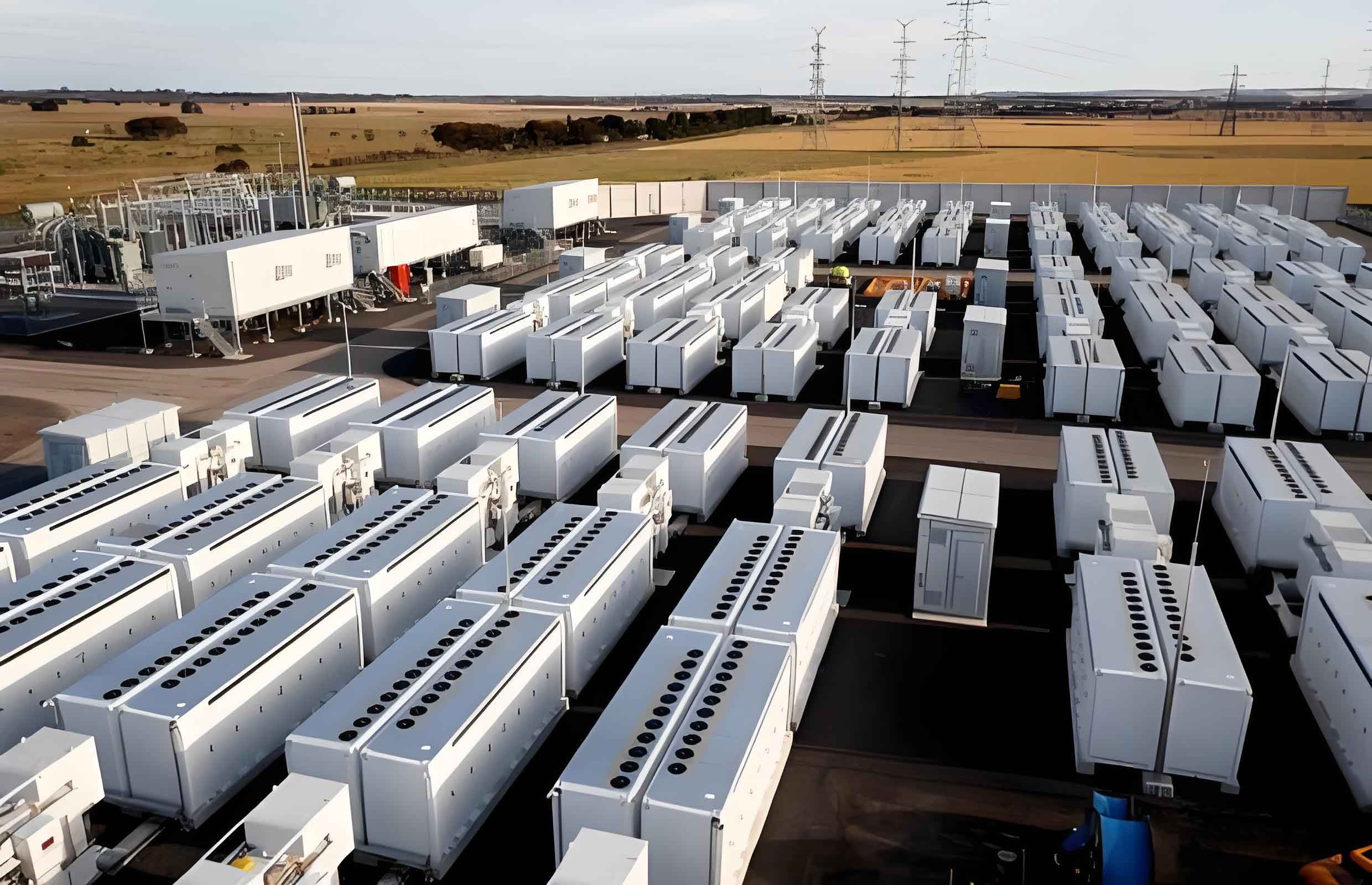
To prevent the single energy storage battery from undergoing stressful frequent transitions between charging and discharging states—which severely impacts its operating life—the storage system is divided into two equal-capacity units: Battery A and Battery B. They operate in a coordinated, complementary manner. Initially, one battery is designated for charging (absorbing positive fluctuation) and the other for discharging (compensating for negative fluctuation). The central controller continuously monitors their SOC. When the charging battery reaches its SOC upper limit or the discharging battery reaches its SOC lower limit, a synchronized state-switching command is issued: the charging battery switches to discharge mode, and the discharging battery switches to charge mode. This strategy effectively reduces the cycle frequency for each individual energy storage battery unit.
The fundamental power balance for the wind-storage system is given by:
$$P_{grid} = P_w + P_b$$
where \(P_{grid}\) is the actual power injected into the grid, \(P_w\) is the instantaneous wind farm output power, and \(P_b\) is the output power from the energy storage battery system (positive when discharging, negative when charging). The control objective is to make \(P_{grid}\) track a smooth reference power \(P_{grid}^*\) derived from \(P_w\). Therefore, the reference power command for the energy storage battery system is:
$$P_{b,ref}^* = P_{grid}^* – P_w$$
The core challenge is to generate \(P_{grid}^*\) from \(P_w\) in an optimal way.
Dual-Time-Scale Grid Code and Fluctuation Metrics
National standards define the maximum allowable rate of change for the active power output of a connected wind farm over two time scales: 1 minute and 10 minutes. The limits depend on the installed capacity of the farm, as summarized in the table below.
| Wind Farm Capacity (MW) | 1-min Max Limit (MW) | 10-min Max Limit (MW) |
|---|---|---|
| < 30 | 10 | 3 |
| 30–150 | Capacity / 3 | Capacity / 10 |
| > 150 | 50 | 15 |
Let the sampling interval be \(\Delta T\) (where 60 seconds is divisible by \(\Delta T\)). The number of sample points for the two time scales are:
$$N_{T1min} = \frac{60}{\Delta T}, \quad N_{T10min} = \frac{10 \times 60}{\Delta T}$$
The fluctuation rate at sample time \(k\) for a time scale \(x\) (where \(x\) is 1 or 10) is calculated based on the maximum power variation within the preceding window, normalized by the rated power \(P_{nom}\):
$$r_x(k) = \frac{ \max(P(j)) – \min(P(j)) }{ P_{nom} }, \quad j \in [k-N_{Tx}+1, k]$$
Therefore, the grid compliance constraint is:
$$\begin{cases}
r_{1}(k) \leq \frac{1}{10} \\
r_{10}(k) \leq \frac{1}{3}
\end{cases}$$
Improved Adaptive Moving Average Filtering Algorithm
The proposed algorithm dynamically adjusts the smoothing window length \(N(k)\) at each time step \(k\) to meet the constraints above with the smallest possible window. A smaller window means \(P_{grid}^*(k)\) follows \(P_w(k)\) more closely, reducing \(P_{b,ref}^*(k)\) and the burden on the energy storage battery.
Algorithm Steps:
- Initialization: Set total data length \(N_{point}\). Start with sample index \(k=1\).
- Direct Grid Injection Test: For the current wind power sample \(P_w(k)\), tentatively set \(P_{grid}^*(k) = P_w(k)\). Calculate \(r_1(k)\) and \(r_{10}(k)\). If both satisfy the constraints, set the optimal window \(N(k)=1\) (meaning no smoothing is needed), accept \(P_{grid}^*(k)=P_w(k)\), increment \(k\), and return to Step 2. Otherwise, proceed to Step 3.
- Adaptive Window Search: Initialize the trial window size \(N_{trial}=2\).
- Window Validity Check: Ensure \(N_{trial} \leq k\) (cannot use more samples than available). If invalid, set \(N(k)=1\) as a fallback and move to the next sample.
- Smoothing and Check: Calculate the candidate grid-reference power using a simple moving average:
$$P_{grid,candidate}^*(k) = \frac{1}{N_{trial}} \sum_{i=k-N_{trial}+1}^{k} P_w(i)$$
Recalculate the fluctuation rates \(r_1(k)\) and \(r_{10}(k)\) for this smoothed signal. If both constraints are satisfied, set the optimal window \(N(k) = N_{trial}\) and \(P_{grid}^*(k) = P_{grid,candidate}^*(k)\). If not, increment \(N_{trial}\) by 1 and return to Step 4.
This online algorithm ensures that during periods of low natural fluctuation, the energy storage battery remains idle (window size of 1), while during periods of high fluctuation, it automatically applies just enough smoothing to meet grid standards, thereby optimizing the usage of the energy storage battery.
Energy Storage Battery Lifetime Evaluation Model
The operating life of the energy storage battery is critically dependent on the depth and frequency of charge-discharge cycles. A rain-flow counting method is used to translate irregular cycling into an equivalent number of full cycles. The relationship between the number of cycles to failure \(N\) and the depth of discharge (DOD, denoted \(d\)) for a lithium iron phosphate battery can be modeled by a polynomial:
$$N(d) = -3278d^4 + 12823d^3 – 14122d^2 + 5112d$$
An equivalent cycle count \(n_i(d_i)\) for a cycle with depth \(d_i\) is calculated by equating its damage to that of a full cycle:
$$n_i(d_i) = \frac{C_{NT}(d_i) \cdot N(1)}{N(d_i)}$$
where \(N(1)\) is the maximum cycle count at 100% DOD, and \(C_{NT}(d_i)\) is 1 for a full cycle or 0.5 for a half-cycle (e.g., charge from 50% to 100% SOC). The total equivalent full cycles accumulated per day is:
$$N_d = \sum_{i=1}^{m} n_i(d_i)$$
where \(m\) is the number of cycles counted in a day via the rain-flow algorithm. The estimated battery lifespan in days is then:
$$T_d = \frac{N(1)}{N_d}$$
A higher daily equivalent cycle count \(N_d\) leads to a shorter predicted lifespan \(T_d\), clearly linking the control strategy’s impact on cycling to the economic longevity of the energy storage battery asset.
Simulation Analysis and Comparative Results
A case study using real-world wind power data from a 50 MW farm over 24 hours (sampling interval \(\Delta T = 1\) min) was conducted to compare the proposed Improved Algorithm (IA) with a Traditional Adaptive Algorithm (TAA). The TAA analyzes a historical data block offline to find a single, fixed optimal window (found to be 25 minutes) applied uniformly.
Smoothing Performance and Energy Storage Burden: Both algorithms successfully produced a grid-reference power \(P_{grid}^*\) that met the 1-min and 10-min fluctuation rate standards. However, as shown in the power and energy plots, the IA’s output tracked the original wind power much more closely during calm periods (e.g., minutes 360-565 and 826-1190), whereas the TAA applied unnecessary smoothing. This resulted in a significantly lower amplitude of the required compensating power \(P_{b,ref}^*\) for the IA. The cumulative energy throughput through the energy storage battery, a direct indicator of its burden, was substantially lower for the IA.
Energy Storage Battery Sizing Implications: The required power and energy capacity of the energy storage battery are determined by the extremes of \(P_{b,ref}^*\) and its energy integral, considering SOC limits (\(SOC_{min}=0.1\), \(SOC_{max}=0.9\)). The calculations are shown in the comparative table below.
| Algorithm | Required Power Capacity (MW) | Required Energy Capacity (MWh) |
|---|---|---|
| Traditional Algorithm (TAA) | 27.74 | 17.27 |
| Improved Algorithm (IA) | 21.03 | 16.46 |
The IA reduces the required power rating by approximately 24% and the energy capacity slightly. This translates directly to lower capital costs for the energy storage battery system.
Dual-Battery Operation and Lifetime Assessment: The configured dual-battery system (each with 18 MWh, 18 MW) was simulated under both control strategies. The IA led to longer idle periods and fewer charge-discharge state switches for each individual energy storage battery unit compared to the TAA. Applying the rain-flow counting lifetime model yielded the following results:
| Algorithm | Battery 1 Estimated Lifespan (days) | Battery 2 Estimated Lifespan (days) |
|---|---|---|
| Traditional Algorithm (TAA) | 438.5 | 320.4 |
| Improved Algorithm (IA) | 2056.8 | 1740.0 |
The proposed IA extends the predicted operating life of the energy storage battery by a factor of approximately 4 to 5. This dramatic improvement underscores the critical importance of a control strategy that minimizes both the magnitude and frequency of unnecessary cycles imposed on the energy storage battery.
Conclusion
This research presented an improved adaptive moving average filtering algorithm for smoothing wind power fluctuations, designed with explicit consideration for extending the operating life of the supporting energy storage battery. By performing real-time, online adaptation of the smoothing window based on strict grid-code compliance checks, the algorithm ensures optimal performance: it applies aggressive smoothing only when necessary to meet standards and minimizes intervention during naturally stable periods. This approach directly reduces the power and energy throughput demanded from the energy storage battery.
When coupled with a dual-battery configuration featuring SOC feedback control to prevent over-charge/discharge and reduce mode-switching stress, the strategy significantly alleviates the cyclic degradation of the energy storage battery. Quantitative lifespan assessment using the rain-flow counting method demonstrated that the proposed method can extend the service life of the energy storage battery by several times compared to a traditional fixed-window smoothing approach, while simultaneously reducing the required power and energy capacity ratings. This work provides a practical and effective solution for enhancing the economic viability and sustainability of wind-storage integrated systems, highlighting that intelligent control is paramount to maximizing the return on investment in the critical energy storage battery component.