
In recent years, the rapid development of renewable energy and the increasing demand for grid stability have propelled the advancement of energy storage systems. Among these, energy storage batteries play a pivotal role in balancing power supply and demand, enabling peak shaving, valley filling, and emergency backup. However, energy storage batteries are highly temperature-sensitive, requiring precise thermal management to maintain optimal performance and longevity. As a researcher in this field, I have observed that effective thermal management systems are critical for ensuring the safety, efficiency, and durability of large-scale energy storage battery installations. This article delves into the current research status of energy storage battery systems based on liquid cooling management technology, emphasizing the importance of temperature control and the advancements in cooling methodologies.
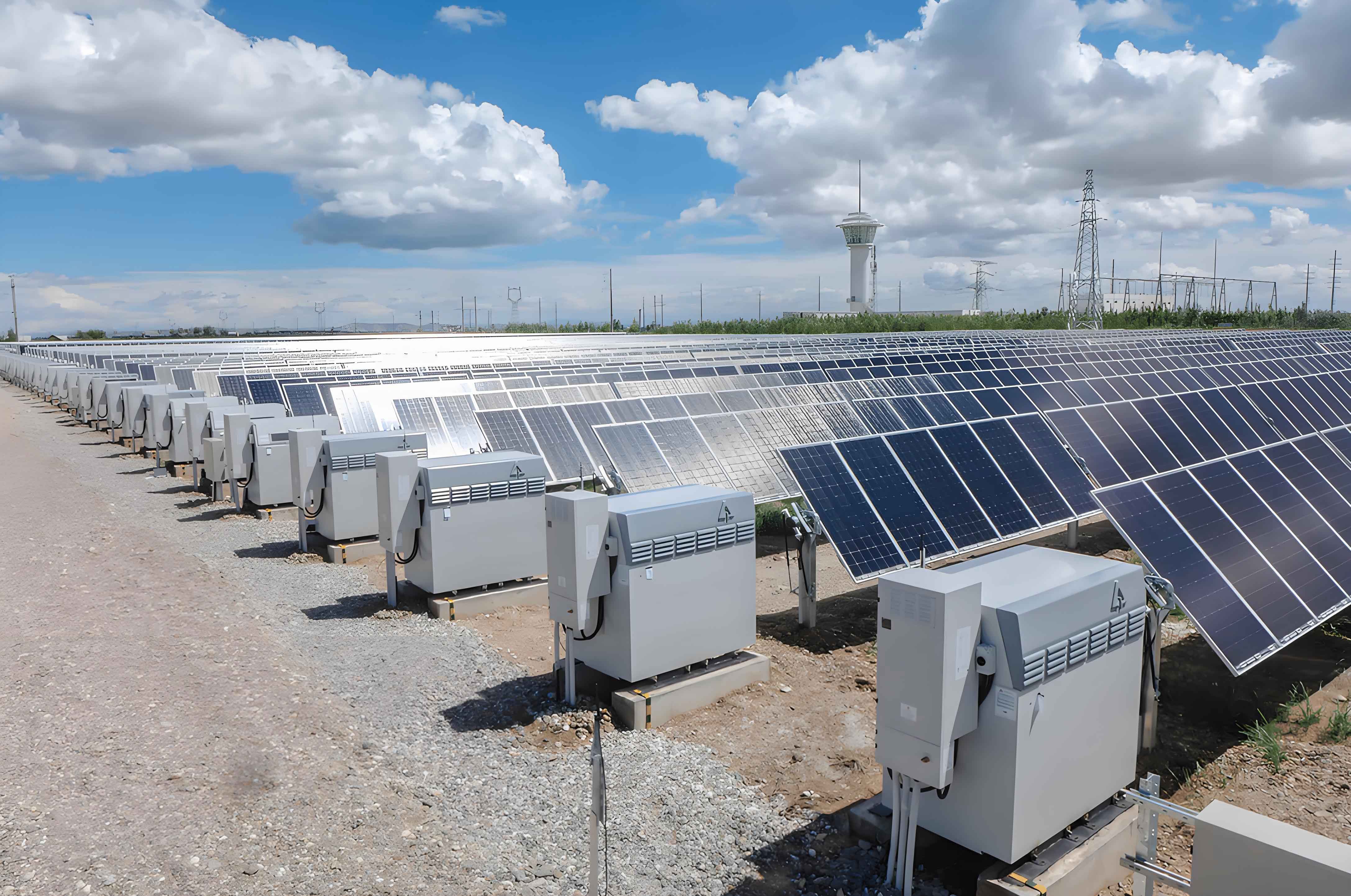
The performance and lifespan of energy storage batteries are profoundly influenced by operating temperatures. Lithium-ion batteries, which dominate the energy storage battery market due to their high energy density and long cycle life, exhibit optimal functionality within a narrow temperature range. Deviations from this range can lead to accelerated degradation, capacity loss, and safety hazards. For instance, high temperatures exacerbate side reactions within the battery, such as solid electrolyte interphase (SEI) decomposition and electrolyte breakdown, while low temperatures increase internal resistance and promote lithium plating. Therefore, maintaining energy storage batteries within 15–35°C with a temperature uniformity of less than 5°C across the battery pack is essential. This necessitates robust thermal management systems tailored for energy storage battery applications.
To understand the thermal behavior of energy storage batteries, it is crucial to analyze the heat generation mechanisms. The total heat generation rate in a lithium-ion battery can be expressed as:
$$Q = I^2 R + I T \frac{dU}{dT}$$
where \(Q\) is the heat generation rate, \(I\) is the current, \(R\) is the internal resistance, \(T\) is the absolute temperature, and \(\frac{dU}{dT}\) is the entropy coefficient. This equation highlights that heat generation arises from irreversible Joule heating and reversible entropic effects. For energy storage batteries operating at high currents or in stacked configurations, managing this heat becomes challenging, underscoring the need for efficient cooling strategies.
Various thermal management technologies have been explored for energy storage batteries, including air cooling, liquid cooling, phase change material (PCM) cooling, heat pipe cooling, and hybrid approaches. Each method has its merits and limitations, as summarized in Table 1. Liquid cooling, in particular, has gained traction due to its superior heat transfer capabilities compared to air cooling. The high specific heat capacity and thermal conductivity of liquids enable more effective heat dissipation, which is vital for densely packed energy storage battery systems prone to thermal runaway.
| Technology | Advantages | Disadvantages | Suitability for Energy Storage Batteries |
|---|---|---|---|
| Air Cooling | Simple design, low cost, lightweight | Low cooling efficiency, high temperature gradients | Limited to low-power applications |
| Liquid Cooling | High cooling efficiency, good temperature uniformity | Complex system, risk of leakage | Ideal for high-density energy storage batteries |
| PCM Cooling | Passive operation, high latent heat | Low thermal conductivity, volume change issues | Supplementary role in hybrid systems |
| Heat Pipe Cooling | Excellent heat transfer, passive operation | High cost, design complexity | Niche applications in compact energy storage batteries |
| Hybrid Cooling | Enhanced performance, flexibility | Increased cost and complexity | Emerging for advanced energy storage battery packs |
Liquid cooling systems for energy storage batteries can be categorized into indirect and direct cooling methods. Indirect liquid cooling involves separating the coolant from the batteries using heat exchange components like cold plates or jackets, while direct liquid cooling immerses the batteries in a dielectric coolant. Both approaches aim to maintain the temperature of energy storage batteries within safe limits, but they differ significantly in design and performance.
Indirect liquid cooling is widely adopted in commercial energy storage battery systems due to its reliability and ease of maintenance. Common coolants include water and water-glycol mixtures, which offer high thermal conductivity and specific heat capacity. The cooling performance depends on factors such as flow channel geometry, coolant flow rate, and contact area. For instance, optimizing the flow channel design in cold plates can enhance heat transfer and reduce temperature gradients among energy storage batteries. The heat transfer rate in an indirect cooling system can be modeled using the following equation:
$$q = h A (T_b – T_c)$$
where \(q\) is the heat transfer rate, \(h\) is the convective heat transfer coefficient, \(A\) is the contact area, \(T_b\) is the battery surface temperature, and \(T_c\) is the coolant temperature. Research has shown that serpentine or parallel flow channels can improve cooling uniformity for energy storage battery modules. Additionally, advancements in materials, such as using aluminum or copper cold plates with high thermal conductivity, further boost efficiency. Table 2 compares the thermophysical properties of typical coolants used in indirect cooling systems for energy storage batteries.
| Coolant | Density (kg/m³) | Specific Heat Capacity (J/(kg·K)) | Thermal Conductivity (W/(m·K)) | Dynamic Viscosity (Pa·s) |
|---|---|---|---|---|
| Water | 992.2 | 4178 | 0.628 | 6.53×10⁻⁴ |
| Water-Glycol (50/50) | 1069 | 3323 | 0.389 | 2.58×10⁻³ |
| Mineral Oil | 924.1 | 1900 | 0.13 | 5.60×10⁻² |
Direct liquid cooling, or immersion cooling, offers a more intimate thermal contact between the coolant and energy storage batteries, leading to superior heat dissipation. In this method, batteries are submerged in a dielectric fluid that circulates to remove heat. The choice of coolant is critical, as it must be electrically insulating, non-flammable, and chemically stable. Common options include mineral oils, silicone oils, esters, and fluorinated fluids. The cooling effectiveness can be evaluated using the Nusselt number (\(Nu\)), which relates convective to conductive heat transfer:
$$Nu = \frac{h L}{k} = C Re^m Pr^n$$
where \(L\) is the characteristic length, \(k\) is the thermal conductivity of the coolant, \(Re\) is the Reynolds number, \(Pr\) is the Prandtl number, and \(C\), \(m\), \(n\) are constants. For energy storage batteries immersed in coolants, higher \(Nu\) values indicate better cooling performance. Studies have demonstrated that direct cooling can reduce the maximum temperature and temperature spread in energy storage battery packs more effectively than indirect methods, especially under high discharge rates. However, challenges such as coolant degradation, pump power consumption, and system sealing must be addressed. Table 3 summarizes the properties of coolants used in direct cooling for energy storage batteries.
| Coolant Type | Dielectric Strength (kV/mm) | Flash Point (°C) | Thermal Conductivity (W/(m·K)) | Environmental Impact |
|---|---|---|---|---|
| Mineral Oil | >15 | ~200 | 0.13 | Moderate |
| Silicone Oil | >20 | >300 | 0.15 | Low |
| Synthetic Ester | >30 | >250 | 0.16 | Biodegradable |
| Fluorinated Fluid | >40 | None (non-flammable) | 0.07–0.09 | High GWP |
Comparing indirect and direct liquid cooling for energy storage batteries reveals distinct trade-offs. Indirect cooling systems are generally more mature and easier to integrate into existing energy storage battery designs, but they may suffer from higher thermal resistance due to the interface between the battery and cooling plate. Direct cooling eliminates this interface, offering lower thermal resistance and better temperature uniformity, yet it requires careful selection of coolants and robust encapsulation to prevent leakage. The overall cooling efficiency (\(\eta\)) can be expressed as:
$$\eta = \frac{Q_{removed}}{Q_{generated}}$$
where \(Q_{removed}\) is the heat dissipated by the cooling system and \(Q_{generated}\) is the total heat generated by the energy storage batteries. For large-scale energy storage battery systems, achieving high \(\eta\) with minimal pumping power is a key research goal.
Recent advancements in liquid cooling management for energy storage batteries focus on optimizing system parameters and exploring novel coolants. For indirect cooling, researchers are investigating enhanced flow channel designs, such as microchannel cold plates and bifurcated structures, to improve heat transfer coefficients. Computational fluid dynamics (CFD) simulations are employed to model thermal behavior and predict temperature distributions in energy storage battery packs. For direct cooling, the development of new dielectric fluids with high thermal conductivity, low viscosity, and eco-friendly profiles is underway. Additionally, hybrid systems combining liquid cooling with PCMs or heat pipes are being explored to leverage the strengths of multiple technologies for energy storage batteries.
The thermal management of energy storage batteries also involves control strategies to adapt to varying operational conditions. Proportional-integral-derivative (PID) controllers or model predictive control (MPC) can regulate coolant flow rates based on real-time temperature feedback from energy storage batteries. The control law for a PID controller can be written as:
$$u(t) = K_p e(t) + K_i \int_0^t e(\tau) d\tau + K_d \frac{de(t)}{dt}$$
where \(u(t)\) is the control output (e.g., pump speed), \(e(t)\) is the temperature error, and \(K_p\), \(K_i\), \(K_d\) are tuning parameters. Such adaptive control ensures that energy storage batteries remain within the optimal temperature range during dynamic charging and discharging cycles.
Looking ahead, the future of liquid cooling management for energy storage batteries lies in innovation and integration. As energy storage batteries become more ubiquitous in grid-scale applications, there is a growing need for cost-effective, scalable, and reliable cooling solutions. Emerging trends include the use of nanofluids as coolants to enhance thermal properties, the application of additive manufacturing for customized cold plates, and the integration of artificial intelligence for predictive thermal management. Moreover, sustainability considerations are driving research into biodegradable coolants and energy-efficient pumping systems for energy storage batteries.
In conclusion, liquid cooling management is a cornerstone technology for ensuring the performance and safety of energy storage batteries. Both indirect and direct cooling methods offer viable pathways, with ongoing research addressing their limitations through structural optimizations and coolant innovations. As the demand for energy storage batteries continues to rise, advancing thermal management systems will be crucial for enabling longer lifespans, higher efficiencies, and broader adoption in renewable energy integration. I believe that interdisciplinary collaborations and continued experimentation will unlock new potentials for liquid cooling in energy storage battery systems, ultimately contributing to a more resilient and sustainable power grid.