
In recent years, the integration of distributed energy resources into power systems has increased significantly, marking the beginning of a new energy revolution. As traditional power systems undergo major transformations to address these changes, microgrids have emerged as a key solution. A microgrid is a small-scale, decentralized power system composed of distributed generation, energy storage systems, and loads, which can operate either connected to the main grid or in islanded mode. Within such systems, each energy storage battery should share current based on its instantaneous State-of-Charge (SoC) and available battery capacity. Ensuring balance among the SoC levels of energy storage batteries is crucial: during charging, batteries with lower SoC absorb power at a higher rate, while during discharging, those with higher SoC release power more aggressively. This approach not only extends the lifespan of the batteries but also maintains their functional integrity. However, excessive charging or discharging can lead to degradation and safety issues. Therefore, developing efficient control strategies for SoC balance is of paramount importance.
In this article, I address the problem of SoC consensus in battery energy storage systems within microgrids by proposing an event-triggered control protocol with a virtual leader. This method enables each energy storage battery to track a reference target for charging or discharging, thereby achieving SoC balance while avoiding overcharging or overdischarging. The core idea is to transform individual energy storage batteries into first-order dynamic models and then frame the SoC consensus problem as a virtual leader-following consensus issue. By incorporating event-triggered mechanisms, the control protocol reduces communication burden among energy storage batteries, as state updates occur only at specific triggering instants rather than continuously. I provide sufficient conditions for asymptotic SoC balance and prove that the event-triggered controller avoids Zeno behavior, ensuring practical implementability. The effectiveness of the proposed approach is validated through numerical simulations for both charging and discharging modes.
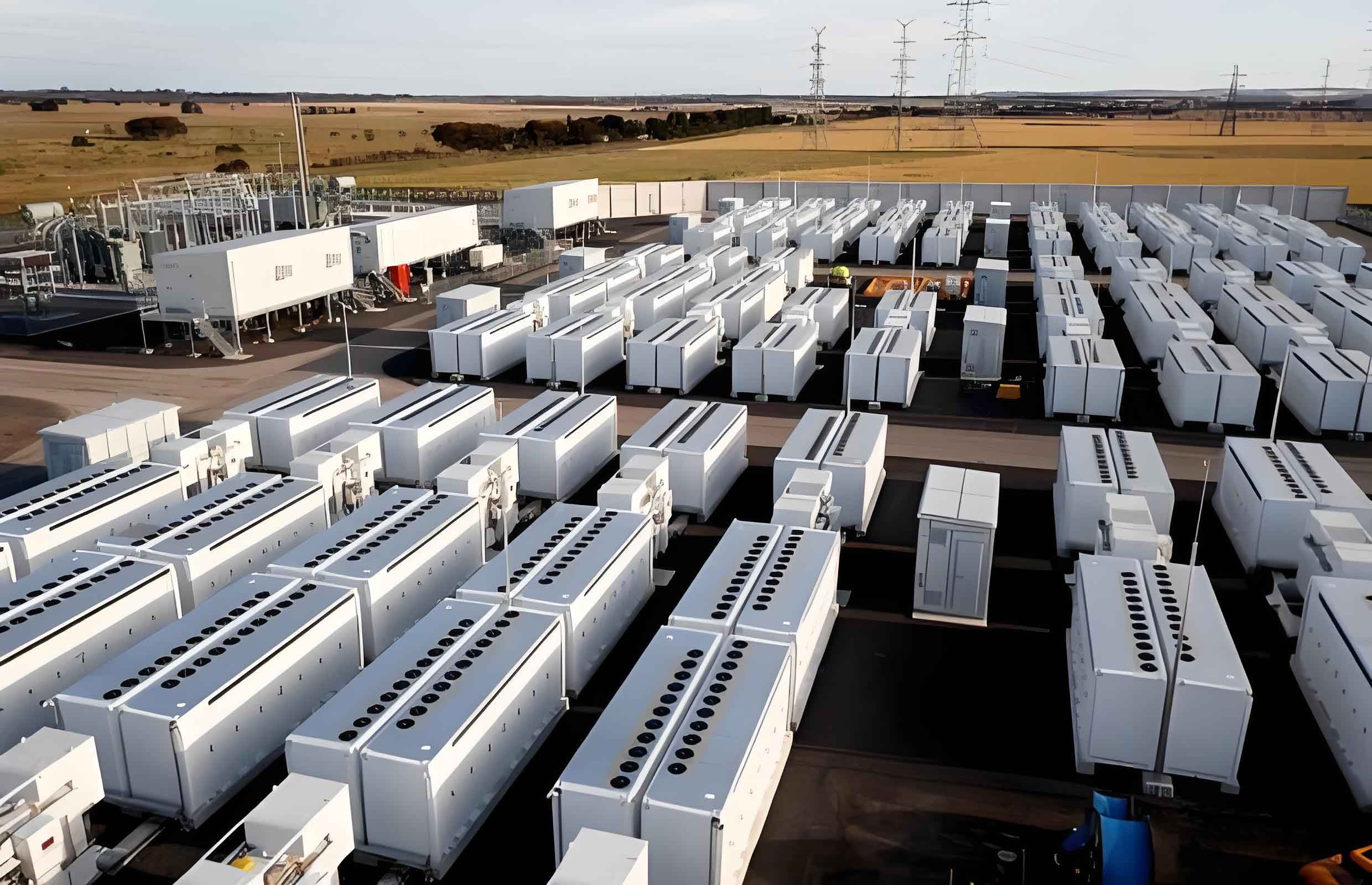
To begin, I model the dynamics of each energy storage battery using the Coulomb counting method. The SoC of battery \(i\) at time \(t\) is given by:
$$ S_i(t) = S_i(0) – \frac{1}{C_i} \int_0^t I_i(\tau) \, d\tau, \quad i = 1, 2, \dots, N $$
where \(S_i(t)\) is the SoC, \(S_i(0)\) is the initial SoC, \(C_i\) is the nominal capacity, and \(I_i(t)\) is the output current (positive for discharging, negative for charging). Differentiating with respect to time yields the SoC dynamics:
$$ \dot{S}_i(t) = -\frac{I_i(t)}{C_i}, \quad i = 1, 2, \dots, N $$
Assuming negligible power loss in converters and identical output voltages for all energy storage batteries, the output power \(P_i(t)\) is related to the current by \(P_i(t) = V_i I_i(t)\), where \(V_i\) is the output voltage. Substituting this into the SoC dynamics, I obtain:
$$ \dot{S}_i(t) = -\frac{P_i(t)}{C_i V_i} $$
For simplicity, I define new state and control variables: let \(x_i(t) = S_i(t)\) and \(u_i(t) = P_i(t)\), and set \(m_i = -1/(C_i V_i)\). Thus, each energy storage battery can be represented as a first-order system:
$$ \dot{x}_i(t) = m_i u_i(t), \quad i = 1, 2, \dots, N $$
This formulation allows me to treat the battery energy storage system as a multi-agent system, where each agent (energy storage battery) follows first-order dynamics. The communication topology among the energy storage batteries is described by a directed graph \(\mathcal{G} = (\mathcal{V}, \mathcal{E})\), where \(\mathcal{V} = \{1, 2, \dots, N\}\) is the set of vertices (batteries) and \(\mathcal{E} \subseteq \mathcal{V} \times \mathcal{V}\) is the set of edges representing communication links. The adjacency matrix \(A = [a_{ij}] \in \mathbb{R}^{N \times N}\) and the Laplacian matrix \(L = [l_{ij}] \in \mathbb{R}^{N \times N}\) are defined accordingly. To introduce a reference signal for SoC tracking, I incorporate a virtual leader, labeled as node 0, with a communication topology \(\bar{\mathcal{G}} = (\bar{\mathcal{V}}, \bar{\mathcal{E}})\), where \(\bar{\mathcal{V}} = \mathcal{V} \cup \{0\}\) and \(\bar{\mathcal{E}} \subseteq \bar{\mathcal{V}} \times \bar{\mathcal{V}}\). The virtual leader has a state \(x_0(t)\) representing the desired SoC threshold (e.g., 100% for charging or 20% for discharging). The connection between the virtual leader and follower batteries is captured by a diagonal matrix \(B = \text{diag}(d_1, d_2, \dots, d_N)\), where \(d_i = 1\) if there is a directed edge from the leader to battery \(i\), and \(d_i = 0\) otherwise.
The control objective is to design a distributed control protocol such that all energy storage batteries achieve SoC consensus while tracking the virtual leader’s state. Specifically, for charging mode, I aim to have \(\lim_{t \to \infty} |x_i(t) – x_j(t)| = 0\) and \(\lim_{t \to \infty} |x_i(t) – x_0(t)| = 0\) for all \(i, j \in \{1, 2, \dots, N\}\), with \(x_0(t) \to 100\%\) and \(u_i(t) \to 0\) to prevent overcharging. Similarly, for discharging mode, \(x_0(t) \to 20\%\) and \(u_i(t) \to 0\) to avoid overdischarging. To reduce communication burden, I employ an event-triggered control scheme, where each energy storage battery broadcasts its state only at certain triggering instants determined by a predefined condition.
I propose the following distributed control protocol with event triggering:
$$ u_i(t) = K \left( \sum_{j \in N_i} a_{ij} (\hat{x}_i(t) – \hat{x}_j(t)) + d_i (\hat{x}_i(t) – x_0(t)) \right) $$
where \(K > 0\) is a control gain to be designed, \(\hat{x}_i(t)\) is the last broadcast state of battery \(i\) at time \(t\), and \(N_i\) is the set of neighbors of battery \(i\). The broadcast state is updated only at triggering times \(t_k^i\), defined by \(\hat{x}_i(t) = x_i(t_k^i)\) for \(t \in [t_k^i, t_{k+1}^i)\). The state measurement error is defined as \(e_i(t) = x_i(t) – \hat{x}_i(t)\). To streamline analysis, I define the tracking error \(\delta_i(t) = x_i(t) – x_0(t)\) and collect vectors \(\delta(t) = [\delta_1(t), \delta_2(t), \dots, \delta_N(t)]^T\) and \(e(t) = [e_1(t), e_2(t), \dots, e_N(t)]^T\). The overall system dynamics can then be written in matrix form:
$$ \dot{\delta}(t) = -K m (L + B) (\delta(t) + e(t)) $$
where \(m = \text{diag}(m_1, m_2, \dots, m_N)\). The event-triggering condition is centralized and given by:
$$ t_{k+1} = \inf \{ t > t_k : \| e(t) \| > \sigma \gamma \| \delta(t) \| \} $$
where \(\sigma \in (0,1)\) is a parameter, \(\gamma = \lambda_{\min}(L + B) / \| L + B \|\), and \(\lambda_{\min}(L + B)\) denotes the minimum eigenvalue of \(L + B\). This condition ensures that events are triggered only when the error norm exceeds a threshold proportional to the tracking error norm, thereby reducing unnecessary communications.
To analyze the stability and consensus properties, I use Lyapunov theory. Consider the Lyapunov function candidate:
$$ V(t) = \frac{1}{2} \delta^T(t) P \delta(t) $$
where \(P\) is a positive definite matrix defined based on the graph Laplacian. Under the assumption that the communication topology contains a directed spanning tree with the virtual leader as the root, I can show that \(P > 0\) and \(Q = P(L + B) + (L + B)^T P > 0\). Taking the derivative of \(V(t)\) along the system trajectories and applying the event-triggering condition, I obtain:
$$ \dot{V}(t) \leq -K \lambda_{\min}(P) (1 – \sigma) \lambda_{\min}(L + B) \| \delta(t) \|^2 \leq 0 $$
This implies that \(\lim_{t \to \infty} \delta(t) = 0\), ensuring SoC consensus and tracking of the virtual leader. Thus, the energy storage batteries asymptotically achieve the desired SoC balance. Moreover, I prove that the event-triggered controller does not exhibit Zeno behavior by showing that the inter-event times are bounded below by a positive constant \(\tau > 0\), given by:
$$ \tau = \frac{\sigma \lambda_{\min}(L + B)}{K \| m \| \| L + B \| (\sigma \lambda_{\min}(L + B) + \| L + B \|)} $$
This guarantees that events are not triggered infinitely fast, making the control protocol practical for real-world implementations.
To validate the proposed method, I conduct numerical simulations for both charging and discharging modes using a system of four energy storage batteries. The parameters for each energy storage battery are summarized in Table 1.
| Parameter | Symbol | Value | Unit |
|---|---|---|---|
| Battery 1 Voltage | \(V_1\) | 220 | V |
| Battery 2 Voltage | \(V_2\) | 220 | V |
| Battery 3 Voltage | \(V_3\) | 220 | V |
| Battery 4 Voltage | \(V_4\) | 220 | V |
| Battery 1 Capacity | \(C_1\) | 70 | Ah |
| Battery 2 Capacity | \(C_2\) | 80 | Ah |
| Battery 3 Capacity | \(C_3\) | 75 | Ah |
| Battery 4 Capacity | \(C_4\) | 90 | Ah |
| Initial SoC of Battery 1 | \(x_1(0)\) | 75% | – |
| Initial SoC of Battery 2 | \(x_2(0)\) | 85% | – |
| Initial SoC of Battery 3 | \(x_3(0)\) | 72% | – |
| Initial SoC of Battery 4 | \(x_4(0)\) | 85% | – |
The communication topology is as shown earlier, with the Laplacian matrix \(L\) and matrix \(B\) defined accordingly. For charging mode, I set the virtual leader state \(x_0(t) = 100\%\) (i.e., full charge) and select control gain \(K = 1.4\) and event-triggering parameter \(\sigma = 0.8\). The SoC trajectories of the energy storage batteries converge to 100%, as depicted in the simulation results. The input power \(u_i(t)\) for each energy storage battery decreases to zero, preventing overcharging. Similarly, for discharging mode, I set \(x_0(t) = 20\%\) (i.e., minimum safe SoC) with the same \(K\) and \(\sigma\). The SoC trajectories converge to 20%, and the output power \(u_i(t)\) approaches zero, avoiding overdischarging. The event-triggering instants and inter-event intervals are plotted, confirming the absence of Zeno behavior in both modes.
The key equations governing the system dynamics and control are summarized below for clarity. The SoC dynamics for each energy storage battery:
$$ \dot{x}_i(t) = m_i u_i(t) $$
The distributed control protocol with event triggering:
$$ u_i(t) = K \left( \sum_{j \in N_i} a_{ij} (\hat{x}_i(t) – \hat{x}_j(t)) + d_i (\hat{x}_i(t) – x_0(t)) \right) $$
The closed-loop error dynamics:
$$ \dot{\delta}(t) = -K m (L + B) (\delta(t) + e(t)) $$
The event-triggering condition:
$$ \| e(t) \| \leq \sigma \gamma \| \delta(t) \| $$
where \(\gamma = \lambda_{\min}(L + B) / \| L + B \|\). The Lyapunov function and its derivative:
$$ V(t) = \frac{1}{2} \delta^T(t) P \delta(t), \quad \dot{V}(t) \leq -K \lambda_{\min}(P) (1 – \sigma) \lambda_{\min}(L + B) \| \delta(t) \|^2 $$
These formulas encapsulate the theoretical foundation of the proposed control strategy.
In conclusion, I have developed an event-triggered consensus control method for battery energy storage systems in microgrids. By modeling each energy storage battery as a first-order agent and introducing a virtual leader for reference tracking, the approach ensures SoC balance during both charging and discharging operations. The event-triggering mechanism significantly reduces communication frequency among energy storage batteries, enhancing practicality. Theoretical analysis confirms asymptotic stability and the exclusion of Zeno behavior. Numerical simulations demonstrate the effectiveness of the method in achieving SoC consensus while preventing overcharging or overdischarging. Future work may extend this framework to heterogeneous energy storage batteries with nonlinear dynamics or incorporate robust control techniques to handle uncertainties in real-world microgrid environments.
The proposed control strategy offers a scalable solution for managing distributed energy storage batteries in modern power systems. By leveraging consensus algorithms and event-triggered communications, it addresses critical challenges in microgrid operation, such as resource optimization and battery longevity. As renewable energy integration continues to grow, such advanced control methods will play a vital role in ensuring grid stability and efficiency. The energy storage battery, as a key component, benefits from this coordinated approach, highlighting the importance of intelligent control in sustainable energy infrastructure.