
In the contemporary era of energy transition, the integration of intermittent renewable energy sources like solar and wind power presents a fundamental challenge to the stability and reliability of electrical grids. As a power system engineer, I observe that the inherent variability of these sources necessitates robust, fast-responding solutions to balance supply and demand instantaneously. Among the suite of available technologies, the energy storage battery has emerged as a cornerstone technology, offering unparalleled flexibility for applications ranging from frequency regulation and peak shaving to renewable energy integration and backup power. This article delves into the technical principles, mathematical modeling, grid applications, and future trends of modern energy storage battery systems, aiming to provide a comprehensive resource for understanding their critical role in the future power landscape.
The core value proposition of an energy storage battery lies in its ability to convert electrical energy into chemical energy during periods of excess generation and reverse the process during periods of deficit. This seemingly simple charge-discharge cycle is governed by complex electrochemistry and requires sophisticated power electronics and control systems to interface seamlessly with the grid. The primary function extends beyond mere energy shifting; modern battery energy storage systems (BESS) are increasingly deployed for their dynamic grid services. They can inject or absorb real power within milliseconds, providing essential inertia emulation and primary frequency response in grids with declining rotational inertia from conventional synchronous generators. This capability is paramount for maintaining frequency stability, especially following a sudden loss of generation or a large load step. Consequently, accurate modeling of the energy storage battery‘s capabilities and limitations, including its state of charge (SOC), state of health (SOH), and power degradation over time, is crucial for system planning, real-time operation, and stability assessment.
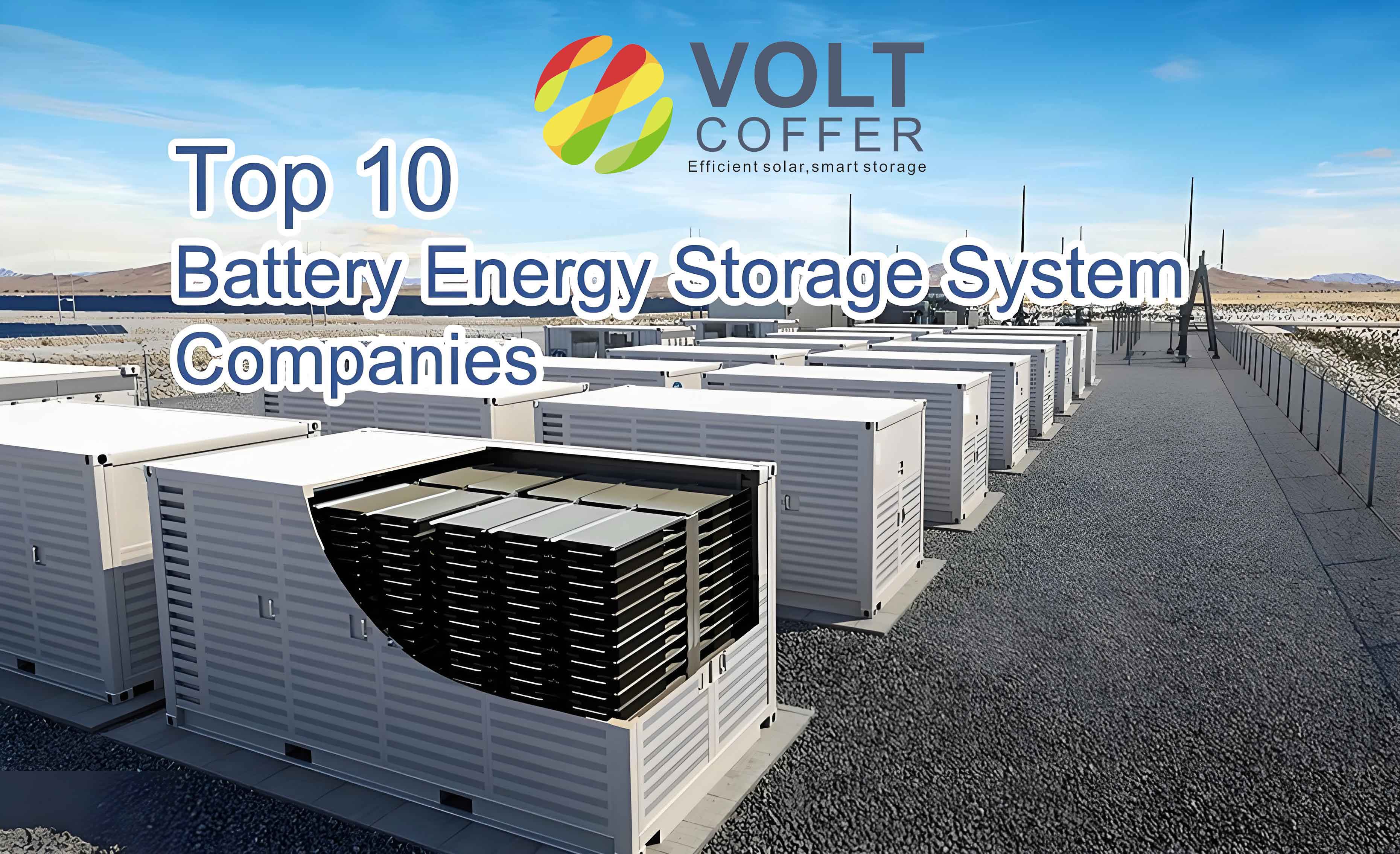
Technical Foundations and Chemistry of Energy Storage Batteries
The performance characteristics of an energy storage battery—such as energy density, power density, cycle life, calendar life, and cost—are intrinsically linked to its electrochemical composition. While numerous chemistries exist, lithium-ion batteries currently dominate the grid-scale and high-performance application space due to their favorable balance of these properties. Within the lithium-ion family, variations in cathode material (e.g., Lithium Iron Phosphate LFP, Nickel Manganese Cobalt NMC, Lithium Cobalt Oxide LCO) and anode material (graphite, silicon-composite) lead to distinct performance trade-offs. For instance, LFP batteries offer superior safety and longer cycle life but at a lower energy density compared to NMC batteries.
Other chemistries are also significant for specific grid roles. Flow batteries, such as vanadium redox, decouple power and energy ratings, making them ideal for long-duration storage (4+ hours). Their energy is stored in liquid electrolytes contained in external tanks, while power is determined by the size of the cell stack. Sodium-sulfur (NaS) batteries operate at high temperatures and offer high energy density, suitable for bulk energy time-shifting. Lead-acid, the oldest rechargeable technology, remains relevant for certain backup applications due to its low capital cost, despite limitations in cycle life and depth of discharge. Emerging technologies like solid-state batteries promise even higher energy densities and safety by replacing the liquid electrolyte with a solid material, though they are not yet commercially mature for grid-scale use.
The table below summarizes key characteristics of major energy storage battery technologies relevant to power systems.
| Battery Chemistry | Typical Energy Density (Wh/kg) | Typical Power Capability | Cycle Life (to 80% SOH) | Key Advantages | Key Challenges |
|---|---|---|---|---|---|
| Lithium-ion (NMC) | 150-220 | High | 3,000 – 5,000 | High energy & power density, good efficiency | Thermal runaway risk, cobalt supply chain |
| Lithium-ion (LFP) | 90-160 | Moderate-High | 4,000 – 8,000+ | Excellent safety, long cycle life, low cost | Lower energy density than NMC |
| Vanadium Redox Flow | 15-30 (for electrolyte) | Moderate | >10,000 | Independent power/energy scaling, long duration, deep discharge | Lower energy density, system complexity |
| Sodium-Sulfur (NaS) | 150-240 | Moderate | 2,500 – 4,500 | High energy density, good for bulk storage | High operating temperature (~300°C), safety |
| Lead-Acid (Advanced) | 30-50 | Moderate | 1,000 – 2,500 | Low upfront cost, mature technology | Low energy density, short cycle life, environmental concerns |
Mathematical Modeling of Battery Dynamics and Degradation
To effectively integrate an energy storage battery into grid planning and control algorithms, accurate mathematical models are essential. These models range from high-fidelity electrochemical models for cell design to simplified equivalent circuit models (ECM) and performance models for system-level studies. A common ECM represents the battery as a voltage source (open-circuit voltage, OCV) in series with an internal resistance (R), sometimes with additional RC pairs to model dynamic polarization effects.
The state of charge (SOC) is the fundamental state variable, representing the available capacity relative to the maximum capacity. Its dynamics are typically modeled as:
$$ SOC(t+Δt) = SOC(t) – \frac{η_{chg} P_{in}(t)Δt}{E_{max}} – \frac{P_{out}(t)Δt}{η_{dch} E_{max}} $$
where \( SOC(t) \) is the SOC at time \( t \), \( Δt \) is the time step, \( P_{in} \) and \( P_{out} \) are the charging and discharging power, \( E_{max} \) is the maximum energy capacity, and \( η_{chg} \), \( η_{dch} \) are the charging and discharging efficiencies, respectively. The open-circuit voltage \( V_{oc}(SOC) \) is a nonlinear function of SOC, which is critical for estimating terminal voltage \( V_t \):
$$ V_t(t) = V_{oc}(SOC(t)) – I(t)R_{int}(SOC(t), T) $$
where \( I(t) \) is the current and \( R_{int} \) is the internal resistance, which itself depends on SOC and temperature \( T \).
For grid stability studies, particularly frequency response, the energy storage battery is often modeled as a controlled power source that can emulate inertia. The virtual inertia control law can be expressed as:
$$ P_{BESS}(t) = -K_{BESS}(SOC) \cdot \frac{df(t)}{dt} $$
Here, \( P_{BESS}(t) \) is the output power of the battery energy storage system, \( K_{BESS}(SOC) \) is an inertia response coefficient that can be made adaptive to the SOC to prevent over-charge or over-discharge, and \( df(t)/dt \) is the Rate of Change of Frequency (RoCoF) of the grid.
A critical aspect often overlooked in short-term studies is the long-term degradation of the energy storage battery. Battery aging, leading to capacity fade and power capability reduction, is caused by calendar aging and cycle aging. An empirical model for total power degradation \( P_{total} \) (%) can be expressed as:
$$
\begin{aligned}
P_{total} &= P_{d,cal} + P_{d,cyc} \\
P_{d,cal} &= α \cdot M_{SOC}^β \cdot t^γ \\
P_{d,cyc} &= \sum_{i=1}^{N} κ \cdot d_i^λ \cdot c_i
\end{aligned}
$$
where \( P_{d,cal} \) is calendar aging degradation, \( M_{SOC} \) is the average SOC during storage, \( t \) is time, \( P_{d,cyc} \) is cycle aging degradation, \( d_i \) and \( c_i \) are the depth-of-discharge (DoD) and cycle count for the \( i \)-th cycle identified by a rainflow counting algorithm, and \( α, β, γ, κ, λ \) are fitting parameters obtained from accelerated aging tests. This degradation directly impacts the upper boundary of the system’s available inertia or power reserve.
Grid Applications and Stability Analysis
The deployment of energy storage battery systems unlocks a multitude of grid services. The most prominent applications include:
1. Frequency Regulation (Primary, Secondary, and Tertiary): The fast response capability of power converters in a BESS makes them ideal for frequency control. For primary frequency response, the BESS provides power proportional to the frequency deviation or RoCoF, as shown in the virtual inertia equation. This helps stabilize frequency immediately after a disturbance. For longer-term secondary regulation (Automatic Generation Control – AGC), BESS can track fast-moving regulation signals more accurately and efficiently than thermal generators.
2. Renewable Energy Integration and Time-Shifting: An energy storage battery mitigates the intermittency of solar PV and wind farms by storing excess energy during peak generation and discharging during periods of low generation or high demand. This smooths the power output and enables the delivery of firm, dispatchable capacity from variable resources.
3. Voltage Support and Grid Congestion Relief: BESS can provide reactive power support independently of real power, helping to manage local voltage levels. By strategically charging during low-load periods and discharging during peak load, they can also alleviate congestion on transmission and distribution lines, deferring costly infrastructure upgrades.
4. Microgrid and Backup Power: In islanded microgrids or as backup for critical facilities, an energy storage battery, often paired with diesel generators or renewables, forms the cornerstone of a resilient power supply, ensuring continuity of service during main grid outages.
From a system stability perspective, the integration of BESS fundamentally alters the frequency dynamics. The system frequency response (SFR) model can be extended to include the aggregated effect of virtual inertia from BESS. The classic swing equation becomes:
$$ 2H_{sys}\frac{df(t)}{dt} = ΔP_m(t) – ΔP_l(t) – DΔf(t) $$
where \( H_{sys} \) is the total system inertia constant, now comprising synchronous inertia \( H_g \) and virtual inertia from resources like BESS \( H_{BESS} \). \( ΔP_m \) and \( ΔP_l \) are mechanical power change and load change, and \( D \) is the load damping constant. The inclusion of \( H_{BESS} \) helps reduce the initial RoCoF following a disturbance. However, the energy-limited nature of an energy storage battery means this support is finite. A key assessment is determining the Inertia Stability Region (ISR)—the range of system inertia within which frequency security criteria (like maximum RoCoF and steady-state frequency deviation) are satisfied. The lower boundary \( E_{sys}^{low} \) is determined by solving an optimization problem subject to these frequency constraints. The upper boundary \( E_{sys}^{high} \) is limited by the aggregated maximum power capability of all resources, which for BESS degrades over time according to the degradation model \( P_{total} \):
$$ E_{sys}^{high} = H_g S_g^{rated} + H_{re} S_{re}^{rated} + (1 – P_{total}) H_{BESS} S_{BESS}^{rated} $$
where \( S^{rated} \) terms represent rated capacities. The real-time system inertia \( E_{sys} \) can be calculated based on online power outputs. An inertia stability margin \( r_{sys} \) can then be defined to quantify security:
$$ r_{sys} = \frac{E_{sys} – E_{sys}^{low}}{E_{sys}^{low}} \times 100\% $$
A negative margin indicates an impending stability risk, triggering the need for preventive control actions. This comprehensive modeling underscores why understanding the long-term performance decay of the energy storage battery is vital for accurate, reliable grid planning and real-time security assessment.
Future Trends and Research Directions
The evolution of the energy storage battery ecosystem is rapid, driven by relentless innovation. Several key trends will shape its future in the power sector:
1. Next-Generation Chemistries: Research is intensifying on post-lithium-ion technologies. Solid-state batteries promise higher energy density and eliminate flammable liquid electrolytes. Sodium-ion batteries offer a potentially lower-cost alternative by using abundant sodium instead of lithium. Lithium-sulfur and metal-air batteries target ultra-high energy densities for long-duration storage.
2. AI and Digitalization for Battery Management: Advanced Battery Management Systems (BMS) are incorporating machine learning and digital twin technologies. These systems can more accurately predict SOC and SOH, optimize charge/discharge strategies to minimize degradation, and even perform early fault detection, thereby extending the useful life and improving the economic viability of the energy storage battery asset.
3. Hybrid Energy Storage Systems (HESS): Combining different storage technologies (e.g., a high-power energy storage battery like supercapacitors with a high-energy battery) can leverage the strengths of each. A HESS can provide both extremely fast power bursts for transient stability and sustained energy for load shifting, optimizing overall system performance and cost.
4. Standardization and Second-Life Applications: As electric vehicle batteries reach their end-of-life for mobility (typically at 70-80% SOH), they present a massive opportunity for second-life use in less demanding grid storage applications. Developing standards for testing, repackaging, and integrating these used batteries is an active area that can significantly reduce the cost of stationary storage.
5. Grid-Forming Inverter Controls: Future BESS will increasingly operate with grid-forming inverters, which can create a stable voltage waveform and set the grid frequency without relying on the traditional grid. This capability is essential for building resilient, 100% inverter-based grids and is a paradigm shift from the current grid-following mode.
In conclusion, the modern energy storage battery is far more than a simple energy bank; it is an active, intelligent grid asset pivotal for the integration of renewable energy and the enhancement of power system stability, reliability, and efficiency. Its successful integration requires a deep understanding of its electrochemical behavior, accurate mathematical modeling of its dynamics and degradation, and sophisticated control strategies tailored to specific grid services. As technology advances and costs continue to decline, the role of the energy storage battery will only become more central, acting as the indispensable enabler for a clean, secure, and flexible global electricity system.