
Accurate and reliable operation of electrochemical energy storage batteries is paramount for modern applications, from electric vehicles to grid-scale renewable energy integration. A critical metric governing the safety, performance, and longevity of these systems is the State of Health (SOH). SOH quantitatively represents the degree of battery aging, typically defined as the ratio of the current maximum available capacity to its nominal capacity:
$$ \text{SOH} = \frac{Q_{\text{current}}}{Q_{\text{nominal}}} \times 100\% $$
Here, $Q_{\text{current}}$ is the present maximum discharge capacity, and $Q_{\text{nominal}}$ is the battery’s original capacity. An energy storage battery is often considered to have reached its end of life when its SOH degrades to 80%. Precise SOH estimation is therefore not merely a diagnostic tool but a foundational component of an effective Battery Management System (BMS), enabling predictive maintenance, optimizing usage strategies, and preventing catastrophic failures. However, SOH is an internal state that cannot be measured directly and must be inferred from externally measurable parameters such as voltage, current, and temperature.
Traditional SOH estimation approaches can be broadly categorized into model-based and data-driven methods. Model-based methods, including Equivalent Circuit Models (ECM) and electrochemical models, attempt to describe the battery’s internal degradation physics. While potentially accurate, these methods often suffer from high computational complexity, difficulties in parameter identification, and a reliance on assumptions that may not hold across diverse operational conditions for an energy storage battery.
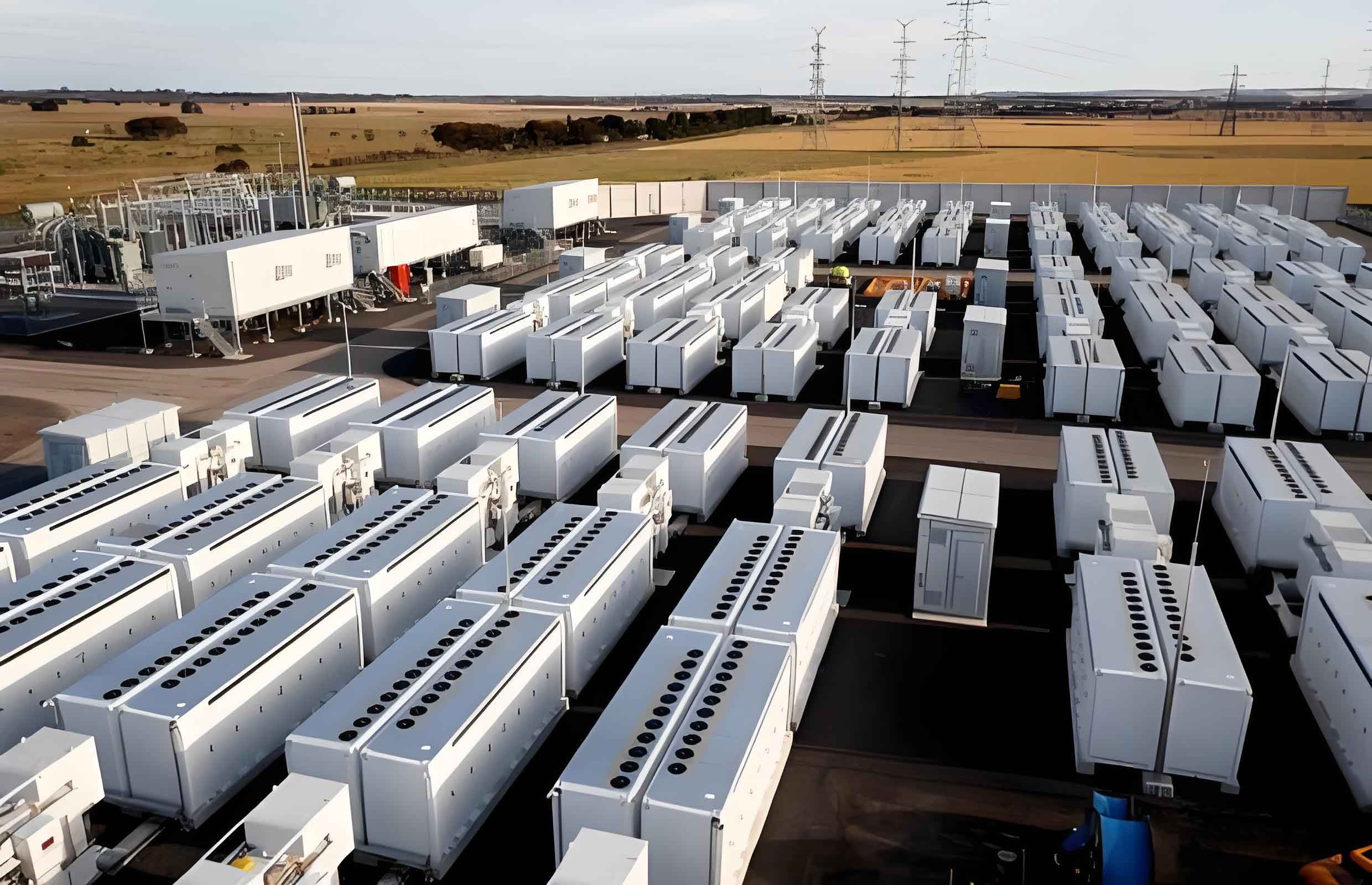
In contrast, data-driven methods have gained substantial traction due to their ability to learn complex, non-linear mappings from operational data to SOH without requiring deep domain-specific knowledge of the underlying electrochemistry. Techniques such as Support Vector Regression (SVR), Random Forests, and various neural network architectures like Deep Neural Networks (DNNs), Long Short-Term Memory (LSTM) networks, and Gated Recurrent Units (GRUs) have been successfully applied. These models typically take engineered health features—often derived from voltage and current curves during constant-current or constant-voltage charging phases—as input. Common features include charging time, voltage intervals, or incremental capacity (IC) curve peaks.
However, a significant limitation persists in many current data-driven approaches for energy storage battery SOH estimation. They frequently treat each battery cycle as an independent snapshot, extracting features from a single cycle to estimate its corresponding SOH. This paradigm overlooks the inherently temporal and progressive nature of battery degradation. The aging of an energy storage battery is a cumulative process where the state and performance in a given cycle are intrinsically linked to the history of preceding cycles. By ignoring the sequential dependencies and correlations between multiple consecutive cycles, these methods discard valuable health information, potentially limiting their estimation accuracy, robustness to measurement noise, and ability to capture long-term degradation trends.
To bridge this gap, this work proposes a novel deep learning architecture named the Multi-Cycle Network (MCNet). The core innovation of MCNet is its direct exploitation of sequential health information across multiple historical cycles for estimating the SOH of an energy storage battery. Unlike methods requiring manual feature engineering, MCNet operates directly on raw, aligned time-series data from the charging phase of several consecutive cycles. It is designed to automatically learn and fuse two levels of informative patterns: 1) intra-cycle features that capture the complex electrochemical signatures within a single charge curve, and 2) inter-cycle features that model the temporal evolution and dependencies between these signatures over successive cycles. This holistic approach allows the model to build a more contextualized and robust understanding of the energy storage battery’s degradation trajectory.
The MCNet Architecture: A Hierarchical Feature Learning Framework
The proposed MCNet is engineered to process sequential battery cycling data and estimate the SOH at the current cycle. Its input is a tensor constructed from the charging voltage and current profiles of the last \( n \) consecutive cycles. The output is the estimated SOH value for the most recent (the \( n \)-th) cycle. The architecture comprises three synergistic modules, as illustrated in the conceptual diagram.
1. Intra-Cycle Feature Extraction Module: This module is responsible for distilling high-level, informative representations from the raw time-series data of each individual cycle. It processes each cycle’s data independently through a pipeline designed for deep feature learning. The module begins with a Feature Dimension Amplification Layer, implemented using a GRU. This layer transforms the input sequence \( \mathbf{u}_1, \mathbf{u}_2, …, \mathbf{u}_L \) (where \( \mathbf{u}_i \in \mathbb{R}^{2} \) contains current and voltage at time step \( i \), and \( L \) is the sequence length) into a higher-dimensional feature space \( \mathbf{u}’_1, \mathbf{u}’_2, …, \mathbf{u}’_L \) (with \( \mathbf{u}’_i \in \mathbb{R}^{N} \)), enhancing the model’s capacity to represent complex patterns within the energy storage battery’s charge profile.
Subsequently, several Transformer Blocks are employed. The Transformer’s multi-head self-attention mechanism allows the model to dynamically weigh the importance of different time steps across the entire sequence, effectively capturing long-range dependencies and contextual relationships within the charge curve. This is crucial for identifying subtle shape changes in the voltage profile that correlate with SOH degradation in an energy storage battery. The output is a sequence of deep contextual feature vectors \( \mathbf{f}_1, \mathbf{f}_2, …, \mathbf{f}_L \).
Finally, a Cycle Information Aggregation Layer (another GRU) sequentially processes the feature vectors \( \mathbf{f}_i \). The GRU’s gating mechanism aggregates information across all time steps, culminating in a single, fixed-dimensional feature vector \( \mathbf{F}_k \) that encapsulates the entire health signature of the \( k \)-th cycle for the energy storage battery.
2. Inter-Cycle Temporal Dependency Capture Module: The outputs from the first module for \( n \) consecutive cycles form a sequence of feature vectors: \( \mathbf{F}_{k-n+1}, \mathbf{F}_{k-n+2}, …, \mathbf{F}_k \). This sequence represents the temporal evolution of the energy storage battery’s health state. A GRU network is used to process this sequence, capturing the sequential dependencies and degradation trends across cycles. The GRU updates its hidden state \( \mathbf{h}_t \) at each step, effectively integrating historical health information:
$$ \mathbf{h}_t = \text{GRU}(\mathbf{F}_t, \mathbf{h}_{t-1}) $$
The final hidden state \( \mathbf{h}_n \), denoted as \( \mathbf{F}_{\text{multicycle}} \), is a rich representation that fuses intra-cycle features with their inter-cycle progression, providing a comprehensive view of the energy storage battery’s condition.
3. SOH Estimation Module: This module is a Fully Connected Neural Network (FCNN) that performs the final regression task. It maps the fused multi-cycle feature vector \( \mathbf{F}_{\text{multicycle}} \) to a precise SOH estimate:
$$ \text{SOH}_{\text{estimated}} = \text{FCNN}(\mathbf{F}_{\text{multicycle}}) $$
Experimental Design and Data Preparation
To validate the proposed MCNet model, experiments were conducted using publicly available lithium-ion battery datasets, which serve as a standard benchmark for energy storage battery degradation studies.
Datasets: The primary dataset used is from the University of Maryland’s Center for Advanced Life Cycle Engineering (CALCE). It comprises cycling data for four LiCoO₂ prismatic cells (CS2_35, CS2_36, CS2_37, CS2_38) with a nominal capacity of 1100 mAh. All cells were cycled under a standard regime: constant-current (CC) charging at 0.5C to 4.2V, followed by constant-voltage (CV) charging until the current dropped to 0.05A, a rest period, and then a constant-current discharge at 1C to a cutoff voltage of 2.7V. The supplementary dataset for robustness verification is the Oxford battery dataset, which includes eight 740 mAh pouch cells aged at 40°C.
Data Preprocessing: Robust preprocessing is essential for effective model training. The following three-step pipeline was applied:
1. Max-Min Normalization: All input current and voltage values are normalized to the range [0, 1] to accelerate model convergence and improve numerical stability. For a feature \( x \), the scaled value is:
$$ x_{\text{scaled}} = \frac{x – x_{\text{min}}}{x_{\text{max}} – x_{\text{min}}} $$
2. Sequence Length Alignment: As an energy storage battery ages, the duration of the CC charging phase decreases, leading to variable-length time-series data per cycle. To enable batch processing, all charging profiles are padded to the length of the longest sequence (typically the first cycle) using zeros.
3. Multi-Cycle Input Tensor Construction: The core innovation’s data foundation. For estimating SOH at cycle \( n \), the normalized and aligned data from the previous \( k \) consecutive cycles (e.g., cycles \( n-k+1 \) to \( n \)) are stacked. The model input is thus a 3D tensor \( \mathbf{X} \in \mathbb{R}^{k \times L \times 2} \), where \( k \) is the number of historical cycles, \( L \) is the aligned sequence length, and the last dimension corresponds to current and voltage measurements.
Evaluation Metrics: Model performance is quantified using two standard metrics: Mean Absolute Error (MAE) and Root Mean Square Error (RMSE). For \( N \) samples, with \( y_i \) being the true SOH and \( \hat{y}_i $ being the estimated SOH, they are defined as:
$$ \text{MAE} = \frac{1}{N} \sum_{i=1}^{N} | y_i – \hat{y}_i | $$
$$ \text{RMSE} = \sqrt{ \frac{1}{N} \sum_{i=1}^{N} (y_i – \hat{y}_i)^2 } $$
Lower values of MAE and RMSE indicate higher estimation accuracy.
Results and Comprehensive Analysis
The experiments were designed to answer two key questions: 1) Does utilizing multiple cycles improve SOH estimation accuracy compared to using a single cycle? 2) How does MCNet perform against other state-of-the-art sequence modeling techniques?
Benefit of Multi-Cycle Inputs: An ablation study was performed where a variant of MCNet using only a single cycle’s data (i.e., \( k=1 \)) was compared against the full MCNet model using \( k=10 \) cycles. A leave-one-out cross-validation strategy was employed on the CALCE dataset. The quantitative results are summarized below.
| Test Cell | Method | MAE | RMSE |
|---|---|---|---|
| CS2_35 | Single-Cycle | 0.65% | 1.14% |
| Multi-Cycle (k=10) | 0.55% | 1.01% | |
| CS2_36 | Single-Cycle | 0.72% | 1.00% |
| Multi-Cycle (k=10) | 0.65% | 1.04% | |
| CS2_37 | Single-Cycle | 0.85% | 1.26% |
| Multi-Cycle (k=10) | 0.60% | 0.86% | |
| CS2_38 | Single-Cycle | 1.02% | 1.56% |
| Multi-Cycle (k=10) | 0.89% | 1.36% |
The results clearly demonstrate the advantage of the multi-cycle approach. In three out of four test cases, MCNet with 10-cycle input achieved lower errors in both MAE and RMSE. The performance gain is particularly noticeable in later life stages (low SOH regions), where single-cycle estimates can exhibit high-error spikes due to measurement noise or singular cycle irregularities. The multi-cycle model inherently smooths such anomalies by leveraging the consistent temporal context from previous cycles, leading to more stable and accurate predictions for the energy storage battery’s health state. Further analysis varying the number of input cycles \( k \) showed that estimation error generally decreases as \( k \) increases up to an optimal point, confirming the value of historical information.
Comparative Performance against Benchmark Models: MCNet was compared against several powerful and widely-used sequence models for time-series prediction: LSTM, Bidirectional LSTM (BiLSTM), GRU, and Bidirectional GRU (BiGRU). All models were trained and tested under identical conditions using the 10-cycle input format for a fair comparison. The average performance metrics across the four CALCE test cells are presented below.
| Model | Average MAE | Average RMSE |
|---|---|---|
| BiLSTM | 0.925% | 1.438% |
| LSTM | 0.910% | 1.388% |
| BiGRU | 0.900% | 1.348% |
| GRU | 1.050% | 1.535% |
| MCNet (Proposed) | 0.673% | 1.068% |
MCNet consistently outperformed all benchmark models. On average, it reduced MAE by approximately 28.4% and RMSE by 24.2% compared to the best-performing benchmark (BiGRU in this case). The superior performance can be attributed to MCNet’s hierarchical architecture. While standard RNNs (LSTM/GRU) are effective at modeling temporal sequences, the intra-cycle module of MCNet, particularly the Transformer blocks, provides a more powerful mechanism for learning complex, non-local patterns within a single cycle’s data from the energy storage battery. This refined intra-cycle representation, when subsequently processed for inter-cycle dependencies, yields a more informative feature for the final regression task.
Robustness Validation on the Oxford Dataset: To assess the generalizability of the proposed method beyond the primary dataset, MCNet was trained on a subset of the Oxford energy storage battery dataset and tested on unseen cells. The model demonstrated excellent transferability, achieving high estimation accuracy as shown in the following results.
| Test Cell (Oxford) | MAE | RMSE |
|---|---|---|
| Cell 2 | 0.73% | 1.39% |
| Cell 4 | 0.22% | 0.30% |
| Cell 5 | 0.45% | 0.48% |
| Cell 6 | 0.25% | 0.47% |
These results, with all MAE values below 0.8% and RMSE below 1.5%, confirm that MCNet is not overfitted to a specific dataset or cell chemistry. Its architecture possesses the robustness to learn generalizable degradation patterns applicable to different energy storage battery types and testing conditions.
Conclusion
Accurate State of Health estimation remains a critical challenge for ensuring the safety, reliability, and economic viability of electrochemical energy storage systems. This work addresses a key limitation in prevailing data-driven methods by explicitly modeling the temporal dependencies across battery charge-discharge cycles. The proposed Multi-Cycle Network (MCNet) introduces a novel hierarchical deep learning framework that automatically extracts and fuses informative features both within individual cycles and across sequences of cycles.
The model’s effectiveness is rigorously validated through comprehensive experiments. The ablation study conclusively proves that utilizing multiple historical cycles as input significantly enhances estimation accuracy and stability compared to single-cycle methods, especially in mitigating error spikes caused by data noise. Furthermore, comparative evaluations demonstrate that MCNet substantially outperforms standard sequence models like LSTMs and GRUs, achieving an average MAE reduction of over 28%. Its robustness is successfully verified on an independent battery dataset. By providing a precise, robust, and practical data-driven solution for SOH estimation, the MCNet model represents a meaningful advancement toward smarter and more reliable management of energy storage batteries, ultimately contributing to the longevity and safety of modern energy storage systems.