
The reliable and efficient operation of modern power systems, particularly in critical applications such as uninterruptible power supplies (UPS) for offshore drilling platforms, is heavily dependent on the performance of the energy storage battery. The health of these batteries, quantified by the State-of-Health (SOH), is a paramount factor in ensuring system safety and preventing unexpected failures. SOH, often defined as the ratio of current maximum available capacity to its nominal capacity, directly dictates the remaining useful life and the backup duration an energy storage battery can provide. Conventionally, measuring SOH requires a full-capacity verification test, a process that is time-consuming, causes deep discharge stress, and is often impractical during regular operation. Therefore, developing accurate and robust model-based online estimation algorithms is of significant practical importance for the predictive maintenance and management of energy storage battery systems.
Research on SOH estimation primarily follows two paradigms: data-driven approaches and model-based methods. While data-driven techniques, utilizing machine learning or statistical models, can be effective, their performance is highly contingent on the quality and comprehensiveness of training data. Model-based methods, particularly those employing equivalent circuit models (ECMs), offer a physics-informed structure that balances complexity and computational efficiency. A common challenge with ECMs is parameter drift due to aging, State-of-Charge (SOC), and temperature variations. To address this, recursive algorithms like the Kalman Filter (KF) and its variants are employed for joint state and parameter estimation. The Dual Kalman Filter (DKF) structure, which runs two filters in parallel—one for parameter identification and another for state estimation—provides a foundational framework. However, its robustness to initial parameter errors and its estimation accuracy can be limited. This article presents a refined algorithmic framework, introducing a coupled filtering structure and a multi-time scale strategy to significantly enhance the SOH estimation performance for energy storage battery systems under typical operational profiles.
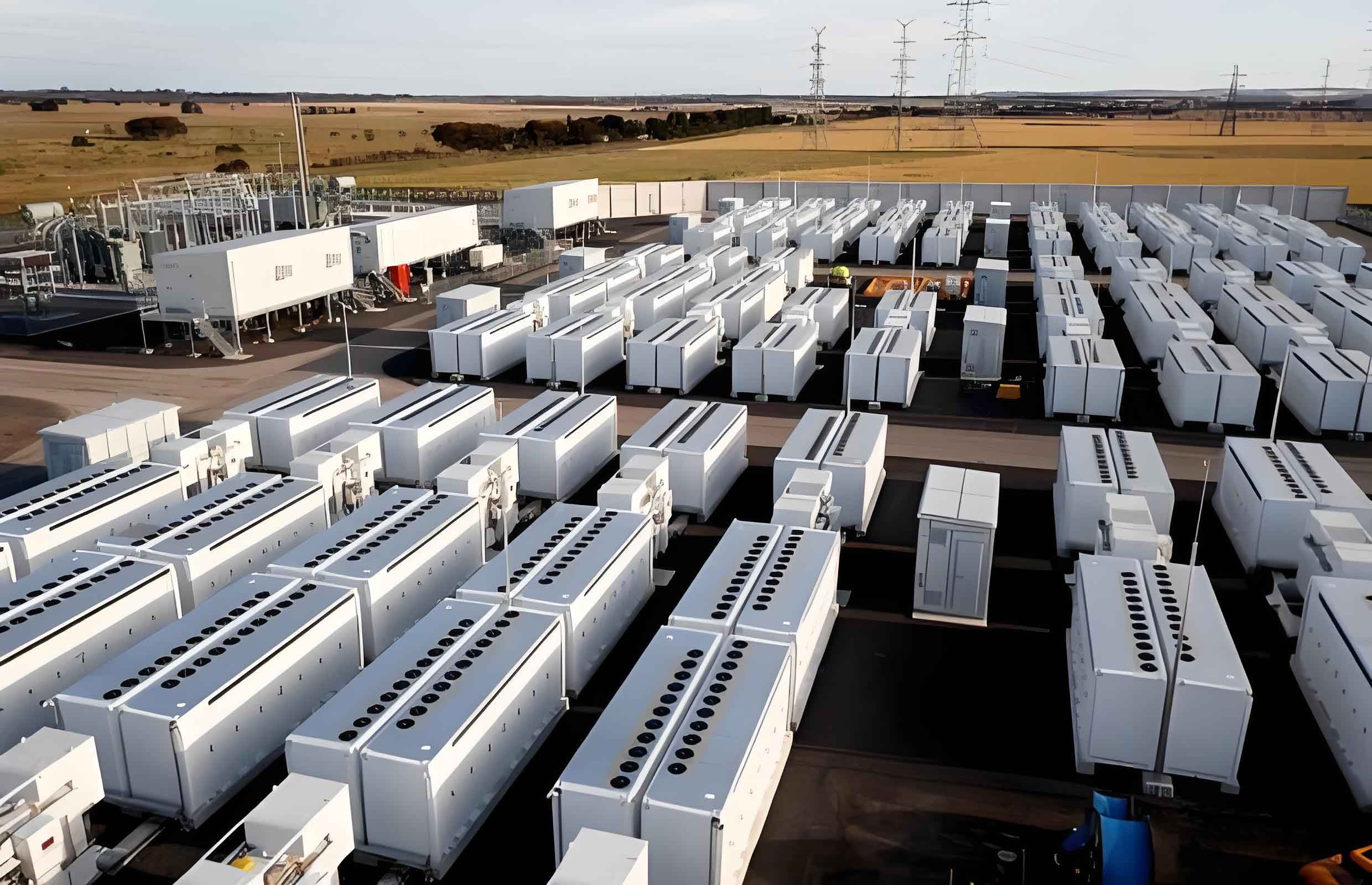
Battery Model and Problem Formulation
The Thevenin equivalent circuit model is widely adopted for its effective balance between model fidelity and computational simplicity, making it suitable for real-time algorithms in energy storage battery management systems. It captures the key dynamic behaviors, including the ohmic voltage drop and the electrochemical polarization.
Thevenin Equivalent Circuit Model
The model consists of an open-circuit voltage (OCV) source, a series ohmic resistance \(R_0\), and a parallel \(R_d\)-\(C_d\) network representing the polarization dynamics. The governing equations are derived from Kirchhoff’s laws and the Coulomb counting method:
$$
\begin{aligned}
\frac{dU_d}{dt} &= \frac{i_L}{C_d} – \frac{U_d}{R_d C_d} \\
\frac{dz}{dt} &= -\frac{\eta}{Q_n} i_L \\
U_v &= U_{oc}(z) – U_d – i_L R_0
\end{aligned}
$$
where \(U_d\) is the polarization voltage, \(i_L\) is the load current (positive for discharge), \(z\) is the battery SOC, \(\eta\) is the Coulombic efficiency, \(Q_n\) is the maximum available capacity (i.e., SOH), \(U_{oc}\) is the OCV which is a function of SOC, and \(U_v\) is the terminal voltage. For a constant discharge rate, \(\eta\) can be approximated as 1.
Discretizing these equations with a sampling period \(\Delta T\) under the assumption that parameters are constant within one interval yields:
$$
\begin{aligned}
U_{d,k} &= \exp(-\Delta T / \tau) U_{d,k-1} + [1 – \exp(-\Delta T / \tau)] i_{L,k-1} R_d \\
z_k &= z_{k-1} – \frac{i_{L,k} \Delta T}{Q_n} \\
U_{v,k} &= U_{oc}(z_k) – U_{d,k} – i_{L,k} R_0
\end{aligned}
$$
where \(\tau = R_d C_d\) is the time constant. The OCV-SOC relationship \(U_{oc}(z)\) is typically obtained via offline characterization. A common representation is a polynomial fit:
$$
U_{oc,k} = a_5 z_k^5 + a_4 z_k^4 + a_3 z_k^3 + a_2 z_k^2 + a_1 z_k + a_0
$$
The core estimation problem is to jointly identify the model parameter vector \(\boldsymbol{\theta} = [R_0, R_d, C_d]^T\) and the state vector \(\boldsymbol{\chi} = [U_d, z]^T\) using only measurable inputs (\(i_L\)) and outputs (\(U_v\)), and subsequently to estimate \(Q_n\) (SOH) from the converged SOC trajectory.
Algorithm Development: From DKF to an Enhanced Framework
Foundation: The Dual Kalman Filter (DKF)
The standard DKF operates two decoupled filters. The parameter filter (often a linear KF) identifies the ECM parameters, while the state filter (an Extended KF or EKF) estimates the SOC and polarization voltage.
Parameter Identification with KF:
Define \(U_{c,k} = U_{oc,k} – U_{v,k} = U_{d,k} + i_{L,k}R_0\). A derived autoregressive form can be expressed as:
$$ U_{c,k+1} = a_k U_{c,k} + b_k i_{L,k} + c_k i_{L,k+1} $$
where \(a_k = \exp(-\Delta T/\tau)\), \(b_k = R_d[1-\exp(-\Delta T/\tau)] – R_0 \exp(-\Delta T/\tau)\), and \(c_k = R_0\). The parameter vector for this linear model is \(\boldsymbol{\theta}_{c,k} = [a_k, b_k, c_k]^T\). The state-space model for the KF is:
$$
\begin{aligned}
\boldsymbol{\theta}_{c,k+1} &= \mathbf{A}_{\theta} \boldsymbol{\theta}_{c,k} + \boldsymbol{\omega}_{\theta} \\
Y_{\theta,k} &= \mathbf{C}_{\theta,k} \boldsymbol{\theta}_{c,k} + v_{\theta}
\end{aligned}
$$
with \(\mathbf{A}_{\theta} = \mathbf{I}\), \(\mathbf{C}_{\theta,k} = [U_{c,k}, i_{L,k}, i_{L,k+1}]\), and \(Y_{\theta,k} = U_{c,k}\). \(\boldsymbol{\omega}_{\theta}\) and \(v_{\theta}\) are process and measurement noise.
State Estimation with EKF:
The nonlinear state model is linearized for the EKF. The state transition and measurement matrices are:
$$
\mathbf{A}_{\chi,k} = \begin{bmatrix}
\exp(-\Delta T/\tau) & 0 \\
0 & 1
\end{bmatrix}, \quad
\mathbf{C}_{\chi,k} = \begin{bmatrix}
-1 & \frac{dU_{oc}}{dz}\big|_{z=\hat{z}_k^-}
\end{bmatrix}
$$
The EKF then proceeds with the standard prediction and update steps using the model from Eq. (2).
SOH Estimation via Inverse Coulomb Counting:
Once a reliable SOC estimate \(\hat{z}\) is available, SOH (\(Q_n\)) is updated by inverting the Coulomb counting equation over a time window of length \(T_s\):
$$ \hat{Q}_{n,k} = \frac{\sum_{j=k-T_s+1}^{k} i_{L,j} \Delta T}{\hat{z}_k – \hat{z}_{k-T_s}} = \frac{\Delta Q_k}{\Delta z_k} $$
To ensure numerical stability and accuracy, update constraints are applied: a minimum initialization time \(L_s\), a threshold \(z_f\) for the SOC change \(\Delta z_k\), and a limit \(s_f\) on the rate of change of \(\hat{Q}_n\).
Enhancement 1: The Dual Extended Kalman Filter (DEKF)
The primary limitation of the standard DKF is its decoupled structure, where the parameter filter does not utilize the innovation from the state filter directly, potentially reducing robustness. The DEKF addresses this by formulating both the parameter and state estimation problems within the EKF framework, creating a coupled structure. The parameter vector is now defined directly as \(\boldsymbol{\theta}_k = [R_0, R_d, C_d]_k^T\).
The parameter estimation is cast as a nonlinear filtering problem where the “state” is \(\boldsymbol{\theta}_k\), and the measurement is the terminal voltage \(U_{v,k}\):
$$
\begin{aligned}
\boldsymbol{\theta}_{k+1} &= \boldsymbol{\theta}_k + \boldsymbol{\omega}_{\theta} \\
Y_{\theta,k} &= H(\hat{\boldsymbol{\chi}}_k, \boldsymbol{\theta}_k, i_{L,k}) + v_{\theta}
\end{aligned}
$$
Critically, the measurement function \(H(\cdot)\) is identical to the state observer’s measurement function: \(H(\hat{\boldsymbol{\chi}}_k, \boldsymbol{\theta}_k, i_{L,k}) = U_{oc}(\hat{z}_k) – \hat{U}_{d,k} – i_{L,k} R_0\). This shared innovation creates coupling. The linearized measurement matrix for the parameter EKF is:
$$
\mathbf{C}_{\theta,k} = \frac{\partial H}{\partial \boldsymbol{\theta}} \bigg|_{\hat{\boldsymbol{\chi}}_k, \hat{\boldsymbol{\theta}}_k^-} = \left[ \frac{\partial H}{\partial R_0}, \frac{\partial H}{\partial R_d}, \frac{\partial H}{\partial C_d} \right]
$$
This requires calculating the sensitivity of the state estimates to the parameters, \(\frac{d\hat{\boldsymbol{\chi}}_k}{d\boldsymbol{\theta}}\), which is achieved through a recursive sensitivity equation derived from the state EKF update, thereby fully coupling the two filters.
Enhancement 2: Multi-time Scale Dual Extended Kalman Filter (MDEKF)
In a typical energy storage battery system, states (voltage, SOC) evolve much faster than model parameters (internal resistances, capacitance) which change with aging and temperature. The MDEKF algorithm explicitly exploits this disparity by operating the state estimation on a “fast” or micro time scale and the parameter estimation on a “slow” or macro time scale.
Let the macro time index be \(k\) and the micro time index within one macro step be \(l = 1, 2, …, L_z\), where \(L_z\) is the scale factor. The combined time instant is \(t = (k-1)L_z + l\).
MDEKF Algorithm Steps:
1. Initialization: Set \(\hat{\boldsymbol{\chi}}_0, \mathbf{P}_{\chi,0}, \mathbf{Q}_{\chi}, \hat{\boldsymbol{\theta}}_0, \mathbf{P}_{\theta,0}, \mathbf{Q}_{\theta}, \mathbf{R}\).
2. Macro Scale (Parameter) Time Update (at each \(k\)):
$$ \hat{\boldsymbol{\theta}}_k^- = \hat{\boldsymbol{\theta}}_{k-1} $$
$$ \mathbf{P}_{\theta,k}^- = \mathbf{P}_{\theta,k-1} + \mathbf{Q}_{\theta} $$
3. Micro Scale (State) Update (for \(l=1\) to \(L_z\)):
Execute a full EKF cycle for the state \(\boldsymbol{\chi}\) using the current parameter estimate \(\hat{\boldsymbol{\theta}}_k^-\). This involves prediction and update using Eqs. (2) and the linearization in Eq. (5). This yields the updated state estimate \(\hat{\boldsymbol{\chi}}_{k,L_z}\) after \(L_z\) micro steps.
4. Macro Scale (Parameter) Measurement Update (at each \(k\)):
Use the final state estimate \(\hat{\boldsymbol{\chi}}_{k,0} (=\hat{\boldsymbol{\chi}}_{k-1,L_z})\) and the corresponding measurement \(Y_{k,0}\) to update the parameters.
$$ \mathbf{e}_{\theta,k} = Y_{k,0} – H(\hat{\boldsymbol{\chi}}_{k,0}, \hat{\boldsymbol{\theta}}_k^-, i_{L,k,0}) $$
$$ \mathbf{L}_{\theta,k} = \mathbf{P}_{\theta,k}^- \mathbf{C}_{\theta,k}^T (\mathbf{C}_{\theta,k} \mathbf{P}_{\theta,k}^- \mathbf{C}_{\theta,k}^T + \mathbf{R})^{-1} $$
$$ \hat{\boldsymbol{\theta}}_k = \hat{\boldsymbol{\theta}}_k^- + \mathbf{L}_{\theta,k} \mathbf{e}_{\theta,k} $$
$$ \mathbf{P}_{\theta,k} = (\mathbf{I} – \mathbf{L}_{\theta,k} \mathbf{C}_{\theta,k}) \mathbf{P}_{\theta,k}^- $$
5. SOH Estimation: After the state EKF converges, calculate \(\hat{Q}_n\) using Eq. (6) when the predefined conditions (\(\Delta z_k > z_f\), etc.) are met.
The following table summarizes the key characteristics of the three algorithms:
| Algorithm | Filter Structure | Time Scale | Key Feature |
|---|---|---|---|
| DKF | Decoupled (Linear KF for parameters, EKF for state) | Single | Simple, but sensitive to initial parameter errors. |
| DEKF | Coupled (EKF for both parameters and state) | Single | Enhanced robustness through shared innovation. |
| MDEKF | Coupled (EKF for both) | Multi-scale (Macro/Micro) | Improves accuracy & stability by respecting different dynamics. |
Experimental Validation and Comparative Analysis
The proposed algorithms were validated using a constant-current discharge dataset from a 200 Ah nominal capacity energy storage battery with a current SOH of approximately 150 Ah. The discharge depth was 50%, simulating a typical partial discharge test scenario for a UPS energy storage battery. The performance was evaluated in terms of SOC tracking error and final SOH estimation accuracy and robustness to erroneous initial parameters.
Initialization and Settings:
The sampling time \(\Delta T = 1\) s. For SOH update: \(L_s = 2000\) s, \(z_f = 0.5\%\), \(s_f = 0.03\). For MDEKF, \(L_z = 60\). Noise covariance matrices were tuned for stability: \(\mathbf{Q}_{\chi} = \text{diag}(0.001, 0.001)\), \(\mathbf{R}_{\chi} = 1\), \(\mathbf{Q}_{\theta} = \text{diag}(0.001, 0.001, 0.001)\), \(\mathbf{R}_{\theta} = 1\). Initial parameters: \(\hat{R}_0 = 0.004 \Omega\), \(\hat{R}_d = 0.004 \Omega\), \(\hat{C}_d = 20000\) F. To test robustness, a perturbed case with \(\hat{R}_0 = 0.005 \Omega\) was also evaluated.
Performance of DKF
With correct initialization, DKF showed acceptable performance. The maximum SOC error was below 0.05, and the stabilized SOH error was within 5 Ah. However, under the perturbed initial \(R_0\), the SOC estimation accuracy degraded noticeably, and the SOH error exceeded 10 Ah, revealing its lack of robustness.
Performance of DEKF
The DEKF algorithm demonstrated markedly improved robustness. The estimation performance before and after the initial parameter perturbation was nearly identical. The maximum SOC error remained below 0.05, and the stabilized SOH error was within 5 Ah. This confirms the benefit of the coupled filtering structure.
Performance of MDEKF and Comparative Summary
The MDEKF algorithm delivered the best overall performance, combining the robustness of DEKF with higher precision. The SOC trajectory was estimated more smoothly and accurately. The final SOH estimate was the closest to the reference value.
The following table quantitatively compares the algorithms under the perturbed initialization condition, which is critical for a practical energy storage battery management system where true parameters are unknown.
| Algorithm | Max SOC Error | SOC MAPE (%) | Stabilized SOH Error (Ah) |
|---|---|---|---|
| DKF | 0.048 | 5.38 | > 10 (Divergent trend) |
| DEKF | 0.035 | 3.56 | 3.57 |
| MDEKF | 0.039 | 1.30 | 1.59 |
The results clearly show the progression of improvement. The DEKF reduces the SOC Mean Absolute Percentage Error (MAPE) from 5.38% to 3.56% compared to DKF and ensures stable SOH convergence. The MDEKF further cuts the SOC MAPE to 1.30% and reduces the final SOH error to just 1.59 Ah (about 1.06% of the true capacity), showcasing superior accuracy. The multi-time scale approach allows the state filter to converge with a relatively stable parameter estimate from the slower macro-scale filter, reducing coupled noise and improving the overall estimation fidelity for the energy storage battery.
Conclusion
This article presented a comprehensive framework for enhancing SOH estimation in energy storage battery systems. Starting from the foundational Dual Kalman Filter (DKF), two key enhancements were introduced: 1) the Dual Extended Kalman Filter (DEKF), which couples the parameter and state estimation processes to improve algorithm robustness against model initialization errors; and 2) the Multi-time Scale DEKF (MDEKF), which further refines accuracy by respecting the different evolution rates of battery states and parameters.
Validation on a constant-current discharge profile, representative of a partial capacity test for a UPS energy storage battery, confirmed the effectiveness of the proposed approach. The MDEKF algorithm achieved a high-precision SOH estimate with an error below 2 Ah while maintaining strong robustness. This methodology provides a powerful and practical tool for online battery health monitoring, enabling condition-based maintenance without the need for disruptive full-capacity tests, thereby enhancing the safety and reliability of critical systems dependent on energy storage battery technology.