
The global transition towards sustainable energy systems has led to a substantial increase in the penetration of distributed renewable generation. Utility interactive inverters serve as the critical interface, converting DC power from sources like photovoltaics into AC power synchronized with the utility grid. A prevalent challenge in integrating these distributed resources is their frequent connection to the grid via long transmission lines or through networks with high equivalent impedance, resulting in what is termed a “weak grid.” In such conditions, the performance and stability of the utility interactive inverter are significantly challenged.
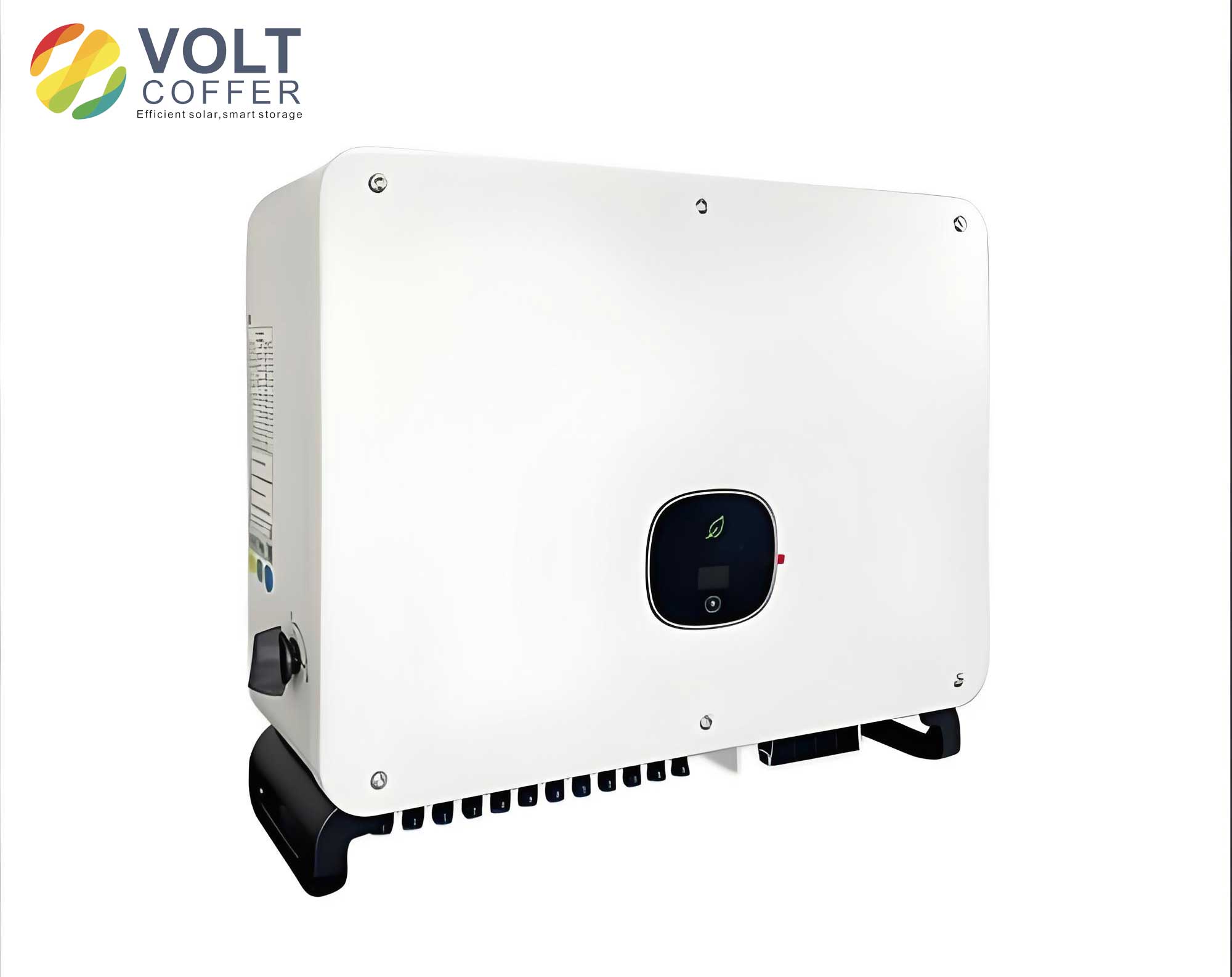
The LCL filter is widely adopted in utility interactive inverter designs due to its superior harmonic attenuation capabilities with relatively small component sizes. However, its frequency response introduces a resonant peak that can destabilize the control system. This issue is exacerbated in weak grids where the variable grid impedance causes the LCL resonance frequency to shift, potentially degrading power quality and, more critically, limiting the maximum power transfer capacity. In extremely weak grids with a Short Circuit Ratio (SCR) below 2, the stability-power transfer trade-off becomes a fundamental constraint.
Traditional solutions involve damping the LCL resonance. Active damping methods, such as Capacitor Current Feedback (CCF), are effective but often require additional current sensors, increasing cost and complexity. While control strategies like Model Predictive Control (MPC) offer high performance, their reliance on precise system models makes them vulnerable to parameter mismatches, especially under varying grid conditions. This paper addresses these interconnected challenges—cost, robustness, and weak-grid adaptability—by proposing a novel control strategy for the LCL-type utility interactive inverter.
We present a Capacitance Voltage Estimation-Based Optimized Resonance Damping Predictive Control (CVE-ORDPC) strategy. The core innovations include: 1) A linear equivalence-based method to estimate the filter capacitor voltage, eliminating the need for a dedicated voltage sensor and reducing hardware cost. 2) The dynamic reconstruction of the inverter’s ultra-local model using a Negative First-Order High-Pass Filter (NFHPF) to actively optimize damping characteristics around the shifting resonance frequency. 3) A two-step predictive current control scheme integrated with the optimized model to enhance dynamic response. This approach enhances the utility interactive inverter‘s robustness against grid impedance variations and expands its stable operating region in weak grids.
Mathematical Modeling of LCL-Type Utility Interactive Inverter in Weak Grid
The system under study is a three-phase LCL-filtered inverter. In a weak grid, the grid impedance at the Point of Common Coupling (PCC) is non-negligible. For stability analysis under the most challenging condition, the grid impedance is often considered purely inductive, denoted as $Z_g(s) = sL_g$. The system’s electrical equations in the stationary ($\alpha\beta$) frame can be derived from Kirchhoff’s laws:
$$
\begin{cases}
L_1 \frac{di_{L\alpha\beta}}{dt} = u_{\alpha\beta} – u_{c\alpha\beta} \\
C \frac{du_{c\alpha\beta}}{dt} = i_{L\alpha\beta} – i_{g\alpha\beta} \\
L_T \frac{di_{g\alpha\beta}}{dt} = u_{c\alpha\beta} – u_{g\alpha\beta}
\end{cases}
$$
Here, $L_T = L_2 + L_g$ represents the total inductance on the grid side, combining the filter inductance $L_2$ and the grid equivalent inductance $L_g$. The variables $u$, $i_L$, $i_g$, and $u_c$ represent the inverter output voltage, inverter-side current, grid-side current, and capacitor voltage, respectively. Transforming these equations to the frequency domain reveals the transfer functions critical for stability analysis. The key transfer functions from the inverter output voltage $u_{ab}$ to different currents are:
Grid-side current: $$G_{ig}^{ab}(s) = \frac{i_g(s)}{u_{ab}(s)} = \frac{1}{s L_1 L_T C (s^2 + \omega_r^2)}$$
Inverter-side current: $$G_{iL}^{ab}(s) = \frac{i_L(s)}{u_{ab}(s)} = \frac{1 + s^2 L_T C}{s L_1 L_T C (s^2 + \omega_r^2)}$$
Capacitor voltage: $$G_{uc}^{ab}(s) = \frac{u_c(s)}{u_{ab}(s)} = \frac{1}{L_1 C (s^2 + \omega_r^2)}$$
The resonant frequency $\omega_r = 2\pi f_{res}$ of the LCL filter is given by:
$$
f_{res} = \frac{1}{2\pi} \sqrt{\frac{L_1 + L_T}{L_1 L_T C}}
$$
A critical metric for grid strength is the Short Circuit Ratio (SCR). For a utility interactive inverter with rated power $P_N$ and grid voltage $U_g$, the SCR in relation to the grid inductance is:
$$
SCR = \frac{U_g^2}{L_g \cdot 2\pi f_0 \cdot P_N}
$$
where $f_0$ is the grid fundamental frequency. An SCR < 10 indicates a weak grid, and SCR < 2 signifies an extremely weak grid. As $L_g$ increases, the SCR decreases, and according to the resonant frequency formula, $f_{res}$ also changes. This shifting resonance poses a major stability challenge for the utility interactive inverter controller. The system parameters used for analysis and experimentation are listed in the table below.
| Parameter | Symbol | Value |
|---|---|---|
| DC-Link Voltage | $U_{dc}$ | 605 V |
| Grid Phase Voltage (RMS) | $U_g$ | 220 V |
| Inverter-side Inductor | $L_1$ | 2 mH |
| Grid-side Inductor | $L_2$ | 0.1 mH |
| Filter Capacitor | $C$ | 10 µF |
| Grid Equivalent Inductance (Range) | $L_g$ | 0 – 10 mH |
| Switching Frequency | $f_s$ | 20 kHz |
| Rated Power | $P_N$ | 10 kW |
Capacitor Voltage Estimation and Active Damping Feedback Strategy
Sensorless Capacitor Voltage Estimation
To reduce hardware cost and complexity, a method to estimate the capacitor voltage $u_c$ without a dedicated sensor is proposed. Starting from the grid-side equation $u_c = u_g + sL_T i_g$ and the relationship $i_g = u_g / Z_{LCL}(s)$, where $Z_{LCL}(s)=sL_1 + 1/(sC) + sL_T$, we can derive the transfer function between $u_c$ and $u_g$:
$$
H_{CV}(s) = \frac{u_c(s)}{u_g(s)} = 1 + \frac{sL_T}{Z_{LCL}(s)}
$$
Analysis of this transfer function, particularly at the fundamental grid frequency (50 Hz), shows that the magnitude is near 0 dB and the phase is near 0°, indicating an approximately linear relationship: $u_c \approx k_e \cdot u_g$. The equivalent gain $k_e$ can be calculated from the component values at the grid frequency. This linear approximation forms the basis for the estimation: $\hat{u}_c = k_e \cdot u_g$. This allows the utility interactive inverter to obtain the capacitor voltage signal using only the measured grid voltage, which is typically already available for synchronization, thereby saving a sensor.
Active Damping via Capacitor Voltage Feedback with NFHPF
We first develop a baseline active damping strategy using the estimated capacitor voltage. The Capacitance Voltage Estimation-Based Active Damping Feedback (CVE-ADF) injects a processed version of $\hat{u}_c$ back into the modulation signal. The processing is done through a Negative First-Order High-Pass Filter (NFHPF):
$$
G_{NH}(s) = -K_n \frac{s}{s + \omega_n}
$$
This feedback path creates an equivalent active damping effect. The open-loop gain $T_{ADF}(s)$ from the current reference $i_{ref}$ to the inverter-side current $i_L$ can be derived. The damping performance is highly dependent on the NFHPF parameters $K_n$ (gain) and $\omega_n$ (corner frequency). Analysis of the system’s frequency response reveals the design trade-offs:
- Effect of $K_n$: Increasing $K_n$ enhances damping at the resonance frequency but also pushes the resonant peak to a higher frequency. An excessively high $K_n$ can reduce phase margin.
- Effect of $\omega_n$: A lower $\omega_n$ provides stronger damping at the resonant frequency but may affect low-frequency gain and phase. Its value should be chosen relative to the nominal resonant frequency $\omega_r$.
For the given system parameters, selecting $K_n=0.06$ and $\omega_n=2\omega_r$ offers a good balance between resonance suppression and stability margin.
Proposed Resonant Damping Optimized Predictive Control (CVE-ORDPC)
While the CVE-ADF provides damping, its fixed-parameter PI-based control may have limited adaptability under large grid impedance variations. We propose a more advanced strategy, CVE-ORDPC, which integrates the damping optimization into a model-free predictive control framework for superior robustness and dynamic response.
Ultra-Local Model Reconstruction with Optimized Damping
The core idea is to use an ultra-local model for prediction, which requires only an approximate input gain $b_0$ and treats all other dynamics (including the LCL resonance and grid interaction) as a total disturbance $f$. The standard model for the inverter-side current in the $\alpha\beta$ frame is:
$$
\frac{di_{L\alpha\beta}}{dt} = b_0 u_{\alpha\beta} + f_{\alpha\beta}
$$
In the proposed method, we dynamically reconstruct this model by integrating the NFHPF-processed capacitor voltage feedback into the disturbance estimation. The new, optimized disturbance $\tilde{f}$ is defined as:
$$
\tilde{f}_{\alpha\beta} = f_{\alpha\beta} + \left( -\frac{u_{c\alpha\beta}}{L_1} \right) * G_{NH}(s)
$$
Here, $f_{\alpha\beta}$ inherently contains the term $-u_{c\alpha\beta}/L_1$ from the original plant model. Adding the filtered capacitor voltage through $G_{NH}(s)$ actively shapes the system’s response around the resonance frequency within the model itself. This makes the predictive controller inherently “aware” of the required damping action.
Two-Step Predictive Current Control Algorithm
The control algorithm proceeds as follows:
- Model Update: The total disturbance $\tilde{f}(k)$ is estimated using a state observer (e.g., a Linear Extended State Observer – LESO) based on the reconstructed model and measured current $i_L(k)$.
- Two-Step Prediction: To compensate for computational delay, the current is predicted two steps ahead using Euler discretization:
$$i_L(k+2) = i_L(k) + T_s b_0 u(k+1) + T_s \tilde{f}(k+1)$$
Assuming the disturbance changes slowly, $\tilde{f}(k+1) \approx \tilde{f}(k)$. - Cost Function Minimization: The cost function minimizes the error between the predicted current and its reference:
$$g = [i_{L\alpha}^* – i_{L\alpha}(k+2)]^2 + [i_{L\beta}^* – i_{L\beta}(k+2)]^2$$ - Optimal Voltage Calculation: Solving $\partial g / \partial u_{\alpha\beta} = 0$ yields the optimal control voltage for the next interval:
$$u_{\alpha\beta}(k+1) = \frac{i_{L\alpha\beta}^* – i_L(k)}{b_0 T_s} – \frac{\tilde{f}_{\alpha\beta}(k)}{b_0}$$
This voltage is then used to generate the PWM signals for the utility interactive inverter.
Weak Grid Adaptability Analysis
The superiority of the proposed CVE-ORDPC strategy is evaluated through frequency-domain stability analysis and compared with the CVE-ADF strategy. The open-loop transfer function $T_{ODRPC}(s)$ for the proposed method is derived. Bode plots are then drawn for varying grid inductance $L_g$ from 0 mH (strong grid) to 10 mH (extremely weak grid, SCR≈1.54).
The key stability metrics—Gain Margin (GM) and Phase Margin (PM)—for both controllers under extreme weak grid condition ($L_g=10$ mH) are summarized below.
| Control Strategy | Gain Margin (dB) | Phase Margin (deg) | Stability Assessment |
|---|---|---|---|
| CVE-ADF (Baseline) | 8.7 | 15.5 | Low margin, risk of instability |
| CVE-ORDPC (Proposed) | 73.9 | 40.2 | High margin, robustly stable |
The analysis reveals that for the baseline CVE-ADF, both gain and phase margins decrease significantly as $L_g$ increases, with PM dropping to a critically low value of 15.5° at $L_g=10$ mH, indicating potential instability. In contrast, the proposed CVE-ORDPC strategy maintains a consistently high phase margin (above 40°) and a very large gain margin throughout the impedance variation. This demonstrates the exceptional robustness and weak-grid adaptability of the utility interactive inverter equipped with the CVE-ORDPC strategy. The integration of the NFHPF-based damping directly into the model-free predictive framework allows the controller to autonomously adjust to the shifting LCL resonance, ensuring stability over a wide range of operating conditions.
Experimental Verification
The proposed strategy was validated on a 10 kW three-phase ANPC inverter experimental platform. The grid impedance was emulated using series inductors, and a programmable AC source simulated the grid voltage. Experiments covered steady-state, dynamic transient, and weak-grid performance.
1. Capacitor Voltage Estimation Validation
The estimated capacitor voltage $\hat{u}_c$ was compared with the measured signal $u_c$ for $L_g=0$ mH and $L_g=10$ mH. The waveforms showed near-perfect alignment in both amplitude and phase, confirming the accuracy of the sensorless estimation method across different grid strengths.
2. Steady-State Performance
Under strong grid ($L_g=0$ mH) and full-load (10 kW) conditions, both CVE-ADF and CVE-ORDPC provided stable operation with good current quality. However, CVE-ORDPC achieved a lower grid current Total Harmonic Distortion (THD) of 3.10% compared to 3.37% for CVE-ADF, showing better harmonic suppression.
3. Dynamic Response
For a step change in power reference from 10 kW to 5 kW, CVE-ADF exhibited a settling time of about 9.5 ms with noticeable current overshoot. In contrast, the CVE-ORDPC-based utility interactive inverter responded within 4 ms with minimal overshoot, demonstrating superior dynamic performance.
4. Weak and Extremely Weak Grid Performance
The critical tests involved increasing $L_g$.
- At $L_g=6$ mH (SCR=2.57, Weak Grid):
- At 5 kW: Both controllers operated, but CVE-ORDPC had lower THD (4.49% vs. 10.86%).
- At 10 kW: The CVE-ADF system became unstable with severe low-order harmonic distortion (THD=19.03%). The CVE-ORDPC system remained perfectly stable with a THD of only 4.65%.
- At $L_g=10$ mH (SCR=1.54, Extremely Weak Grid):
- The CVE-ADF controller failed to maintain stable operation.
- The utility interactive inverter with CVE-ORDPC maintained stable operation at both 5 kW (THD=4.95%) and 10 kW (THD=8.12%). This validates the strategy’s capability to not only stabilize the system in an extremely weak grid but also to sustain full rated power transfer, effectively pushing the power transmission limit.
The experimental results are summarized in the following table, highlighting the performance in weak grid scenarios.
| Grid Condition ($L_g$) | Power | CVE-ADF THD / Status | CVE-ORDPC THD / Status | Key Observation |
|---|---|---|---|---|
| 6 mH (Weak) | 5 kW | 10.86% / Stable | 4.49% / Stable | Proposed method offers cleaner current. |
| 10 kW | 19.03% / Unstable | 4.65% / Stable | Proposed method enables full-power stable operation where baseline fails. | |
| 10 mH (Extremely Weak) | 5 kW | Unstable | 4.95% / Stable | Proposed method maintains stability. |
| 10 kW | Unstable | 8.12% / Stable | Proposed method achieves stable full-power transfer in extreme condition. |
Conclusion
This paper has addressed the critical challenges of stability and power transfer limitation for LCL-type utility interactive inverters operating in weak and extremely weak grids. The proposed CVE-ORDPC strategy successfully integrates three key elements: a sensorless capacitor voltage estimator for cost reduction, a dynamic model reconstruction using an NFHPF for optimized active damping against resonance shift, and a two-step predictive current controller for fast dynamics.
Theoretical stability analysis and extensive experimental results confirm the strategy’s effectiveness. Compared to conventional active damping methods, CVE-ORDPC demonstrates significantly enhanced robustness against wide variations in grid impedance. Most notably, it enables the utility interactive inverter to operate stably at its full rated power even in an extremely weak grid scenario (SCR < 2), where traditional methods fail. This represents a substantial improvement in the inverter’s grid adaptability and usable power transmission capacity, contributing to more reliable and efficient integration of distributed renewable energy resources into weak power grids.