
As the penetration of renewable energy sources continues to rise, the power system is evolving towards a future characterized by a high proportion of power electronic devices. The utility interactive inverter serves as the critical interface between distributed generation, such as photovoltaics, and the main utility grid. However, the stability and power quality of systems employing these inverters face significant challenges, particularly in weak grid conditions. A weak grid, characterized by a high grid impedance, can lead to substantial interactive effects between the inverter and the grid, potentially causing system instability. Furthermore, the presence of background harmonics in the grid voltage exacerbates these issues, severely impacting the quality of the current injected by the utility interactive inverter.
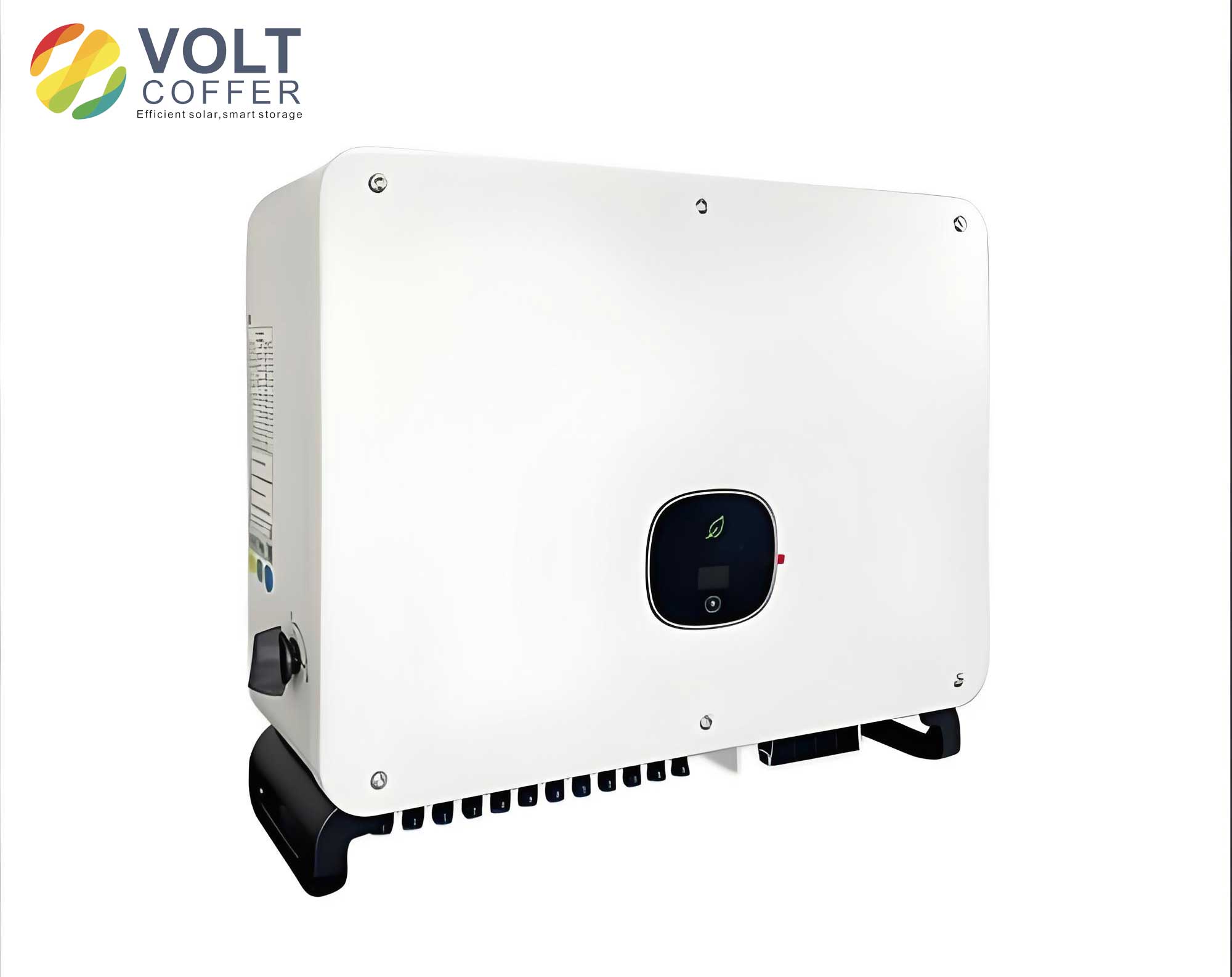
In modern power systems, it is increasingly common for multiple utility interactive inverters to be connected at a common point. This parallel operation introduces complex coupling and interaction among the inverters themselves and with the grid impedance. These interactions can excite harmonic resonances, degrading the overall system’s power quality and threatening its stable operation. Traditional analysis methods, such as the Norton equivalent circuit model combined with the impedance-based stability criterion, provide a foundation. However, these methods can become computationally cumbersome for high-dimensional multi-inverter systems and offer limited insight into how disturbance sources affect the output current of individual inverters.
This article delves into the resonance mechanisms of multi-utility interactive inverter systems under weak grid conditions, explicitly accounting for the influence of background harmonics. A novel triple-decomposition admittance model is proposed to facilitate clearer system analysis. This model, combined with modal analysis, effectively reveals the system’s resonance characteristics. Furthermore, an integrated impedance remodeling strategy is proposed, combining an improved weighted average current control (WACC) with a virtual admittance connected at the point of common coupling (PCC). This strategy aims to mitigate the adverse effects of background harmonics and actively suppress system resonances.
System Modeling and Resonance Analysis Framework
Structure and Control of a Three-Phase Utility Interactive Inverter
A standard three-phase LCL-type utility interactive inverter is considered. The control strategy typically employs a dual-loop control in the stationary (αβ) reference frame. A quasi-proportional resonant (QPR) controller is often used for the current loop to accurately track the sinusoidal reference. To mitigate the impact of grid background harmonics on the output current, a grid voltage feed-forward loop is commonly implemented. Additionally, capacitor current feedback is frequently adopted as an active damping method to suppress the inherent resonance peak of the LCL filter. The controller transfer functions are central to modeling the dynamic behavior of the utility interactive inverter.
The current controller, incorporating the QPR regulator, feed-forward, and active damping, can be represented by the following transfer function relation between the reference current $$i_{ref}(s)$$, the grid voltage $$u_g(s)$$, and the inverter’s output characteristics. The QPR controller is given by:
$$G_{QPR}(s) = K_p + \frac{2K_r\omega_i s}{s^2 + 2\omega_i s + \omega_0^2}$$
where $$K_p$$ is the proportional gain, $$K_r$$ is the resonant coefficient, $$\omega_i$$ is the control bandwidth, and $$\omega_0$$ is the fundamental angular frequency.
Triple-Decomposition Admittance Model for a Single Utility Interactive Inverter
Traditional analysis often uses a Norton equivalent model for the utility interactive inverter, where it is represented as a controlled current source in parallel with an output admittance. While useful, this model conflates the effects of the reference command and the inverter’s own admittance, making it less intuitive for analyzing the influence of excitation sources and for constructing system-wide admittance matrices for modal analysis.
To address this, we propose a triple-decomposition admittance model. The control blocks of the utility interactive inverter are systematically partitioned into three distinct admittances, leading to a two-port equivalent network model. This decomposition is performed by equivalently transforming the control block diagram and identifying key internal nodes.
The resulting admittances are:
- First Decomposition Admittance (Y_r1): Primarily associated with the current controller and the inverter bridge gain. It represents the path from the internal control reference to the filter capacitor voltage node.
- Second Decomposition Admittance (Y_r2′): Represents the combined effect of the capacitor feedback and the grid-side filter inductor. It is connected between the capacitor voltage node and the PCC.
- Third Decomposition Admittance (Y_L2): This is simply the physical admittance of the grid-side inductor of the LCL filter, i.e., $$Y_{L2} = 1/(sL_2)$$.
The mathematical expressions for these admittances are derived from the control system parameters. If we define an intermediate function $$A(s)$$ encompassing the plant and control dynamics:
$$A(s) = s^3L_1L_2C + s^2L_2CH_{i1}K_{PWM} + s(L_1+L_2) + H_{i2}K_{PWM}G_{QPR}(s)$$
Then the first decomposition admittance can be expressed as:
$$Y_{r1}(s) = \frac{A(s)}{K_{PWM}G_{QPR}(s)}$$
The second decomposition admittance $$Y_{r2}'(s)$$ is a function of $$Y_{r1}$$, the capacitor impedance, and the feed-forward transfer function $$G_{ff}(s)$$. The key advantage of this model is that the intermediate node between $$Y_{r2}’$$ and $$Y_{L2}$$ corresponds directly to the capacitor voltage, giving each branch a clear physical meaning and simplifying the construction of the nodal admittance matrix for a multi-inverter system.
Modal Analysis for Multi-Inverter System Resonance
To analyze the resonance characteristics of a system with N utility interactive inverters connected in parallel to a weak grid, we employ modal analysis. Based on the triple-decomposition model, each inverter contributes three admittances to the system network. The PCC and the capacitor voltage node of each inverter are treated as system nodes.
The nodal voltage equation for the entire system is formulated as:
$$\mathbf{Y}_{sys}(s) \mathbf{U}_{node}(s) = \mathbf{I}_{inj}(s)$$
where $$\mathbf{Y}_{sys}(s)$$ is the system nodal admittance matrix, $$\mathbf{U}_{node}(s)$$ is the vector of node voltages, and $$\mathbf{I}_{inj}(s)$$ is the vector of injected currents (from reference sources and grid voltage).
The resonance characteristics are revealed by performing an eigenvalue decomposition on the admittance matrix at a specific frequency $$f$$:
$$\mathbf{Y}_{sys}(j2\pi f) = \mathbf{L} \mathbf{\Lambda} \mathbf{T}$$
Here, $$\mathbf{\Lambda} = diag(\lambda_1, \lambda_2, …, \lambda_n)$$ is the diagonal matrix of eigenvalues. The modal impedance for mode $$k$$ is defined as the reciprocal of the eigenvalue: $$Z_{m,k} = 1/\lambda_k$$. A peak in the modal impedance plot versus frequency indicates a potential resonance point for that particular mode. The mode with the highest peak (lowest eigenvalue magnitude) is considered the critical resonance mode. This method provides a clear, global view of all potential resonant frequencies and their relative severity in the multi-utility interactive inverter system.
Analysis of Resonance Characteristics
Using the established modeling and modal analysis framework, we can investigate how various factors influence the resonance behavior of a system with multiple utility interactive inverters. The base parameters for a typical utility interactive inverter are summarized in Table 1.
| System Parameter | Symbol | Typical Value |
|---|---|---|
| Grid Voltage (RMS, line-to-line) | U_g | 220 V |
| Inverter-side Filter Inductor | L_1 | 1.2 mH |
| Grid-side Filter Inductor | L_2 | 0.3 mH |
| Filter Capacitor | C | 28 µF |
| Grid Inductance (Weak Grid) | L_g | 0.1 – 1.0 mH |
| QPR Proportional Gain | K_p | 3 |
| QPR Resonant Coefficient | K_r | 100 |
| Capacitor Current Feedback Gain | H_{i1} | 3 |
Impact of the Number of Utility Interactive Inverters
When all utility interactive inverters have identical parameters, the modal analysis reveals distinct trends. For a single utility interactive inverter system (N=1), there is typically one dominant resonant mode corresponding to the interaction between the inverter output impedance and the grid impedance.
For systems with two or more utility interactive inverters (N≥2), the coupling between the inverters introduces additional dynamics. The modal analysis consistently shows the emergence of two dominant resonant modes:
- Low-Frequency Resonance Mode: This mode is primarily governed by the collective interaction of all utility interactive inverters with the grid impedance. As the number N of utility interactive inverters increases, the resonant frequency of this mode decreases, and its peak magnitude also tends to diminish.
- High-Frequency Resonance Mode: This mode is mainly excited by the coupling among the utility interactive inverters themselves. Its resonant frequency and peak magnitude remain relatively unchanged as N increases beyond two.
This behavior underscores that adding more utility interactive inverters does not simply scale the problem but qualitatively changes the resonance landscape, introducing a new high-frequency resonant mode.
Impact of Grid Strength (Grid Inductance)
The strength of the grid, quantified by the grid inductance $$L_g$$, is a critical factor. Analyzing a system with two utility interactive inverters while varying $$L_g$$ from a strong grid value (e.g., 0.1 mH) to a weak grid value (e.g., 1.0 mH) yields the following observations:
- The low-frequency resonant mode is highly sensitive to grid strength. As $$L_g$$ increases (weaker grid), the resonant frequency of this mode shifts significantly lower. The modal impedance peak may exhibit a non-monotonic behavior, often increasing initially and then decreasing.
- The high-frequency resonant mode, being predominantly dependent on inverter-to-inverter coupling, shows negligible change in frequency or peak magnitude with varying $$L_g$$. The grid impedance does not participate strongly in this mode.
This analysis confirms that weak grid conditions significantly alter the low-frequency resonance characteristics of a multi-utility interactive inverter system, potentially bringing resonant frequencies closer to the fundamental frequency or lower-order harmonics, which are more problematic for power quality.
Effect of Non-Identical Inverter Parameters
In practical installations, utility interactive inverters may have slight variations in their LCL filter parameters due to manufacturing tolerances or aging. Modal analysis of systems with non-identical parameters (e.g., different filter capacitors) shows that:
- The general resonance structure (low-frequency and high-frequency bands) is preserved.
- Parameter mismatch can lead to a splitting of the high-frequency resonance peak into multiple, closely spaced peaks. Essentially, each significant parameter discrepancy can contribute an additional high-frequency resonant mode.
- The low-frequency resonance mode is less affected by parameter variations among the utility interactive inverters, as it is still dominated by the aggregate interaction with the grid.
While parameter mismatch adds complexity, the fundamental resonance challenges persist, validating the need for a robust suppression strategy applicable to both identical and non-identical systems.
Resonance Mechanism Induced by Grid Voltage Feed-Forward
The grid voltage feed-forward loop, while effective in rejecting background harmonics in stiff grids, introduces a destabilizing positive feedback path in weak grids. This mechanism is crucial for understanding the complete stability picture of a utility interactive inverter.
In the control diagram, the feed-forward of the PCC voltage (which is the grid voltage plus the drop across the grid impedance $$L_g$$) creates an additional signal path. When the grid voltage contains background harmonics $$u_{g,h}$$, the resulting harmonic current $$i_{g,h}$$ flowing through the grid impedance $$sL_g$$ alters the PCC voltage. This altered voltage is fed forward, influencing the inverter’s modulation, which in turn affects the output current. This forms a closed loop: background harmonic voltage -> harmonic current -> PCC voltage -> feed-forward signal -> modulated output.
Using the impedance-based stability criterion, the system stability is assessed by the ratio of the grid impedance to the inverter output impedance: $$Z_g(s) / Z_{inv}(s)$$ or its admittance counterpart. The phase margin at the crossover frequency is a key metric. For a utility interactive inverter with standard feed-forward, as the grid inductance $$L_g$$ increases, the phase margin decreases. In many weak-grid scenarios, this margin can fall below acceptable levels (e.g., below 30°), indicating reduced stability and increased susceptibility to resonance excitation, particularly from background harmonics. This explains why the combination of weak grids and background harmonics is particularly detrimental for utility interactive inverter systems.
Proposed Integrated Impedance Remodeling Strategy
To address the dual challenges of background harmonic amplification and multi-inverter resonance in weak grids, an integrated impedance remodeling strategy is proposed. This strategy consists of two complementary components applied to each utility interactive inverter.
1. Improved Weighted Average Current Control (WACC)
The standard WACC method uses a weighted sum of the capacitor current and the grid-side current for feedback. The weighting factor β is designed to make the closed-loop transfer function from reference to feedback current independent of the grid-side filter parameters at the fundamental frequency. However, when capacitor current feedback (active damping) and grid voltage feed-forward are present, the standard β calculation is insufficient to cancel the influence of grid voltage harmonics.
We propose an improved WACC design that explicitly accounts for the feed-forward path and the active damping loop. The control law is:
$$i_{fb}(s) = \beta \cdot i_c(s) + (1-\beta) \cdot i_g(s)$$
The goal is to choose β such that the transfer function from the grid voltage $$u_g(s)$$ to the feedback current $$i_{fb}(s)$$ is zero, thereby eliminating the positive feedback effect of background harmonics. Solving this condition yields the improved design formulas:
$$\beta = \frac{sL_1}{s(L_1+L_2) + H_{i1}K_{PWM}}$$
$$G_{ff}(s) = \frac{1}{K_{PWM}}$$
This improved WACC ensures that the utility interactive inverter’s current control loop is inherently robust to grid voltage distortions, effectively breaking the harmful positive feedback path in weak grids.
2. PCC-Parallel Virtual Admittance
While the improved WACC handles the harmonic issue, the inherent resonance peaks in the multi-inverter system’s output impedance may still compromise stability margins. To reshape this impedance and add damping, a virtual admittance is connected in parallel at the PCC. This is implemented locally within each utility interactive inverter’s control as an additional feed-forward term based on the measured PCC voltage.
The virtual admittance $$Y_v(s)$$ is designed to be high at the fundamental frequency (to avoid affecting power transfer) and to provide a resistive or damped characteristic at higher frequencies where resonance occurs. A typical implementation uses a band-pass or high-pass filter structure to generate the virtual current reference $$i_{v,ref}$$:
$$i_{v,ref}(s) = Y_v(s) \cdot u_{PCC}(s) = H_{i3} \cdot G_{trap}(s) \cdot u_{PCC}(s)$$
where $$H_{i3}$$ is a gain and $$G_{trap}(s)$$ is a trap filter designed to block the fundamental component. A second-order trap filter tuned at the fundamental frequency $$\omega_0$$ with quality factor Q is effective:
$$G_{trap}(s) = \frac{s^2 + \omega_0^2}{s^2 + (\omega_0 / Q)s + \omega_0^2}$$
This virtual admittance acts as an active damper viewed from the PCC. It effectively lowers the peak of the equivalent output impedance of the cluster of utility interactive inverters at resonant frequencies, thereby increasing the phase margin and stabilizing the system.
Integrated Control Structure and Performance Summary
The final control structure for each utility interactive inverter integrates the improved WACC current regulator and the PCC-parallel virtual admittance generator. The reference current for the current controller becomes the sum of the power reference and the virtual damping reference. The parameters for the virtual admittance ($$H_{i3}$$ and Q) are selected to achieve sufficient damping without compromising dynamic response. A comparison of the effectiveness of different strategies is summarized in Table 2.
| Strategy | Principle | Effect on Background Harmonics | Effect on Resonance Damping | Suitability for Weak Grid |
|---|---|---|---|---|
| Standard Feed-forward | Directly counteracts grid voltage distortion. | Good in strong grids, creates positive feedback in weak grids. | Negligible or negative. | Poor |
| Basic WACC | Adjusts feedback point to stabilize LCL filter. | Partial cancellation. | Good for single-inverter LCL resonance. | Moderate |
| PCC Virtual Impedance (Standalone) | Shapes equivalent output impedance at PCC. | Limited direct effect. | Good for damping interactive resonances. | Good |
| Proposed Integrated Strategy (Improved WACC + Virtual Admittance) | Decouples harmonic feedback and actively damps resonance. | Excellent (cancels harmonic feedback path). | Excellent (actively damps multi-inverter modes). | Excellent |
Modal analysis of a system employing the proposed impedance remodeling strategy shows a dramatic reduction in the peak modal impedances across all resonant frequencies. For instance, in a two-utility interactive inverter system, the resonant peaks can be suppressed by an order of magnitude, confirming the strategy’s effectiveness in ensuring stability and power quality for utility interactive inverter clusters in weak, harmonically distorted grids.
Conclusion
The integration of multiple utility interactive inverters into weak power grids presents significant challenges related to harmonic stability and resonance. The presence of background harmonics exacerbates these issues, particularly due to the positive feedback mechanism introduced by conventional grid voltage feed-forward control in utility interactive inverters.
This article presented a comprehensive analysis framework based on a novel triple-decomposition admittance model for the utility interactive inverter. This model, superior to the traditional Norton equivalent for system-level analysis, facilitates straightforward application of modal analysis to uncover the complex resonance characteristics of multi-inverter systems. The analysis confirms that increasing the number of utility interactive inverters introduces high-frequency coupling resonances, while weak grid conditions strongly influence the low-frequency interactive resonance mode.
To address these challenges, an integrated impedance remodeling strategy was proposed and detailed. The strategy combines an improved Weighted Average Current Control, designed to nullify the effect of grid voltage harmonics, with a PCC-connected virtual admittance, designed to actively damp system-wide resonances. The improved WACC specifically calculates its weighting factor to account for both capacitor-current active damping and voltage feed-forward, completely eliminating the harmful feedback path for background harmonics. The virtual admittance then reshapes the net output impedance of the utility interactive inverter cluster, providing sufficient damping and phase margin for stable operation in weak grids.
This combined approach ensures that systems employing multiple utility interactive inverters can maintain high power quality and robust stability even when connected to weak grids with significant background harmonic distortion, paving the way for more reliable and higher penetration of renewable energy sources.