
In modern power systems, the integration of renewable energy sources has become increasingly prevalent, driven by the need to reduce reliance on non-renewable resources. A key component in this integration is the on-grid inverter, which interfaces distributed generation systems with the main grid. These on-grid inverters are often deployed in remote areas far from load centers, necessitating long-distance transmission lines. To enhance the power transmission capacity of such lines, series compensation is a common solution. However, the interaction between the on-grid inverter and series-compensated power lines can introduce oscillation problems, particularly sub-synchronous resonance (SSR), which threatens the safe operation of the power system. This issue is exacerbated in weak grids and high series compensation level (SCL) grids, where the low inertia and fast control responses of on-grid inverters can lead to complex oscillatory behaviors.
Traditional control strategies for on-grid inverters often rely on phase-locked loops (PLLs) for synchronization. While effective in many scenarios, PLLs can introduce negative resistance effects in low-frequency regions, making the system prone to instability. Moreover, the interaction between PLL dynamics and line impedance can propagate oscillation components, further compromising stability. Therefore, there is a pressing need for control methods that mitigate these issues without relying on PLLs. In this context, impedance-emulating control strategies have emerged as a promising alternative. These strategies mimic the behavior of passive circuits, enabling self-synchronization without PLLs. However, existing impedance-emulating controls are primarily designed for inductive grids and cannot be directly applied to series-compensated systems. To address this gap, I propose an extended impedance-emulating control strategy tailored for series-compensated three-phase on-grid inverters. This approach eliminates the need for PLLs, enhances stability in weak and high-SCL grids, and offers a cost-effective and easily implementable solution.
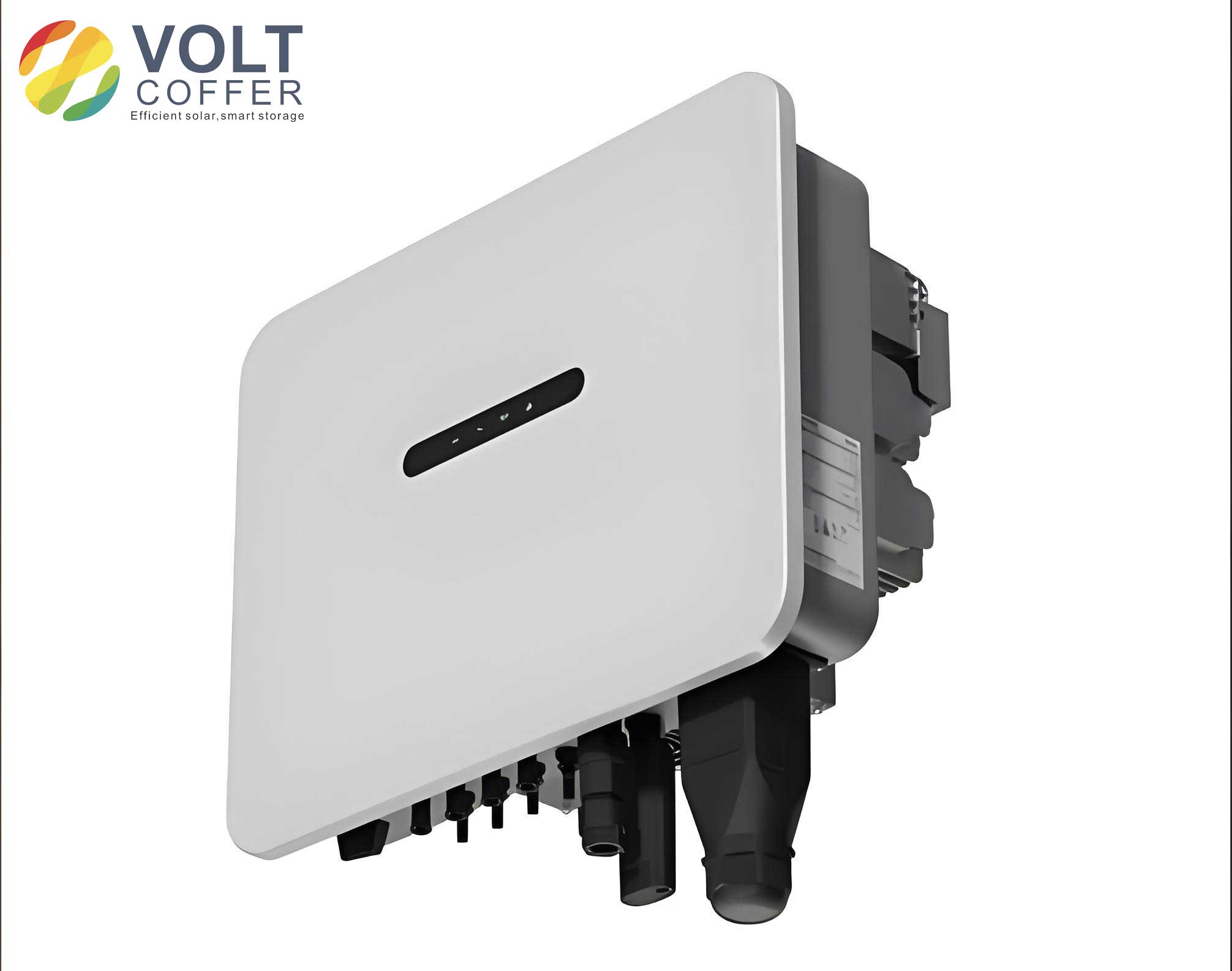
The core idea behind impedance-emulating control is to shape the on-grid inverter’s port characteristics to resemble a specific passive circuit. By doing so, the inverter naturally synchronizes with the grid voltage without external synchronization mechanisms. For a traditional impedance-emulating control, the inverter’s behavior is modeled as an impedance combining negative resistance $R_x$ and negative inductance $L_x$. In the $\alpha\beta$ coordinate system using complex space vectors, the grid voltage to current transfer function for an on-grid inverter connected to a series-compensated grid can be expressed as:
$$G_1(s) = \frac{1}{R_g + s(L_g + L) + \frac{1}{sC_g} + R_x + sL_x}$$
Here, $R_g$, $L_g$, and $C_g$ represent the grid resistance, inductance, and series compensation capacitance, respectively, while $L$ is the inverter-side inductance. The corresponding characteristic polynomial is:
$$(L + L_g + L_x)s^2 + (R_g + R_x)s + \frac{1}{C_g} = 0$$
Even if conditions such as $R_x < -R_g$ and $L_x < -(L + L_g)$ are met, the system may remain unstable due to the positive term $\frac{1}{C_g}$. This highlights the limitation of traditional impedance-emulating control in series-compensated grids. To overcome this, I extend the strategy by incorporating a simulated negative capacitance $C_x$. The modified transfer function becomes:
$$G_1(s) = \frac{1}{R_g + s(L_g + L) + \frac{1}{sC_g} + R_x + sL_x + \frac{1}{sC_x}}$$
With this extension, the characteristic polynomial is updated to:
$$(L + L_g + L_x)s^2 + (R_g + R_x)s + \left(\frac{1}{C_g} + \frac{1}{C_x}\right) = 0$$
By ensuring all coefficients are negative, system stability can be achieved. The implementation of the extended impedance-emulating control involves adding a negative capacitance path in the controller, effectively canceling out the detrimental effects of the series compensation capacitor. This approach allows the on-grid inverter to operate stably across a wider range of grid conditions.
To validate the effectiveness of the proposed control strategy, I conduct a detailed stability analysis using a closed-loop state-space model. The model accounts for practical factors such as control delays, zero-order hold effects, and DC-link voltage control dynamics. The state-space representation is derived in the $dq$ frame to facilitate comparison with traditional methods. The system dynamics are described by the following equations for the main circuit:
$$
\begin{aligned}
\dot{i}_d &= \frac{v_{gd} – i_d R_g – u_{cd} – v_{d1}}{L + L_g} + \omega i_q \\
\dot{i}_q &= \frac{v_{gq} – i_q R_g – u_{cq} – v_{q1}}{L + L_g} – \omega i_d \\
\dot{u}_{cd} &= \frac{i_d}{C_g} + \omega u_{cq} \\
\dot{u}_{cq} &= \frac{i_q}{C_g} – \omega u_{cd} \\
\dot{x}_{dc} &= \frac{2(P – 1.5(v_d i_d + v_q i_q))}{C}
\end{aligned}
$$
Here, $i_d$ and $i_q$ are $dq$-axis grid currents, $v_{gd}$ and $v_{gq}$ are grid voltages, $u_{cd}$ and $u_{cq}$ are capacitor voltages, $v_{d1}$ and $v_{q1}$ are control outputs, $x_{dc} = u_{dc}^2$ is the DC-link voltage squared, $P$ is the power command, and $\omega$ is the grid angular frequency. The controller dynamics for the extended impedance-emulating control are given by:
$$
\begin{aligned}
\dot{x}_d &= -\frac{i_d}{C_x} + \omega x_q \\
\dot{x}_q &= -\frac{i_q}{C_x} – \omega x_d \\
\dot{v}_d &= m_1 v_{gd} + m_2 i_d – m_1 u_{cd} – \frac{v_d}{\tau} + \omega v_q – \frac{x_d}{\tau} + m_3 x_{d1} + m_4 x_{d2} \\
\dot{v}_q &= m_1 v_{gq} + m_2 i_q – m_1 u_{cq} – \frac{v_q}{\tau} – \omega v_d – \frac{x_q}{\tau} + m_3 x_{q1} + m_4 x_{q2} \\
\dot{x}_0 &= k_{iu} (x_{dc}^* – x_{dc}) \\
\dot{x}_{d1} &= x_{d2} + \omega x_{q1} \\
\dot{x}_{q1} &= x_{q2} – \omega x_{d1} \\
\dot{x}_{d2} &= v_d – \frac{4x_{d2}}{T_s} – \frac{4x_{d1}}{T_s^2} + \omega x_{q2} \\
\dot{x}_{q2} &= v_q – \frac{4x_{q2}}{T_s} – \frac{4x_{q1}}{T_s^2} – \omega x_{d2}
\end{aligned}
$$
where $m_1$, $m_2$, $m_3$, and $m_4$ are coefficients defined by controller parameters, $\tau$ is a time constant, $T_s$ is the control period, and $k_{iu}$ is an integral gain. The overall closed-loop system is linearized to obtain a small-signal model $\dot{\tilde{x}} = A \tilde{x}$, where $A$ is the state matrix. Eigenvalue analysis of $A$ provides insights into system stability under varying grid conditions.
I perform eigenvalue analysis to assess the stability boundaries with respect to short-circuit ratio (SCR) and SCL. The system parameters used in the analysis are summarized in the following tables:
| Parameter | Value |
|---|---|
| Grid Voltage $V_g$ | 110 V |
| Grid Angular Frequency $\omega_s$ | 100$\pi$ rad/s |
| Inverter-side Inductance $L$ | 3 mH |
| Grid Inductance $L_g$ | 15 mH |
| Grid Resistance $R_g$ | 0.25 $\Omega$ |
| Series Compensation Capacitance $C_g$ (for SCL=50%) | 1.4 mF |
| DC-link Capacitance $C$ | 2000 $\mu$F |
| Power Command $P$ (for SCR=6.5) | 2357 W |
| Parameter | Value |
|---|---|
| Time Constant $\tau$ | -1/(1200$\pi$) s |
| Control Period $T_s$ | 50 $\mu$s |
| Simulated Inductance $L_x$ | -36 mH |
| Simulated Capacitance $C_x$ | -0.39 mF |
| Feedforward Resistance $R$ | -20 $\Omega$ |
| Voltage Loop Proportional Gain $k_{pu}$ | 0.0009 |
| Voltage Loop Integral Gain $k_{iu}$ | 0.10 |
| DC-link Voltage Reference $u_{dc}^*$ | 350 V |
The root loci of the dominant eigenvalues as SCL increases from 10% to 70% at a fixed SCR of 3.8 show that the system remains stable even at high SCL values. Similarly, when SCR decreases from 10 to 2 at a fixed SCL of 50%, the eigenvalues stay in the left-half plane, indicating stability in weak grids. This demonstrates that the extended impedance-emulating control strategy significantly expands the stable operating region compared to traditional methods. The stability conditions derived from the Routh-Hurwitz criterion are:
$$
\begin{cases}
\tau < 0 \\
C_x > -C_g \\
C_x < C_{\text{max}} \\
L_x < L_{\text{max1}} \\
L_x < L_{\text{max2}}
\end{cases}
$$
where $C_{\text{max}} = -\tau C_g / (\tau + C_g R_g + C_g R_x)$, $L_{\text{max1}} = -(L + L_g + \tau R_g + \tau R_x)$, and $L_{\text{max2}} = L_{\text{max1}} + (L + L_g) / (1 + \tau C_g C_x (R_g + R_x) / (C_g + C_x))$. These conditions guide parameter design to ensure robust performance.
To further validate the proposed strategy, I conduct experimental tests using a controller-hardware-in-the-loop platform. The setup consists of an OPAL-RT 4510 simulator emulating the series-compensated on-grid inverter system, with the control algorithm implemented on a DSP (TMS320F28335) board. The sampling frequency is set to 10 kHz, and data is recorded for analysis. The experimental parameters align with those in Tables 1 and 2. Comparative tests between traditional impedance-emulating control and the extended version are performed under varying SCR and SCL conditions.
When SCL is 40% and SCR switches from 4.5 to 3.8, both control strategies maintain stability. However, at SCL=50% and the same SCR transition, traditional control fails to sustain synchronization, leading to SSR, while the extended control effectively suppresses oscillations. Similarly, at SCL=60% and SCR switching from 5.5 to 4.5, the extended strategy ensures stable operation, whereas traditional control results in sub-synchronous oscillations in grid currents. These findings correlate with the eigenvalue analysis, confirming that the extended impedance-emulating control enhances robustness across a wider SCL range.
Additional experiments demonstrate the performance of the extended control strategy under extreme conditions. For instance, with SCL values of 10%, 50%, and 70%, and an SCR transition from 6.5 to 2, the on-grid inverter remains stable with sinusoidal current waveforms and no divergence. This underscores the effectiveness of the proposed method in both weak and high-SCL grids. The ability to operate without a PLL eliminates a major source of instability, making the on-grid inverter more resilient to grid disturbances.
The extended impedance-emulating control strategy offers several advantages for on-grid inverters in series-compensated systems. First, it eliminates the need for PLLs, reducing complexity and avoiding negative resistance effects. Second, it provides inherent synchronization through passive circuit emulation, enhancing stability in weak grids. Third, the inclusion of simulated negative capacitance counteracts the series compensation capacitor, enabling stable operation at high SCL values. These benefits make the strategy particularly suitable for renewable energy integration, where on-grid inverters must operate reliably under varying grid conditions.
From an implementation perspective, the control structure is straightforward and cost-effective. The controller requires only basic arithmetic operations and can be easily integrated into existing digital signal processors. The parameter design guidelines derived from stability analysis ensure that the on-grid inverter can be tuned for optimal performance. Moreover, the strategy’s scalability allows it to be applied to large-scale systems with multiple on-grid inverters, contributing to grid stability in renewable-rich areas.
In conclusion, the extended impedance-emulating control strategy represents a significant advancement in the control of series-compensated three-phase on-grid inverters. By addressing the limitations of traditional methods, it provides a robust solution for mitigating sub-synchronous oscillations in weak and high-SCL grids. The stability analysis and experimental validation confirm its effectiveness, highlighting its potential for enhancing the security and reliability of modern power systems. As renewable energy penetration continues to grow, such innovative control approaches will play a crucial role in ensuring stable grid integration of distributed generation resources.
Future work could explore the application of this strategy to other types of on-grid inverters, such as those in multi-terminal HVDC systems or microgrids. Additionally, adaptive tuning mechanisms could be developed to automatically adjust controller parameters in response to real-time grid conditions, further improving resilience. The integration of advanced monitoring and communication technologies may also enable coordinated control among multiple on-grid inverters, amplifying the benefits of impedance-emulating strategies. Ultimately, the goal is to create a more flexible and stable power grid that can accommodate the evolving energy landscape.
Throughout this discussion, the importance of the on-grid inverter as a key interface between renewable sources and the grid has been emphasized. The proposed control strategy enhances the performance of the on-grid inverter, ensuring that it can reliably deliver power even in challenging grid environments. By repeatedly focusing on the on-grid inverter’s role, we underscore its centrality in modern power systems. The extended impedance-emulating control not only stabilizes the on-grid inverter but also contributes to overall grid stability, making it a valuable tool for system operators and engineers.
In summary, the extended impedance-emulating control strategy offers a practical and effective means to address oscillation issues in series-compensated grids. Its simplicity, cost-effectiveness, and robustness make it an attractive option for deployment in real-world applications. As the demand for renewable energy grows, innovations like this will be essential for building a sustainable and secure energy future. The on-grid inverter, equipped with advanced control strategies, will continue to be a cornerstone of this transformation.