
In the context of global carbon neutrality goals, photovoltaic (PV) power generation has emerged as a pivotal clean energy source, experiencing exponential growth, particularly in the residential rooftop sector. As a researcher deeply involved in power electronics and grid integration, I have observed that the widespread adoption of household PV systems brings forth critical challenges in power quality, with harmonic pollution standing out as a primary concern. The grid tied inverter, being the core interface between the PV array and the utility grid, plays a dual role: it is essential for efficient energy conversion and is simultaneously a significant source of harmonic distortion due to its high-frequency switching operation. In this comprehensive article, I will systematically explore the intrinsic functions of the residential grid tied inverter, delve into the root causes and profound impacts of harmonics, evaluate contemporary detection methodologies, and analyze advanced mitigation technologies. My aim is to provide a detailed technical reference that underscores the importance of harmonic management for ensuring the stability, efficiency, and safety of modern distributed energy systems.
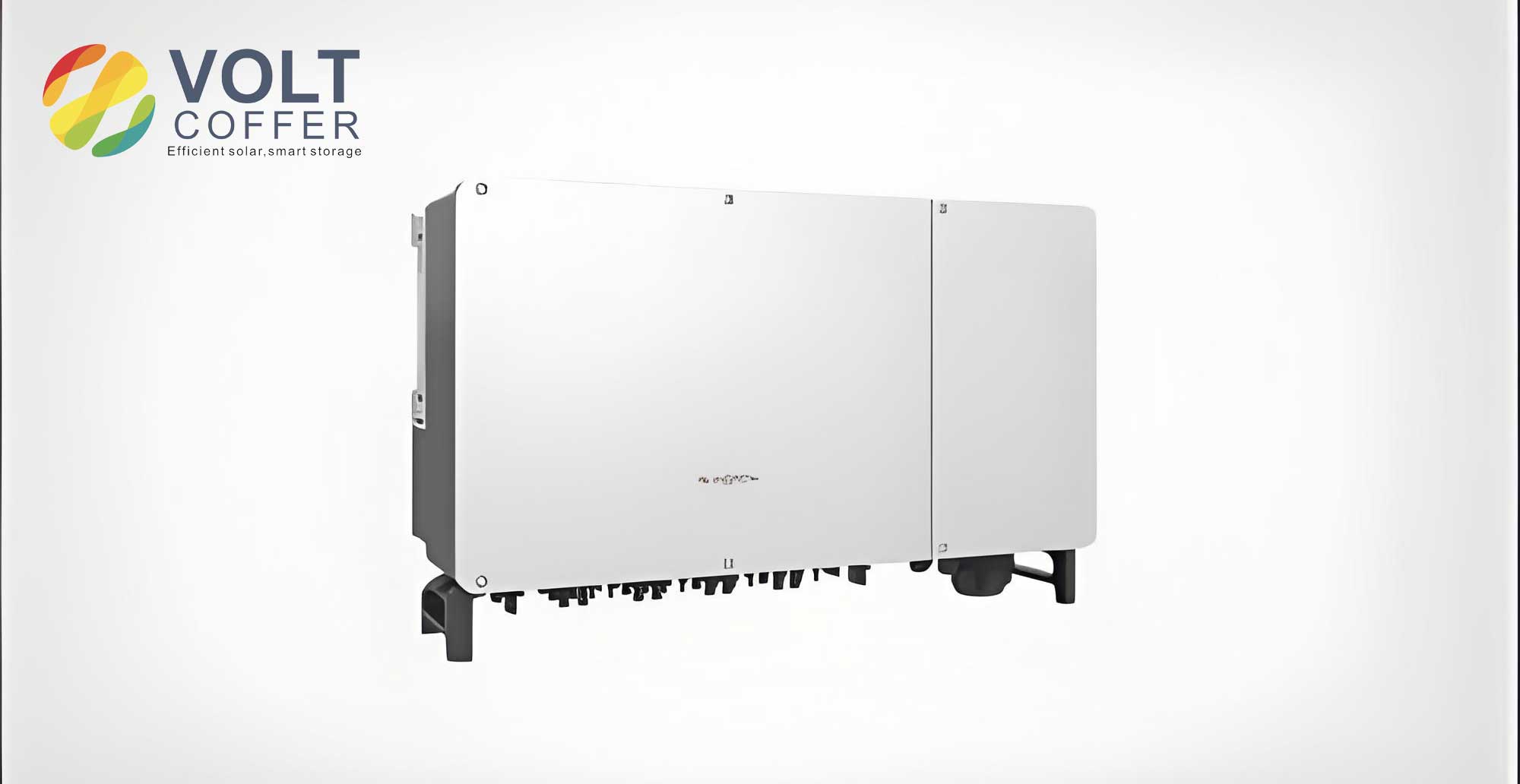
The residential grid tied inverter is fundamentally defined as a power electronic device that converts direct current (DC) output from PV modules into alternating current (AC) that complies with strict grid standards for voltage, frequency, and phase. Unlike off-grid inverters, a grid tied inverter must synchronize its output perfectly with the grid, acting as a controlled current source. Its functionalities extend beyond mere conversion. Firstly, it incorporates Maximum Power Point Tracking (MPPT) algorithms to optimize energy harvest from the PV panels under varying environmental conditions. The core MPPT principle can be summarized by seeking the operating point where the derivative of power with respect to voltage is zero:
$$ \frac{dP}{dV} = 0 $$
where \( P = V \times I \) is the output power of the PV array. Secondly, it performs critical grid-interactive functions like anti-islanding protection, reactive power support, and real-time communication with energy management systems. The evolution of the grid tied inverter has transformed it from a simple converter into an intelligent grid node, making its performance parameters—especially those related to harmonic emission—crucial for system-level power quality.
The generation of harmonics in a grid tied inverter is inherently linked to its switching nature. Modern inverters predominantly use Pulse Width Modulation (PWM) techniques, where semiconductor switches (like IGBTs or MOSFETs) turn on and off at high frequencies to synthesize a sinusoidal current. This process introduces high-frequency components around the switching frequency and its multiples. The ideal output current \( i_{inv}(t) \) of a single-phase inverter can be modeled as a fundamental sinusoidal component plus harmonics:
$$ i_{inv}(t) = I_1 \sin(\omega t + \phi_1) + \sum_{h=2}^{\infty} I_h \sin(h\omega t + \phi_h) $$
where \( h \) is the harmonic order, \( I_h \) is the amplitude, and \( \phi_h \) is the phase. Non-idealities such as dead-time, DC-link voltage ripple, and nonlinearities in the control loop further distort this waveform. Moreover, background voltage distortion from the grid itself can cause the inverter’s current control loop to generate compensating harmonics, leading to a complex interaction often termed “harmonic amplification.” The impact of these injected harmonics is multifaceted and severe. They cause voltage distortion, leading to increased RMS currents and subsequent thermal stress on transformers, cables, and other connected equipment. The additional power losses due to harmonics can be significant, reducing overall system efficiency. Harmonic resonance, particularly in networks with capacitive elements, can dangerously amplify specific harmonic currents, potentially causing protective device malfunctions and equipment failure. For sensitive residential loads like computers and medical devices, voltage distortion can lead to operational errors and premature wear.
Accurate harmonic detection is the prerequisite for effective mitigation. I will analyze three prominent categories of methods. The first, based on Fourier Transform, is a cornerstone of harmonic analysis. The Discrete Fourier Transform (DFT) and its efficient implementation, the Fast Fourier Transform (FFT), decompose a sampled signal into its frequency constituents:
$$ X[k] = \sum_{n=0}^{N-1} x[n] \cdot e^{-j 2\pi k n / N} $$
where \( x[n] \) is the discrete-time current or voltage signal, and \( X[k] \) represents the complex spectrum. While powerful for stationary signals, its limitations in time-frequency resolution and sensitivity to non-periodic components make it less ideal for dynamic conditions common in grid tied inverter operation.
| Method | Core Principle | Advantages | Disadvantages | Suitability for Dynamic Inverter Output |
|---|---|---|---|---|
| Fourier Transform (FFT) | Frequency-domain decomposition of periodic signals. | Clear harmonic spectrum; well-established. | Poor time resolution; assumes signal stationarity. | Low to Medium |
| Instantaneous Power Theory (p-q Theory) | Real-time calculation of instantaneous active and reactive power in α-β coordinates. | Excellent dynamic response; suitable for unbalanced conditions. | Sensitive to voltage measurement errors and grid harmonics. | High |
| Adaptive Filtering (e.g., LMS Algorithm) | Iteratively adjusts filter weights to minimize error and extract harmonics. | Can track time-varying harmonics; good robustness. | Convergence speed and stability depend on step-size parameter. | High |
| Artificial Intelligence (e.g., Neural Networks) | Pattern recognition and nonlinear mapping learned from historical data. | Can handle complex, non-stationary patterns; potential for high accuracy. | High computational cost; requires extensive training data. | Very High (with sufficient resources) |
The second category, Instantaneous Power Theory, offers superior real-time performance. For a three-phase system, the Clarke transformation converts grid voltages \( (v_a, v_b, v_c) \) and inverter output currents \( (i_a, i_b, i_c) \) into the α-β stationary frame:
$$
\begin{bmatrix}
v_{\alpha} \\ v_{\beta}
\end{bmatrix} = \sqrt{\frac{2}{3}}
\begin{bmatrix}
1 & -\frac{1}{2} & -\frac{1}{2} \\
0 & \frac{\sqrt{3}}{2} & -\frac{\sqrt{3}}{2}
\end{bmatrix}
\begin{bmatrix}
v_a \\ v_b \\ v_c
\end{bmatrix}
$$
A similar transformation is applied to currents. The instantaneous real power \( p \) and imaginary power \( q \) are then calculated:
$$ p = v_{\alpha} i_{\alpha} + v_{\beta} i_{\beta}, \quad q = v_{\alpha} i_{\beta} – v_{\beta} i_{\alpha} $$
The alternating components of \( p \) and \( q \) (\( \tilde{p} \) and \( \tilde{q} \)) correspond to harmonic currents, which can be extracted and used for compensation. This method is highly effective for the fast control loops needed in a grid tied inverter. The third category leverages adaptive filtering and AI. The Least Mean Squares (LMS) adaptive filter, for instance, updates its weight vector \( \mathbf{w}(n) \) to minimize the error \( e(n) \) between a reference signal and the primary input containing harmonics:
$$ \mathbf{w}(n+1) = \mathbf{w}(n) + \mu \cdot e(n) \cdot \mathbf{x}(n) $$
where \( \mu \) is the step size. AI techniques, such as deep neural networks, can model the highly nonlinear relationship between operating conditions (e.g., solar irradiance, grid voltage) and harmonic emission profiles of a grid tied inverter, enabling predictive detection.
Once harmonics are detected, effective mitigation strategies must be deployed. I will discuss three primary technological approaches. Active Power Filters (APFs) represent a dynamic and powerful solution. An APF, often connected in parallel with the grid tied inverter load, injects a compensation current \( i_c(t) \) that is equal in magnitude but opposite in phase to the detected harmonic current \( i_h(t) \):
$$ i_c(t) = – i_h(t) $$
The core of an APF is a voltage-source inverter controlled by high-bandwidth controllers based on the detection methods previously described. Its compensation current \( i_c \) for a typical harmonic spectrum can be expressed as:
$$ i_c(t) = \sum_{h=2}^{H} I_{c,h} \sin(h\omega t + \theta_{c,h}) $$
where \( I_{c,h} \) and \( \theta_{c,h} \) are the amplitude and phase of the compensation for the \( h \)-th harmonic. APFs offer broad-band compensation and excellent adaptability to changing harmonic conditions, making them ideal companions for modern grid tied inverter systems, though at a higher cost.
Passive Filters (PFs) provide a cost-effective alternative for targeting specific, dominant harmonics. A single-tuned passive filter, consisting of an inductor \( L \) and capacitor \( C \) in series, presents a low-impedance path at its resonant frequency \( f_r \):
$$ f_r = \frac{1}{2\pi\sqrt{LC}} $$
By tuning \( f_r \) to the frequency of a problematic harmonic (e.g., the 5th at 250 Hz in a 50 Hz system), that harmonic current is shunted away from the grid. The impedance of the filter is given by:
$$ Z_{PF}(j\omega) = j\omega L + \frac{1}{j\omega C} $$
While simple and reliable, PFs can interact adversely with grid impedance, potentially causing resonance at other frequencies. Their performance is also fixed at design time, lacking the adaptability of active solutions.
| Technology | Typical Configuration | Key Advantages | Key Limitations | Estimated Cost Impact | Integration Complexity with Grid-Tied Inverter |
|---|---|---|---|---|---|
| Active Power Filter (APF) | Stand-alone unit or integrated module in parallel. | Dynamic compensation, broad frequency range, adaptable to changing harmonics. | Higher cost, increased control complexity, requires fast switching devices. | High | Medium to High (requires coordinated control) |
| Passive Filter (PF) | Series LC circuits connected at the Point of Common Coupling (PCC). | Low cost, high efficiency, simple construction and maintenance. | Fixed compensation, risk of resonance with grid, bulky size for low frequencies. | Low | Low (acts as a shunt path) |
| Multilevel Inverter Topology | Inherent design of the main power conversion stage (e.g., 3-Level NPC). | Reduces harmonic generation at source, improves output waveform quality, higher efficiency. | Increased component count, more complex modulation and control strategies. | Medium | Inherent (replaces standard 2-level inverter) |
| Hybrid Filter (APF+PF) | APF handles higher-order harmonics, PF handles dominant lower-order harmonics. | Cost-performance optimization, reduces rating of APF, improves overall efficiency. | Design complexity to avoid interaction, requires careful system modeling. | Medium | High (needs system-level design) |
The third approach involves modifying the inverter topology itself. Multilevel inverters, such as the three-level Neutral-Point Clamped (NPC) topology, significantly improve the output waveform quality of the grid tied inverter. Compared to a standard two-level inverter which generates an output voltage swinging between \( +V_{dc}/2 \) and \( -V_{dc}/2 \), a three-level NPC inverter can output three voltage levels: \( +V_{dc}/2 \), \( 0 \), and \( -V_{dc}/2 \). This results in a stepped voltage waveform that much closer approximates a sine wave, thereby reducing the magnitude of lower-order harmonics. The Fourier series for the phase voltage \( v_{an} \) of a three-level inverter with a specific modulation index \( m_a \) shows a significant reduction in Total Harmonic Distortion (THD). The line-to-line voltage THD can be approximated for a multilevel inverter as being inversely proportional to the number of levels \( L \):
$$ \text{THD}_{V_{LL}} \propto \frac{1}{L} $$
This inherent harmonic suppression reduces the burden on output filters and represents a paradigm where the grid tied inverter is designed from the ground up to be a “clean” generator. Advanced modulation techniques like Selective Harmonic Elimination (SHE) PWM can be mathematically formulated to eliminate specific low-order harmonics. For a quarter-wave symmetric waveform with \( N \) switching angles per quarter cycle (\( \alpha_1, \alpha_2, …, \alpha_N \)), the condition to eliminate the 3rd, 5th, …, up to the \( (2N-1) \)-th harmonic is given by solving the nonlinear equations:
$$ \sum_{k=1}^{N} (-1)^{k-1} \cos(n \alpha_k) = 0 \quad \text{for } n = 3, 5, …, 2N-1 $$
where the fundamental component is controlled by:
$$ \sum_{k=1}^{N} (-1)^{k-1} \cos(\alpha_k) = \frac{m_a \pi}{4} $$
Integrating such modulation into the control of a multilevel grid tied inverter offers a powerful, source-side harmonic mitigation strategy.
Looking forward, the convergence of wide-bandgap semiconductors (like SiC and GaN), advanced digital signal processors, and machine learning is poised to revolutionize harmonic management in grid tied inverter systems. Future inverters will likely embed intelligent, self-adapting harmonic compensation algorithms that predict distortion based on real-time grid impedance measurements and load forecasts. The role of the grid tied inverter will evolve from a mere power converter to an active grid supporter, providing not just real power but also comprehensive power quality services. In conclusion, as I have detailed, addressing harmonic pollution from residential grid tied inverter installations requires a holistic understanding spanning from fundamental causes to sophisticated detection and mitigation tools. A synergistic approach combining optimized inverter topologies, intelligent control algorithms, and strategic use of filtering technologies—both active and passive—holds the key to unlocking the full potential of distributed PV generation while safeguarding the integrity and efficiency of the electrical grid. The continuous innovation in this field is not merely a technical pursuit but a necessary step towards a sustainable and resilient energy future.