
The increasing integration of renewable energy sources into the power grid has made the grid connected inverter a critical interface technology. Among various filter topologies, the LCL-type filter is widely adopted for grid connected inverters due to its superior high-frequency harmonic attenuation capabilities with smaller passive components. However, the LCL filter introduces a third-order resonant dynamic, posing significant challenges for system stability and precise control of the injected grid current. While active damping methods, particularly capacitor-current-feedback, are effective in suppressing this resonance, the performance can be severely degraded by parameter uncertainties, unmodeled dynamics, sampling delays, and grid impedance variations. These factors collectively act as disturbances, leading to increased grid current total harmonic distortion (THD) and potentially threatening system stability.
To address these challenges, this article explores a composite control strategy combining a feedback controller with an active disturbance rejection core. The focus is on the Uncertainty and Disturbance Estimator (UDE) based strategy, specifically the Separated UDE (SUDE) structure. The core idea of SUDE is to lump all internal uncertainties and external disturbances into a total disturbance term, estimate it in real-time using a carefully designed filter, and then cancel it out within the control law. This process forces the actual complex plant to behave like a predefined, well-understood “nominal model.” Traditionally, for simplicity in design and stability analysis, a first-order nominal model (e.g., an L-filter equivalent) is often chosen for a third-order LCL system. This work investigates the impact of the nominal model selection on robustness. By designing the SUDE’s nominal model as a third-order system that more closely matches the actual grid connected inverter plant with active damping, significant improvements in disturbance rejection, stability margin, and grid current quality are demonstrated compared to the conventional first-order approach.
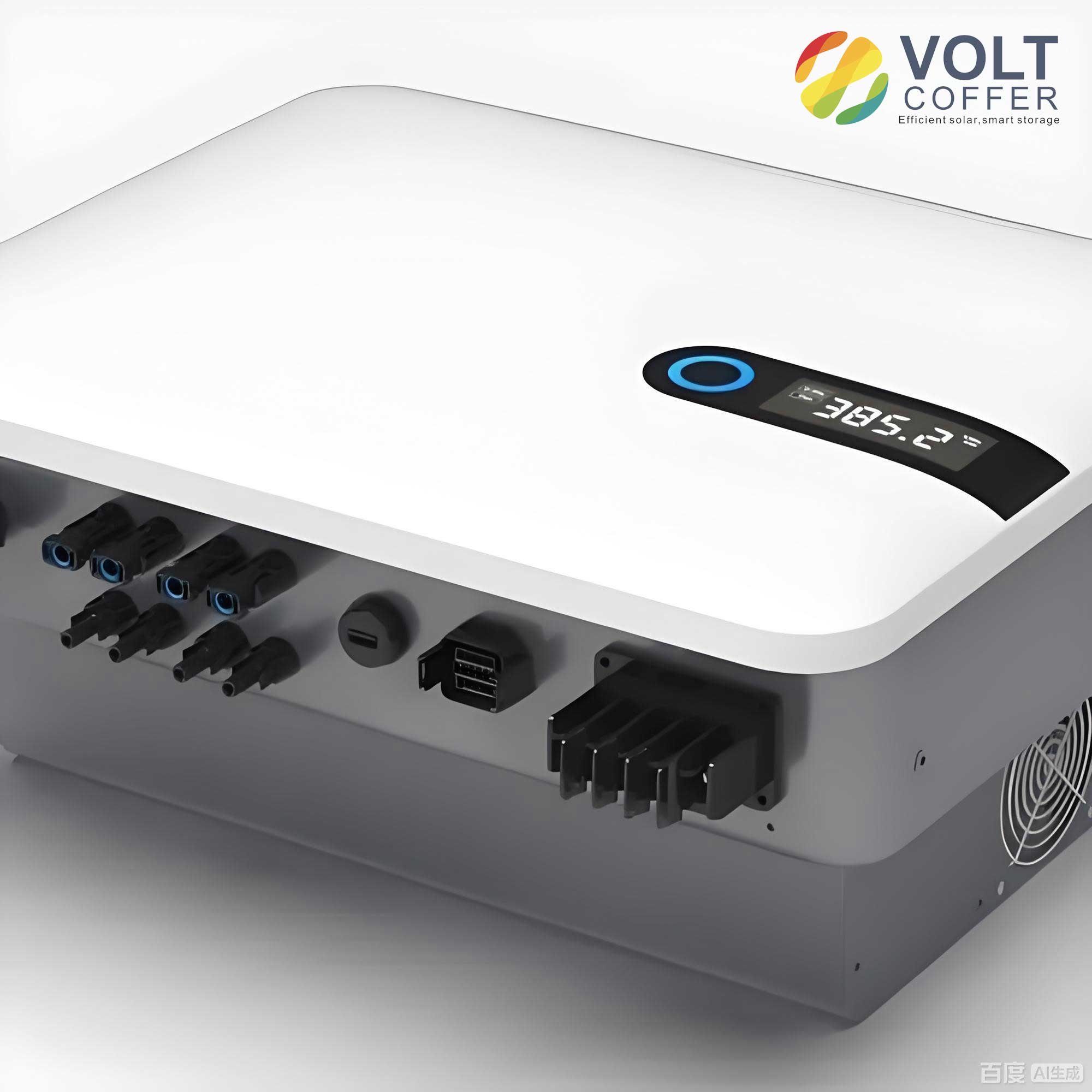
1. Modeling of the Single-Phase LCL Grid-Connected Inverter
The topology of a single-phase LCL-type grid connected inverter is shown in the figure above. The system parameters are summarized in Table 1. The inverter bridge produces a pulsed voltage \(u_{inv}\), which is filtered by the LCL filter (\(L_1\), \(C\), \(L_2\)) before injecting a sinusoidal current \(i_2\) into the grid at the point of common coupling (PCC). The grid voltage is denoted as \(u_g\), and \(L_g\) represents the grid-side inductance.
| Parameter | Symbol | Value |
|---|---|---|
| DC-Link Voltage | \(U_{dc}\) | 380 V |
| Inverter-side Inductor | \(L_1\) | 3 mH |
| Filter Capacitor | \(C\) | 6 µF |
| Grid-side Inductor | \(L_2\) | 2 mH |
| Fundamental Frequency | \(f_0\) | 50 Hz |
| Switching Frequency | \(f_{sw}\) | 10 kHz |
| Sampling Time | \(T_s\) | 50 µs |
| PCC Voltage (RMS) | \(U_{PCC}\) | 220 V |
Capacitor-current-feedback active damping is employed to stabilize the resonant peak. The control block diagram for this approach is shown below, where \(H_i\) is the active damping gain, \(G_i(s)\) is the current controller, and \(K_{PWM}(s)\) represents the PWM and computational delay. A total delay of \(1.5T_s\) is typical, modeled as \(K_{PWM}(s) = e^{-1.5T_s s}\).
From the block diagram, the transfer function from the controller output \(u_{in}\) to the grid current \(i_2\) is derived as:
$$
P(s) = \frac{i_2(s)}{u_{in}(s)} = \frac{K_{PWM}(s)}{s^3 L_1 L_2 C + s^2 H_i L_2 C K_{PWM}(s) + s(L_1 + L_2)}
$$
With the parameters from Table 1 and \(H_i=40\), the Bode plot demonstrates effective resonance damping. The third-order Padé approximation is used for the delay term \(e^{-1.5T_s s}\) in analysis.
2. Composite PR+SUDE Current Control Strategy
The proposed control strategy features a two-loop structure: an inner SUDE-based disturbance rejection loop and an outer Proportional-Resonant (PR) feedback loop. The SUDE loop’s objective is to make the actual plant behave like a chosen nominal model, while the PR controller ensures accurate tracking of the sinusoidal reference current.
2.1. Theoretical Foundation of SUDE Control
Consider a general linear time-invariant system with uncertainties and disturbances:
$$
\dot{\mathbf{x}}(t) = (\mathbf{A} + \Delta\mathbf{A})\mathbf{x}(t) + (\mathbf{B} + \Delta\mathbf{B})\mathbf{u}(t) + \mathbf{d}(t)
$$
This can be rewritten in a compact form:
$$
\dot{\mathbf{x}}(t) = \mathbf{A}\mathbf{x}(t) + \mathbf{B}[\mathbf{u}(t) + \mathbf{u}_d(t)]
$$
where \(\mathbf{u}_d(t)\) is the lumped total disturbance, defined as:
$$
\mathbf{u}_d(t) = \mathbf{B}^+[\Delta\mathbf{A}\mathbf{x}(t) + \Delta\mathbf{B}\mathbf{u}(t) + \mathbf{d}(t)]
$$
Here, \(\mathbf{B}^+\) is the pseudo-inverse of \(\mathbf{B}\). The SUDE control law is formulated as \(\mathbf{u}(t) = \mathbf{u}_t(t) – \mathbf{u}_{de}(t)\), where \(\mathbf{u}_t(t)\) is the output of the outer loop controller acting on the nominal model, and \(\mathbf{u}_{de}(t)\) is the estimate of \(\mathbf{u}_d(t)\). Substituting yields:
$$
\dot{\mathbf{x}}(t) = \mathbf{A}\mathbf{x}(t) + \mathbf{B}[\mathbf{u}_t(t) – \mathbf{u}_{de}(t) + \mathbf{u}_d(t)]
$$
Perfect disturbance rejection (\(\mathbf{u}_{de}(t) \approx \mathbf{u}_d(t)\)) would make the system behave as \(\dot{\mathbf{x}}(t) = \mathbf{A}\mathbf{x}(t) + \mathbf{B}\mathbf{u}_t(t)\), i.e., the nominal model. The estimate \(\mathbf{u}_{de}(t)\) is obtained via filtering:
$$
\mathbf{u}_{de}(t) = [\mathbf{u}_d(t)] * g_f(t) = \mathbf{B}^+[\dot{\mathbf{x}}(t) – \mathbf{A}\mathbf{x}(t) – \mathbf{u}_t(t) + \mathbf{u}_{de}(t)] * g_f(t)
$$
where \(g_f(t)\) is the impulse response of a strictly proper filter \(G_f(s)\) and \(*\) denotes convolution. Solving for \(\mathbf{u}_{de}(s)\) in the frequency domain gives the implementable form:
$$
\mathbf{u}_{de}(s) = \frac{G_f(s)}{1 – G_f(s)} [\mathbf{B}^+ (s\mathbf{I} – \mathbf{A}) \mathbf{x}(s) – \mathbf{u}_t(s)]
$$
The term \(\mathbf{B}^+ (s\mathbf{I} – \mathbf{A}) \mathbf{x}(s)\) is essentially the nominal model’s inverse applied to the output. Therefore, the final SUDE structure estimates the disturbance by comparing the actual plant’s input-output relationship with that of the nominal model, filtered through \(G_f(s)\). The effectiveness of disturbance rejection hinges on the term \(1 – G_f(s)\).
2.2. Design of Nominal Models for the Grid Connected Inverter
The choice of the nominal model \(P_0(s)\) within the SUDE framework is crucial. This work investigates two distinct designs.
2.2.1. First-Order Nominal Model (Conventional Approach)
This model simplifies the LCL filter to an equivalent L-filter, ignoring the capacitor and its associated dynamics. Its transfer function and state-space representation are:
$$
P_{0-1}(s) = \frac{1}{s(L_1 + L_2)}
$$
$$
L_\Sigma \frac{di_2(t)}{dt} = u_{in}(t) – u_{PCC}(t), \quad \text{where } L_\Sigma = L_1 + L_2
$$
Identifying \(\mathbf{A}=0\), \(\mathbf{B}=1/L_\Sigma\), and \(\mathbf{x}=i_2\), the SUDE control law for this model becomes:
$$
u_{de}(s) = \frac{G_f(s)}{1 – G_f(s)} [P_{0-1}^{-1}(s) i_2(s) – u_t(s)] = \frac{G_f(s)}{1 – G_f(s)} [s L_\Sigma i_2(s) – u_t(s)]
$$
2.2.2. Third-Order Nominal Model (Proposed Approach)
This model explicitly includes the actively damped LCL dynamics, making it a much closer representation of the actual grid connected inverter plant. Its transfer function is:
$$
P_{0-3}(s) = \frac{1}{s^3 L_1 L_2 C + s^2 H_i L_2 C + s(L_1 + L_2)}
$$
A state-space representation can be defined with \(\mathbf{x} = [i_2, \dot{i}_2, \ddot{i}_2]^T\). The matrices \(\mathbf{A}\) and \(\mathbf{B}\) are derived from the differential equation corresponding to \(P_{0-3}(s)\). The key term for the SUDE law becomes:
$$
\mathbf{B}^+ (s\mathbf{I} – \mathbf{A}) \mathbf{x}(s) = [s^3 L_1 L_2 C + s^2 H_i L_2 C + s(L_1 + L_2)] i_2(s) = P_{0-3}^{-1}(s) i_2(s)
$$
Thus, the SUDE control law is:
$$
u_{de}(s) = \frac{G_f(s)}{1 – G_f(s)} [P_{0-3}^{-1}(s) i_2(s) – u_t(s)]
$$
The structure is identical to the first-order case, but the inverse nominal model \(P_0^{-1}(s)\) is now a third-order differentiator rather than a first-order one. This allows the SUDE to target and cancel disturbances that are specific to the LCL resonant dynamics.
| Feature | First-Order Nominal Model (P_{0-1}) | Third-Order Nominal Model (P_{0-3}) |
|---|---|---|
| Model Fidelity | Low (Ignores C & resonance) | High (Includes C & active damping) |
| Lumped Disturbance u_d(t) | Large (includes modeling error of resonant dynamics) | Smaller (primarily unmodeled delays, nonlinearities, grid distortion) |
| SUDE Inverse Term | \(s L_\Sigma\) | \(s^3 L_1 L_2 C + s^2 H_i L_2 C + s(L_1+L_2)\) |
| Design Complexity | Simple | Higher |
| Expected Robustness | Limited | Superior |
2.3. Design of the UDE Filter \(G_f(s)\)
The filter \(G_f(s)\) must be strictly proper and low-pass to make \(u_{de}(t)\) implementable. Its design directly governs the disturbance rejection bandwidth. From the derived system equation \(\dot{\mathbf{x}}(t) = \mathbf{A}\mathbf{x}(t) + \mathbf{B}[\mathbf{u}_t(t) + (1-G_f(t))*\mathbf{u}_d(t)]\), it is clear that the disturbance is attenuated by \([1-G_f(j\omega)]\). For perfect rejection at a frequency \(\omega\), we need \(G_f(j\omega) \approx 1\).
For grid connected inverters, disturbances often contain periodic harmonics at multiples of the fundamental frequency. A standard low-pass filter may not be optimal. A time-delay based low-pass filter provides notches at specific harmonic frequencies, offering superior periodic disturbance rejection. A third-order filter with time delay is chosen:
$$
G_f(s) = G_{f0}(s) e^{-T_p s} = \frac{(2\pi f_c)^3}{s^3 + 4\pi f_c s^2 + 2(2\pi f_c)^2 s + (2\pi f_c)^3} e^{-T_p s}
$$
where \(f_c\) is the filter cutoff frequency (bandwidth) and \(T_p = 1/f_0 = 0.02s\) is the fundamental period. The magnitude of \([1-G_f(j\omega)]\) shows deep notches at 50 Hz and its harmonics, providing excellent attenuation for grid-related disturbances when \(f_c\) is chosen appropriately (e.g., 800-1200 Hz).
3. Stability Analysis Based on the Small-Gain Theorem
The stability of the SUDE-controlled system can be analyzed using the small-gain theorem. The actual plant is \(P(s) = P_0(s) + \Delta P(s)\), where \(\Delta P(s)\) represents the unmodeled dynamics (which is smaller when \(P_0(s)=P_{0-3}(s)\) compared to \(P_0(s)=P_{0-1}(s)\)). The SUDE controller, when combined with the outer PR controller \(G_c(s)\), creates an inner loop. The equivalent block diagram can be rearranged to isolate the uncertainty \(\Delta P(s)\) within a feedback loop.
The stability condition according to the small-gain theorem is:
$$
\| \Delta P(s) \cdot T(s) \|_{\infty} < 1
$$
where \(T(s)\) is the complementary sensitivity function of the nominal closed-loop system (with plant \(P_0(s)\) and controller). A key component of \(T(s)\) involves the term:
$$
M(s) = \frac{G_f(s)}{1 – G_f(s)} P_0^{-1}(s)
$$
For stability, the product of the uncertainty norm \(\|\Delta P(j\omega)\|\) and the nominal system’s gain \(\|T(j\omega)\|\) must be less than 1 for all frequencies. Since \(\Delta P_{0-3}(s) \ll \Delta P_{0-1}(s)\), the system using the third-order nominal model inherently satisfies the small-gain condition over a wider range of frequencies and parameter variations. Specifically, it can tolerate larger variations in grid inductance \(L_g\) and allows for a higher UDE filter bandwidth \(f_c\) without violating stability, as will be shown in simulations.
| Condition | First-Order Nominal Model (P_{0-1}) | Third-Order Nominal Model (P_{0-3}) |
|---|---|---|
| Max UDE Bandwidth (f_c) | Lower (e.g., ~800 Hz) | Higher (e.g., >1200 Hz) |
| Robustness to L_g increase | Low (Stable for small L_g) | High (Stable for larger L_g) |
| Reason | Large \(\Delta P\) requires conservative \(T(s)\) gain. | Small \(\Delta P\) allows more aggressive \(T(s)\) gain. |
4. Simulation Results and Performance Evaluation
The system was simulated with the parameters from Table 1. The PR controller parameters were set to \(K_p = 30\), \(K_r = 800\). The active damping gain \(H_i = 40\). Performance was evaluated for both nominal model designs under various conditions.
4.1. Grid Current Quality Under Nominal Conditions
With UDE filter bandwidth \(f_c = 800\) Hz, the grid connected inverter performance was compared.
| Metric | First-Order Nominal Model | Third-Order Nominal Model |
|---|---|---|
| Grid Current THD | 2.83% | 2.31% |
| Reference Tracking Error (RMS) | 0.21 A | 0.17 A |
| Current Waveform Distortion | Visible higher harmonic content | Cleaner sinusoidal waveform |
The third-order model demonstrates superior performance, yielding a lower THD and better tracking accuracy, confirming that a more accurate nominal model reduces the burden on the disturbance estimator.
4.2. Impact of UDE Filter Bandwidth (f_c)
Increasing \(f_c\) improves the disturbance rejection bandwidth but may risk instability if the nominal model is inaccurate. With \(f_c = 1200\) Hz, the system with the first-order nominal model became unstable, exhibiting diverging grid current. In contrast, the system with the third-order nominal model remained stable and showed further improved performance: THD reduced to 2.13% and tracking error (RMS) to 0.14 A. This validates the stability analysis, showing the third-order design permits a more aggressive and higher-performance UDE filter.
4.3. Robustness Against Parameter Uncertainties
The robustness of the grid connected inverter control was tested by varying LCL filter parameters \(\pm 20\%\) from their nominal values. The resulting grid current THD is summarized below.
| Parameter / % of Nominal | 80% | 90% | 100% | 110% | 120% |
|---|---|---|---|---|---|
| \(L_1\) (1st Order) | 2.84 | 2.86 | 2.83 | 2.77 | 2.73 |
| \(L_1\) (3rd Order) | 2.19 | 2.37 | 2.31 | 2.37 | 2.39 |
| \(L_2\) (1st Order) | 2.65 | 2.79 | 2.83 | 3.18 | 3.10 |
| \(L_2\) (3rd Order) | 2.30 | 2.29 | 2.31 | 2.52 | 2.43 |
| \(C\) (1st Order) | 2.53 | 2.65 | 2.83 | 2.97 | 3.33 |
| \(C\) (3rd Order) | 2.18 | 2.29 | 2.31 | 2.40 | 2.50 |
The controller based on the third-order nominal model consistently maintains a lower THD across all parameter variations, demonstrating significantly enhanced robustness for the grid connected inverter.
4.4. Performance in Weak Grid Scenarios
Weak grid conditions, characterized by increasing grid inductance \(L_g\), were simulated by effectively increasing \(L_2\). The impact on grid current THD is plotted below, confirming the theoretical stability advantage. The system with the first-order model showed a rapid increase in THD and became unstable for \(L_g > 2\) mH. The system with the third-order model maintained stable operation with a slowly increasing but consistently lower THD, demonstrating its suitability for weak grid applications.
| Grid Inductance \(L_g\) (mH) | 0.0 | 0.5 | 1.0 | 1.5 | 2.0 |
|---|---|---|---|---|---|
| THD – 1st Order Model | 2.83% | 3.05% | 3.40% | 3.85% | Unstable |
| THD – 3rd Order Model | 2.31% | 2.32% | 2.35% | 2.40% | 2.48% |
5. Conclusion
This article has presented a comprehensive analysis of a robust current control strategy for LCL-type grid connected inverters, focusing on the critical role of the nominal model within the UDE framework. The proposed composite PR+SUDE controller effectively addresses system uncertainties and disturbances. The core finding is that moving beyond the conventional first-order nominal model to a carefully designed third-order nominal model—which accurately reflects the actively damped LCL dynamics—brings substantial benefits. Theoretical analysis based on the small-gain theorem explains why this approach offers a larger stability margin. Simulation results conclusively demonstrate that the third-order nominal model design leads to superior performance: lower grid current THD under nominal conditions, enhanced robustness against filter parameter variations, greater tolerance for higher UDE filter bandwidths, and stable, high-quality operation in weak grid scenarios. Therefore, for high-performance and reliable grid connected inverters, investing in a more accurate nominal model for the UDE-based disturbance rejection loop is a highly effective strategy to ensure power quality and system stability in the face of real-world uncertainties.