
As a researcher focused on renewable energy applications in agriculture, I have observed the growing potential for integrating solar panels into farming systems. In this article, I propose a novel approach to combine distributed solar panels with citrus cultivation, leveraging spectral conversion technology to optimize both energy generation and crop yield. The design centers on using specialized light-converting films alongside solar panels to create a synergistic environment that maximizes solar resource utilization. This method addresses the dual challenges of excess sunlight in citrus-growing regions and the need for clean energy production, offering a sustainable model for agricultural and energy sectors.
Distributed photovoltaic systems have gained traction globally, with China being a leading market for such applications. In citrus-producing areas, such as those in southern China, annual sunshine hours range from 1000 to 2000 hours, often exceeding the optimal 1200–1500 hours required for citrus growth. Excess direct sunlight can harm citrus plants, causing sunburn on fruits and leaves, while insufficient diffuse light may limit photosynthesis. Therefore, there is a significant opportunity to harness surplus solar energy through distributed solar panels while protecting crops. Previous studies, including work on spectral separation for plant growth, have inspired this design. We aim to develop a system that not only generates electricity but also enhances citrus photosynthesis by converting harmful or unused light waves into beneficial spectra.
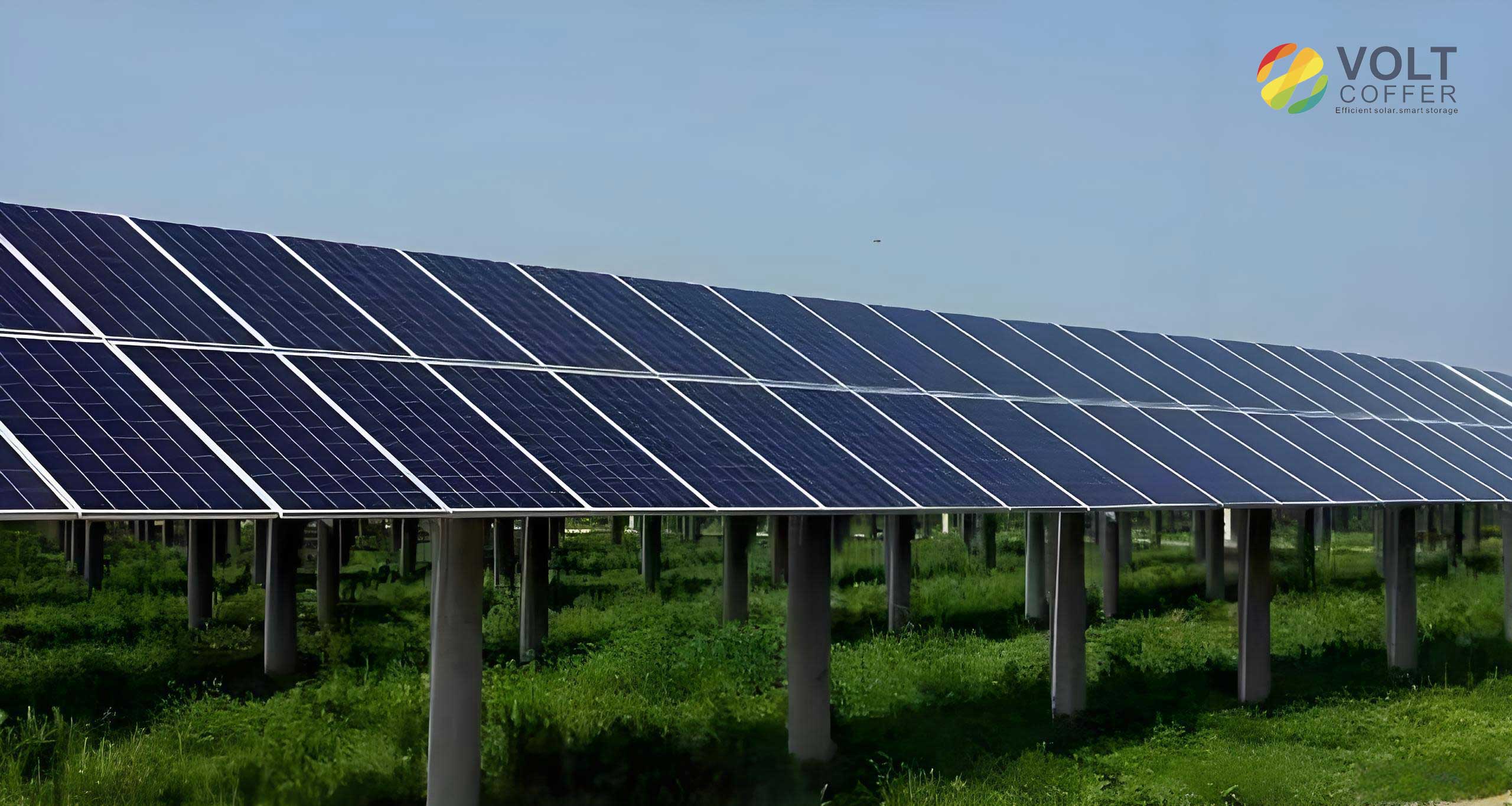
The core innovation lies in the “light-supplementing and power-generating panel,” which integrates solar panels with light-converting plates. These panels are installed above citrus trees at an angle, allowing for light modification, rain drainage, and frost prevention. The design maximizes the area covered by solar panels while ensuring adequate light for citrus photosynthesis. Below, I detail the principles, design specifications, system setup, and experimental results, supported by tables and formulas to summarize key findings.
The light-supplementing and power-generating panel operates on the principle of spectral conversion. Natural sunlight contains a broad spectrum, including ultraviolet (UV), visible, and infrared light. Citrus plants primarily utilize red (600–680 nm) and blue-violet (400–480 nm) light for photosynthesis, while other wavelengths, such as green-yellow (500–580 nm) and UV (290–400 nm), are less efficient or even detrimental. To address this, we incorporate a rare-earth light-converting film doped with Mn4+ ions, oxides, and fluorides as activators. These materials absorb higher-energy photons (e.g., from UV and green-yellow light) and re-emit lower-energy photons in the red and blue-violet ranges. The energy transfer process can be described by the following formula, where $$E_{\text{absorbed}}$$ is the energy of absorbed photons and $$E_{\text{emitted}}$$ is the energy of emitted photons:
$$E_{\text{absorbed}} > E_{\text{emitted}}$$
This results in a Stokes shift, moving the emission spectrum toward longer wavelengths. Mathematically, the conversion efficiency $$\eta_c$$ can be expressed as:
$$\eta_c = \frac{\int_{\lambda_1}^{\lambda_2} I_{\text{converted}}(\lambda) d\lambda}{\int_{\lambda_3}^{\lambda_4} I_{\text{incident}}(\lambda) d\lambda}$$
where $$I_{\text{incident}}$$ is the incident light intensity over wavelengths $$\lambda_3$$ to $$\lambda_4$$ (e.g., 290–580 nm), and $$I_{\text{converted}}$$ is the converted light intensity over wavelengths $$\lambda_1$$ to $$\lambda_2$$ (e.g., 400–480 nm and 600–680 nm). The film effectively transforms UV and green-yellow light into red and blue-violet light, increasing the proportion of beneficial wavelengths for citrus growth. This allows us to reduce the transparent area in the panel while maintaining optimal photosynthesis, thereby expanding the space for solar panels.
The panel design is meticulous to balance light transmission and energy generation. Each light-supplementing and power-generating panel measures 2.0 m in length and 0.8 m in width. It consists of 10 solar panels and 10 light-converting plates, each 0.1 m wide and 0.8 m long, arranged alternately. The solar panels are standard photovoltaic modules for electricity generation, while the light-converting plates comprise a diffusive glass plate laminated with the light-converting film. The diffusive side of the glass features prismatic protrusions to scatter the converted light evenly over the citrus plants below, ensuring uniform illumination. The arrangement minimizes shading and maximizes light utilization. The total area of solar panels per unit can be calculated as:
$$A_{\text{solar}} = N \times w \times l$$
where $$N=10$$ is the number of solar panels, $$w=0.1 \, \text{m}$$ is the width, and $$l=0.8 \, \text{m}$$ is the length. Thus, $$A_{\text{solar}} = 0.8 \, \text{m}^2$$ per panel, and the proportion of solar panel area to total panel area is 50%. This design is optimized to increase the density of solar panels while meeting citrus light requirements.
To assess the system’s performance, we set up an experimental plot in a citrus-growing region. The installation involves mounting the panels on support structures above the citrus trees at a tilt angle of 35°–40° facing south. The high end is 3.0 m above ground, and the low end is 1.5 m, directing rainwater into drainage ditches. The spacing between panels is critical to avoid shading during peak sunlight hours (9:00–16:00). The minimum spacing $$D$$ between rows is derived from geometric considerations:
$$D = L \cos \beta + L \sin \beta \left( \frac{0.707 \tan \phi + 0.4338}{0.707 – 0.4338 \tan \phi} \right)$$
Here, $$L = 2.0 \, \text{m}$$ is the panel length, $$\beta = 40^\circ$$ is the tilt angle, and $$\phi = 24^\circ$$ is the local latitude. Plugging in the values, we get $$D \approx 2.35 \, \text{m}$$. In practice, we use a row spacing of 2.0 m and a column spacing of 0.35 m, with a planting density of 60 trees per acre. This configuration ensures adequate ventilation and light penetration while maximizing land use for both citrus and solar panels.
The experimental evaluation compared our design with control groups to validate its effectiveness. We established three control groups with conventional diffusive glass plates (without light-converting film) of widths 0.10 m, 0.15 m, and 0.20 m, respectively. All groups had the same panel layout and installation parameters. Key metrics included citrus yield, fruit quality, and electricity generation. The results are summarized in tables below.
First, citrus yield per acre was measured to assess photosynthetic enhancement. The light-converting film boosts red and blue-violet light, potentially increasing photosynthesis rates. The yield data are presented in Table 1.
| Light-Converting Plate Width (m) | Presence of Light-Converting Film | Yield per Acre (kg) |
|---|---|---|
| 0.10 | Yes | 2127.3 |
| 0.10 | No | 2011.0 |
| 0.15 | No | 2119.1 |
| 0.20 | No | 2115.5 |
Table 1 shows that the design with 0.10 m light-converting plates and film achieved the highest yield of 2127.3 kg per acre. This represents a 5.8% increase over the control without film (2011.0 kg). Notably, the 0.10 m width with film allows a 33% reduction in transparent area compared to wider plates, enabling more solar panels per unit area. This aligns with our goal of maximizing solar panel coverage while sustaining crop productivity.
Second, fruit quality was evaluated based on weight and sunburn incidence. Sunburn, caused by excessive direct sunlight, leads to blemishes and reduced market value. We categorized fruits into three grades: Grade A (weight >80 g, no sunburn), Grade B (weight >80 g with sunburn or weight <80 g without sunburn), and Grade C (weight <80 g with sunburn). The distribution is shown in Table 2.
| Light-Converting Plate Width (m) | Presence of Light-Converting Film | Grade A Percentage | Grade B Percentage | Grade C Percentage |
|---|---|---|---|---|
| 0.10 | Yes | 79.51% | 15.44% | 5.05% |
| 0.10 | No | 61.80% | 22.93% | 15.27% |
| 0.15 | No | 47.63% | 32.87% | 19.50% |
| 0.20 | No | 29.87% | 38.80% | 31.33% |
From Table 2, the design with film significantly improves fruit quality, with 79.51% Grade A fruits compared to 61.80% without film. This demonstrates the film’s role in mitigating sunburn by converting harmful UV light and providing diffuse beneficial light. The reduction in Grade C fruits from 15.27% to 5.05% highlights the protective effect, which is crucial for premium citrus production.
Third, electricity generation was monitored over an 8-month citrus growth period (April to November). The installed capacity and output depend on the area covered by solar panels. We calculated the solar panel area proportion for each design and recorded the energy production. The data are in Table 3.
| Light-Converting Plate Width (m) | Solar Panel Area Proportion | Presence of Light-Converting Film | Installed Capacity (kW/acre) | Electricity Generation (kWh) |
|---|---|---|---|---|
| 0.10 | 50.0% | Yes | 18 | 17200 |
| 0.10 | 50.0% | No | 18 | 17200 |
| 0.15 | 40.0% | No | 14.4 | 13824 |
| 0.20 | 33.3% | No | 12 | 11520 |
Table 3 indicates that the design with 0.10 m plates and film achieves the highest electricity generation of 17,200 kWh per acre, due to its 50% solar panel area proportion. This is comparable to the control without film but with the same panel layout, confirming that the film does not hinder energy output. In contrast, designs with wider transparent plates (0.15 m and 0.20 m) have lower solar panel proportions and thus reduced generation. This underscores the advantage of minimizing transparent areas through spectral conversion, allowing more solar panels to be deployed.
To further analyze the system’s efficiency, we can model the overall energy balance. The total solar irradiance $$S_{\text{total}}$$ incident on the panels can be partitioned into parts used for electricity generation and light conversion. Let $$\alpha$$ be the fraction of area covered by solar panels, and $$\beta$$ be the fraction for light-converting plates. The electricity output $$E_{\text{elec}}$$ is given by:
$$E_{\text{elec}} = \alpha \cdot A_{\text{total}} \cdot \eta_{\text{pv}} \cdot \int S_{\text{total}} \, dt$$
where $$A_{\text{total}}$$ is the total panel area, $$\eta_{\text{pv}}$$ is the photovoltaic efficiency (typically 15-20% for standard solar panels), and the integral represents cumulative solar radiation over time. For the light-converting plates, the useful light for citrus photosynthesis $$L_{\text{useful}}$$ is:
$$L_{\text{useful}} = \beta \cdot A_{\text{total}} \cdot \eta_c \cdot \int I_{\text{beneficial}} \, dt$$
where $$I_{\text{beneficial}}$$ is the incident light in convertible wavelengths, and $$\eta_c$$ is the conversion efficiency as defined earlier. In our design, $$\alpha = 0.5$$ and $$\beta = 0.5$$ for the 0.10 m plate configuration, optimizing both parameters. The synergy between solar panels and light conversion can be expressed as a performance index $$PI$$:
$$PI = \omega_1 \cdot \frac{E_{\text{elec}}}{E_{\text{max}}} + \omega_2 \cdot \frac{Y}{Y_{\text{max}}}$$
where $$E_{\text{max}}$$ and $$Y_{\text{max}}$$ are maximum possible electricity and yield, and $$\omega_1$$ and $$\omega_2$$ are weighting factors reflecting economic or ecological priorities. For our system, $$PI$$ is maximized when solar panel area is high and crop yield is enhanced through spectral conversion.
The economic implications are significant. By integrating solar panels into citrus farms, farmers can diversify income streams through electricity sales or on-site use. Assuming a feed-in tariff rate, the revenue from electricity can offset agricultural costs. Additionally, improved fruit quality and yield boost market returns. A simple cost-benefit analysis involves calculating the net present value (NPV) over the system’s lifetime:
$$NPV = -C_0 + \sum_{t=1}^{T} \frac{R_{\text{elec},t} + R_{\text{fruit},t} – O_t}{(1 + r)^t}$$
where $$C_0$$ is initial capital cost for solar panels and installation, $$R_{\text{elec}}$$ is revenue from electricity, $$R_{\text{fruit}}$$ is revenue from citrus sales, $$O$$ is operational costs, $$r$$ is discount rate, and $$T$$ is project lifetime. Our design reduces $$O$$ by minimizing crop losses from sunburn and increasing yield, thereby enhancing NPV.
Environmental benefits include reduced carbon emissions through clean energy generation and sustainable land use. Each kilowatt-hour generated by solar panels avoids approximately 0.5 kg of CO2 emissions from fossil fuels. Over an acre, the annual reduction is:
$$\Delta CO_2 = E_{\text{elec}} \times 0.5 \, \text{kg/kWh}$$
For 17,200 kWh, this equals 8,600 kg of CO2 saved per year. Moreover, the light-converting film reduces the need for artificial shading or cooling systems, lowering resource consumption.
In terms of scalability, this model can be adapted to other crops with similar light requirements, such as grapes or berries. The key is tailoring the spectral conversion to match specific photosynthetic profiles. Future research could explore dynamic films that adjust conversion based on light conditions or integrate with smart farming technologies. The use of advanced solar panels, like bifacial or perovskite types, may further boost efficiency.
Challenges include the initial cost of light-converting films and maintenance of elevated structures. However, as solar panel prices decline and film production scales, these barriers may diminish. Long-term durability studies are needed to assess film degradation under outdoor conditions. Nonetheless, our experimental results demonstrate feasibility and advantages.
In conclusion, the integration of distributed solar panels with spectral conversion technology offers a promising path for agrivoltaics. Our design maximizes solar panel area while enhancing citrus growth through targeted light modification, leading to higher yields, better fruit quality, and substantial electricity generation. This approach aligns with global trends toward sustainable agriculture and renewable energy, providing a blueprint for future innovations. By continuing to refine such systems, we can unlock the full potential of solar resources in farming regions, creating economic and environmental synergies for a greener future.