
The global push towards renewable energy has catalyzed the rapid adoption of photovoltaic systems. Integrating solar panels onto existing building rooftops presents a compelling opportunity to harness clean energy without consuming additional land. However, this retrofit significantly alters the permanent loads acting on the original structure. The superimposed dead load from the solar panel mounting systems, alongside potential increases in wind and snow loads, imposes new stresses that the building may not have been designed to withstand. Therefore, a comprehensive structural safety assessment is a non-negotiable prerequisite before proceeding with any rooftop solar panel installation. This article details a first-person, in-depth engineering investigation into the feasibility of retrofitting an existing industrial steel structure with solar panels, demonstrating the systematic methodology, critical analyses, and decisive conclusions required for such projects.
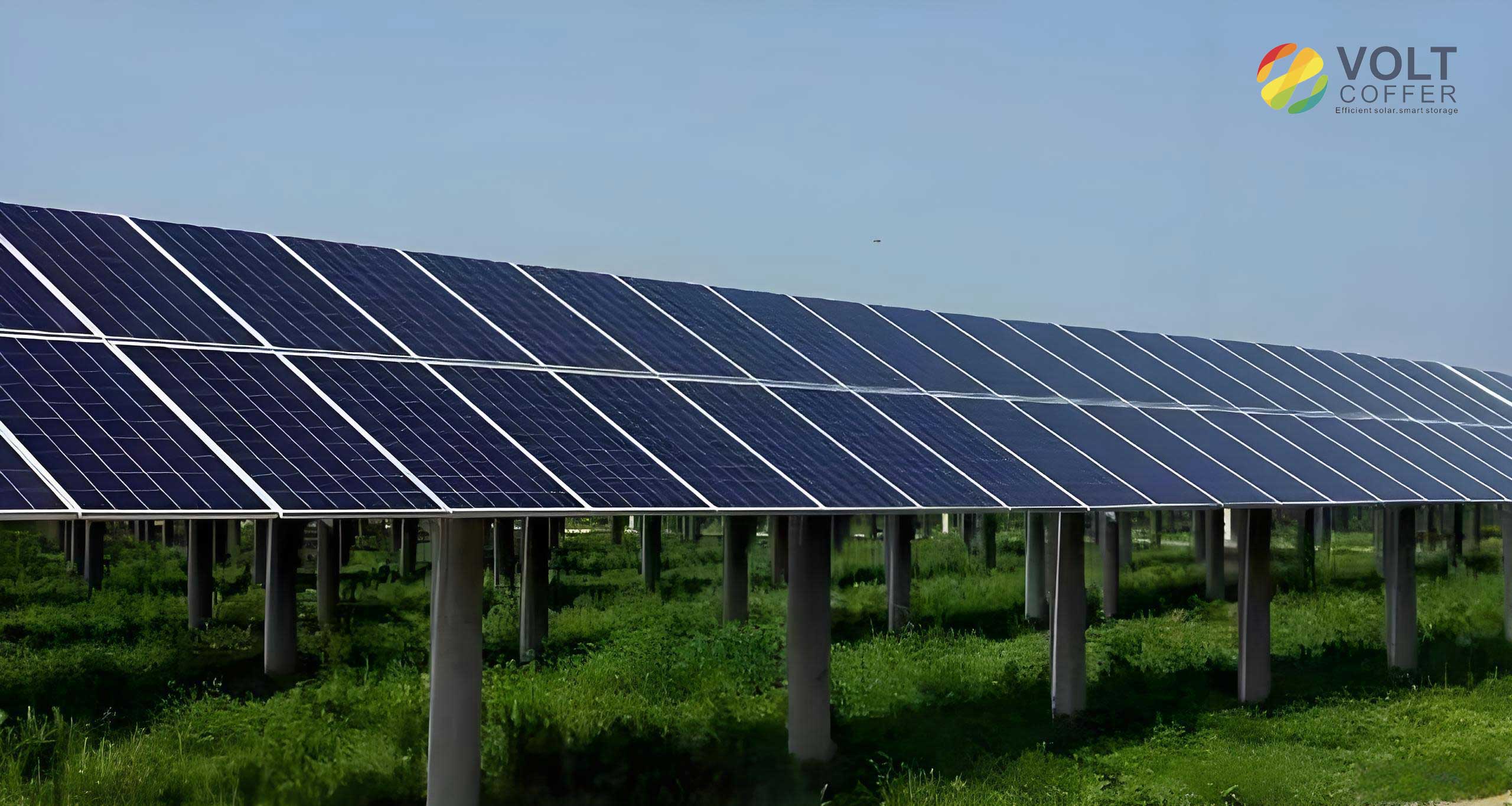
The project involved a single-story industrial workshop, primarily used for storage and light manufacturing. The structure was a clear-span gabled frame, constructed around six years prior. Critical design documentation, including structural drawings and material certificates, was unavailable—a common challenge when assessing existing buildings for solar panel compatibility. The client intended to install a distributed photovoltaic array across the entire roof area. Our mandate was to determine if the existing structural system could safely support the additional permanent load from the solar panels, estimated at 0.15 kN/m², in combination with all other prescribed live and environmental loads.
The assessment was conducted in strict accordance with national technical standards for the reliability appraisal of industrial buildings. The process was bifurcated into two primary phases: a thorough field investigation to ascertain the as-built condition and material properties, followed by a detailed analytical review to evaluate structural capacity under the proposed new loading regime incorporating the solar panels.
Field Investigation and Material Characterization
A meticulous on-site survey is the foundation of any reliable structural assessment. The field work commenced with a dimensional survey of primary and secondary structural members. Using ultrasonic thickness gauges, vernier calipers, and measuring tapes, we sampled the cross-sectional dimensions of columns, rafters, and purlins. The results confirmed the structure was a light-gauge steel system.
| Serial No. | Member Location | Member Type | Measured Dimensions (mm) |
|---|---|---|---|
| 1 | Grid C×5 | Column | H450×250×10.2×12.5 |
| 2 | Grid C×6 | Column | H451×248×10.1×12.5 |
| 3 | Grid D×6 | Column | H300×150×7.4×8.8 |
| 4 | Grid A-C×6 | Rafter (Tapered) | H(501~299)×181×7.9×7.9 |
| 5 | Grid A-C×7 | Rafter (Tapered) | H(502~302)×179×7.9×8.1 |
| 6 | Roof Plane | Purlin | C180×70×16×2.2 |
With design records missing, determining the actual material strength was paramount. We employed a rebound hardness tester (e.g., Leeb hardness) on multiple members. The measured hardness values were converted to ultimate tensile strength ($f_u$) and subsequently to yield strength ($f_y$) estimates for analysis. The characteristic yield strength was derived statistically from the sample data.
| Member Sample | Avg. Hardness (HLD) | Est. Tensile Strength $f_u$ (N/mm²) | Inferred Yield Strength $f_y$ (N/mm²) | Probable Steel Grade |
|---|---|---|---|---|
| Column C×5 | 407-411 | 418-424 | ~245 | Q235 / Grade S235 |
| Column C×6 | 410-419 | 423-436 | ~255 | |
| Rafter A-C×6 | 411-412 | 424-425 | ~250 | |
| Rafter A-C×7 | 396-413 | 401-427 | ~235 | |
| Overall Characteristic Value | – | 421.3 | ~235-255 |
The consistent results indicated the use of Q235 steel (equivalent to S235), with a nominal yield strength of 235 N/mm². This value was adopted for all subsequent analytical models. The condition of protective coatings was also assessed to evaluate corrosion levels, which directly affect the net cross-sectional area and thus member capacity.
| Member | Average Coating Thickness (µm) | Assessment |
|---|---|---|
| Column C×5 | 80.8 | Insufficient, corrosion present |
| Column C×6 | 78.8 | Insufficient, corrosion present |
| Rafter A-C×6 | 81.0 | Insufficient, corrosion present |
| Rafter A-C×7 | 79.4 | Insufficient, corrosion present |
A visual and tactile inspection of the structural system integrity was performed. Key findings included:
- Connections: Primary bolted connections between rafters and columns appeared intact, though some bolt heads showed significant rust.
- Bracing: Roof horizontal bracing was present but severely corroded and deformed in sections. No vertical column bracing was installed between the main frames.
- Purlins: Extensive section loss due to corrosion was observed on the cold-formed C-purlins. The connection between the purlin’s rolled edge and its flange was also non-compliant with detailing guidelines.
- Overall Deformation: No significant global lateral drift or vertical sag was immediately apparent in the main frames.
This field data formed the factual basis for creating an accurate analytical model.
Analytical Safety Assessment Methodology
The safety evaluation was segmented into substructures: the foundation/ground sub-system and the upper load-bearing structure. The assessment criteria were based on a multi-tiered rating system (A/B/C/D), where A signifies compliance with current standards and D signifies a critical safety hazard.
1. Foundation and Ground Sub-system Assessment
Since the building was a lightweight steel structure on isolated footings, the investigation focused on signs of differential settlement. A walk-through of the interior and exterior revealed no cracks in floor slabs, wall cladding, or distress in column-to-base connections. The site showed no evidence of slope instability or prior ground failure. Given the structure had been in service for several years without observed movement, the foundation was deemed to have adequately stabilized. Consequently, both the foundation’s deformation and bearing capacity were rated Grade B, meaning it was essentially sound for the existing and proposed modified loads, including those from the new solar panels.
2. Upper Load-Bearing Structure Assessment
This was the core of the investigation, as the roof structure would directly carry the solar panels. The assessment comprised several checks:
a) Structural Integrity and Systemic Completeness:
The layout of the main frames, purlins, and roof bracing was reviewed. While the primary load path was clear, the deficiency in column bracing and the degraded condition of the roof bacing compromised the overall lateral force-resisting system. The connections item was thus downgraded to Grade C, indicating it did not fully meet standard requirements and required remedial action.
b) Analysis of Load Effects and Member Capacity:
A 3D structural model was built using industry-standard software (e.g., PKPM, SAP2000). The key load cases for the solar panel retrofit analysis included:
- Permanent Actions (G): Existing roof self-weight + New solar panel system dead load (0.15 kN/m²).
- Variable Actions (Q): Roof live load (0.5 kN/m²), Snow load (0.35 kN/m²), and Wind load (0.30 kN/m²).
Load combinations were formed in accordance with limit states design principles, such as:
$$1.35G + 1.5Q_{snow} + 0.9\times1.5Q_{wind}$$
$$1.2G + 1.5Q_{wind} + 0.7\times1.5Q_{snow}$$
The model incorporated the measured member sizes, inferred material strength ( $f_y=235 \text{ N/mm}^2$ ), and accounted for section loss in severely corroded purlins by applying a net area reduction factor (e.g., 0.8).
The analysis yielded two critical results:
- Serviceability Deflection: The calculated maximum vertical deflection ($\Delta_{max}$) of the main rafter under service loads was compared to the code-specified limit. For a supporting member carrying cladding, the limit is often $L/180$, where $L$ is the span.
$$\Delta_{limit} = \frac{12000 \text{ mm}}{180} = 66.7 \text{ mm}$$
The analysis showed $\Delta_{max} \approx 39.4$ mm, resulting in a deflection ratio of $L/304$, which was acceptable.
$$\frac{\Delta_{max}}{L} = \frac{39.4}{12000} \approx \frac{1}{304} < \frac{1}{180}$$ - Ultimate Limit State – Strength: This was the decisive factor. The software output the demand-to-capacity ratio (DCR) or “stress ratio” for each member. A DCR > 1.0 indicates failure. For the main interior rafter, the governing DCR for bending strength was calculated as 1.13.
$$\text{DCR}_{bending} = \frac{\text{Factored Bending Moment (M_u)}}{\text{Reduced Nominal Moment Capacity (\phi M_n)}} = 1.13 > 1.0$$
This clearly showed the member’s capacity was inadequate for the new total load, which included the weight of the proposed solar panels.
Furthermore, analysis of the corroded purlins confirmed their incapacity, even before adding the solar panel load.
Based on these analytical findings, the carrying capacity of the primary structural system was rated Grade C. Synthesizing all items (system integrity, displacement, and carrying capacity), the overall safety grade for the upper structure was definitively rated Grade C.
Overall Conclusion and Remedial Strategy
The integration of a rooftop photovoltaic array is not a trivial modification. The comprehensive assessment led to a definitive conclusion: The existing industrial building, in its current state, is NOT safe for the installation of the proposed solar panels. The overall structural safety rating is C, meaning it does not meet the safety requirements of current standards for the intended retrofit. The critical failure mode is the insufficient flexural capacity of the main roof rafters under the combined permanent load, which is increased by the addition of the solar panels.
For the client to proceed with their solar energy goals, a structural upgrade is mandatory. The following remedial actions were prescribed:
- Primary Frame Strengthening: The interior main rafters with a DCR > 1.0 require immediate strengthening. This could be achieved by welding additional steel plates to the flanges or web (cover plating), or by adding external post-tensioning elements. The design must be performed by a qualified structural engineer.
- Purlin Replacement: All existing cold-formed C-purlins must be replaced with new sections designed to support the roof cladding and the solar panel loads. The new purlins must have adequate edge stiffening ($C/B \geq 0.2$).
- Systemic Repairs:
- Bracing: Install vertical bracing in the end bays between columns. Replace all corroded and deformed roof horizontal bracing.
- Corrosion Protection: All structural steel must be thoroughly cleaned (e.g., sandblasting) and repainted with a certified coating system to achieve a minimum dry film thickness (DFT) as per corrosion protection standards.
- Connection Check: Inspect and torque all high-strength bolts. Replace any corroded or missing bolts.
- Construction Sequencing: During the retrofit work, construction materials must not be concentrated on the roof. Loads must be distributed and applied incrementally to avoid overloading the structure during the transitional phase.
Only upon completion of these strengthening measures should the installation of the solar panels commence. Furthermore, a routine inspection and maintenance regimen was recommended, including a re-assessment every 3-5 years to monitor the long-term effects of the added solar panels and environmental exposure on the structure.
Broader Implications for the Solar Panel Retrofit Industry
This case study underscores several universal principles for rooftop solar panel integrations:
- Mandatory Preliminary Assessment: Retrofitting solar panels is a structural modification. An engineering evaluation based on accurate field data and rigorous analysis is essential, not optional.
- Hidden Criticalities: The most critical deficiency may not be visible. In this case, the main rafter’s inadequate strength was only revealed through calculation, not visual inspection. Corrosion, often underestimated, drastically reduces member cross-section and capacity.
- Systemic Thinking: Adding solar panels affects the entire load path. The assessment must consider foundations, primary frames, secondary members (purlins/girts), and connections. Weak links in the bracing system can precipitate catastrophic failures under wind or seismic events.
- Importance of Original Documents: The absence of as-built drawings increases assessment uncertainty and cost, necessitating more extensive field investigation and conservative material assumptions.
The governing equation for the safety check of a flexural member like a rafter can be generalized as:
$$\frac{M_u}{\phi M_n} + \frac{P_u}{\phi P_n} \leq 1.0$$
Where $M_u$ and $P_u$ are the factored moment and axial force (from models including solar panel loads), and $\phi M_n$ and $\phi P_n$ are the reduced nominal capacities of the existing member. For a successful retrofit, this inequality must hold for all members under all code-specified load combinations.
In conclusion, the drive to adopt solar energy must be matched by a commitment to structural due diligence. Solar panels represent a long-term investment, and their supporting structure must be guaranteed for the same lifespan. A methodical, evidence-based safety assessment, as detailed herein, is the only responsible pathway to ensuring that the pursuit of green energy does not compromise building integrity and public safety. This process validates the feasibility of the solar panel installation or provides the necessary roadmap for strengthening, thereby safeguarding both the physical asset and the sustainability investment.