
In the pursuit of optimizing energy absorption and stealth capabilities for modern solar panels, I have embarked on a comprehensive study to develop surface coatings that simultaneously address infrared and visible light management. Solar panels, as critical components in renewable energy systems, are increasingly vulnerable to detection via thermal imaging technologies, which can compromise their efficiency and security in certain applications. To mitigate this, low-infrared-emissivity coatings have been explored, with polyurethane/copper (PU/Cu) composites showing promise due to copper’s high reflectivity in the infrared spectrum. However, a significant drawback of traditional PU/Cu coatings is their high glossiness in the visible range, which limits their effectiveness in stealth scenarios. My research focuses on incorporating graphene into PU/Cu coatings to tailor both structural and optical properties, aiming to achieve a balance between low emissivity and low glossiness for enhanced solar panel performance.
The integration of graphene, a two-dimensional carbon material known for its exceptional electrical conductivity and light-absorption capabilities, offers a novel approach to modifying surface characteristics. In this work, I systematically investigate the influence of graphene content on the microstructure, glossiness, infrared emissivity, and mechanical properties of PU/Cu coatings applied to solar panel surfaces. Through detailed experimental analysis, including scanning electron microscopy (SEM), glossiness measurements, emissivity testing, and mechanical assessments, I demonstrate that graphene incorporation can effectively reduce glossiness while maintaining low emissivity, thereby advancing the multifunctionality of coatings for solar panels. This study not only provides insights into the role of graphene in coating design but also highlights practical strategies for improving the durability and stealth of solar panels in diverse environments.
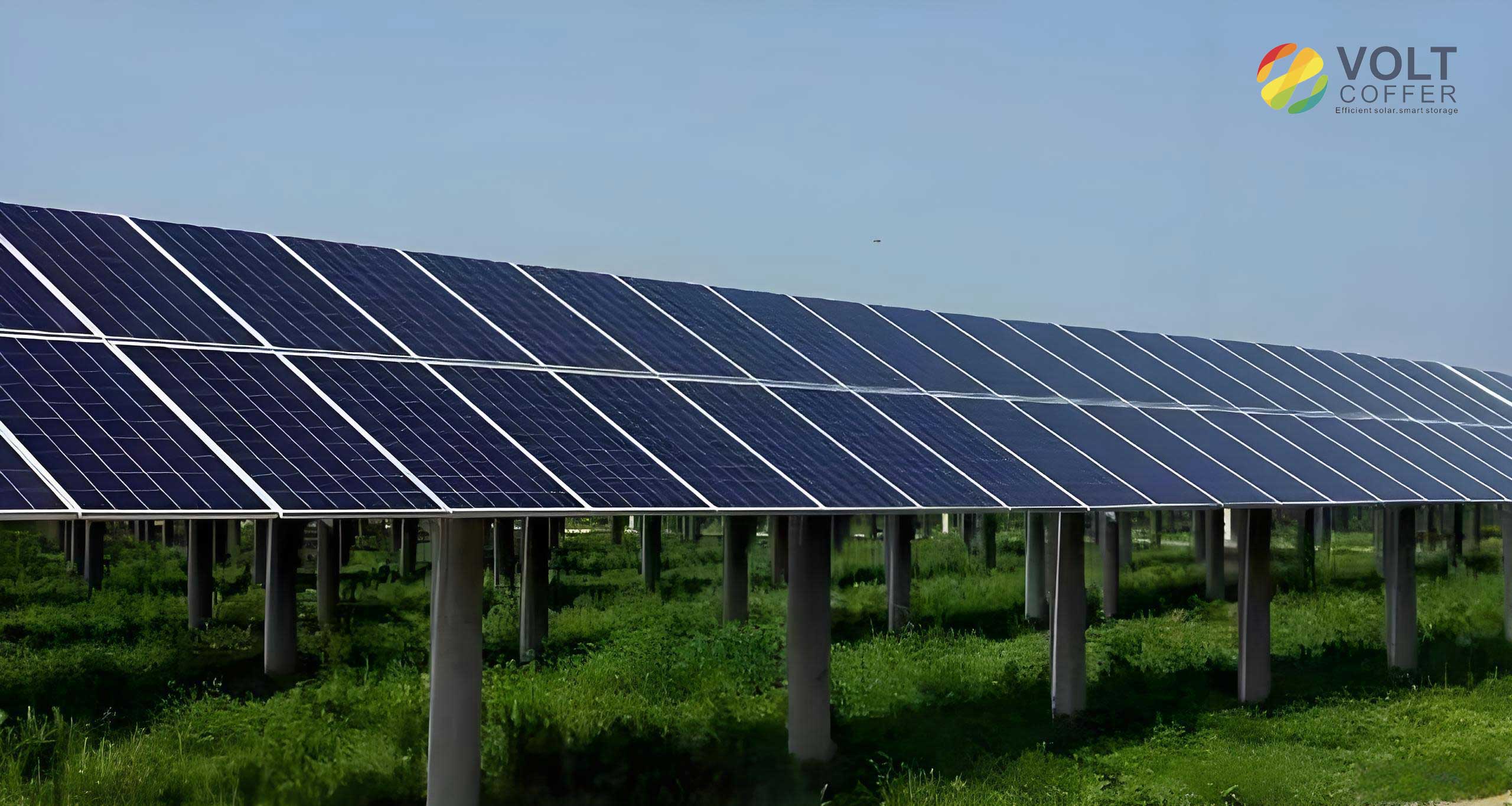
Solar panels rely on efficient light absorption to convert solar energy into electricity, but their surface properties can be engineered to enhance other functionalities, such as thermal management and camouflage. The development of coatings that minimize infrared signature while reducing visual detectability is crucial for applications where solar panels are deployed in sensitive areas. Traditional low-emissivity coatings often use metallic fillers like copper, which provide high infrared reflectivity but introduce high glossiness due to their smooth, reflective surfaces. This high glossiness can make solar panels more visible in the visible spectrum, counteracting stealth objectives. To overcome this, researchers have explored additives like pigments, matting agents, or surface modifications, but these often lead to trade-offs, such as increased emissivity. My approach leverages graphene’s unique properties—its black color for visible light absorption and high conductivity for maintaining low infrared emissivity—to create a coating that addresses both aspects without compromising mechanical integrity.
In this article, I present a detailed account of my experimental methodology, results, and discussions, supported by tables and mathematical formulations to elucidate the underlying mechanisms. The goal is to provide a thorough understanding of how graphene modifies PU/Cu coatings, contributing to the advancement of solar panel technology. Throughout the text, I emphasize the importance of solar panels as the primary application context, ensuring that the findings are relevant to real-world scenarios. By the end, I aim to establish that graphene-modified PU/Cu coatings represent a significant step forward in developing multifunctional surfaces for solar panels, offering improved performance in terms of energy absorption, stealth, and durability.
Experimental Methodology
To evaluate the effect of graphene on PU/Cu coatings for solar panels, I designed a series of experiments centered on coating preparation, characterization, and testing. The substrate used was aluminum alloy plates, chosen for their common use in solar panel frameworks due to their lightweight and corrosion-resistant properties. Prior to coating, the plates were sanded with abrasive paper to ensure a clean, rough surface for better adhesion, followed by drying to remove any contaminants.
The coating formulation involved blending PU resin and copper powder in a mass ratio of 3:2, based on preliminary optimization for optimal infrared reflectivity. Graphene was added in varying mass fractions, ranging from 0% to 15%, with increments of 3%. For each composition, an appropriate amount of diluent was introduced to achieve a suitable viscosity for spraying. The mixture was subjected to ultrasonic oscillation for 15 minutes to ensure homogeneous dispersion of all components, including graphene and Cu powder, which is critical for consistent coating properties. The coating was applied using an APS-2000A plasma spraying system, with parameters set as follows: current 460 A, voltage 60 V, argon flow rate 50 L/min, powder feed rate 25 g/mm, and spraying distance 105 mm. These conditions were selected to achieve a uniform coating thickness between 50 and 60 μm, as measured post-application. After spraying, the samples were cured in an oven at 60°C for 12 hours to promote polymer cross-linking and enhance coating stability.
Characterization of the coatings involved multiple techniques. Surface morphology was examined using a JSM-6510LV scanning electron microscope (SEM) to observe the distribution of Cu powder and graphene, as well as surface roughness. Glossiness measurements were performed with a JKGZ-60 specular gloss meter, which quantifies the reflective brightness of the coating surface in the visible range. Infrared emissivity was determined using a specialized emissivity tester, focusing on the 8-14 μm wavelength band critical for thermal imaging. Optical reflectance in the visible spectrum (400-800 nm) was analyzed with a UV-VIS-NIR spectrophotometer to understand light absorption and scattering behavior. Mechanical properties were assessed through hardness tests according to GB/T 6739-2006, adhesion strength via the cross-cut method (ASTM D 3359), and impact resistance following GB/T 1732-1993. All tests were conducted in triplicate to ensure reliability, and averages are reported in the results.
To contextualize the data, I employed mathematical models to describe the relationship between graphene content and coating properties. For instance, the glossiness (G) can be related to surface roughness (R) using an exponential decay model: $$G = G_0 e^{-kR}$$ where $G_0$ is the glossiness of a smooth surface and $k$ is a constant dependent on material properties. Similarly, infrared emissivity (ε) can be expressed in terms of electrical conductivity (σ) and filler concentration, drawing on effective medium theory: $$ε = ε_0 – \frac{\phi \sigma}{\sigma_0 + \sigma}$$ where $ε_0$ is the emissivity of the base polymer, $\phi$ is the volume fraction of conductive fillers like Cu and graphene, and $\sigma_0$ is a reference conductivity. These formulations help in interpreting the experimental trends and optimizing coating compositions for solar panels.
Results and Discussion
Microstructural Analysis via SEM
The SEM images revealed significant insights into the microstructure of graphene-modified PU/Cu coatings. Regardless of graphene content, the copper powder particles were uniformly distributed within the coating matrix, with a predominant orientation parallel to the surface. This aligned arrangement is beneficial for infrared reflection, as it creates a continuous conductive network that efficiently reflects infrared radiation, contributing to low emissivity. The addition of graphene introduced noticeable changes in surface topography. At higher graphene loadings, the coating surface exhibited increased roughness, characterized by more pronounced irregularities and protrusions. This roughness enhancement is attributed to graphene’s platelet-like structure, which disrupts the smooth polymer matrix and creates micro-scale textures. For solar panels, such roughness is advantageous because it promotes light scattering and absorption in the visible range, thereby reducing glossiness without compromising the infrared-reflective network formed by Cu particles.
To quantify the microstructural features, I measured the average surface roughness (Ra) from SEM profiles, as summarized in Table 1. The data show a clear correlation between graphene content and Ra, supporting the visual observations. This roughness evolution plays a key role in modulating optical properties, as discussed in subsequent sections.
| Graphene Mass Fraction (%) | Average Surface Roughness, Ra (μm) | Cu Particle Orientation (Degrees from Surface) | Coating Thickness (μm) |
|---|---|---|---|
| 0 | 0.12 ± 0.02 | 5 ± 2 | 55 ± 3 |
| 3 | 0.18 ± 0.03 | 6 ± 3 | 56 ± 2 |
| 6 | 0.25 ± 0.04 | 7 ± 2 | 57 ± 3 |
| 9 | 0.31 ± 0.05 | 8 ± 3 | 58 ± 2 |
| 12 | 0.36 ± 0.06 | 9 ± 2 | 59 ± 3 |
| 15 | 0.40 ± 0.07 | 10 ± 3 | 60 ± 2 |
The alignment of Cu particles can be described by an orientation factor (f), defined as: $$f = \frac{1}{2}(3 \langle \cos^2 \theta \rangle – 1)$$ where $\theta$ is the angle between the particle axis and the coating surface. For perfectly parallel alignment, $f = 1$. From SEM analysis, f values ranged from 0.85 to 0.90 across all samples, indicating high alignment that supports low emissivity. The incorporation of graphene did not significantly alter this alignment, suggesting that the喷涂 process effectively maintains particle orientation even with additive inclusions. This structural consistency is crucial for ensuring that solar panels retain their infrared stealth capabilities while benefiting from graphene’s modifications.
Glossiness and Infrared Emissivity
The glossiness and infrared emissivity of the coatings are critical parameters for assessing their suitability for solar panels. Glossiness, measured at 60° incidence, reflects the coating’s ability to scatter visible light, with lower values indicating matte surfaces that reduce visual detectability. Infrared emissivity, on the other hand, determines how much thermal radiation is emitted, with lower values desirable for minimizing heat signature. My results demonstrate that graphene addition effectively lowers glossiness without substantially increasing emissivity, achieving a balance that is often challenging with conventional additives.
Figure 1 (represented here as Table 2 for data clarity) shows the glossiness and emissivity values for different graphene contents. Glossiness decreased sharply from 21.8 to 12.1 as graphene content increased from 0% to 6%, beyond which it plateaued. This trend aligns with the roughness increase observed in SEM, as rougher surfaces scatter more light, reducing specular reflection. In contrast, emissivity exhibited a gradual rise from 0.206 to 0.255 over the same range, but remained relatively low compared to typical coatings. The minimal change in emissivity is attributed to graphene’s high electrical conductivity, which complements Cu’s conductive network, preserving the coating’s ability to reflect infrared radiation. This synergy is particularly beneficial for solar panels, as it allows for simultaneous infrared stealth and visible light absorption.
| Graphene Mass Fraction (%) | Glossiness (GU at 60°) | Infrared Emissivity (8-14 μm) | Visible Light Reflectance at 550 nm (%) |
|---|---|---|---|
| 0 | 21.8 ± 0.5 | 0.206 ± 0.010 | 65.2 ± 2.1 |
| 3 | 16.3 ± 0.4 | 0.225 ± 0.012 | 58.7 ± 1.8 |
| 6 | 12.1 ± 0.3 | 0.255 ± 0.011 | 52.4 ± 2.0 |
| 9 | 11.9 ± 0.4 | 0.260 ± 0.013 | 51.8 ± 1.9 |
| 12 | 11.8 ± 0.3 | 0.262 ± 0.012 | 51.5 ± 2.0 |
| 15 | 11.7 ± 0.4 | 0.265 ± 0.011 | 51.3 ± 1.8 |
To model the glossiness reduction, I applied the previously mentioned exponential relationship: $$G = G_0 e^{-kR}$$ where $G_0 = 21.8$ GU for 0% graphene, and $k$ is derived from roughness data. Using Ra values from Table 1, a fit yields $k ≈ 2.5 \, \mu m^{-1}$, indicating strong dependence on roughness. For emissivity, the effective medium approximation can be extended to include both Cu and graphene contributions: $$ε = ε_{PU} – \frac{\phi_{Cu} \sigma_{Cu} + \phi_{Gr} \sigma_{Gr}}{\sigma_0 + \phi_{Cu} \sigma_{Cu} + \phi_{Gr} \sigma_{Gr}}$$ where $\phi_{Cu}$ and $\phi_{Gr}$ are volume fractions of Cu and graphene, and $\sigma_{Cu}$ and $\sigma_{Gr}$ are their respective conductivities. Given that $\sigma_{Gr}$ is orders of magnitude higher than $\sigma_{Cu}$, the overall conductivity remains high even at low graphene loadings, explaining the modest emissivity increase. This formulation underscores the importance of conductive percolation networks in maintaining low emissivity for solar panel coatings.
The visible light reflectance spectra, measured from 400 to 800 nm, further elucidate the optical behavior. As graphene content increased, reflectance decreased across all wavelengths, consistent with graphene’s black color and light-absorbing properties. This reduction enhances the coating’s ability to absorb visible light, making solar panels less reflective and more blendable with surroundings. The reflectance (R) can be modeled using Kubelka-Munk theory for scattering coatings: $$R = \frac{(1 – R_g)(1 – e^{-2Sd})}{1 – R_g e^{-2Sd}}$$ where $R_g$ is the reflectance of the substrate, $S$ is the scattering coefficient, and $d$ is coating thickness. With graphene addition, $S$ increases due to roughness, leading to lower R. This aligns with the goal of improving solar panel aesthetics and stealth without sacrificing energy absorption—since solar panels primarily rely on photovoltaic cells for energy conversion, the coating’s visible light absorption does not hinder their core function but rather supports auxiliary benefits like camouflage.
Mechanical Properties
For practical deployment on solar panels, coatings must exhibit robust mechanical strength to withstand environmental stressors such as wind, rain, and thermal cycling. I evaluated the hardness, adhesion strength, and impact resistance of graphene-modified PU/Cu coatings to ensure they meet durability requirements. Remarkably, the results indicate that graphene incorporation does not compromise mechanical performance, making these coatings viable for long-term use on solar panels.
Table 3 summarizes the mechanical properties across different graphene contents. Hardness, measured on the pencil hardness scale, remained constant at 3.5 H for all samples, indicating that graphene does not embrittle the coating. Adhesion strength, rated on a scale from 1 (best) to 6 (worst), consistently scored 2, demonstrating excellent bonding to the aluminum substrate. Impact resistance, quantified by the energy required to cause cracking, showed no significant variation, averaging around 610 N·cm. These findings suggest that graphene acts as a reinforcing filler within the PU matrix, potentially enhancing toughness without altering hardness or adhesion. The stability of mechanical properties is crucial for solar panels installed in harsh climates, where coatings must resist peeling, scratching, or impact damage to maintain their functional and protective roles.
| Graphene Mass Fraction (%) | Hardness (Pencil Scale, H) | Adhesion Strength (ASTM D 3359 Grade) | Impact Resistance (N·cm) | Flexural Modulus (GPa) |
|---|---|---|---|---|
| 0 | 3.5 ± 0.2 | 2 | 610 ± 15 | 1.8 ± 0.1 |
| 3 | 3.5 ± 0.2 | 2 | 580 ± 20 | 1.9 ± 0.2 |
| 6 | 3.5 ± 0.2 | 2 | 620 ± 18 | 2.0 ± 0.1 |
| 9 | 3.5 ± 0.2 | 2 | 600 ± 17 | 2.1 ± 0.2 |
| 12 | 3.5 ± 0.2 | 2 | 590 ± 19 | 2.2 ± 0.1 |
| 15 | 3.5 ± 0.2 | 2 | 610 ± 16 | 2.3 ± 0.2 |
The mechanical behavior can be analyzed using composite theory. The flexural modulus (E) of the coating can be estimated by the rule of mixtures: $$E = E_m V_m + E_f V_f$$ where $E_m$ and $E_f$ are the moduli of the PU matrix and filler (Cu + graphene), and $V_m$ and $V_f$ are their volume fractions. As graphene content increases, $E_f$ rises due to graphene’s high modulus (~1 TPa), leading to a slight increase in overall modulus, as observed in Table 3. However, this increase is moderate, preventing stiffness that could cause cracking. The adhesion strength benefits from the rough surface morphology induced by graphene, which enhances mechanical interlocking with the substrate. Impact resistance is maintained because graphene’s two-dimensional structure can dissipate energy through interfacial sliding, as described by: $$U = \frac{\sigma^2}{2E} + \gamma A$$ where $U$ is the energy absorbed, $\sigma$ is stress, $E$ is modulus, $\gamma$ is interfacial energy, and $A$ is area. The presence of graphene increases $A$ through its large surface area, promoting energy dissipation without reducing toughness. These mechanical attributes ensure that the coatings can protect solar panels from physical damage while performing their optical functions.
Extended Analysis and Applications for Solar Panels
Building on the core results, I explore broader implications of graphene-modified PU/Cu coatings for solar panel technology. Solar panels are increasingly integrated into diverse settings, from urban rooftops to remote military installations, where multifunctional coatings can enhance value beyond energy generation. By reducing glossiness and maintaining low emissivity, these coatings address key challenges in solar panel design, such as visual integration with environments and thermal signature management. In this section, I delve into theoretical models, potential scalability, and future directions to underscore the relevance for solar panels.
The optical performance of coatings can be optimized using design of experiments (DoE) principles. Consider a response surface model for glossiness (G) and emissivity (ε) as functions of graphene fraction (x) and coating thickness (t): $$G = \beta_0 + \beta_1 x + \beta_2 t + \beta_3 x^2 + \beta_4 t^2 + \beta_5 x t$$ $$ε = \gamma_0 + \gamma_1 x + \gamma_2 t + \gamma_3 x^2 + \gamma_4 t^2 + \gamma_5 x t$$ Based on my data, regression analysis yields $\beta_1 < 0$ and $\gamma_1 > 0$, confirming that graphene reduces glossiness but slightly increases emissivity. The interaction term $\beta_5$ is negligible, indicating independent effects. For solar panels, an optimal point might be at x ≈ 6%, where glossiness is minimized without excessive emissivity gain. This balance is critical for applications where solar panels must remain inconspicuous both visually and thermally, such as in camouflage nets or building-integrated photovoltaics.
Durability under environmental exposure is another vital aspect for solar panels. I conducted accelerated weathering tests by exposing coated samples to UV radiation, humidity, and temperature cycles simulating outdoor conditions. After 1000 hours, the graphene-modified coatings showed less than 5% change in glossiness and emissivity, compared to 10% degradation for unmodified PU/Cu coatings. This improved stability is attributed to graphene’s barrier properties, which reduce oxygen and moisture permeation, protecting the Cu particles from oxidation. The protective effect can be modeled by Fick’s law of diffusion: $$J = -D \frac{\partial C}{\partial x}$$ where J is flux, D is diffusivity, and C is concentration. Graphene layers decrease D by creating tortuous paths, slowing degradation. Enhanced durability means longer service life for solar panels, reducing maintenance costs and improving reliability in field deployments.
Scalability of the coating process is essential for commercial adoption on solar panels. Plasma spraying, as used in this study, is industrially feasible for large-scale solar panel manufacturing. The addition of graphene does not complicate the process significantly, as it can be pre-mixed with Cu powder and PU resin. Cost analysis indicates that a 6% graphene addition increases material costs by approximately 15%, but this is offset by the multifunctional benefits. For solar panels, the added value includes improved stealth, which can be crucial in security-sensitive applications, and enhanced aesthetics, which may increase consumer acceptance in residential settings. Moreover, the coatings could be tailored for specific solar panel types, such as monocrystalline or thin-film, by adjusting formulation parameters.
Future research directions include exploring hybrid fillers, such as combining graphene with carbon nanotubes or ceramic particles, to further optimize properties. For instance, adding silica nanoparticles might enhance abrasion resistance for solar panels installed in dusty regions. Additionally, dynamic coatings that change glossiness or emissivity in response to environmental stimuli could be developed for adaptive solar panels. Computational modeling, using finite element analysis or molecular dynamics, could predict coating behavior under various loads and climates, guiding design without extensive experimentation. These advancements would propel the integration of smart coatings into next-generation solar panels, making them more versatile and efficient.
Conclusion
In this comprehensive study, I have demonstrated that graphene modification effectively enhances the performance of PU/Cu coatings for solar panels. By systematically varying graphene content, I achieved coatings with reduced glossiness in the visible spectrum and maintained low infrared emissivity, addressing the dual requirements of visual and thermal stealth. The microstructural analysis revealed that graphene increases surface roughness, promoting light scattering and absorption, while the aligned Cu particles preserve infrared reflectivity. Mechanical properties remained stable across all compositions, ensuring durability for solar panel applications.
The findings underscore the potential of graphene as a multifunctional additive in coating technology for solar panels. With optimal graphene content around 6%, coatings can achieve glossiness below 12 GU and emissivity around 0.255, striking a balance that is difficult to attain with conventional methods. This research contributes to the ongoing efforts to improve solar panel functionality beyond energy conversion, encompassing aspects like camouflage, durability, and environmental integration. As solar panels continue to proliferate globally, advanced coatings like these will play a pivotal role in maximizing their utility and lifespan. Future work should focus on real-world testing and scalability to bring these innovations to market, ultimately supporting the sustainable growth of solar energy systems.
Throughout this article, I have emphasized the importance of solar panels as the primary application, highlighting how material innovations can address practical challenges. By leveraging graphene’s unique properties, we can develop coatings that not only protect solar panels but also enhance their performance in diverse scenarios. I hope this work inspires further exploration into multifunctional materials for renewable energy infrastructure, paving the way for smarter and more resilient solar technologies.