
The global transition towards clean energy has positioned photovoltaic (PV) technology as a cornerstone of sustainable development. In arid and semi-arid regions, which often face severe ecological degradation, the construction of large-scale solar farms presents a unique intersection of energy production and potential environmental modification. While the primary function of solar panel arrays is to harvest sunlight, their physical presence significantly alters the local microclimate by intercepting solar radiation, redistributing precipitation, and modifying wind patterns. These changes directly and indirectly influence the underlying soil environment, affecting critical properties such as moisture retention and nutrient cycling. Understanding these effects is paramount for assessing the ecological footprint of solar energy infrastructure and for developing management strategies that can harmonize energy generation with ecosystem health, particularly in fragile landscapes like karst rocky desertification areas.
Our study investigates the impact of solar panel installation height on soil physicochemical properties during the dry season in a karst rocky desertification region. A common feature in such areas is the installation of solar panels at varying heights due to topographic constraints and optimization of solar irradiance capture. We hypothesized that the height of a solar panel, by determining the degree of shading and microclimatic alteration beneath it, would be a critical factor governing soil moisture conservation and nutrient dynamics. Specifically, lower solar panels were expected to create a more pronounced shading effect, leading to reduced evaporation and potentially higher soil moisture and nutrient retention compared to higher panels. Furthermore, we anticipated that the local terrain slope would interact with solar panel height, as slope affects water runoff, infiltration, and soil stability.
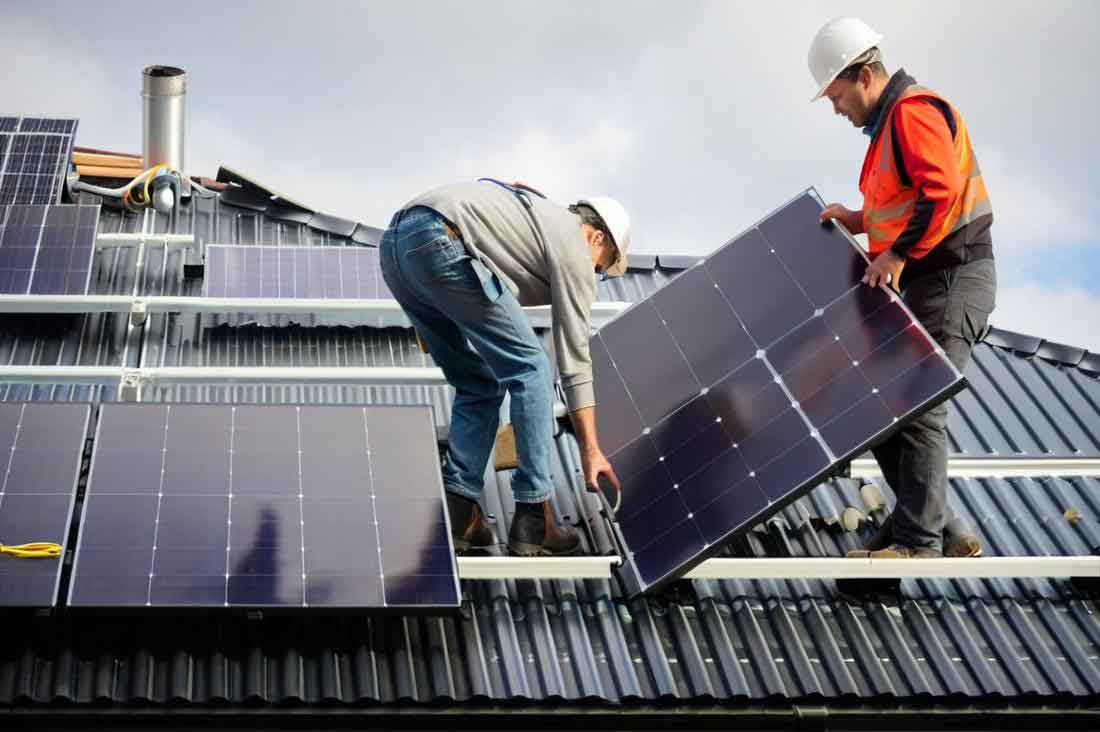
The research was conducted at a photovoltaic demonstration base that had been operational for eight years within a karst rocky desertification zone characterized by a distinct dry-wet seasonal climate. The dry season, with its limited precipitation and high evaporative demand, presents a period of significant stress for soil ecosystems, making it an ideal time to evaluate the potential buffering effects of solar panel infrastructure. The area features two primary solar panel installation configurations:
The study design included sampling from beneath these two solar panel types on both gentle (near-flat) and steep slopes. Control plots without any solar panel coverage were also established on comparable gentle and steep terrain. Soil samples were collected from the top 10 cm layer at two critical stages: the early dry season (November) and the late dry season (May), capturing the progression of drought stress. A total of 18 plots were established, with three replicate plots per treatment combination. Within each plot, soil cores were taken using a ring knife for physical property analysis and composite samples were gathered for chemical and biological assays. Key soil parameters measured included volumetric water content (VWC), water-holding capacities (saturation, capillary, and field capacity), bulk density, porosity, pH, soil organic carbon (SOC), total nitrogen (TN), total phosphorus (TP), and the activities of key enzymes (urease, alkaline phosphatase, catalase).
Soil Moisture Dynamics Under Varying Solar Panel Heights
The presence of solar panels created a significant spatial heterogeneity in soil moisture conditions. Throughout the dry season, areas shaded by solar panels consistently maintained higher soil moisture levels compared to the unshaded control areas. This confirms the expected shading effect of the solar panel infrastructure, which reduces direct solar radiation on the soil surface, thereby lowering soil temperature and suppressing evaporative water loss. The data revealed a clear gradient related to solar panel height. The low solar panel configuration, by virtue of being closer to the ground, provided more extensive and consistent shading, resulting in superior soil moisture conservation. The difference was particularly pronounced on gentle slopes, where water infiltration is typically higher and surface runoff lower compared to steep slopes.
The quantitative results for soil water characteristics are summarized in the table below, which presents average values for the early and late dry season across the different treatments. The values clearly illustrate the advantage of the low solar panel on gentle terrain (LP-Gentle).
| Treatment & Slope | Period | Volumetric Water Content (%) | Saturated Water Capacity (g/kg) | Capillary Water Capacity (g/kg) | Field Capacity (g/kg) |
|---|---|---|---|---|---|
| Low Panel – Gentle | Early Dry | 35.2 ± 0.6a | 559.5 ± 51.3a | 416.9 ± 11.3a | 325.1 ± 12.2ab |
| Low Panel – Steep | Early Dry | 32.0 ± 1.0b | 464.1 ± 21.9b | 409.0 ± 23.0ab | 345.1 ± 17.5a |
| High Panel – Gentle | Early Dry | 25.2 ± 0.9c | 424.4 ± 23.0bc | 376.8 ± 15.6bcd | 311.3 ± 27.0bc |
| High Panel – Steep | Early Dry | 24.2 ± 0.8cd | 419.5 ± 32.9bc | 356.5 ± 21.0cd | 283.2 ± 14.5cd |
| Control – Gentle | Early Dry | 23.1 ± 1.3d | 415.9 ± 70.8bc | 380.2 ± 16.1bc | 301.5 ± 3.1bc |
| Control – Steep | Early Dry | 20.6 ± 0.9e | 383.1 ± 11.4c | 345.2 ± 18.5d | 261.9 ± 6.5d |
| Low Panel – Gentle | Late Dry | 13.6 ± 0.8a | 276.1 ± 79.3ab | 179.2 ± 14.1ab | 97.3 ± 4.2a |
| Low Panel – Steep | Late Dry | 12.5 ± 1.1a | 194.4 ± 48.4bc | 147.5 ± 19.1bc | 86.0 ± 6.6b |
| High Panel – Gentle | Late Dry | 10.8 ± 1.4b | 268.8 ± 68.3ab | 193.8 ± 51.5a | 73.5 ± 7.7c |
| High Panel – Steep | Late Dry | 8.7 ± 1.7c | 183.0 ± 48.7a | 123.2 ± 22.3ab | 55.2 ± 10.9d |
| Control – Gentle | Late Dry | 7.6 ± 0.5cd | 192.3 ± 8.9bc | 140.0 ± 5.1bc | 53.6 ± 2.8d |
| Control – Steep | Late Dry | 6.9 ± 0.1d | 176.1 ± 8.4c | 114.1 ± 1.9c | 45.7 ± 2.8d |
Note: Different superscript letters within a column for each period indicate significant differences (p < 0.05).
The relationship between solar panel height (H), terrain slope (S, in radians), and soil volumetric water content (θ) can be conceptually modeled. The shading efficiency (SE) of a panel decreases with increasing height and is modified by slope. A simplified representation is:
$$ SE \propto \frac{1}{H \cdot (1 + k \cdot \tan(S))} $$
where \(k\) is a terrain coefficient. Soil moisture conservation is then positively correlated with shading efficiency and the soil’s inherent water-holding capacity (WHC), which is itself influenced by soil physical properties altered by the solar panel microclimate:
$$ \theta_{dry} = f(SE, WHC) = \alpha \cdot SE + \beta \cdot WHC + \epsilon $$
Here, \(\alpha\) and \(\beta\) are positive coefficients, and \(\epsilon\) represents other environmental factors. The data supports that lower H and gentler S maximize SE, leading to higher θ, as seen in the LP-Gentle treatment.
Soil Nutrient Responses to Solar Panel-Induced Microclimates
The modification of the soil moisture regime by the solar panels had profound and complex effects on soil nutrient contents. For total nitrogen (TN) and total phosphorus (TP), a consistent pattern emerged across the dry season: nutrient content was inversely related to solar panel height. The low solar panel treatments, especially on gentle slopes, retained significantly higher levels of TN and TP compared to both the high panel treatments and the unshaded controls. This suggests that the improved moisture conditions under low panels helped reduce the loss of these nutrients, potentially by limiting leaching (even in the dry season, dew and rare precipitation events can cause movement) and by creating a more stable environment for organic matter and nutrient complexes.
The dynamics of soil organic carbon (SOC) presented a more nuanced picture. In the early dry season, the low solar panel on gentle slope also showed the highest SOC content. However, by the late dry season, a striking shift occurred: the unshaded control plots exhibited significantly higher SOC content than all the solar panel-shaded areas. On average, SOC under solar panels was about 35% lower than in the controls by the end of the drought. This indicates a potential divergence in carbon cycling processes. The shaded, cooler, and more humid environment under the solar panels may have initially favored SOC retention, but over the prolonged dry period, it might have also supported different microbial activity or plant litter input dynamics compared to the exposed, fluctuating conditions of the control areas.
| Nutrient & Treatment | Early Dry Season (g/kg) | Late Dry Season (g/kg) |
|---|---|---|
| SOC – Low Panel, Gentle | 15.48 ± 1.2a | 22.15 ± 2.1b |
| SOC – Low Panel, Steep | 12.31 ± 0.9b | 19.87 ± 1.8bc |
| SOC – High Panel, Gentle | 10.05 ± 0.8c | 17.92 ± 1.5c |
| SOC – High Panel, Steep | 8.80 ± 0.7d | 14.87 ± 1.3d |
| SOC – Control, Gentle | 9.95 ± 0.8c | 30.49 ± 3.0a |
| SOC – Control, Steep | 9.12 ± 0.7cd | 27.33 ± 2.5a |
| TN – Low Panel, Gentle | 3.17 ± 0.3a | 2.20 ± 0.2a |
| TN – Low Panel, Steep | 2.65 ± 0.2b | 1.65 ± 0.15b |
| TN – High Panel, Gentle | 2.11 ± 0.2c | 1.85 ± 0.17ab |
| TN – High Panel, Steep | 1.45 ± 0.1d | 1.15 ± 0.10c |
| TN – Control, Gentle | 1.89 ± 0.2c | 1.42 ± 0.13bc |
| TN – Control, Steep | 1.19 ± 0.1d | 0.98 ± 0.09c |
| TP – Low Panel, Gentle | 0.79 ± 0.07a | 0.53 ± 0.05a |
| TP – Low Panel, Steep | 0.68 ± 0.06ab | 0.48 ± 0.04ab |
| TP – High Panel, Gentle | 0.51 ± 0.05bc | 0.48 ± 0.04ab |
| TP – High Panel, Steep | 0.43 ± 0.04c | 0.31 ± 0.03c |
| TP – Control, Gentle | 0.47 ± 0.04c | 0.35 ± 0.03bc |
| TP – Control, Steep | 0.45 ± 0.04c | 0.27 ± 0.02c |
Note: SOC = Soil Organic Carbon, TN = Total Nitrogen, TP = Total Phosphorus. Different superscript letters within a column for each nutrient indicate significant differences (p < 0.05).
Mechanistic Drivers: Linking Soil Properties to Panel Effects
The observed patterns in soil moisture and nutrients are not direct consequences of the solar panel‘s presence alone but are mediated through changes in fundamental soil properties and biological activity. Statistical redundancy analysis (RDA) helped identify the key drivers. For soil moisture, parameters like bulk density (BD), porosity (P), and pH were strongly correlated with water-holding capacities. The installation and maintenance activities associated with the solar panel array, as well as the altered microclimate, likely affected soil structure. We found that the shaded areas, particularly under low panels, often had a lower bulk density and a more favorable pore structure, which directly enhances water retention capabilities. The relationship can be expressed as the soil’s potential water storage volume (\(V_{water}\)) being a function of porosity and pore-size distribution, which is influenced by the environmental conditions under the solar panel:
$$ V_{water} \approx \phi \cdot V_{total} – V_{non-available} $$
where \(\phi\) is porosity. The term \(V_{non-available}\) is smaller in well-structured soils with a high proportion of capillary pores, a condition seemingly promoted by the stable, shaded environment of the low solar panel.
For soil nutrients, the activities of extracellular enzymes were identified as crucial linking variables. Enzyme activities such as urease (UR) and alkaline phosphatase (AP) are catalysts for the mineralization of organic nitrogen and phosphorus, respectively. Their activity is highly sensitive to microclimate. The improved moisture and moderated temperature under the solar panels, especially the low ones, appeared to create a more conducive environment for microbial and enzymatic activity during the stressful dry season. This likely accelerated the processing of organic matter, influencing the pool sizes of available and total nutrients. The dynamic between a nutrient pool (N) and its related enzyme activity (E) can be conceptually framed as:
$$ \frac{dN}{dt} = I – L – \lambda \cdot E \cdot N $$
where \(I\) represents inputs (e.g., litter, atmospheric deposition), \(L\) represents losses (leaching, volatilization), and \(\lambda \cdot E \cdot N\) represents the enzyme-mediated mineralization or transformation rate. The solar panel-induced microclimate modulates both \(L\) (by reducing evaporation and potentially runoff) and \(E\), thereby controlling \(dN/dt\). The late-dry-season drop in SOC under panels, despite higher moisture, could be explained by a sustained higher \(\lambda \cdot E\) term for carbon-degrading enzymes compared to the controls, leading to a net decrease in the SOC pool over that period.
Synthesis and Implications
This study demonstrates that the height of a solar panel is a significant design parameter with tangible ecological consequences for the soil ecosystem beneath it. The low solar panel configuration acted as a more effective moderator of the near-surface environment, creating a cooler, more humid, and less variable microclimate. This, in turn, led to improved soil physical structure (evidenced by better porosity and water-holding capacity), which enhanced moisture retention during the critical dry season. The conservation of moisture subsequently supported greater retention of total nitrogen and phosphorus and influenced the activity of soil enzymes, creating a feedback loop that affected nutrient cycling.
The finding that soil organic carbon was ultimately lower under solar panels by the end of the dry season highlights the complexity of carbon dynamics. It suggests that while solar panel shading conserves water and some nutrients, it may alter the balance between carbon input (from vegetation) and output (microbial respiration and decomposition) over time. This warrants longer-term investigation across multiple seasonal cycles.
From a practical perspective, for solar farm developments in arid, semi-arid, or degraded ecosystems like karst rocky desertification regions, our results indicate that lower mounting heights for solar panels could be a beneficial strategy for in-situ soil conservation and rehabilitation. This is especially true on gentler slopes where the synergistic benefits are maximized. Such a design could help mitigate soil erosion, conserve scarce water resources, and maintain soil fertility, thereby supporting the broader goal of developing truly sustainable “agrivoltaic” or “ecovoltaic” systems where energy production and ecological functions are co-optimized. Future research should integrate plant community responses and detailed microbial community analysis to build a complete picture of the ecosystem impact of solar panel infrastructure.