
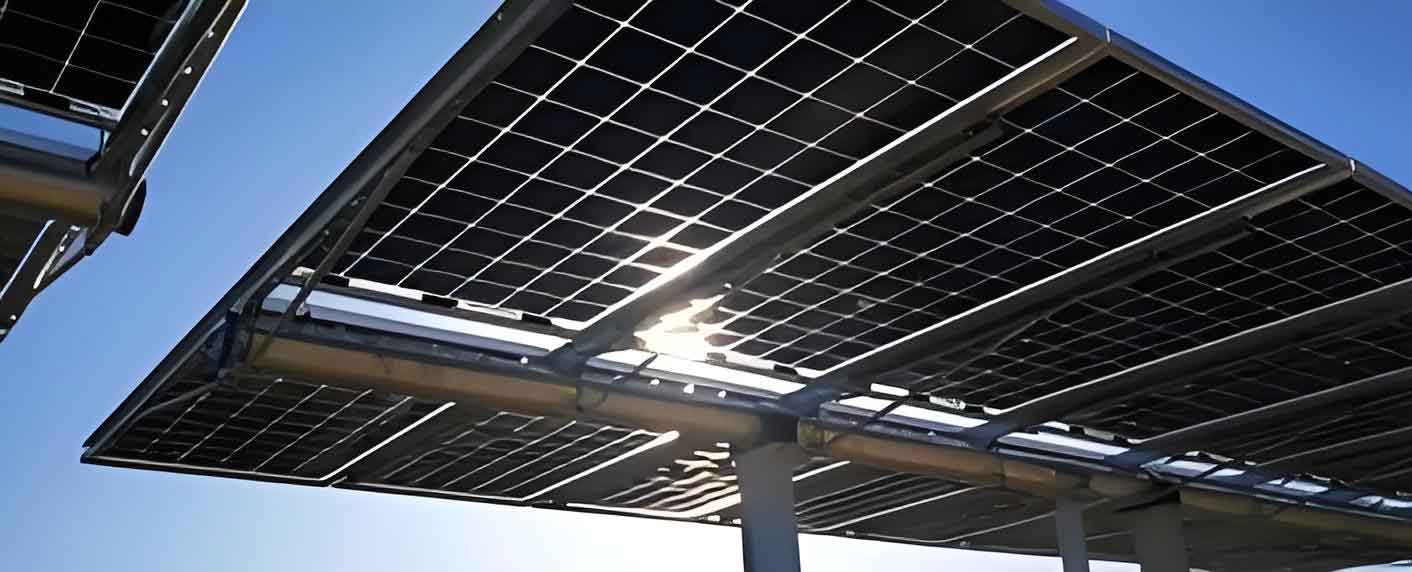
As solar energy continues to establish itself as one of the most commercially viable green energy sources, maintaining the efficiency of photovoltaic systems is paramount. The core component, the solar panel, is susceptible to performance degradation due to dust accumulation on its surface. This dust layer obstructs solar radiation, leading to a significant drop in photoelectric conversion efficiency and output power. Studies have shown that even low dust densities can cause power reductions exceeding 14%, and the relationship between dust accumulation and power loss is often exponential. Furthermore, severe dusting can induce hot spots, potentially damaging the solar panel and shortening its lifespan. Therefore, the timely and accurate detection of dust on solar panels is critical for operational efficiency and preventative maintenance.
Traditional dust detection methods, such as manual inspection or threshold-based image processing techniques, are often inadequate. Their accuracy and efficiency are heavily influenced by environmental variables like lighting conditions and weather, making them unreliable in complex, real-world scenarios. While deep learning has introduced powerful tools for object detection and image segmentation, its performance is notoriously dependent on the volume and quality of annotated training data. In practical solar farm inspections, acquiring a vast and diverse dataset of dusty solar panels under all possible conditions is challenging. This data scarcity limits the generalization capability of pure deep learning models, leading to issues like missed detections and false positives when faced with uneven dust distribution, shadows, or varying illuminations.
To address these challenges, we propose a novel, robust dust detection methodology that synergistically combines a state-of-the-art deep learning architecture, YOLO11, with traditional image processing techniques and dual-light image fusion. Our approach is designed to enhance accuracy and reliability even with limited annotated dust data. The core innovation lies in a dual-verification mechanism: a deep learning model provides primary detection, and a histogram-based image analysis pipeline performs secondary validation. Furthermore, by fusing visible light and thermal imaging data, we can not only detect dust but also assess its severity based on the induced temperature anomalies. This comprehensive framework significantly improves detection robustness in complex environments.
The fundamental workflow of our system is as follows. First, drones equipped with RTK positioning and dual-light cameras capture synchronized visible and thermal images of solar panel arrays. These images are preprocessed for distortion correction. Subsequently, an improved YOLO11-OBB (Oriented Bounding Box) model is employed to accurately extract individual solar panel strings and modules from both image types, handling inherent tilts and orientations. For each solar panel module in the visible image, a YOLO11-SEGMENT model identifies potential dust regions. Detections with high confidence are directly accepted. For low-confidence detections or modules initially flagged as dust-free, a traditional image processing pipeline analyzes the panel’s grayscale histogram to calculate a dust coverage score. This secondary check reduces both false negatives and false positives. Finally, confirmed dust regions from the visible spectrum are geo-referenced and matched with hot spots detected in the corresponding thermal image. The temperature data from these hot spots is then used to classify the dust accumulation severity into levels such as “light” or “severe,” providing actionable insights for maintenance scheduling.
The YOLO11 architecture serves as the backbone for our object detection tasks. It builds upon its predecessors with enhancements that balance accuracy and computational efficiency, making it suitable for real-time applications like drone-based inspection. For detecting solar panels, which often appear rotated in aerial imagery, we utilize the YOLO11-OBB variant. Standard horizontal bounding boxes include excessive background, harming precision. The OBB model predicts rotated rectangles, providing a much tighter fit around inclined solar panels. We further enhanced this model by integrating advanced attention mechanisms to improve feature extraction under challenging conditions.
Our first architectural improvement involves augmenting the C3K2 module with a Triple Attention mechanism, forming a C3K2-T block. This allows the model to simultaneously focus on channel-wise, spatial, and contextual features, increasing sensitivity to subtle dust patterns on solar panel surfaces. The combined attention operation can be represented as:
$$ F_{out} = X \cdot C \cdot S \cdot S_{context} $$
Where \( X \) is the input feature map, \( C \) is the channel attention weight, \( S \) is the spatial attention map, and \( S_{context} \) is the context attention map. The channel attention is computed as \( C = \sigma(W_c \cdot X) \), and the context attention as \( S_{context} = \text{SoftMax}(W_{context} \cdot X) \).
The second improvement addresses interference from shadows and background clutter. We integrated the SEAM (Squeeze-and-Excitation Attention Module) into the C2PSA module, creating a C2PSA-S block. SEAM introduces additional loss functions during training that improve the model’s robustness to affine transformations and enhance pixel-level feature consistency. The total SEAM loss is a combination:
$$ L = L_{cls} + L_{ER} + L_{ECR} $$
The classification loss \( L_{cls} \) is standard. The Equivariant Regularization loss \( L_{ER} \) and the Equivariant Cross Regularization loss \( L_{ECR} \) ensure that the feature representations are consistent across different spatial transformations, which is crucial for reliably detecting dust on solar panels viewed from slightly different angles. These losses are defined as:
$$ L_{ER} = | \mathcal{T}_A(y^0) – y^t | $$
$$ L_{ECR} = | \mathcal{T}_A(y^0) – y^t | + | y^0 – y^t | $$
Where \( y^0 \) and \( y^t \) are prediction sets, and \( \mathcal{T}_A \) represents a transformation by matrix \( A \).
For solar panels where the deep learning model yields uncertain dust predictions, our histogram-based analysis pipeline provides verification. The process for a single detected solar panel region is methodical:
- Grayscale Conversion: The RGB image of the solar panel is converted to grayscale using the standard luminance formula:
$$ I_{gray} = 0.299 \times R + 0.587 \times G + 0.114 \times B $$ - Gaussian Filtering: Noise is suppressed using a Gaussian filter with kernel \( G(x, y) \):
$$ G(x, y) = \frac{1}{2\pi\sigma^2} e^{-\frac{x^2 + y^2}{2\sigma^2}} $$ - Morphological Operations: Erosion and dilation are applied to remove small artifacts like mounting frame edges and to enhance dust regions:
$$ \text{Erosion: } A \ominus B = \{ z \,|\, (B)_z \subseteq A \} $$
$$ \text{Dilation: } A \oplus B = \{ z \,|\, (\hat{B})_z \cap A \neq \emptyset \} $$ - Histogram Analysis & Gaussian Smoothing: The grayscale histogram of the processed image is calculated and smoothed. We identify the two dominant peaks in the histogram, which typically correspond to clean and dusty areas on the solar panel. The minimum value between these peaks is determined as a dynamic threshold \( T \).
- Adaptive Binarization: The image is binarized using \( T \). Pixels with intensity above \( T \) (and below a very high value to ignore specular highlights) are classified as dusty, while others are classified as clean. The dust coverage ratio \( R_{dust} \) is simply:
$$ R_{dust} = \frac{N_{dust}}{N_{total}} $$
where \( N_{dust} \) is the count of dusty pixels and \( N_{total} \) is the total pixel count for the solar panel area.
This pipeline generates a dust score between 0 and 1. If the deep learning model’s confidence is below 0.65 but the histogram score is above 0.7, the solar panel is flagged as dusty. Conversely, if the model detects no dust but the histogram score exceeds 0.8, it is also flagged. This dual-check mechanism significantly bolsters reliability.
The integration of thermal imaging adds a critical physical dimension. Dust accumulation often leads to localized heating (hot spots) due to increased resistance in shaded cells. Our improved YOLO11-OBB model also detects these hot spots in thermal images. By aligning the visible and thermal images via geospatial coordinates, we can associate a dust patch on a solar panel with its corresponding thermal signature. The severity of dust accumulation is then graded based on the temperature rise \( \Delta T \) of the hot spot relative to the panel’s average temperature:
- Light Dust: \( 40^\circ C \leq T_{hotspot} < 60^\circ C \)
- Severe Dust: \( T_{hotspot} \geq 60^\circ C \)
This tri-level classification (clean, light dust, severe dust) provides prioritized guidance for cleaning crews.
To validate our proposed framework, we constructed an extensive dataset from multiple solar farms across diverse terrains and under various weather conditions. The dataset comprises approximately 100,000 synchronized visible and thermal image pairs. A subset of 5,000 visible images contains meticulously annotated dust regions on solar panels for training and evaluation. Our experimental platform utilized an Ubuntu system with Intel Xeon Gold 5218 processors and NVIDIA Quadro RTX 8000 GPUs. Models were implemented in PyTorch 1.12.1.
We employed standard evaluation metrics to quantify performance:
- Mean Average Precision (mAP): \( mAP@0.5 \) and \( mAP@0.5:0.95 \).
- Precision (P): \( P = \frac{TP}{TP + FP} \)
- Recall (R): \( R = \frac{TP}{TP + FN} \)
- Parameters and GFLOPs: To measure model complexity and computational cost.
The following table compares our improved YOLO11-OBB model against other state-of-the-art detectors for the task of solar panel string detection, demonstrating its superior accuracy and efficiency.
| Algorithm | Recall | mAP@0.5 | mAP@0.5:0.95 | Params (M) | GFLOPs |
|---|---|---|---|---|---|
| Faster R-CNN | 0.76 | 0.77 | 0.78 | 370.0 | 220 |
| SSD | 0.73 | 0.76 | 0.72 | 12.3 | 62 |
| YOLOv5s | 0.73 | 0.75 | 0.75 | 7.2 | 17 |
| YOLOv8s | 0.76 | 0.78 | 0.77 | 11.2 | 28 |
| YOLO11s-OBB (Base) | 0.80 | 0.82 | 0.79 | 13.5 | 20 |
| Ours (Improved YOLO11s-OBB) | 0.85 | 0.88 | 0.83 | 15.0 | 21 |
An ablation study further confirms the contribution of each proposed module to the detection performance for solar panels.
| Method | C2PSA-S | C3K2-T | Recall | mAP@0.5 | Params (M) | GFLOPs |
|---|---|---|---|---|---|---|
| YOLO11s-OBB (Base) | – | – | 0.80 | 0.82 | 13.5 | 20 |
| Variant ① | √ | – | 0.81 | 0.83 | 15.5 | 22 |
| Variant ② | – | √ | 0.83 | 0.85 | 13.5 | 20 |
| Ours (Variant ③) | √ | √ | 0.85 | 0.88 | 15.0 | 21 |
For the specific task of dust detection on solar panels, our two-stage strategy (detect panel first, then analyze for dust) proves highly effective. The comparative results are summarized below.
| Algorithm | Recall | mAP@0.5 | mAP@0.5:0.95 | Params (M) | GFLOPs |
|---|---|---|---|---|---|
| Faster R-CNN | 0.53 | 0.55 | 0.55 | 370.0 | 220 |
| SSD | 0.51 | 0.52 | 0.52 | 12.3 | 62 |
| YOLOv5s | 0.55 | 0.56 | 0.58 | 7.2 | 17 |
| YOLOv8s | 0.56 | 0.58 | 0.58 | 11.2 | 28 |
| YOLO11s-OBB (Base) | 0.56 | 0.59 | 0.61 | 13.5 | 20 |
| Ours (Two-Stage) | 0.62 | 0.65 | 0.63 | 7.8 | 20 |
The performance gain, especially in recall, is crucial for a maintenance application where missing a dusty solar panel is costlier than a false alarm. The integration of the histogram-based verifier pushed the final recall even higher in field tests, effectively reducing false negatives.
Hot spot detection in thermal imagery is another critical component. Our model’s performance in identifying these temperature anomalies on solar panels is competitive, as shown below.
| Algorithm | Recall | mAP@0.5 | mAP@0.5:0.95 | Params (M) | GFLOPs |
|---|---|---|---|---|---|
| Faster R-CNN | 0.64 | 0.61 | 0.59 | 370.0 | 220 |
| SSD | 0.55 | 0.57 | 0.53 | 12.3 | 62 |
| YOLOv5s | 0.66 | 0.62 | 0.57 | 7.2 | 17 |
| YOLOv8s | 0.65 | 0.67 | 0.62 | 11.2 | 28 |
| YOLO11s-OBB (Base) | 0.66 | 0.69 | 0.64 | 13.5 | 20 |
| Ours (Improved YOLO11s-OBB) | 0.73 | 0.75 | 0.71 | 7.8 | 20 |
The final, integrated system’s output provides a comprehensive assessment. For each solar panel in a farm, the system reports its status (clean/dusty), a dust coverage ratio from histogram analysis, and if dusty, a severity level based on thermal data. This multi-faceted output is far more actionable than a simple binary dust label. In field validation on over 1,000 drone-captured images, our hybrid method demonstrated a significant reduction in both missed dusty solar panels and false alarms compared to using either deep learning or traditional image processing alone. The histogram pipeline successfully validated ambiguous deep learning results and caught dusty solar panels that the model initially missed, especially in high-contrast shadow conditions or when dust patterns were subtle.
In conclusion, we have presented a robust and practical framework for detecting and assessing dust on solar panels. By innovatively fusing the powerful feature extraction of an enhanced YOLO11-OBB model with the stability of histogram-based image analysis and the physical validation offered by thermal imaging, we overcome key limitations of prior methods. Our approach delivers high accuracy in complex real-world conditions without requiring an impractically large dataset of annotated dusty solar panels. The method provides not only detection but also a severity classification, enabling prioritized and efficient cleaning operations for solar farm maintenance. Future work will focus on optimizing the model for edge computation on drones and expanding the system to dynamically monitor dust accumulation trends over time, paving the way for fully automated, intelligent solar panel cleaning systems.