
In recent years, I have closely followed the rapid evolution of solar panel technology, particularly its integration into industrial equipment and building electrical systems. This convergence represents a significant shift towards sustainable energy solutions, driven by global environmental concerns and technological innovations. Through empirical research and analysis, I aim to explore the development trends, key challenges, and future prospects of this融合 technology. The solar panel, as a core component, has transformed from a niche residential application to a critical element in large-scale industrial and architectural projects. In this article, I will delve into the historical progression, technological intricacies, market dynamics, and application scenarios, emphasizing the role of solar panels in enhancing energy efficiency and environmental friendliness.
The journey of solar panel technology can be segmented into three distinct phases, each marked by technological leaps and expanded applications. Initially, solar panels were primarily deployed in residential settings, providing clean energy to individual consumers. This phase laid the foundation for public acceptance and basic technological standards. Subsequently, as renewable energy gained prominence, the integration of solar panels into industrial and building sectors began. During this growth phase, innovations focused on improving conversion efficiency, reducing costs, and enhancing reliability. Solar panels were adapted to various architectural structures and industrial layouts, incorporating new materials and intelligent control systems. Today, we are in a mature phase where solar panel technology synergizes with smart grids and energy storage systems, enabling comprehensive energy fusion and reliable round-the-clock power supply. The future trajectory points towards heightened智能化 levels and deeper integration with storage solutions, facilitating widespread adoption across industrial设备和建筑电气系统.
| Development Phase | Timeframe | Key Characteristics | Primary Applications |
|---|---|---|---|
| Phase 1: Initial Adoption | Early 2000s and prior | Residential focus, low efficiency, high cost | Homes, small-scale standalone systems |
| Phase 2: Industrial and Building Integration | 2010s to present | Efficiency improvements, cost reduction, smart controls | Factories, commercial buildings, agricultural facilities |
| Phase 3: Maturity and Fusion | Present and beyond | Smart grid compatibility, energy storage integration, AI-driven optimization | Large-scale industrial plants, smart cities, transportation hubs |
The application domains for solar panel technology in industrial and building electrical融合 are vast and varied. One prominent area is smart manufacturing, where solar panels are integrated into factory roofs, walls, and equipment surfaces. This not only reduces reliance on traditional power grids but also lowers operational costs and carbon footprints. In commercial and office buildings, solar panels are嵌入 into façades, glass幕墙, and rooftops, transforming structures into energy-generating assets. This building-integrated photovoltaics (BIPV) approach enables partial or full energy self-sufficiency, aligning with green building standards. Additionally, solar panels are increasingly used in agricultural settings, such as greenhouses and farms, where they provide power for irrigation, lighting, and climate control systems. The integration with智能能源管理系统 further optimizes energy distribution through real-time monitoring and adaptive调度.
To quantify the energy output of a solar panel system, we can use the following formula for power generation:
$$ P = \eta \cdot A \cdot G \cdot (1 – \alpha) $$
where \( P \) is the power output in watts, \( \eta \) is the conversion efficiency of the solar panel, \( A \) is the surface area in square meters, \( G \) is the solar irradiance in watts per square meter, and \( \alpha \) represents losses due to factors like temperature, shading, or dirt. This formula highlights the importance of enhancing solar panel efficiency and optimal placement to maximize energy harvest. For instance, in industrial settings, large roof areas can be leveraged to install high-efficiency solar panels, significantly contributing to energy needs.
Current trends in solar panel technology are shaping a future of greater intelligence and adaptability. The emergence of novel materials, such as perovskite and multi-junction cells, promises higher efficiencies exceeding 30%. Moreover, the integration of artificial intelligence (AI) and the Internet of Things (IoT) enables智能监控 and predictive maintenance of solar panel systems. These technologies allow for real-time adjustments based on weather forecasts, energy demand patterns, and grid conditions, ensuring optimal performance. Another key trend is the fusion of solar panels with energy storage technologies, like advanced batteries and supercapacitors. This addresses the intermittency of solar power, enabling consistent energy supply even during non-sunny periods. The economic and policy drivers, including government subsidies and rising energy costs, are accelerating adoption across sectors.
| Trend Category | Specific Innovations | Impact on Solar Panel Technology |
|---|---|---|
| Material Science | Perovskite cells, bifacial solar panels, thin-film technologies | Increased conversion efficiency, flexibility, and durability |
| 智能化 and Control | AI algorithms, IoT sensors, blockchain for energy trading | Enhanced energy management, fault detection, and grid integration |
| Energy Storage Integration | Lithium-ion batteries, flow batteries, hydrogen storage | Improved reliability and dispatchability of solar power |
| Policy and Market Forces | Carbon pricing, net metering, corporate sustainability goals | Expanded market penetration and investment in solar panel projects |
The technological underpinnings of solar panel systems involve multiple layers of engineering excellence. At the core is the photovoltaic effect, where photons from sunlight excite electrons in semiconductor materials, generating electricity. The efficiency of this process depends on factors like bandgap energy and material purity. For a solar panel, the maximum power point (MPP) is critical, defined by:
$$ P_{max} = V_{mp} \cdot I_{mp} $$
where \( V_{mp} \) is the voltage at maximum power and \( I_{mp} \) is the current at maximum power. Advanced manufacturing techniques, such as roll-to-roll printing and laser scribing, have enabled cost-effective production of high-quality solar panels. Furthermore, system-level technologies like maximum power point tracking (MPPT) controllers optimize energy harvest by adjusting electrical operating points dynamically. Monitoring systems equipped with sensors and data analytics provide insights into performance degradation, enabling proactive maintenance and延长 lifespan.
Research hotspots and难点 in solar panel technology for industrial and building integration are multifaceted. One major focus is multi-energy fusion, where solar panels are combined with other renewables like wind or geothermal energy. This requires sophisticated hybrid system designs and control strategies to balance supply and demand. For example, the energy output from a hybrid system can be modeled as:
$$ E_{total} = E_{solar} + E_{wind} + E_{storage} $$
where \( E_{solar} \) is the energy from solar panels, \( E_{wind} \) from wind turbines, and \( E_{storage} \) from backup systems. Another hotspot is the development of efficient and affordable storage solutions. The challenge lies in achieving high energy density, long cycle life, and low costs for batteries paired with solar panels. Additionally, material science hurdles persist, such as improving the stability and scalability of next-generation光伏 materials. Smart grid integration poses technical difficulties in ensuring grid stability, power quality, and cybersecurity when numerous分布式 solar panel systems are connected.
Future directions for solar panel technology are poised to revolutionize energy systems. I anticipate a shift towards fully intelligent solar networks that autonomously manage energy flows based on real-time data. This will involve edge computing and machine learning algorithms to predict energy generation and consumption patterns. Another direction is the widespread adoption of bifacial solar panels, which capture sunlight from both sides, increasing yield by up to 30% in reflective environments. These panels are particularly suitable for industrial installations with high-albedo surfaces. Moreover, the concept of energy-positive buildings, where solar panels generate more energy than consumed, will become mainstream through advanced design and integration techniques.
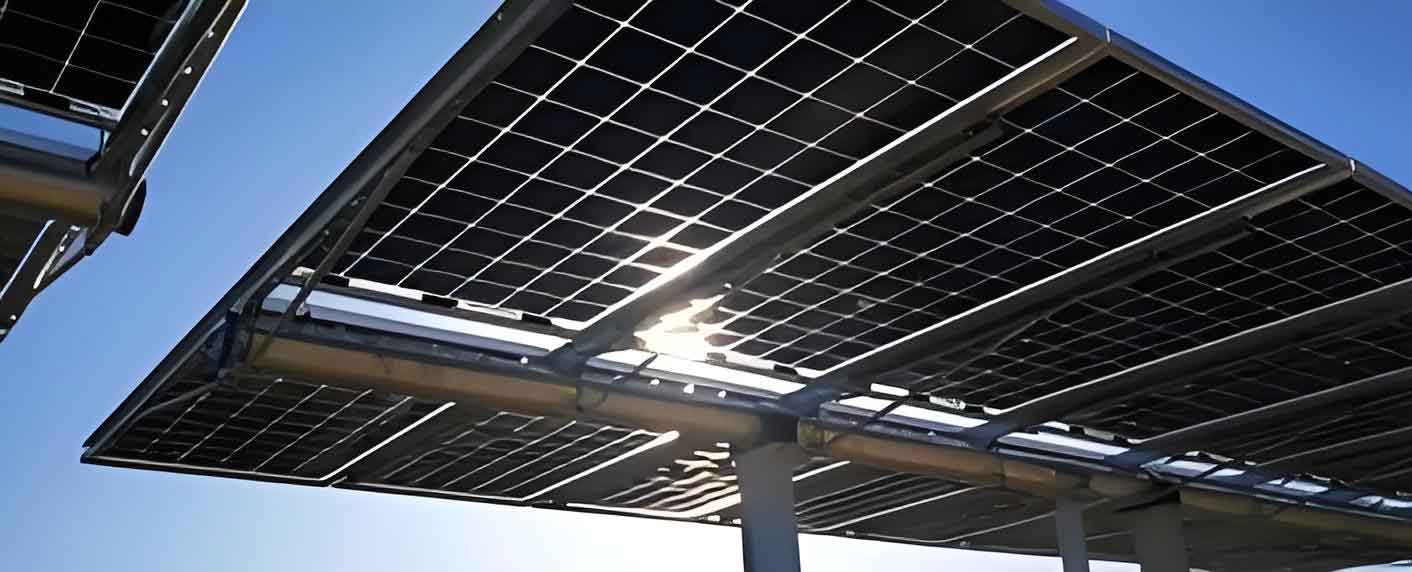
The market前景 for solar panel technology in industrial and building integration is exceptionally promising. Global market规模 has been expanding rapidly, with solar panel installations growing at a compound annual growth rate (CAGR) of over 20% in recent years. In 2022, the photovoltaic industry chain achieved record-high production outputs, with total产值 exceeding 1.4 trillion yuan. This growth is fueled by declining costs of solar panels, supportive policies, and increasing corporate commitments to sustainability. The application scenarios are diverse, ranging from industrial rooftops to commercial complexes and infrastructure projects. For instance, solar panels are extensively used in communication基站, water treatment plants, parking lots, and logistics centers, contributing to decentralized energy generation.
| Application Scenario | Estimated Market Share | Key Benefits |
|---|---|---|
| Industrial Factory Roofs | 40% | Large area availability, high energy consumption offset |
| Commercial and Office Buildings | 25% | Architectural integration, reduced operational costs |
| Agricultural and Greenhouse Facilities | 15% | Dual-use land, support for precision farming |
| Transportation Infrastructure (e.g., parking lots, stations) | 10% | Shaded structures, EV charging integration |
| Others (e.g., communication bases, water plants) | 10% | Remote power supply, reliability enhancement |
The competitive landscape in the solar panel market is dynamic and intense. Leading manufacturers continuously innovate to produce higher-efficiency panels at lower costs, leveraging economies of scale. System integrators and technology firms are competing to offer smart solutions that combine solar panels with energy management software. Emerging players, including startups, are introducing disruptive business models, such as solar-as-a-service, which lowers upfront barriers for adoption. However, challenges like supply chain constraints, raw material price volatility, and regulatory uncertainties can impact market dynamics. Despite this, the overall trajectory points towards increased consolidation and technological differentiation, with solar panels becoming more ubiquitous across sectors.
In conclusion, the integration of solar panel technology into industrial equipment and building electrical systems holds immense potential for a sustainable energy future. My analysis indicates that advancements in材料,智能化 controls, and storage integration will drive further efficiency gains and cost reductions. The broad application scenarios, from smart factories to energy-positive buildings, underscore the versatility of solar panels. As market forces and policy support align, I envision widespread adoption that reduces carbon emissions and enhances energy security. The ongoing innovation in solar panel technology will undoubtedly play a pivotal role in transitioning towards a cleaner, more resilient global energy landscape, empowering industries and communities alike.
To further illustrate the technical aspects, consider the efficiency improvement trajectory of solar panels over time. The empirical formula for efficiency growth can be approximated as:
$$ \eta(t) = \eta_0 + k \cdot \ln(t) $$
where \( \eta(t) \) is the efficiency at time \( t \), \( \eta_0 \) is the initial efficiency, and \( k \) is a constant representing technological progress rate. This logarithmic trend highlights the incremental yet sustained advancements in solar panel performance. Additionally, the levelized cost of electricity (LCOE) for solar panel systems has decreased significantly, making them competitive with conventional sources. The LCOE can be calculated as:
$$ LCOE = \frac{\sum_{t=1}^{n} \frac{I_t + M_t}{(1+r)^t}}{\sum_{t=1}^{n} \frac{E_t}{(1+r)^t}} $$
where \( I_t \) is the investment cost in year \( t \), \( M_t \) is the maintenance cost, \( E_t \) is the energy output, \( r \) is the discount rate, and \( n \) is the system lifetime. This metric underscores the economic viability of solar panels in long-term deployments.
In summary, the fusion of solar panel technology with industrial and building electrical systems is not just a trend but a transformative shift. Through continuous research and development, we can overcome existing challenges and unlock new possibilities, ensuring that solar panels remain at the forefront of the renewable energy revolution.