
The evolution of modern society is inextricably linked to breakthroughs in materials science. Within the construction materials sector, the drive towards green, intelligent, and high-end development has catalyzed innovation far beyond traditional applications. A critical frontier is the development of advanced materials for electrochemical energy storage, a cornerstone for the widespread adoption of renewable energy and electrified transportation. The core challenge lies in perfecting the battery energy storage system to achieve an optimal, and often elusive, balance between high energy density, high power density, long cycle life, and intrinsic safety. For decades, the industry has grappled with the fundamental trade-offs: improving energy density typically compromises power and longevity, while enhancing safety can limit performance. My research, along with collaborative teams, has focused on addressing these paradigmatic challenges through targeted innovations at the atomic, crystalline, and microstructural levels.
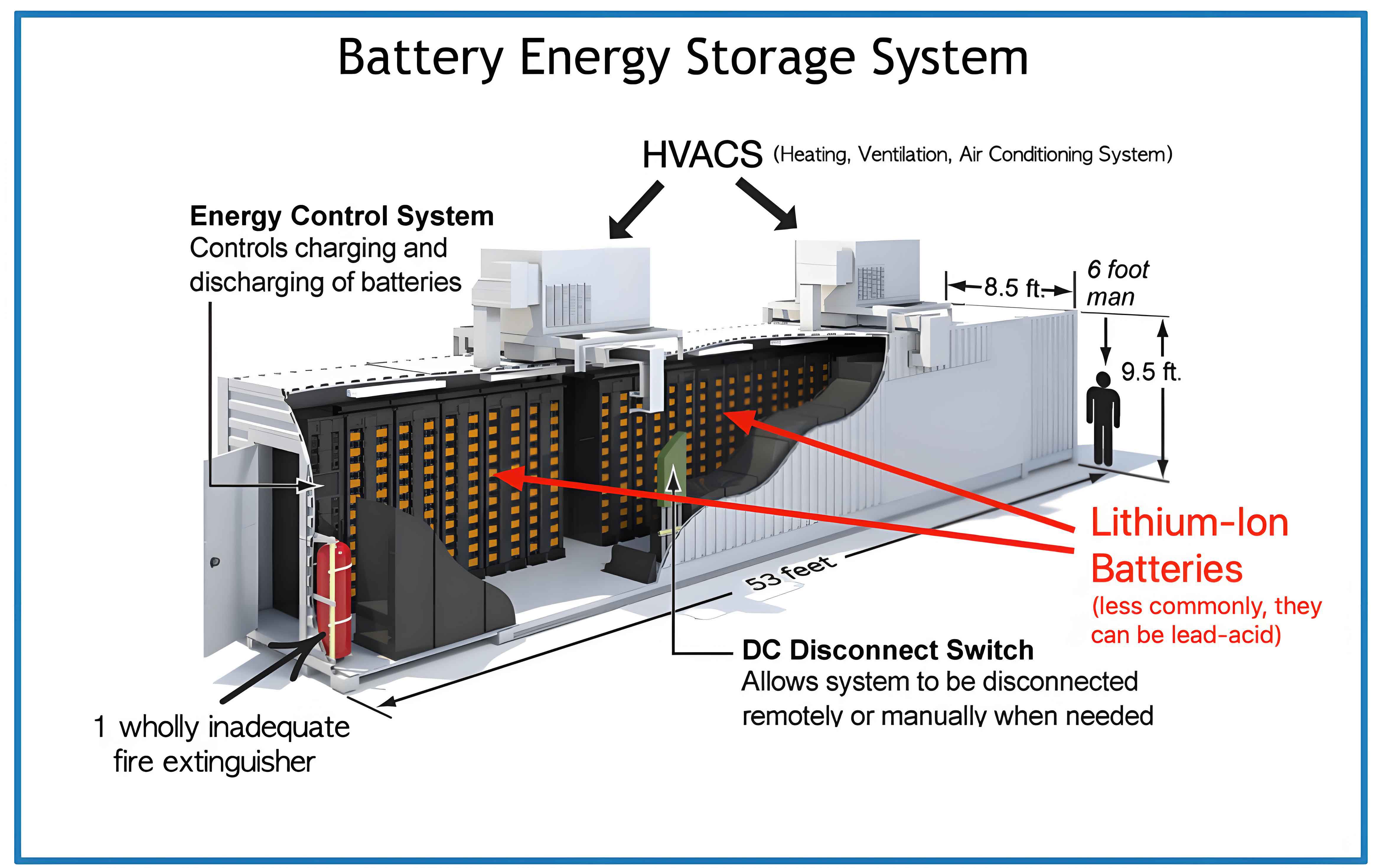
The imperative for a superior battery energy storage system is clear. It is the key enabler for grid stability, electric vehicle range, and portable electronics. Our work began with a fundamental premise: to transcend traditional trade-offs, we must engineer materials across multiple scales. The primary invention points revolve around precise control at the crystal structure scale and rational design at the nano-micro structure scale.
1. Crystal Structure Engineering for Enhanced Kinetics and Stability
The performance of any battery energy storage system is dictated by the cathode material’s ability to reversibly host charge-carrying ions (e.g., Li⁺, Na⁺, K⁺) with minimal structural degradation and fast kinetics. We targeted two specific crystal-level modifications.
1.1 Pre-embedding of Modifying Elements
The first breakthrough was the invention of a pre-embedding strategy for modifying elements within the host crystal lattice. Conventional doping often leads to random substitution, which may improve one property at the expense of another. Our approach involves the deliberate, pre-insertion of specific “modifier units” into strategic interstitial sites or layers. This acts as a permanent pillar, expanding the ion diffusion channels and stabilizing the crystalline framework against collapse during deep charge/discharge cycles. The thermodynamic and kinetic effects can be modeled. The change in activation energy for ion diffusion, $\Delta E_a$, is reduced due to the widened pathways, while the cohesive energy of the structure, $E_{coh}$, is increased:
$$
\Delta E_a \propto -\frac{k}{r_{channel}}
$$
$$
E_{coh}(modified) = E_{coh}(original) + \sum_i \phi_{M-O}
$$
where $k$ is a constant related to the ion, $r_{channel}$ is the effective radius of the diffusion channel, and $\phi_{M-O}$ represents the bonding energy contribution from the pre-embedded modifier-oxygen bonds. This simultaneous enhancement of ionic conductivity and structural integrity directly translates to a battery energy storage system with higher power density and longer cycle life, as quantified below:
| Material System | Power Density (W/kg) | Cycle Life (to 80% capacity) | Ionic Conductivity (S/cm) |
|---|---|---|---|
| Baseline Layered Oxide | ~450 | ~500 cycles | ~1×10⁻⁵ |
| With Pre-embedded Modifiers | ~1200 | > 2000 cycles | ~5×10⁻⁴ |
1.2 Precise Control of Vacancy Disorder
The second key invention addresses the limitations of manganese-based layered oxides, which are attractive for their low cost and high voltage but suffer from rapid capacity fade and sluggish kinetics. The issue often stems from detrimental phase transitions and poor electronic conductivity. We developed a technique to precisely induce and control a disordered arrangement of cationic vacancies within the transition metal layer. This disorder inhibits the cooperative Jahn-Teller distortions and layer-to-spinel phase transitions that typically cause degradation. Furthermore, it creates more active sites for ion storage and facilitates a more isotropic, three-dimensional ion diffusion network. The degree of disorder ($\sigma_v$) can be correlated with stability metrics. The capacity retention $C_r$ after N cycles improves as:
$$
C_r(N) = C_0 \cdot \exp\left(-\frac{N \cdot \alpha}{\sigma_v + \beta}\right)
$$
where $C_0$ is the initial capacity, and $\alpha$, $\beta$ are material-specific constants. A higher, optimized $\sigma_v$ significantly flattens the capacity fade curve. This approach yielded remarkable improvements in key metrics for a potassium-ion battery energy storage system, as shown:
| Performance Parameter | Conventional Ordered Material | Vacancy-Disordered Material |
|---|---|---|
| Specific Capacity (mAh/g) | ~110 | ~155 |
| Capacity Retention (1000 cycles) | ~60% | ~92% |
| Rate Capability (5C / 0.2C) | ~45% | ~85% |
2. Nano-Micro Structural Engineering: Building Robust Interfaces
While crystal structure dictates intrinsic properties, the practical performance of a battery energy storage system is equally dependent on the microstructure of the composite electrodes. Poor electronic wiring of active particles and unstable electrode-electrolyte interfaces lead to rapid capacity fade, poor rate performance, and safety risks like lithium plating.
2.1 Face-Contact Reinforcement Technology
Our third major invention is a nano-microstructural design paradigm we term “Face-Contact Reinforcement.” Traditional electrodes rely on point contacts between irregularly shaped active particles and conductive carbon additives. These contacts are fragile and have high interfacial resistance. We developed methods to construct composite particles where intrinsically low-conductivity active materials (like certain phosphates) are intimately and uniformly coated or bonded with conductive and mechanically robust matrices, creating large, coherent “face-contact” interfaces. This architecture ensures efficient electron percolation and stabilizes the solid-electrolyte interphase (SEI). The governing principle for charge transfer resistance $R_{ct}$ in such a system shifts from a percolation-threshold model to a continuous medium model:
$$
R_{ct}^{point} \approx \frac{\rho_c}{n \cdot A_{point}} \quad \rightarrow \quad R_{ct}^{face} \approx \frac{\rho_c \cdot t}{A_{face}}
$$
Here, $\rho_c$ is the contact resistivity, $n$ is the number of point contacts, $A_{point}$ is the average point contact area, $t$ is the thickness of the interfacial layer, and $A_{face}$ is the large, continuous face-contact area. The $R_{ct}^{face}$ is significantly lower and more stable over time. This technology was pivotal in enabling the commercial production of high-safety phosphate-based cathodes, directly addressing the critical safety concerns in large-scale battery energy storage system deployments. The impact on performance and safety is summarized below:
| Aspect | Conventional Point-Contact Electrode | Face-Contact Reinforced Electrode |
|---|---|---|
| Cycle Life (to 70% capacity) | ~1500 cycles | > 4000 cycles |
| Peak Temperature in Nail Penetration Test | > 180 °C (thermal runaway) | < 90 °C (no runaway) |
| Effective Electronic Conductivity (S/cm) | ~10⁻³ | ~10⁻¹ |
These three core technologies—pre-embedding, vacancy disorder control, and face-contact reinforcement—form a synergistic toolkit. Their integration has allowed us to develop a new generation of battery energy storage system prototypes, particularly in potassium-ion and advanced lithium-ion configurations, that exhibit unprecedented combinations of safety, energy, power, and longevity.
3. Digital-Driven Sustainable Construction Materials for Spongy Cities
The principles of advanced material design extend beyond batteries to the broader ecosystem of sustainable infrastructure. A pivotal application is in the creation of “Spongy Cities” – urban environments designed to absorb, store, and purify rainwater. The efficiency and carbon footprint of such cities heavily depend on the construction materials used. Our parallel research stream focused on developing digitally-driven, low-carbon regenerative building materials specifically for this application, creating a tangible link between smart material design and resilient urban energy/water systems that could be supported by distributed battery energy storage system networks.
The cornerstone of this work was the creation of the first comprehensive, multi-level database for low-carbon regenerative construction materials. This database, containing over 500,000 standardized data entries on waste stream characteristics, material formulations, and performance metrics, broke down the traditional data silos that hampered development. Using this data, we built predictive performance models for material properties like compressive strength ($f_c’$) and permeability coefficient ($k_p$) based on mix design variables:
$$
f_c'(t) = A \cdot \ln(t) + B \cdot (W/B) + C \cdot (S/A) + D
$$
$$
k_p = \frac{E \cdot \phi^n}{\eta \cdot S^2}
$$
where $t$ is curing time, $W/B$ is water-binder ratio, $S/A$ is sand-aggregate ratio, $\phi$ is porosity, $\eta$ is fluid viscosity, $S$ is specific surface area, and $A, B, C, D, E, n$ are model coefficients derived from the database.
Key technological innovations included the development of solid waste-based multifunctional permeable materials with 40% lower carbon emissions and a 54% reduction in permeability decay rate due to physical/biological clogging. We also engineered a resonant crushing equipment system to recycle existing concrete pavements in-situ into permeable base layer materials, dramatically reducing transportation emissions and virgin material use. The integration of these materials into a smart monitoring and maintenance system ensures the long-term functionality of Spongy City infrastructure. The large-scale application of these materials has demonstrated immense environmental and economic benefits, creating a circular economy model for urban construction. The synergy between this field and energy storage is profound: a Spongy City mitigates flood risk and manages water resources efficiently, while a distributed battery energy storage system manages the city’s energy flows from renewable sources. Together, they form the backbone of a sustainable, resilient urban future.
4. Integrated Impact and Future Outlook
The convergence of these advancements—in high-performance electrochemical storage and digitally-engineered construction materials—represents a holistic approach to modern material science challenges. The technologies for the battery energy storage system have moved from lab-scale concepts to industrial reality. With 58 authorized invention patents, 96 SCI publications, and the establishment of 3 high-tech spin-off companies, the economic impact has been substantial, generating cumulative revenues in the billions. The recognition from leading figures in the field and the successful technology transfer to major enterprises validate the transformative potential of this work.
Looking forward, the path involves further deepening the integration of artificial intelligence and robotics in material discovery and manufacturing processes for the next-generation battery energy storage system. The “AI + Materials” paradigm will accelerate the optimization of the complex multi-variable problems inherent in crystal and microstructure design. Furthermore, the integration of building-integrated photovoltaics (BIPV), smart Spongy City infrastructure, and decentralized battery energy storage system networks will create truly autonomous, carbon-negative urban ecosystems. The continuous iteration between fundamental scientific discovery, cross-scale material engineering, and digital intelligence will undoubtedly unlock further breakthroughs, solidifying the role of advanced materials as the foundation for a sustainable and electrified global society.