
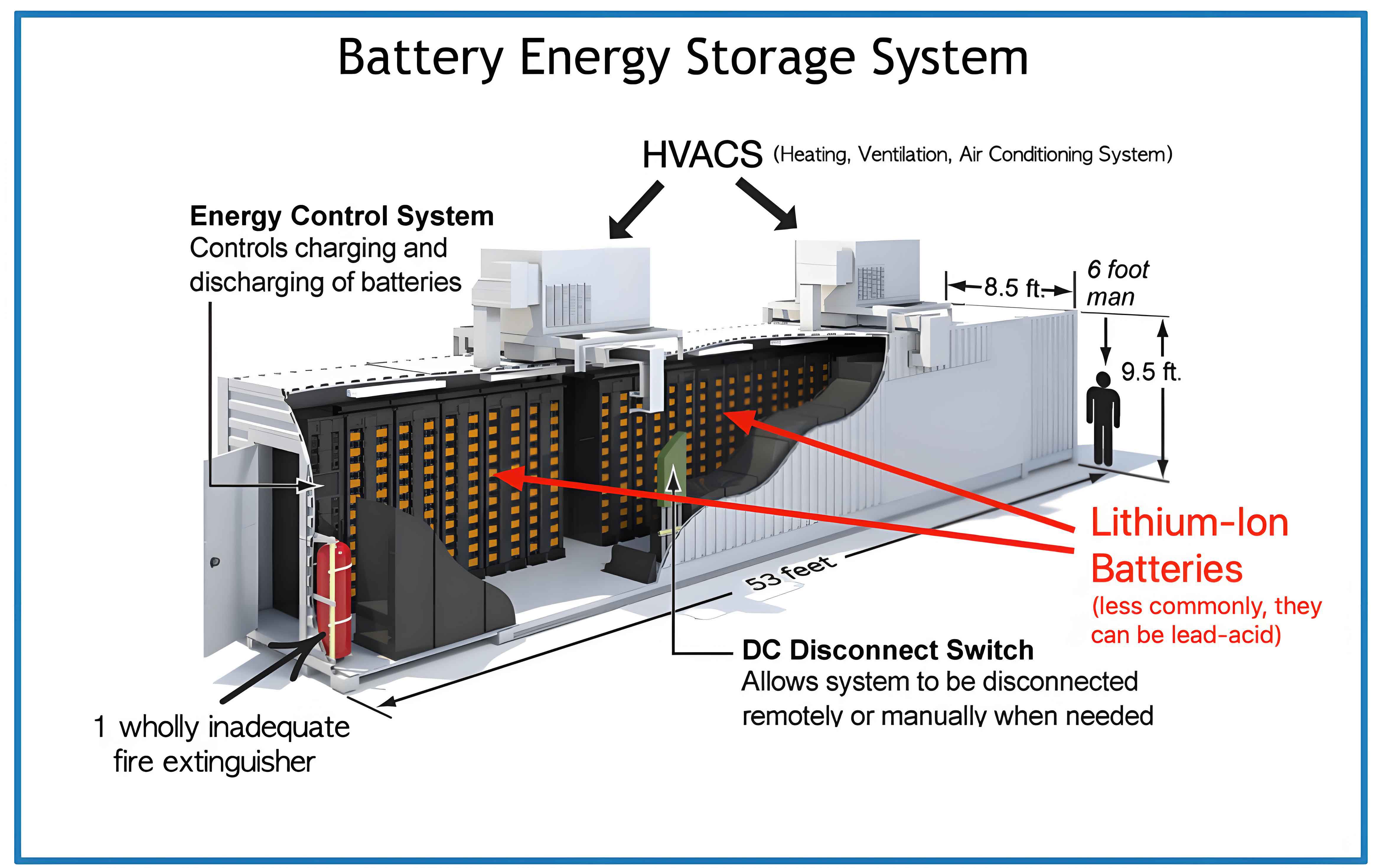
In the context of global efforts to achieve carbon peak and carbon neutrality, the transition towards renewable energy sources has accelerated, necessitating robust solutions for energy management. The battery energy storage system plays a pivotal role in stabilizing grids, storing excess energy from intermittent sources like solar and wind, and ensuring reliable power supply. As the core component of these systems, the health and performance of storage batteries directly impact efficiency, safety, and longevity. Accurate estimation of the State of Health (SOH) for batteries is therefore critical for optimizing operations, scheduling maintenance, and preventing failures in battery energy storage system deployments. In this study, we address this challenge by developing an advanced predictive model that combines bidirectional long short-term memory neural networks with optimization algorithms, tailored specifically for battery energy storage system applications. Our approach leverages data-driven methods to capture nonlinear aging patterns, enhancing prediction accuracy without relying on complex electrochemical models.
The significance of the battery energy storage system in modern energy infrastructure cannot be overstated. With the increasing integration of renewables, these systems provide essential services such as frequency regulation, load shifting, and backup power. However, batteries degrade over time due to factors like cycling, temperature fluctuations, and chemical reactions, leading to capacity fade and increased resistance. This degradation affects the overall performance of the battery energy storage system, potentially causing economic losses and safety hazards. To mitigate these issues, real-time monitoring and prediction of battery SOH are imperative. SOH serves as a key indicator of battery condition, reflecting the extent of aging and remaining useful life. Traditional methods for SOH estimation often fall short in handling the dynamic, nonlinear nature of battery aging, prompting the need for more sophisticated, data-centric approaches. Our work contributes to this domain by proposing a novel framework that integrates machine learning with metaheuristic optimization, aiming to improve the reliability and efficiency of battery energy storage system management.
Defining SOH accurately is fundamental to any prediction model. In general, SOH represents the degradation of battery capacity or performance relative to its initial state. For lithium-ion batteries, which are commonly used in battery energy storage system due to their high energy density, low self-discharge, and long cycle life, SOH is often expressed as a percentage of current capacity to rated capacity. Mathematically, this can be represented as: $$ SOH = \frac{C_{aged}}{C_{rated}} \times 100\% $$ where \( C_{aged} \) is the current capacity and \( C_{rated} \) is the nominal capacity at manufacture. However, direct measurement of capacity in operational battery energy storage system is challenging, as it requires full discharge cycles that disrupt normal operation. To address this, we redefine SOH based on the maximum discharge quantity, which aligns better with practical usage in battery energy storage system. The revised definition is: $$ SOH = \frac{Q_{max}}{C_{rated}} $$ Here, \( Q_{max} \) denotes the maximum discharge amount under standard conditions, and \( C_{rated} \) remains the rated capacity. This formulation facilitates easier data acquisition from battery management systems, making it suitable for real-world battery energy storage system applications.
Methods for obtaining SOH can be categorized into direct measurement, model-based approaches, and data-driven techniques. Direct measurement involves periodic capacity tests, which are accurate but intrusive and time-consuming, hindering continuous monitoring in a battery energy storage system. Model-based methods rely on electrochemical or equivalent circuit models to simulate battery behavior, yet they often require detailed knowledge of internal parameters and may not adapt well to varying conditions. In contrast, data-driven methods exploit historical operational data to learn aging patterns without delving into complex mechanisms. Given that battery aging is a nonlinear process influenced by multiple factors, data-driven approaches offer flexibility and scalability for large-scale battery energy storage system. Common techniques include regression models, support vector machines, and neural networks. In this study, we focus on data-driven prediction using neural networks, enhanced by optimization algorithms to improve performance. The following table summarizes key SOH estimation methods and their characteristics in the context of battery energy storage system:
| Method | Description | Advantages | Disadvantages | Suitability for Battery Energy Storage System |
|---|---|---|---|---|
| Direct Measurement | Physical capacity tests via full discharge | High accuracy | Disruptive, inefficient for real-time use | Low, due to operational constraints |
| Model-Based | Uses electrochemical or equivalent circuit models | Mechanistic insights | Requires precise parameters, less adaptive | Moderate, for controlled environments |
| Data-Driven | Learns from historical data using algorithms | Adaptive, scalable, non-intrusive | Needs large datasets, risk of overfitting | High, ideal for dynamic grid applications |
Our predictive model is built upon a bidirectional long short-term memory (BiLSTM) neural network, a type of recurrent neural network (RNN) adept at capturing temporal dependencies in sequential data. In a battery energy storage system, battery parameters such as voltage, temperature, and current evolve over time during charge-discharge cycles, making sequence modeling crucial. Traditional RNNs process information in one direction, either forward or backward, which may overlook contextual cues. BiLSTM overcomes this by incorporating two LSTM layers: one processing sequences forward and the other backward. The outputs are concatenated at each time step, providing a comprehensive representation of past and future contexts. The architecture of BiLSTM is illustrated below, though we omit detailed diagrams to adhere to guidelines. Mathematically, an LSTM unit consists of forget, input, and output gates, along with a cell state. The operations are defined as: $$ f_t = \sigma(W_f [h_{t-1}, x_t] + b_f) $$ $$ i_t = \sigma(W_i [h_{t-1}, x_t] + b_i) $$ $$ \tilde{C}_t = \tanh(W_c [h_{t-1}, x_i] + b_c) $$ $$ C_t = f_t \odot C_{t-1} + i_t \odot \tilde{C}_t $$ $$ o_t = \sigma(W_o [h_{t-1}, x_t] + b_o) $$ $$ h_t = o_t \odot \tanh(C_t) $$ Here, \( f_t \), \( i_t \), and \( o_t \) are the forget, input, and output gates, respectively; \( C_t \) is the cell state; \( \tilde{C}_t \) is a candidate cell state; \( h_t \) is the hidden state; \( x_t \) is the input at time \( t \); \( W \) and \( b \) denote weights and biases; \( \sigma \) is the sigmoid function; and \( \odot \) represents element-wise multiplication. For BiLSTM, the final hidden state combines forward and backward passes: \( h_t = [\overrightarrow{h_t}, \overleftarrow{h_t}] \), enhancing the model’s ability to learn from entire sequences in battery energy storage system data.
To optimize the BiLSTM model for SOH prediction in battery energy storage system, we integrate the Chameleon Swarm Algorithm (CSA), a metaheuristic optimization algorithm inspired by the foraging behavior of chameleons. CSA excels in global search capabilities, convergence speed, and solution accuracy, making it suitable for tuning hyperparameters like learning rates, layer units, and dropout probabilities in neural networks. The algorithm mimics chameleon dynamics through four steps: initialization, prey search, eye rotation, and prey capture. In the prey search phase, chameleon positions update based on current best positions and random exploration, formulated as: $$ y_{i,j}^{t+1} = \begin{cases} y_{i,j}^t + \mu (P_{i,j}^t – G_j^t) r_1 + \mu (G_j^t – y_{i,j}^t) r_2, & \text{if } r_3 \geq P_p \\ y_{i,j}^t + \mu (l_j + (u_j – l_j) r_4) \text{sgn}(rand-0.5), & \text{otherwise} \end{cases} $$ where \( y_{i,j}^t \) is the position of chameleon \( i \) in dimension \( j \) at iteration \( t \), \( G_j^t \) is the global best position, \( P_{i,j}^t \) is the personal best, \( u_j \) and \( l_j \) are bounds, \( \mu \) controls search ability, \( P_p \) is a perception probability, and \( r_1, r_2, r_3, r_4 \) are random numbers in [0,1]. Eye rotation simulates prey localization: $$ y_i^{t+1} = y_i^t + (y_r^t – y_i^t) R $$ with \( y_r^t \) as a rotation target and \( R \) as a rotation matrix. Prey capture updates velocity akin to particle swarm optimization: $$ v_{i,j}^{t+1} = w v_{i,j}^t + c_1 (G_j^t – y_{i,j}^t) r_1 + c_2 (P_{i,j}^t – y_{i,j}^t) r_2 $$ where \( w \) is an inertia weight, and \( c_1, c_2 \) are constants. CSA’s ability to balance exploration and exploitation helps in finding optimal hyperparameters for the BiLSTM model, thereby enhancing prediction accuracy for battery energy storage system applications.
The combined CSA-BiLSTM model flowchart involves initializing BiLSTM with random hyperparameters, using CSA to iteratively optimize them based on validation error, and then training the final model. This synergy leverages CSA’s robust search to fine-tune BiLSTM’s architecture, leading to improved generalization on unseen data from battery energy storage system. The process can be summarized in the following table, outlining key steps and their roles in SOH prediction for battery energy storage system:
| Step | Action | Purpose in Battery Energy Storage System |
|---|---|---|
| Data Collection | Gather voltage, temperature, discharge data from battery cycles | Provide inputs for learning aging patterns in real-world operation |
| Preprocessing | Normalize data, extract features like average voltage and temperature | Ensure model compatibility and highlight relevant SOH indicators |
| BiLSTM Initialization | Set up neural network with layers (e.g., 128 units), dropout, Adam optimizer | Establish baseline for sequence modeling of battery parameters |
| CSA Optimization | Use CSA to tune hyperparameters (learning rate, units, etc.) | Enhance model accuracy and convergence for diverse battery energy storage system conditions |
| Model Training | Train BiLSTM on historical data with optimized parameters | Learn nonlinear relationships between inputs and SOH output |
| Validation & Prediction | Test on new data, compute errors (MAE, RMSE) | Assess performance and deploy for real-time SOH estimation in battery energy storage system |
To validate our method, we utilize the Oxford battery aging dataset, which comprises cycling data for lithium cobalt oxide batteries with a rated capacity of 740 mAh. The dataset includes repeated charge-discharge cycles under controlled conditions, with capacity calibration every 100 cycles until SOH drops to approximately 70%. This simulates long-term aging relevant to battery energy storage system. We select average voltage and average temperature during charging as input features, as constant current charging makes current less informative, and output the maximum discharge quantity to compute SOH. Partial data samples are shown below, illustrating the relationship between SOH, charge amount, discharge current, and temperature for battery energy storage system analysis:
| SOH (%) | Charge Amount (mAh) | Discharge Current (A) | Temperature (°C) |
|---|---|---|---|
| 99.88 | 739.11 | 0.74 | 40.93 |
| 93.29 | 690.36 | 0.74 | 40.91 |
| 88.21 | 652.78 | 0.74 | 41.14 |
| 85.37 | 631.74 | 0.74 | 40.86 |
| 82.28 | 608.87 | 0.74 | 41.08 |
| 78.05 | 577.59 | 0.74 | 41.43 |
| 75.76 | 560.65 | 0.74 | 41.37 |
Experimental setup involves MATLAB 2021a for network implementation and data processing. The BiLSTM model is configured with initial parameters: a BiLSTM layer of 128 units, dropout probability of 0.2, 200 epochs, 568 learning samples, Adam optimizer, learning rate of 0.0002, CSA population size of 5, and evolution number of 5. These settings are optimized further via CSA to suit battery energy storage system demands. We compare the CSA-BiLSTM model against a standard BiLSTM model without optimization. Prediction results for SOH over cycles show that both models capture the overall declining trend, but CSA-BiLSTM predictions align more closely with reference values, with reduced fluctuations. The relative error analysis reveals that pre-optimization errors range between -2.5% and 2%, while post-optimization errors concentrate within -1% to 1%, indicating superior accuracy for battery energy storage system monitoring.
Quantitative evaluation employs mean absolute error (MAE) and root mean square error (RMSE), defined as: $$ MAE = \frac{1}{n} \sum_{i=1}^{n} |y_i – \hat{y}_i| $$ $$ RMSE = \sqrt{\frac{1}{n} \sum_{i=1}^{n} (y_i – \hat{y}_i)^2 } $$ where \( y_i \) is the true SOH value, \( \hat{y}_i \) is the predicted SOH, and \( n \) is the number of cycles. The computed errors for both models are presented below, demonstrating the efficacy of CSA optimization in enhancing battery energy storage system SOH prediction:
| Algorithm Type | MAE | RMSE |
|---|---|---|
| BiLSTM (without optimization) | 2.501 | 2.551 |
| CSA-BiLSTM (optimized) | 1.292 | 1.420 |
The results clearly show that CSA-BiLSTM achieves lower MAE and RMSE, signifying improved prediction precision and robustness. This advancement is crucial for battery energy storage system, as accurate SOH estimation enables proactive maintenance, extends battery lifespan, and optimizes energy dispatch. The reduction in errors can be attributed to CSA’s ability to fine-tune hyperparameters, allowing the BiLSTM to better capture complex aging dynamics. Additionally, the data-driven approach avoids reliance on physical models, making it adaptable to various battery chemistries and operational conditions in diverse battery energy storage system installations.
Further analysis considers the impact of input features on SOH prediction. In battery energy storage system, parameters like voltage and temperature are readily available from battery management systems, but their correlations with aging may vary. Our model incorporates average voltage and temperature during charging, as these reflect internal resistance and thermal effects that influence capacity fade. To generalize, we can express SOH as a function of multiple operational variables: $$ SOH = f(V_{avg}, T_{avg}, I, t, …) $$ where \( V_{avg} \) is average voltage, \( T_{avg} \) is average temperature, \( I \) is current, and \( t \) is time. The BiLSTM model learns this function implicitly through training, and CSA optimization ensures the learned mappings are optimal. For broader battery energy storage system applications, including large-scale installations with heterogeneous batteries, the model can be extended by incorporating additional features such as state-of-charge (SOC) profiles, cycling history, and environmental factors. This adaptability underscores the value of our approach for future smart grids integrating extensive battery energy storage system.
In conclusion, our study proposes a novel CSA-BiLSTM model for predicting the State of Health of lithium-ion batteries in battery energy storage system. By redefining SOH based on maximum discharge quantity and leveraging a bidirectional LSTM network optimized with the Chameleon Swarm Algorithm, we achieve high accuracy and robustness, as validated on the Oxford dataset. The optimized model reduces prediction errors significantly, with MAE and RMSE dropping to 1.292 and 1.420, respectively, compared to unoptimized baselines. This work contributes to the efficient management and longevity of battery energy storage system, supporting the global transition to sustainable energy. Future directions may involve real-time implementation in battery energy storage system, integration with cloud-based monitoring platforms, and exploration of other optimization algorithms for further enhancements. Ultimately, advancing SOH prediction capabilities will play a vital role in ensuring the reliability and economic viability of battery energy storage system worldwide.