
The rapid integration of intermittent renewable energy sources into the power grid has intensified the demand for efficient and large-scale energy storage solutions. Among these, Lithium-ion battery energy storage system technology stands out due to its high energy density, efficiency, and scalability. However, the long-term operational reliability and economic viability of such systems are critically dependent on the health of the battery packs. Within a battery energy storage system, packs composed of numerous cells connected in series and parallel are the fundamental building blocks. The performance of the entire system degrades as individual cells age at different rates, leading to increased inconsistency, reduced available capacity, and elevated safety risks. Therefore, accurate online estimation of the State of Health (SOH) for battery packs is paramount for predictive maintenance, lifetime assessment, and ensuring the safe operation of the battery energy storage system.
Conventional SOH estimation methods for battery packs often face significant practical challenges. Model-based approaches, reliant on precise electrochemical or equivalent circuit models, struggle with the complexity and parameter identification required for large packs under real-world grid conditions. Many data-driven methods proposed in literature focus on single-cell analysis, extracting health features from detailed voltage/current curves or incremental capacity analysis. Scaling these methods to monitor every cell within a massive battery energy storage system is computationally prohibitive and data-intensive. Furthermore, features like incremental capacity curves require stringent constant-current charging conditions, which are not always guaranteed in dynamic grid service applications like frequency regulation or peak shaving. There is a clear need for a pack-level SOH estimation method that utilizes easily accessible, system-level measurements, is robust to operational variability, and is suitable for online implementation in a real-world battery energy storage system.
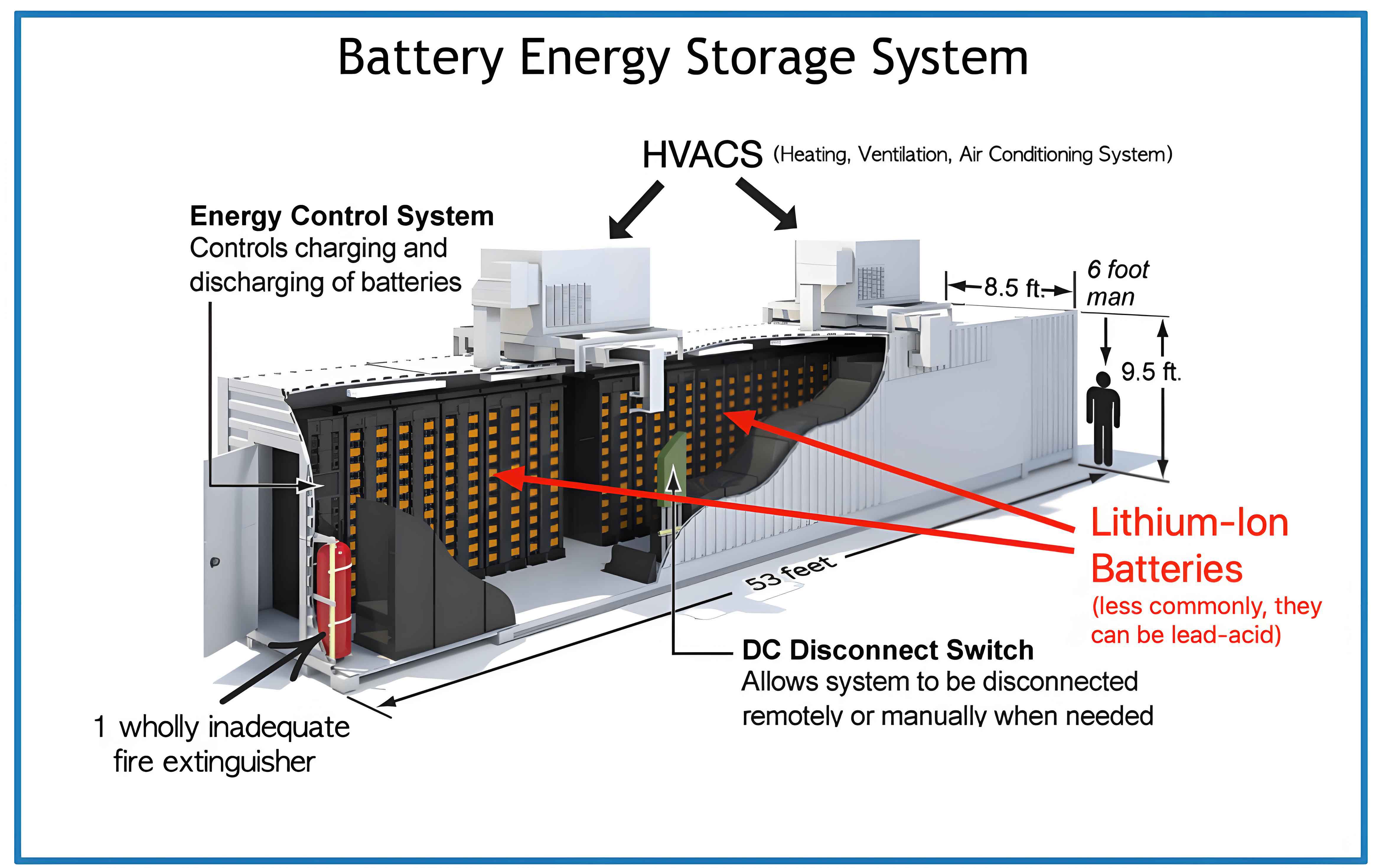
This article addresses this gap by proposing a novel, early-stage SOH detection framework for large-capacity Lithium Iron Phosphate (LFP) battery packs based on the analysis of voltage range characteristics. The core premise is that the evolution of cell-to-cell voltage differences, or voltage range, during standard operational cycles contains profound information about the pack’s collective aging and consistency loss. We demonstrate that simple features extracted from the voltage range signal are highly correlated with capacity fade. A sophisticated data-driven model, optimized via a bio-inspired algorithm, is then employed to translate these features into an accurate SOH estimate. This method circumvents the need for cell-level monitoring, relying only on pack-level current and individual cell voltage measurements—data that is inherently available in any modern battery energy storage system Battery Management System (BMS).
Fundamentals and Definitions
For a series-connected battery pack, which is the most common configuration in a battery energy storage system, the health state can be defined from both capacity and resistance perspectives. The capacity-based SOH is the most direct indicator of energy storage capability and is defined as:
$$ SOH_C(t) = \frac{C_{actual}(t)}{C_{rated}} \times 100\% $$
where $C_{actual}(t)$ is the maximum discharge capacity of the pack at time $t$ (or cycle $n$), and $C_{rated}$ is the nominal or beginning-of-life capacity of the pack. A SOH of 100% indicates a new pack, while a commonly defined end-of-life (EOL) threshold, e.g., 70-80%, signifies the need for replacement. The capacity $C_{actual}(t)$ is typically measured during a full discharge cycle at a moderate, standardized C-rate.
The State of Charge (SOC) is a complementary critical state, defined as:
$$ SOC(t) = SOC(t_0) – \frac{1}{C_{actual}(t)} \int_{t_0}^{t} \eta I(\tau) d\tau $$
where $SOC(t_0)$ is the initial SOC, $I(t)$ is the current (positive for discharge), and $\eta$ is the Coulombic efficiency. Accurate SOH knowledge is essential for precise SOC estimation, as it directly scales the capacity denominator in the Coulomb counting integral.
The key signal proposed in this work is the instantaneous voltage range $\Delta U(t)$ across the series-connected pack. It is calculated as the difference between the maximum and minimum cell voltages within the pack at any time $t$:
$$ \Delta U(t) = \max_{i \in [1, N]} (U_i(t)) – \min_{i \in [1, N]} (U_i(t)) $$
where $N$ is the number of cells in series, and $U_i(t)$ is the voltage of the $i$-th cell. This metric is a direct, real-time indicator of pack imbalance. As cells age heterogeneously due to variations in internal resistance, capacity, and self-discharge rates, their voltage trajectories during charge and discharge diverge. This divergence is acutely captured by $\Delta U(t)$, making it a potent candidate for a pack-level health indicator.
Experimental Design and Data Acquisition
To validate the proposed method, a cyclic aging experiment was conducted on a commercially available, large-capacity LFP battery pack. The pack specifications are summarized in Table 1. This choice reflects the prevalent technology used in stationary battery energy storage system applications due to its safety, longevity, and cost-effectiveness.
| Parameter | Value |
|---|---|
| Configuration | 8S (8 cells in series) |
| Nominal Voltage | 25.6 V |
| Rated Capacity | 220 Ah |
| Cell Chemistry | Lithium Iron Phosphate (LFP) |
| Charge Cut-off Voltage (per cell) | 3.65 V |
| Discharge Cut-off Voltage (per cell) | 2.7 V |
The testing protocol was designed to simulate a consistent, full-depth cycling regime common in many storage applications. The ambient temperature was controlled at 25°C. Each aging cycle consisted of the following phases, as illustrated in the conceptual current-voltage diagram in Figure 1:
- Constant-Current (CC) Charge: Charge at 0.5C (110 A) until any single cell voltage reaches 3.65 V.
- Charge Rest: Rest for 30 minutes.
- Constant-Current (CC) Discharge: Discharge at 0.5C (110 A) until any single cell voltage falls to 2.7 V.
- Discharge Rest: Rest for 30 minutes.
The maximum discharge capacity $C_{actual}(n)$ for cycle $n$ was recorded as the integral of discharge current over time. The experiment continued for hundreds of cycles, tracking the capacity fade from an initial 240 Ah down to 218 Ah, representing a SOH decline from approximately 109% to 99% of the 220 Ah rating. Throughout the test, high-frequency time-series data for pack current, total voltage, and each individual cell voltage were logged.
Voltage Range Analysis and Feature Extraction
The logged data allows for the computation of $\Delta U(t)$ for every cycle. Analysis of the $\Delta U(t)$ trajectory reveals characteristic patterns that evolve with aging. Key observations are synthesized below:
- End-of-Discharge (EOD) Surge: Due to the flat voltage plateau of LFP chemistry, significant voltage divergence occurs only at very high and very low SOC. At the end of discharge, the weakest cell (lowest capacity/highest resistance) hits the lower voltage limit first, causing a rapid increase in $\Delta U$. The magnitude of this peak is sensitive to the degree of imbalance.
- Resting Period Dynamics: During the 30-minute rest periods after charge and discharge, the voltage range relaxes. This relaxation is driven by the dissipation of concentration polarization within the cells. The stabilized voltage range value after rest, denoted as $\Delta U_{rest}$, is a quasi-steady-state indicator of the open-circuit voltage (OCV) spread, which is directly linked to capacity and SOC imbalance.
- Aging Trends: As the pack ages cyclically, two prominent trends are observed in the $\Delta U(t)$ signal:
- The stabilized voltage range after the discharge rest ($\Delta U_{rest,dis}$) shows a monotonic decreasing trend with cycle number.
- The time required to complete the characteristic $\Delta U(t)$ waveform (from charge rest start to discharge rest end) shortens.
These observations lead to the extraction of five candidate health features from the $\Delta U(t)$ profile of each cycle $n$:
- $F_1(n)$: Voltage range after 30-minute charge rest, $\Delta U_{rest,chg}(n)$.
- $F_2(n)$: Voltage range after 30-minute discharge rest, $\Delta U_{rest,dis}(n)$.
- $F_3(n)$: Voltage range at the instant of charge termination, $\Delta U_{end,chg}(n)$.
- $F_4(n)$: Voltage range at the instant of discharge termination, $\Delta U_{end,dis}(n)$.
- $F_5(n)$: Time-period of the complete voltage range waveform, $T_{cycle}(n)$.
Health Factor Screening via Correlation Analysis
Not all extracted features may have a strong or consistent correlation with the pack’s SOH. To identify the most prognostically useful features, two complementary correlation analyses were performed: Pearson correlation coefficient (linear) and Grey Relational Analysis (GRA) (nonlinear trend similarity).
The Pearson correlation coefficient $\rho$ between a feature sequence $X = \{F(n)\}$ and the SOH sequence $Y = \{SOH(n)\}$ is calculated as:
$$ \rho_{XY} = \frac{\sum_{n=1}^{N} (F(n) – \bar{F})(SOH(n) – \bar{SOH})}{\sqrt{\sum_{n=1}^{N} (F(n) – \bar{F})^2 \sum_{n=1}^{N} (SOH(n) – \bar{SOH})^2}} $$
where $\bar{F}$ and $\bar{SOH}$ are the mean values. $|\rho|$ close to 1 indicates a strong linear relationship.
GRA is particularly useful for assessing the similarity in geometrical shape between two sequences. The grey relational grade $r$ is computed as follows. First, the sequences are normalized. Then, the grey relational coefficient $\xi(n)$ at each point is found:
$$ \xi(n) = \frac{\min_n |SOH'(n) – F'(n)| + \zeta \max_n |SOH'(n) – F'(n)|}{|SOH'(n) – F'(n)| + \zeta \max_n |SOH'(n) – F'(n)|} $$
where $SOH’$ and $F’$ are normalized sequences, and $\zeta$ is a distinguishing coefficient, typically set to 0.5. The final grey relational grade $r$ is the average of $\xi(n)$:
$$ r = \frac{1}{N} \sum_{n=1}^{N} \xi(n) $$
A value of $r$ closer to 1 indicates a higher degree of trend similarity. The results of both analyses on the experimental dataset are consolidated in Table 2.
| Feature | Description | Pearson Correlation ($|\rho|$) | Grey Relational Grade ($r$) |
|---|---|---|---|
| $F_1$ | $\Delta U_{rest,chg}$ | 0.9795 | 0.7428 |
| $F_2$ | $\Delta U_{rest,dis}$ | 0.9835 | 0.9594 |
| $F_3$ | $\Delta U_{end,chg}$ | 0.7451 | 0.5706 |
| $F_4$ | $\Delta U_{end,dis}$ | 0.8026 | 0.6775 |
| $F_5$ | $T_{cycle}$ | 0.9415 | 0.6839 |
Based on high thresholds (e.g., $|\rho| > 0.95$ and $r > 0.90$), features $F_1$ and $F_2$ are selected as the primary health factors. They exhibit an exceptionally strong correlation with SOH, both linearly and in terms of trend similarity. These two features—the settled voltage range after charge and discharge rest—are robust, easy to compute, and form the input vector for the subsequent SOH estimation model.
The SSA-BiLSTM Estimation Model
The mapping from the health factor vector $[F_1(n), F_2(n)]$ to SOH(n) is inherently complex and sequential, as battery aging is a cumulative, time-dependent process. To capture these temporal dynamics, a Bidirectional Long Short-Term Memory (BiLSTM) network is chosen as the core regression model. Unlike standard LSTM, which processes sequences in forward order only, BiLSTM consists of two separate LSTM layers: one processing the sequence from past to future, and another from future to past. The final output at each time step is a combination of both contexts, allowing the model to learn from past trends and future contextual information within the sequence window, leading to more stable and accurate estimations. The hidden state update for the forward LSTM layer is given by:
$$ \begin{aligned}
\vec{h}_t &= \text{LSTM}(x_t, \vec{h}_{t-1}; \vec{\theta}) \\
\end{aligned} $$
and similarly, the backward layer computes:
$$ \begin{aligned}
\reflectbox{$\vec{\reflectbox{$h$}}$}_t &= \text{LSTM}(x_t, \reflectbox{$\vec{\reflectbox{$h$}}$}_{t+1}; \reflectbox{$\vec{\reflectbox{$\theta$}}$}) \\
\end{aligned} $$
The final hidden state used for prediction is the concatenation: $h_t = [\vec{h}_t; \reflectbox{$\vec{\reflectbox{$h$}}$}_t]$.
The performance of a BiLSTM network is highly sensitive to its hyperparameters, such as the number of hidden units, the initial learning rate, and the number of training epochs. Manually tuning these is inefficient. Therefore, the Sparrow Search Algorithm (SSA), a recent and efficient metaheuristic optimizer, is employed to automatically find the optimal hyperparameter set. SSA simulates the foraging and anti-predation behaviors of sparrow flocks, comprising discoverers, followers, and scouts. The position update equations for discoverers (with the best fitness) and followers are designed to balance global exploration and local exploitation. The discoverer’s position update is:
$$ X_{i,j}^{t+1} = \begin{cases}
X_{i,j}^{t} \cdot \exp\left(-\frac{i}{\alpha \cdot T_{max}}\right), & \text{if } R_2 < ST \\
X_{i,j}^{t} + Q \cdot L, & \text{if } R_2 \ge ST
\end{cases} $$
where $X_{i,j}^{t}$ is the position of the $i$-th sparrow in dimension $j$ at iteration $t$, $T_{max}$ is the maximum iterations, $\alpha$ is a random number, $R_2$ and $ST$ are alarm and safety thresholds, and $Q$ is a random number. Scouts (a portion of the population) perform random walks to avoid local optima. The fitness function for the SSA is the Root Mean Square Error (RMSE) of the BiLSTM model on a validation set. The optimized hyperparameters found by SSA for this application were: 119 hidden units, an initial learning rate of 0.0191, and 148 training epochs.
Model Validation and Performance Comparison
The experimental dataset of 720 cycles was split into a training set (first 500 cycles) and a testing set (the remaining 220 cycles). The proposed SSA-BiLSTM model was trained and compared against three established benchmark algorithms: Gaussian Process Regression (GPR), Support Vector Regression (SVR), and a standard LSTM network (without SSA optimization).
The estimation results and the absolute error profiles are shown conceptually in Figures 2 and 3. All models, when fed with the selected health factors ($F_1$, $F_2$), achieved a maximum absolute SOH estimation error within ±0.8% on the test set. This unequivocally validates the effectiveness of the voltage range rest features as robust health indicators for the battery energy storage system pack.
A quantitative comparison of model performance is presented in Table 3, using RMSE and Mean Absolute Error (MAE) as metrics:
$$ RMSE = \sqrt{\frac{1}{N} \sum_{n=1}^{N} (SOH_{true}(n) – SOH_{est}(n))^2} $$
$$ MAE = \frac{1}{N} \sum_{n=1}^{N} |SOH_{true}(n) – SOH_{est}(n)| $$
| Model | RMSE (%) | MAE (%) | Key Characteristics |
|---|---|---|---|
| SSA-BiLSTM (Proposed) | 0.071 | 0.061 | Captures bidirectional temporal dependencies; hyperparameters optimized by SSA. |
| Standard LSTM | 0.175 | 0.160 | Captures forward temporal dependencies; manual hyperparameter tuning. |
| Gaussian Process Regression (GPR) | 0.473 | 0.377 | Provides uncertainty bounds; performance sensitive to kernel choice. |
| Support Vector Regression (SVR) | 0.189 | 0.176 | Effective in high-dimensional spaces; sensitive to kernel and penalty parameters. |
The results demonstrate the clear superiority of the proposed SSA-BiLSTM model, achieving an RMSE as low as 0.071% and MAE of 0.061%. This represents a significant improvement over the other models. The standard LSTM performed well but was outperformed by its bidirectional, optimized counterpart. GPR and SVR, while competent, showed higher error metrics, likely due to their lesser inherent capacity to model the complex temporal degradation dynamics compared to recurrent neural networks.
Discussion and Implications for Battery Energy Storage Systems
The methodology presented here offers several compelling advantages for real-world deployment in grid-scale battery energy storage system applications:
- Practical Data Requirements: It relies solely on cell voltages and pack current, which are fundamental measurements in any BMS. No special cycling or complex electrochemical data is required.
- Pack-Level Focus: By analyzing the pack’s collective voltage range, it bypasses the need for computationally expensive cell-by-cell SOH estimation, dramatically reducing the monitoring overhead for a large battery energy storage system with thousands of cells.
- Early Detection Capability: The selected features ($\Delta U_{rest}$) show strong correlation from the early stages of capacity fade, enabling proactive health management before significant performance degradation occurs.
- Online Suitability: The feature extraction process (finding voltage range after a rest period) is simple and can be performed in real-time by the BMS. The trained SSA-BiLSTM model, once deployed, can provide a near-instantaneous SOH estimate after each operational cycle.
Future work will focus on enhancing the robustness and generalizability of this approach. The next critical step is to validate the method under more dynamic and realistic grid service profiles, such as frequency regulation (FR) or solar smoothing duty cycles, which involve irregular charge/discharge pulses. The health feature extraction logic may need adaptation to identify stable pseudo-rest periods within such variable profiles. Furthermore, transfer learning techniques could be explored to adapt a model trained on one pack or chemistry to another with minimal new data, a crucial feature for managing fleets of battery energy storage system assets. Investigating the fusion of voltage range features with other easily accessible pack-level signals, like average temperature or temperature gradient, may further improve estimation accuracy and robustness across different operating conditions.
Conclusion
Accurate and efficient health monitoring is a cornerstone for the reliable and economic operation of large-scale battery energy storage system infrastructure. This article has introduced a novel, data-driven framework for the online estimation of battery pack State of Health based on voltage range characteristics. The core innovation lies in leveraging the easily measurable voltage imbalance signal—a direct consequence of heterogeneous cell aging—as a powerful health indicator. Through systematic aging experiments, we identified that the settled voltage range after operational rest periods holds a profound correlation with pack capacity fade.
By employing a advanced Bidirectional LSTM network, whose architecture was automatically optimized using the Sparrow Search Algorithm, we established a highly accurate mapping from these simple voltage range features to the pack’s SOH. The proposed SSA-BiLSTM model demonstrated superior performance compared to conventional machine learning models, achieving an exceptionally low estimation error. This methodology provides a practical, pack-centric solution for SOH estimation, effectively reducing the complexity associated with cell-level analysis. It represents a significant step towards implementing intelligent, predictive health management systems that can enhance the safety, longevity, and return on investment for modern battery energy storage system installations, ensuring their critical role in the stability of the future renewable-powered grid.