
The evolution towards a sustainable energy infrastructure is fundamentally intertwined with the development of advanced battery energy storage systems. These systems are pivotal for mitigating the intermittency of renewable sources like solar and wind, enabling grid stability, and powering the electrification of transport. As the scale and complexity of battery energy storage systems grow, ensuring their safety, reliability, and longevity becomes paramount. Traditional monitoring methods, while useful, often fall short in providing the comprehensive, real-time, and spatially resolved data needed for sophisticated Battery Management Systems (BMS). This is where optical fiber sensing technology emerges as a transformative tool. My focus here is to elaborate on the significant progress in utilizing optical fiber sensors for battery energy storage system monitoring, detailing their principles, applications across key parameters, and future pathways.
Optical fiber sensors offer a unique confluence of advantages perfectly suited for the harsh and complex environment within batteries. Their intrinsic characteristics—immunity to electromagnetic interference, small size, lightweight, chemical inertness, and capability for multiparameter and distributed sensing—allow for integration directly onto cell surfaces or even within electrode stacks with minimal intrusion. This enables the capture of critical internal states that external sensors cannot access. The core principle involves modulating light properties (intensity, wavelength, phase, polarization) as it travels through the fiber in response to external stimuli like temperature, strain, or chemical changes. This modulation is then decoded to provide precise measurements.
1. Optical Fiber Sensing for Temperature Monitoring
Temperature is arguably the most critical parameter for battery energy storage system safety and performance. Internal hot spots can initiate thermal runaway, a catastrophic failure mode. Optical fiber sensors provide unparalleled capabilities for detailed thermal profiling.
1.1 Fiber Bragg Grating (FBG) Sensors
FBG sensors are the most widely deployed fiber optic sensors in battery research. An FBG is a periodic modulation of the refractive index in the fiber core. It acts as a wavelength-specific reflector. The central reflected wavelength, the Bragg wavelength (\(\lambda_B\)), is given by:
$$\lambda_B = 2\Lambda n_{eff}$$
where \(\Lambda\) is the grating period and \(n_{eff}\) is the effective core refractive index. Any external perturbation that changes \(\Lambda\) or \(n_{eff}\) causes a shift in \(\lambda_B\). The temperature-induced shift is:
$$\frac{\Delta\lambda_B}{\lambda_B} = (\alpha + \xi)\Delta T$$
where \(\alpha\) is the thermal expansion coefficient and \(\xi\) is the thermo-optic coefficient. Their small size allows them to be embedded, providing direct internal temperature data crucial for accurate thermal management in a battery energy storage system.
1.2 Optical Fiber Photoluminescent Sensors
These sensors rely on luminescent materials (e.g., rare-earth-doped fibers or coated tips) whose emission properties (intensity, lifetime, or intensity ratio between two emission bands) change with temperature. The Fluorescence Intensity Ratio (FIR) technique is particularly robust as it is independent of excitation light fluctuations. A common relation is:
$$R = \frac{I_1}{I_2} = A \exp\left(-\frac{\Delta E}{kT}\right) + B$$
where \(I_1\) and \(I_2\) are intensities at two emission wavelengths, \(A\) and \(B\) are constants, \(\Delta E\) is the energy gap between the two emitting levels, \(k\) is Boltzmann’s constant, and \(T\) is absolute temperature. Their point-based nature is ideal for targeted hotspot monitoring within a cell.
1.3 Distributed Fiber Optic Sensors (DFOS)
For large-scale battery energy storage systems, understanding spatial temperature gradients across modules or packs is essential. DFOS transforms the entire fiber into a continuous sensor. The primary techniques are based on Raman, Brillouin, and Rayleigh scattering.
- Rayleigh-based OFDR (Optical Frequency Domain Reflectometry): Offers very high spatial resolution (mm-scale) and temperature precision (<0.5°C) over moderate distances. A frequency-swept laser is used, and local temperature changes cause shifts in the local Rayleigh backscatter “fingerprint.”
- Raman-based OTDR (Optical Time Domain Reflectometry): Measures the intensity ratio of the anti-Stokes to Stokes Raman bands, which is temperature-dependent. It provides distributed temperature sensing along kilometers of fiber, suitable for massive battery energy storage system installations.
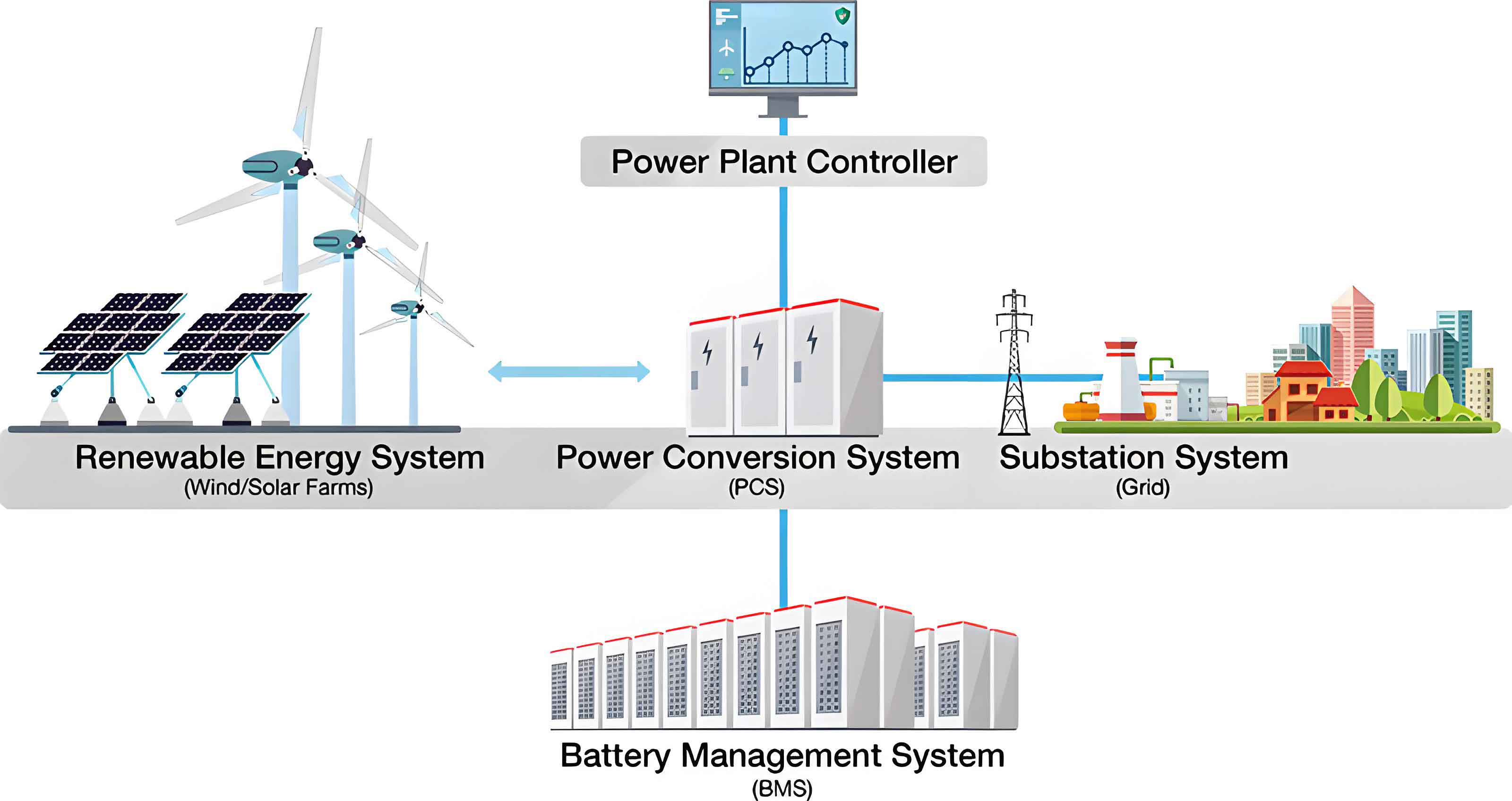
The table below summarizes key optical fiber temperature sensing methods and their reported performance in battery monitoring contexts.
| Sensor Type | Principle | Typical Sensitivity | Key Advantage for BESS | Reported Accuracy in Studies |
|---|---|---|---|---|
| FBG | Bragg wavelength shift | ~10 pm/°C | Point sensing, embeddable, multiplexable | ±0.1°C |
| Photoluminescent | Emission intensity/lifetime/FIR | ~1-2% / K (for FIR) | Point sensing, can be chemically specific | ±0.5°C |
| DFOS (Rayleigh-OFDR) | Rayleigh scatter shift | ~1 GHz/°C | Distributed, high spatial resolution | ±0.27°C |
| DFOS (Raman-OTDR) | Raman anti-Stokes/Stokes ratio | N/A (intensity-based) | Distributed, very long range (km) | ±1.0°C |
2. Optical Fiber Sensing for Strain and Mechanical State Monitoring
Electrodes swell and shrink during lithiation/delithiation, inducing mechanical strain. Monitoring this strain is critical for state-of-charge estimation, fatigue analysis, and detection of abusive conditions like plating in a battery energy storage system.
2.1 FBG Sensors for Strain
FBGs are highly sensitive to strain (\(\varepsilon\)), which alters both \(\Lambda\) and \(n_{eff}\) via the photo-elastic effect:
$$\frac{\Delta\lambda_B}{\lambda_B} = (1-\rho_e)\varepsilon$$
where \(\rho_e\) is the effective photo-elastic coefficient. The challenge is decoupling strain from temperature, typically solved by using a reference FBG that is temperature-sensitive only. Studies have shown FBGs can track electrode expansion in real-time, with sensitivity around 1 pm/µε. Their response reveals the dynamics of phase transitions within electrode materials during cycling.
2.2 Fabry-Perot Interferometer (FPI) Sensors
An FPI sensor is formed by two parallel reflecting surfaces creating an air or solid cavity. The interference pattern of the light reflected from these surfaces is highly sensitive to the cavity length (\(L\)). The phase difference (\(\delta_{FPI}\)) is:
$$\delta_{FPI} = \frac{4\pi n L}{\lambda}$$
Strain directly changes \(L\), causing a shift in the interference spectrum. FPIs can offer higher strain sensitivity than FBGs and are often used in hybrid sensors with FBGs to simultaneously measure strain and temperature.
| Sensor Type | Measurand | Key Performance Metric | Application Insight |
|---|---|---|---|
| FBG (Surface-attached) | Surface strain | ~0.85 pm/µε | Measures global cell expansion, correlates with SOC. |
| FBG (Embedded) | Electrode bulk strain | Complex peak splitting | Detects anisotropic strain within electrode, indicates microstructure changes. |
| FPI / Hybrid FBG-FPI | Strain & Temperature | High finesse, simultaneous measurement | Provides decoupled strain and temperature data at a single point for accurate mechanical state analysis. |
3. Optical Fiber Sensing for State of Charge (SOC) and State of Health (SOH) Monitoring
Accurate SOC and SOH estimation is the cornerstone of an efficient BMS. Optical methods probe intrinsic material properties, offering a direct physical correlate to electrochemical states.
3.1 Fiber Optic Evanescent Wave (FOEW) Spectroscopy
This technique is based on the interaction of the evanescent field extending from the fiber core with the surrounding medium. When the fiber cladding is removed or tapered in the sensing region, this field can interact with, for example, the graphite anode. The optical absorption characteristics of graphite change with its lithiation state (SOC). The penetration depth (\(d_p\)) of the evanescent field is:
$$d_p = \frac{\lambda_{in}}{2\pi\sqrt{n_{co}^2\sin^2\theta – n_{cl}^2}}$$
where \(\lambda_{in}\) is the wavelength, \(\theta\) is the angle of incidence, and \(n_{co}\), \(n_{cl}\) are core and cladding refractive indices. By monitoring transmission spectra changes, the SOC can be inferred. This method has shown direct correlation between optical transmittance and lithium concentration in graphite.
3.2 Fiber Optic Surface Plasmon Resonance (SPR & LSPR)
SPR sensors use a thin metal (e.g., gold) film on the fiber. At a specific wavelength, incident light couples with surface plasmon waves, causing a dip in the transmission spectrum. This resonance condition is exquisitely sensitive to changes in the refractive index of the adjacent medium. In supercapacitors and batteries, the accumulation of charge at the electrode/electrolyte interface changes the local refractive index, allowing for direct, in-situ SOC monitoring. Localized SPR (LSPR) using nanoparticles offers similar functionality with a simpler setup.
3.3 Sensing Electrolyte Properties
The electrolyte’s properties evolve with battery state. In lead-acid batteries, electrolyte density correlates with SOC. Tapered or U-shaped fiber sensors measuring refractive index changes have been used for density monitoring. For lithium-ion batteries, specialized FBGs written in the fiber cladding to be sensitive to the surrounding refractive index can, in principle, track electrolyte composition changes linked to degradation (SOH).
3.4 Gas Monitoring for SOH and Safety
Gas generation (e.g., CO2, CO, H2, HF) is a key indicator of electrolyte decomposition, SEI growth, and onset of thermal runaway. Optical fiber sensors are ideal for this due to their safety and corrosion resistance.
- Tunable Diode Laser Absorption Spectroscopy (TDLAS) coupled with fibers can detect specific gases with high selectivity and sensitivity by measuring absorption at characteristic wavelengths.
- Fiber-optic colorimetric sensors use indicator dyes immobilized on the fiber tip that change color upon reacting with target gases (e.g., CO2), altering the reflected light intensity.
- Fiber-enhanced Raman spectroscopy holds promise for multi-gas analysis but is in early stages for battery energy storage system application.
| Target Parameter | Optical Fiber Method | Sensing Principle | Relation to SOC/SOH |
|---|---|---|---|
| Anode Lithiation (SOC) | FOEW Spectroscopy | Evanescent wave absorption by graphite | Direct optical signature of LixC6 phases. |
| Interface Charge (SOC) | SPR / LSPR | Refractive index change at electrode surface | Direct correlation with electrode surface charge density. |
| Electrolyte Density/Composition | Refractive Index Sensing (Taper, FBG) | Change in external refractive index | Correlates with SOC (lead-acid) and decomposition products (SOH). |
| Decomposition Gases (SOH/Safety) | TDLAS / Colorimetric | Gas-specific absorption / dye reaction | Early warning for SEI breakdown, plating, and thermal runaway initiation. |
4. Synthesis, Challenges, and Future Perspectives
The integration of optical fiber sensing into battery energy storage systems presents a paradigm shift towards data-rich, physically informed BMS. The ability to perform multi-parameter (T, ε, chemistry, gas) and spatially distributed sensing internally and externally is unmatched. The following table provides a consolidated overview of the optical fiber sensing approaches discussed.
| Monitored Parameter | Primary Optical Fiber Method(s) | Typical Sensitivity/Accuracy | Measurement Location | Key Benefit for BESS |
|---|---|---|---|---|
| Temperature | FBG, DFOS (Rayleigh, Raman), Photoluminescent | ±0.1°C to ±1.0°C | Internal & External, Point & Distributed | Hotspot detection, thermal gradient mapping, validation of thermal models. |
| Strain / Pressure | FBG, FPI | ~1 pm/µε, ±0.1 µε | Surface & Electrode bulk | Mechanical state-of-charge, detection of anode plating, fatigue monitoring. |
| State of Charge (SOC) | FOEW, SPR/LSPR | Correlative (R² > 0.98) | Within electrode stack | Direct material-level measurement, independent of voltage/current transients. |
| State of Health (SOH) / Gas | FOEW, Refractive Index, Gas Sensors (TDLAS) | Detection of ppm-level gases | Within cell headspace or electrolyte | Early failure warning, tracking of decomposition reactions, safety assurance. |
However, several challenges must be addressed to transition from laboratory proof-of-concept to widespread commercial deployment in battery energy storage systems:
- Integration and Durability: Robust methods for embedding fibers within commercial cell manufacturing processes without compromising cell performance (e.g., causing shorts, inhibiting electrolyte wetting) or sensor longevity (in corrosive electrolytes) are needed. Specialized coatings and packaging strategies are critical areas of development.
- Multi-Parameter and Cross-Sensitivity: While individual sensors excel, developing a single, multiplexed fiber network that simultaneously and unambiguously measures temperature, strain, and chemical states remains complex. Advanced sensor designs (e.g., multi-core fibers, hybrid gratings) and sophisticated signal processing algorithms are required to decouple cross-sensitivities.
- Cost and System Complexity: The optoelectronic interrogation units for high-performance DFOS or multiplexed FBG systems can be expensive. Widespread adoption in cost-sensitive applications like automotive or grid-scale battery energy storage systems requires the development of simplified, lower-cost interrogation systems without significantly sacrificing performance.
- Data Fusion and BMS Integration: The vast amount of high-fidelity spatial and temporal data from optical sensors must be effectively fused with traditional electrical data (V, I) and integrated into BMS algorithms for state estimation, lifetime prediction, and thermal management control. This requires the development of new multi-physics models and data-driven approaches.
Future research and development should focus on: 1) Creating standardized, non-invasive fiber integration protocols for various cell formats (pouch, cylindrical, prismatic). 2) Developing low-cost, robust interrogation systems tailored for battery energy storage system environments. 3) Advancing multi-functional fiber designs (e.g., fibers with multiple cores for simultaneous T and ε, or with built-in micro-channels for gas sampling). 4) Establishing large-scale validation of these sensing systems in real-world battery energy storage system installations to build confidence and reliability databases.
In conclusion, optical fiber sensing technology provides a powerful and versatile toolkit for deep-dive monitoring of battery energy storage systems. By offering direct access to internal physical and chemical states with high spatial and temporal resolution, it unlocks the potential for a new generation of intelligent, predictive, and ultra-safe BMS. As the technology matures and overcomes current integration and cost hurdles, it is poised to become an indispensable component in the future of reliable and efficient energy storage.